How Home Awareness Startup Notion Broke into the Security Market | CEO of Notion, Brett Jurgens
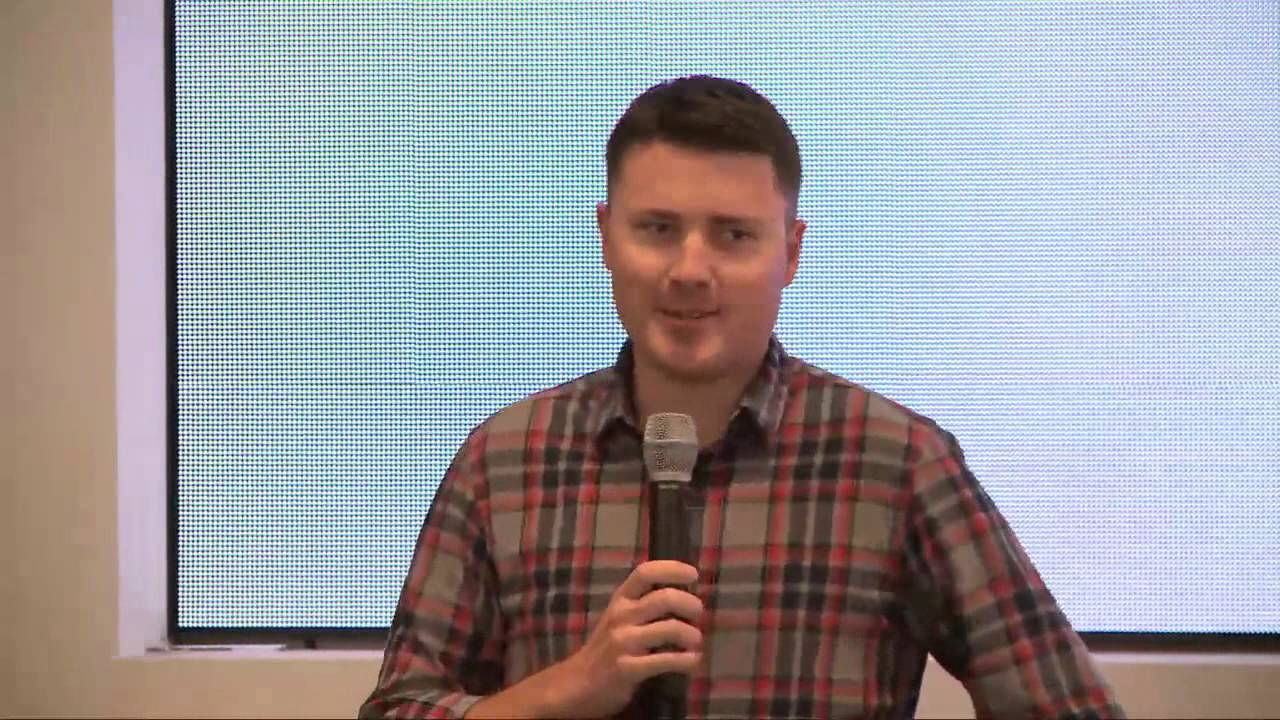
Brett Jurgens, CEO of Notion, describes how his hardware startup built multi-sensor devices for home security. The company raised $2M in convertible notes, ran a successful Kickstarter that brought in $282,000 from 1,300 backers, and grew to 11 people in Denver before launch.
Chapters
How's it going, everybody? Pretty good today? You guys have a week left. Is that what I heard? Wow. That's awesome. Scary, sad, other emotions to describe that? Well, thank you guys for having me here today. And I think I have— do I have an hour? Is that the right amount of time? That's correct. Roughly? OK. I don't actually have a slide deck. And I kind of did that on purpose. I have a pitch like everybody does. My company— and I'll kind of give more of an overview— to set the stage a little bit, we're still pre-launch. We are maybe a year ahead of where some of you are, maybe less, maybe a little bit more. We're a hardware company, so it takes us a lot longer to do everything. And yeah, I don't know exactly all the makeup, but I looked at all the companies. One of the other things about what we've done is we were in Techstars. So Techstars is an accelerator program based out of Boulder. We had a 3-month program. We had a demo day. We had pitches. We had investors there. Very similar to some of the things that I think you guys are going to be going through. And obviously I heard some of the questions there at the end for Tim. And so happy to kind of answer some things about our process, our experience, what life has been like the year after Techstars. One of the things that they kind of talked about was almost a hangover. What happens after you're out of this sort of magical bubble that is this program? You know, what happens next? So happy to get into some of that stuff. But for a little bit more background on me, A little bit more background on my company. Born and raised in Colorado. Went to the University of Colorado. And right out of school, I did investment banking. I did private placements for Piper Jaffray out of Minneapolis. So a lot of $20 to $100 million deals for a number of different companies from VCs, private equity folks, that kind of thing. And then I was the first employee at a company in Denver called UrgentRx. And UrgentRx made a new line of over-the-counter medications. So a finance guy was the first employee at an OTC drug company, which makes absolutely no sense. But I think that's kind of the point of what most of us are trying to do is that we may not have the background in it. We may not have this special skill set in it. Some of us might. I definitely didn't. I didn't know how to make and sell drugs. But I went out and did it. And for me, That was kind of an experience that I continue to talk about as entrepreneurship on training wheels. So we eventually grew that company. We were in 25,000 retail locations. We launched 6 products. We raised $10 million. We had 16 employees. And then I left to start Notion. And that company is still doing very well. They just raised a C round. They've raised about $30 million since then. And I started Notion when I was at UrgentRx. That's kind of my trajectory pretty quickly to kind of get to where I am with my company today. My co-founder and I— so I do have a co-founder, which I've found to be an extremely helpful experience. We started the company about a year before we quit our jobs. So we were moonlighting. We were doing that thing. We, ever since high school probably— we grew up together— ever since high school, we kind of thought we'd be entrepreneurs. Didn't really know what that meant. One day, he had a smoke alarm go off and lived about a block away from work at the time, and he'd recently gotten a new puppy. He came home. The smoke alarm was freaking the dog out. He thought, well, why can't your smoke alarm send you a message? Why can't it communicate? And this is kind of where Notion was born. We went down the path for the first 5 months making the world's best smoke alarm before Nest Protect came out. We didn't think people would pay $150 for smoke alarms, and we thought there was too much regulatory risk. So why not retrofit and just hear a smoke alarm? That's a less expensive device, really easy to throw up on the wall. But to us, it was kind of gadgety. It didn't maybe solve big enough problems. It didn't do enough. And so we started to think about, well, what else could we do with a really small device that was really easy to install? What does that look like? What does the home security market look like? What does the IoT market look like? We didn't really know what that term was at the time, but we started to iterate through that process and came up with what is now today Notion. And Notion is really this. This is our first product. So Notion— our goal as a company has always been to change what your home is capable of. We didn't know quite what that would turn into. We didn't know quite what this device would or wouldn't do, but That really— that was really at the core of what we wanted to do, is to change that and to make it easy to do that for people. So what this device does today is it does 8 different things. Every single one of our sensors does 8 different things. We can detect acceleration, water leaks, sound, temperature, light, orientation, natural frequency, and angular rate. All right, well, what does that all mean? I'm a finance guy. I'm not a technical guy. I know what all that means. But what it really means is, is that we can do a whole bunch of things like tell you if a door opens, if a smoke alarm goes off, if a light is left on, the temperature of your entryway, if a sensor gets wet from a water leak. And every sensor is doing all those things all the time. And so that's really what we wanted to accomplish with Notion. That's really what our first product is. And what I want to make sure I do today is kind of open up a lot of the conversation for questions around fundraising, around finance, around your pitch coming up, kind of around our process with fundraising as a hardware company, and kind of just in general sort of some of the things that we've been both, I think, really successful doing and some of the things we struggled with. So a little bit of background on the company. Is a little bit more background, I should say. So Techstars was a year ago last summer, July through October. We did a Kickstarter campaign during Techstars. We did about $282,000 in 30 days from 1,300 backers. So really successful Kickstarter campaign. That has been good and bad. We had to make a lot of promises on when we would deliver final product and some of those kinds of things. And so it's really forced us to do A lot of things quickly, which is a good thing. It's forced us to make some decisions. We also have raised 2 rounds of capital so far. We raised a very early $500,000 round, a small round leading into Techstars. That was a convertible note. We also raised in March $1.5 million. That was also a convertible note. So I can get into some of those details here in a second. On the verge of probably raising more money soon. So never quite enough in terms of fundraising, but definitely have some good experience there. The other thing that I would mention is we have 11 people. We are based in Denver, which is interesting. So I'm not quite sure where you all plan to be after the program. I assume some of you are gonna be in California, but I did hear a question about what if you're not in California anymore? What does that look like? What does it mean to leave the epicenter of startup world of the tech community. But we're not in it. We're in Denver. What does that look like if you're not going to stay in Colorado— or sorry, California? I think I can talk to that a bit as well. So from my perspective, I think where you guys are at is extremely exciting. One of the reasons why I kind of wanted to come talk or offered to come talk. We had a lot of speakers and Techstars. We've had a ton of people help us. So hopefully this is helpful. And I think one of the things, if it's not up there— my Twitter handle's up there, but my email address is just brett@getnotion.com. If any of you after this think that I could be helpful, if you want to ask me any questions, reach out. Because we're not that far— down the path yet. We're still a very early-stage company. We haven't even launched our first product yet. So if there's anything we can do to be helpful, that's totally open. Let me start off by seeing how many people are going to be staying in California kind of after the program. Okay. So it's like half and half roughly? About that? Yeah. Is there a question in the back? I'm sorry. What is the talent balance? How much do you pay the programmers? We don't pay anybody any— I'm just joking. We have— so of the 11 people, it's me and my co-founder. My co-founder is our CTO. And we have 2 hardware engineers, 3 software engineers, 2 folks on the marketing side, a head of marketing and a marketing manager. We actually have a head of design. For us being a consumer product, we thought that was very important for us to have just a really, really good designed app and website and those kinds of things. We're constantly working on that, but we brought that in-house. And then we also have a data scientist. That was our most recent hire. And we can get into the data applications for what we're doing, but he's been a big help as well. So right now, that's the 11 people that we have. Thank you. And to kind of put that into perspective, we had 4 people that went through Techstars. We had 4 people in October of last year. Now we have 11. The other piece of the team, I think we'll probably look to hire 3 or 4 more people in the next 5 or 6 months depending on where we go. So hopefully that's helpful. How much do we pay them? That's a tough question to answer with kind of a singular number. I mean, pay is across the board. What I will say is we have offered all of them equity so far. Some people are afraid of that. Some people aren't. I think it's a mistake to be afraid of giving your employees equity. I think of it very much the opposite, that it's actually a really good thing. So we've tried to use that as a compensation tool, especially early on. No one's making, you know, hundreds of thousands of dollars. That's not why they joined a startup. They joined a startup for equity, but mostly they joined a startup because they want to make a difference in a company. They want to work for an 11-person company. So happy to answer kind of a more detailed question on that after or through email if you are kind of thinking of specifics around like a certain position or certain hire. I'm happy to kind of share some thoughts on that.
More from Tim


He Sold His Car to Build This Startup, Then Pitched It for $1M 😳 #Startups #AI

This Startup Moves Your Crypto BEFORE Hackers Can Steal It 😳 #Crypto #Cybersecurity




15 Months Without Refrigeration?! This Startup Thinks It Can Go Global 🥥 #FoodTech #Startups



