How the World is Subject to Global Waves | Jordan Greenhall
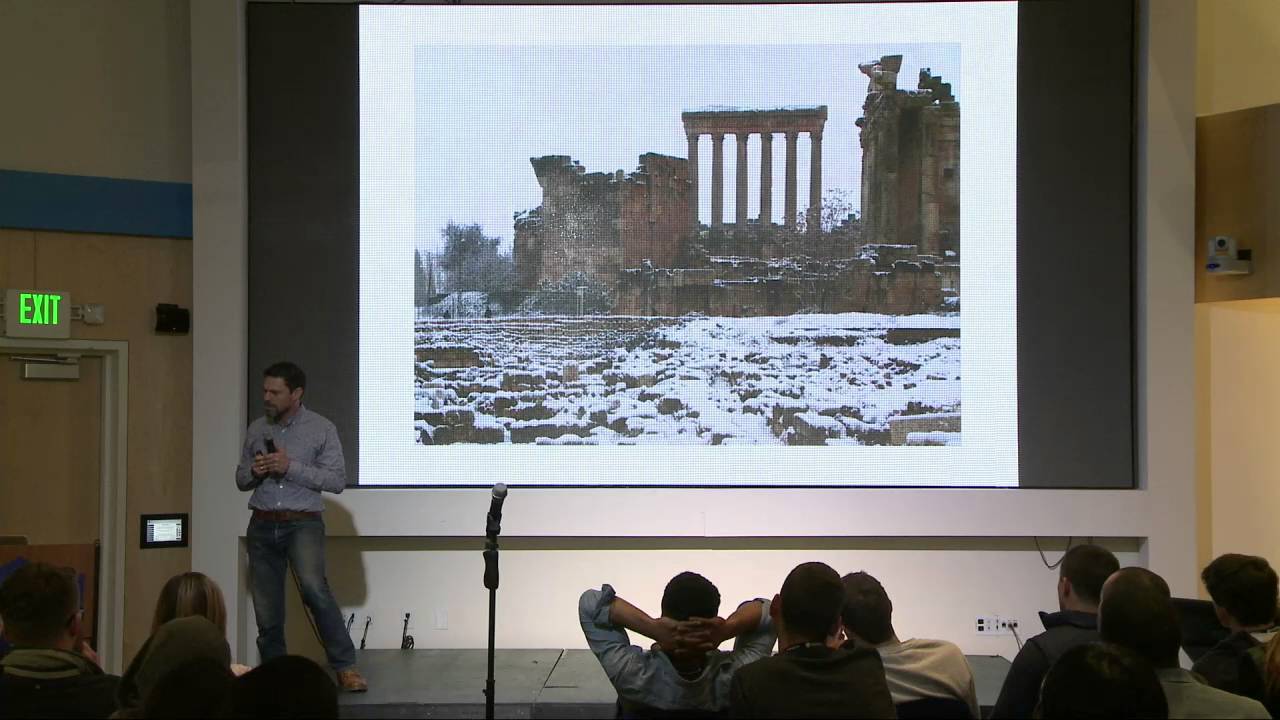
Jordan Greenhall explains how civilization moves in S-curve waves of disruption. We're in one now, driven by globalization, population growth, and information technology, that will reshape institutions and how we find identity and meaning.
Chapters
All right, guys. So just a little bit of background as to what this— the context of what I'm gonna talk about today, 'cause I suspect it's not like anything you've seen before, or probably not in this context. 2. The first is, I actually started my first company in 1998, and then took my last company public in 2007. 3 different companies. So I had an opportunity to experience the rise of the dot-com bubble, the decline of the dot-com bubble, the death afterwards, the rise of the 2006 frenzy, the financial crisis, all while actually at the helm of a startup company. So the key message is macro forces can impact your fate no matter how good you are. So we're gonna talk a little bit about that from the top down. The second is that for some reason over the past 2 decades, I seem to have gotten interested in things well in advance of those things becoming interesting to lots of other people. It definitely hearkens back to my nerd beginnings, but also A little bit of a sort of an obsessive effort to understand the sort of the nature of reality at a fundamental level, and then logically things fall out of that that seem obvious that they'll sort of emerge in reality, and then they do. So I'm gonna try to give you essentially my operating model of what's going on in the world, and for some of you, this may be a complete waste of time, and if so, just try to snore quietly. For others, this may be really awesome, so I'm hoping that those folks get their money's worth. So what I'm going to begin with is some foundational assumptions, try to sort of get everybody on the same page about the nature of how this sort of big picture thing called the world works. The first is one that I had to deal with a lot in the early part of my career, which is this concept that history happens. I remember being in a meeting with the chairman of EMI US when I was probably about 26, and I tried to explain to him earnestly that the music industry as he knew it was already dead. And the only choice he really had was to figure out what his new model was going to look like. And he sort of glazed over and had no capacity to consider this. It wasn't even necessarily that he didn't want to, but that the idea that the world that he had grown up in could suddenly and abruptly change wasn't part of his operating model. So the key idea here is that history happens. Shit falls apart big time. Absolutely anything that currently exists will, at some point, No longer exist. Second, this is the key idea, by the way. If you get this slide, you get a lot. It seems to happen all over the place through something called punctuated equilibrium, right? S-curves. We see S-curves all the time in economics, Schumpeter curves, disruption waves, things like that. But frankly, we see them all over the place. We see them in the, you know, the breaking of dams, the lightning bolts striking. We see them in population growth. We see them all over the place. And the key message— That's right. of an S-curve is this notion of it starts slow. Most people have no idea it's happening at all, and frankly, it has very little impact on the world. And then at some point, for some reason, it starts to become more material and starts to accelerate. At this point, it becomes the hot new thing, right? The new revolution, the new wave, whatever it happens to be. Around here, it is simply the new thing. It's the new standard. It's what happens. And over at this point, it becomes the model that everybody thinks is the nature of reality and is never going to change again. Up here, it's lost its innovative potential. It becomes extractive. It just kind of goes along for as long as it's relevant and typically, by the way, tends to collapse as the next one comes along. All right? So think about these things in terms of waves. If it doesn't seem like anybody really knows about what's going on, but you feel like it's super important, you might be over here. And then you have to think, okay, where am I on this curve? If you're way over on the left of the curve, you're probably not going to win any time immediately soon. It'll take a while. There's gonna be a lot of forces stacked up against you. So you wanna take a strategy that takes that into account. If, on the other hand, things feel like they're getting ready to pop, then you need to position for that as well, okay? Now, these waves appear everywhere in society, and everywhere means everywhere, right? So whether you're talking about fashion or education or sexual activity, family, technology, finance, money, government, every single aspect of reality, and particularly human society, proceeds by the evolution of lots and lots of different waves that feed back on each other and they impact each other. Let's take, for example, the rise of the miniskirt. This was a historical event that it was the combination of— let's see what I tracked down when I did the research— significant changes in textile manufacturing technology, an economic shift towards the middle class, postwar focus on youth and youth culture, The women's movement, changes in media and the emergence of different kinds of new media all happened simultaneously and they all overlapped to cause this to happen. And when this happened, it fed back on everything else, right? So what you get is an extremely complex interference pattern of multiple different waves interacting with each other. Okay. So that's the background. That's the basic ideas, some themes, some concepts. The key point now is right now several really, really big waves are converging and they're beginning to become constructive interference. They're adding together. I've just got a few here. There's many more. But the key message is lots and they're big. Globalization. Somewhere around 1988 or so, the expansion and the inclusion of almost all of the world in a single unified system hit. And now it's starting to feed back on itself, right? The novel spaces where nobody goes and nobody knows what's going on there, they're gone, right? So we are now post-globalization. We're beginning to see what the world is like in a post-global world. Post-world capitalism and the triumph of the West, right? Everybody is in some variation of the post-industrial capitalist model, right? Some flavor of it. Ecosystem disruption, right? I don't know how much— how closely you track those things, but Pick 15 different ecosystem characteristics, and almost all of them are on the far end of the tipping point on the curve. Population expansion. We're now looking at circumstances where the total number of people on the planet are also way beyond anything that we've ever planned on before, and any system that was designed for a world that had, say, 4 billion people in it, which was, you know, before 1960, probably is obsolete right now because there's just more people that it has to deal with. The maturity of a whole variety of different cultural ideas that came out and hit the West in the 1960s, things like civil rights, the green movement, etc. And then lastly, the sort of stuff that gets talked about a lot here is information technology. And I'll probably focus most on that because that's relevant to a lot of the things that happen entrepreneurially. But the key message is these things all line up, and that means for a very, very big wave. And very big waves have very big effects. Right. So the proposition that I'm gonna make is that we are already, and have been for some time, in the middle of a crisis of truly historical proportions, right? How big? I tend to think we're sort of in a 1,000-year to 10,000-year equivalent cycle, right? So think about the fall of Rome, right? The complete collapse of Western civilization into the Dark Ages, or maybe the emergence of civilization itself in the Fertile Crescent 10,000, 15,000 years ago. That's the level that we've got to be thinking about. So if you're thinking about things that happen in sort of 10-, 50-year cycles, that's fine, but just be aware of the fact that the wave may come right by you faster than you can imagine. And I don't know where you guys are from. I happen to be from Southern California, so surfing waves is one of the things that we do. And it's very fair to say that my primary business acumen has been finding waves, spotting them, and paddling into them. I'm usually very early, so other guys end up getting sort of all the big ones. It's kind of fun. All right. So what we're looking at then is a comprehensive, global-in-scale, civilization-level collapse. And what I mean by civilization is civilization is the complete toolkit, all the sets of institutions, concepts, processes, models, behaviors that we have enculturated ourselves into to do all the things that we need to do as humans, right? The way we feed ourselves, the way we groom ourselves, the way we find mates, All that kind of stuff. And it's comprehensive, global, all across, because everything's now entrained. And they're all being rendered obsolete, either because the world has changed more rapidly than they can handle, or because they themselves have become dysfunctional. I'm not going to go into too much depth on that. And these sorts of things always happen in the same way, right? They start at the weak and go towards the center. In this case, they're starting at the edge and working towards the core. So Briefly, things at the edge, right? Remember when journalism was mostly newspapers and television? That's the edge. That was a very weak spot in the existing legacy system. It went digital very quickly, and then journalism largely has already gone through the transition, and most journalism now happens in a way that would have made Cronkite have no idea what was going on, right? By contrast, harder things are at the core. These things are going to take longer, and they're at the the last things to disrupt. And as they disrupt, the consequences are more significant. So one, money. Money turns out to have been a fundamental component of the major legacy institutions that are part of our contemporary global civilization. Not just the form of money, the institutions around it, the way we use it, the way we use it to decide and coordinate behavior. And as we know, certainly everybody here knows, I saw the sign out front, Money is now well into the disruptive wave, maybe at the early majority level. Most people around the world are now beginning to be aware of the fact that money is not magic. It didn't come from God. People make it, and people can change it. That's a pretty significant psychological change from where it was 20 years ago. Governance. I was here— actually, that's why I got invited to give this talk— talking about the fact that governance is just really entering into the disruption wave. And governance is like how we collectively make decisions about the sorts of things that we do. Whether that's in a corporation, corporate governance, and the way that we make decisions at an organizational level, or big picture governance. Like, you know, the— I will say right now on record that within 50 years, the nation-state as a fundamental unit of global political power will be subordinate. It won't go away completely, but there will be other forces that will be more important in deciding the allocation of resources and the movement of people at a global level. And then the last is fundamental operating models. This is more abstract, deeper stuff. You have to read things like Foucault and Gilles Deleuze to kind of get a better sense of it. But these are the ways, the toolkits that we have for going out and getting things done. So for example, in the contemporary environment, after World War II, kind of the Six Sigma bureaucratic hierarchy is an operating model. It's how you can get things done. And we got pretty good at it, right? It put us on the moon. It built the interstate highway system. This stuff is getting thrown out all the way. And some significant things around completely deconstructing the model of even like the corporation is almost certainly on the horizon. In fact, again, I'd go ahead and predict that the form of corporation that we've seen for the past 100 years is almost certainly on its way out, and probably in the next 20 years. So that's big stuff, right? Those are major disruptions. The key message is not only are they big, but as they disrupt, starting at the outside and working their way in, they bring with them lots and lots and lots of other stuff. So think, for example, you guys are familiar with the TPP, the Trans-Pacific Partnership? It's sort of an international law on trade. So in many ways, I mean, it's a big trade, but in many ways, certain chunks of it started all the way back in 1997 when I was getting involved in the MP3 movement. Because the MP3 movement was hitting a very weak spot, which was the music industry. They were very, very weak, right? Very easy for them to be disrupted. In fact, they were disrupted almost instantaneously. Except for one thing. They all had really strong relationships with governance. The music industry had very tight relationships with legislature, with judges, and so that's what they held on to. What they did is that pulled all the disruptive energy that was pointing at the music industry at a market level and put that energy onto the legislative level. They've been fighting the copyright battles ever since, for the past decade and a half, and other guys have gotten into it as their business models have been threatened. And a big chunk of the TPP is in fact a leveling up of governance playing the game of defending older models. And as governance itself then is put on the table, and as it begins to be disrupted, giant chunks of the world begin to change relatively rapidly. The blockchain stuff is blowing people's minds. I've already been engaged in several conversations with folks who are offering the idea of jurisdiction innovation. Go to some local jurisdiction, sovereign nation, they will modify their laws to optimize for particular business models that are not legal in other kinds of nation states that the blockchain can really take great advantage of. And you can think of thousands, actually, even in just a few seconds. And what does the international legal structure do with that? It's really hard to say, but it's going to be interesting and disruptive. But here's the thing. If I'm right and we're actually going in through a level of a 1,000, 10,000-year disruption, It goes even deeper than that. The physical layer of the institutional structures that we use to do things, like the way we do governance, the way we do business, is kind of like the candy coating on the outside of the things we actually need to have done. So this is a map of what the core really looks like. You've got things like politics, art, medicine, the kind of general categories of what human beings need to have done. And inside that are actually the deep human needs that emerge that these things emerge from, like the need for identity, the need to deal with the fact that you're gonna die, the need to have ideas and creativity, right? These are the core things that, you know, unless the transhumanist stuff really takes off, these are probably not gonna change in this wave. So what'll end up happening is that new things are going to clothe them. This is like the core. This is the source of raw energy. People need to have these things satisfied, and as old models go away, these things need to be satisfied, so new models build up around them. And they'll build up around them in very complex fashion. You take a look at your history about how these things have happened in the past. You know, certain— sometimes things like medicine and religion are part of the same structure, and sometimes they'll break apart and they'll be very different. Sometimes family and law are the same structure, right? So at the core, what I think right now is that we could be looking at 3 big ones. One is identity. You know, who are you? What does it mean to be you? What does it mean to be understood in relationship to other kinds of identities? The second is sense-making. How do you make sense of the world? What the hell is going on and how do I behave in this environment? And the third is meaning. What is actually important? What is meaningful? Where are places where I ought to or I should put my energy and my focus? Those questions have really easy, simple answers in mature, coherent cultures. Right now, they're falling apart like crazy and they're going to fall apart faster as the old legacy answers are shown to be in the middle of disruption. Thank you.
More from Tim


He Sold His Car to Build This Startup, Then Pitched It for $1M 😳 #Startups #AI

This Startup Moves Your Crypto BEFORE Hackers Can Steal It 😳 #Crypto #Cybersecurity




15 Months Without Refrigeration?! This Startup Thinks It Can Go Global 🥥 #FoodTech #Startups



