How to Build the Ace Startup Team | Mediacamp's Dave Austin
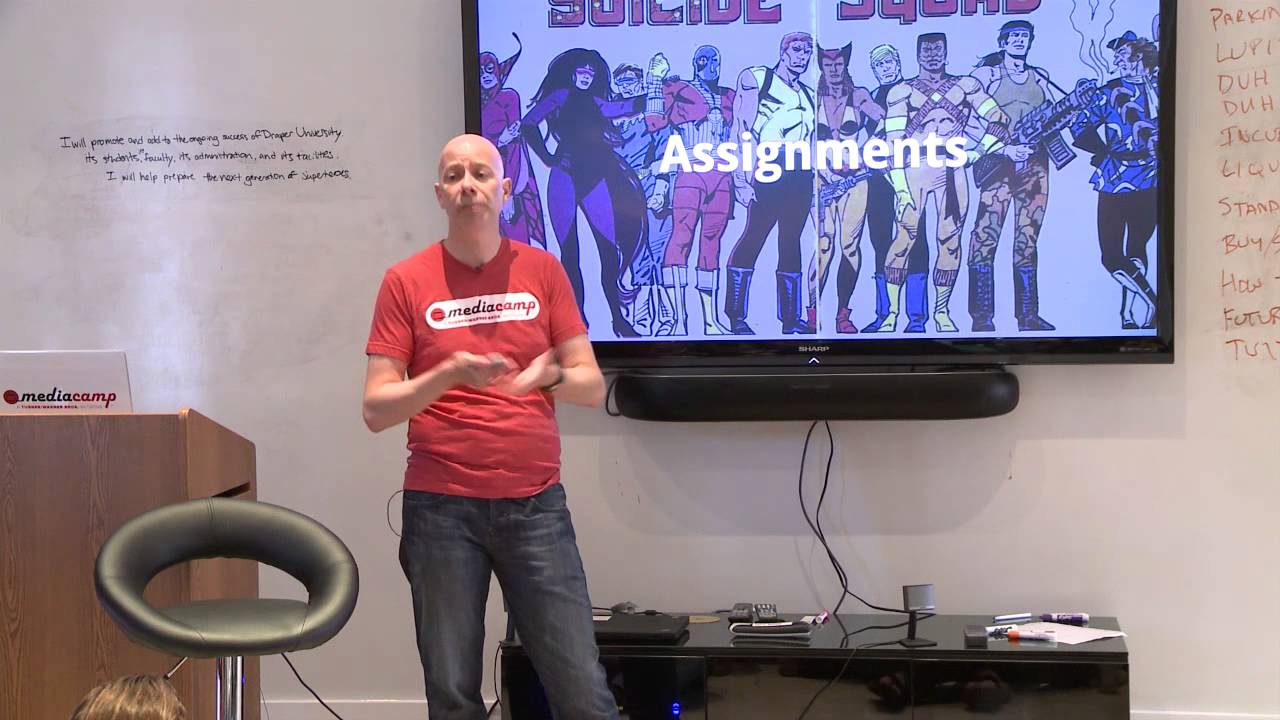
Dave Austin argues that hiring is a leader's core job and that A-players hire A-players while B-players hire C-players, degrading talent over time. He shares how Apple reassigned him to struggling teams when he got bored, and recommends asking team members directly if they're restless and giving them stretch work to keep them engaged.
Chapters
I'll run to teams real quick. Talk about recruiting. Recruiting is, in a startup, in corporations, in everywhere, is probably the most important job as a— if you're a leader. It's job one. It's job zero, because basically if you cannot find good talent to come join you, then you're not going to go anywhere. To find good talent, there's a few really important things. And some of this is— I'm sure probably a lot of this is obvious, but I'll say it anyway. You need to find people who share your vision of where you want to go, which means, of course, you have to have a vision of where you want to go. Hiring somebody who's just a crank, turn the crank person, that's great and good once you get to a certain size, maybe in a certain part of your business, but generally that's not going to be good. You need to find somebody who shares your vision and belief and wants to be part of your journey. I used the J word, sorry. Wants to be part of the path that you're on. So think about each person you hire and realize sometimes you need to not hire someone even though they're 80%— they solve 60% to 80% of the problem, but they don't solve 90% to 100%. Because later you're going to have to deal with the fact that you have a person who's solving 80% of your problem. And though that's really good for you and you'll get an education out of doing that, it's painful. Think of each person you hire as somebody you're going to have to fire later. And you don't want to do that. So think about the fact that you want to make sure that you stack the deck as much as possible that you never have to fire the person. Or have that person fire you, which happens sometimes. Things change.
Hiring.
A's hire A's. You're an A player, A players hire A players. You ever hire a B player, they're going to hire C players. And then it gets worse. As you grow your teams, if you have anybody who's not pulling their weight, Don't let them hire because they're not going to select good people. Yeah?
Do some people just enjoy hiring A+ people and then if they're A, they hire A+ and they find it very difficult to manage the team afterwards?
Yes, that can be a problem. Hiring the best people It means your job as a manager is harder. Tough. Because the reason why you're hiring them is because they can do things you can't do. They can think differently than you. That's the value they're bringing to you. Value it. If they are an A+ coder but have a huge amount of interaction problems, then they're not an A+ player. They have to be able to work— you have to be able to play well with others. In some aspects, or you need to be able to feel like you can mentor them to be able to do that. Managing's hard. That's a whole other topic. But the more you can realize— what I always try to do is I try to hire people and bring people into the work I work with who are, in my opinion, better than me, massively better than me. My job was to make sure that I helped coordinate conversations. That's a lot of what I did in managing Apple.
Yeah?
How do you attract people that are significantly better than you? You have a really amazing vision. You have a product and a space that is enticing and interesting and compelling, and you surround yourself with others I mean, it starts with one, right? And if you have a startup, have a company, and you're doing OK, but it's not great, and you see that somebody else is doing something more amazing that actually entices you more, go maybe work with them. You don't have to always be the leader today. You could be the leader tomorrow. You guys have plenty of time, trust me. If that means— if it forces you to raise your game. My core goal in every single job I take is I want to make sure I'm learning something completely new in an area I've never dealt with before. My job right now, I'm doing marketing, really. I'm running this accelerator thing, and it's mostly a marketing job. It's not what I thought I was going to be doing, but it's something I've never actually had to own and worry about. And so to me, that's— I'm learning something new. It's really valuable. So anything— it's like you keep on expanding yourself, the more context you gain, Then you'll be able to take those next steps. I want you to think really carefully about assignments, how you assign people to different roles and jobs, what you give them to do. Think about— I never would assign somebody a job I wouldn't be willing to do myself if I had the skills. But it's one of those— it's thinking about what's good for the product, good for the thing, but also good for the person. Gives them a chance to grow. Gives them a chance to expand themselves. If you put people into, especially A+ players, if you put them into a, obviously, you know, the turn-the-crank mode, if you put them in that kind of space, they're gonna get bored. You never want your people to be bored. That was the first— every time I'd have a meeting with my boss at Apple, one of the— and I didn't meet with them all, I met them up, but when we had our conversations, It always started with, are you bored? Because if I'm bored at all, that means I'm not getting challenged enough. And he'd give me something else to do or augment what I was doing, or we'd change something up. And a boss that will do that for you, or you being a boss can do that for your people, is huge. And if you do that consistently, you will attract followers slash people who work for you.
Do you have an example of that? That's a really good saying. I agree. Because consistently keeping it challenging for people is a very difficult balance.
Yes, it is.
So do you have an example from your personal experience?
Yeah. So at one point— this happened to me over and over again at Apple, actually. I'd be working on something. I was working on Keynote and Pages and Numbers. And I was doing that fine. And my boss asked me if I was bored. And things were kind of going OK. I go, I'm not bored, but things are OK. And as soon as I said that, he goes, well, I need you to— he told me, I need you to go help this team. It's a team that's in trouble. They need to be— they need more structure. They need to be aligned more with the business. They're good folks. They're well-intentioned, but they're a little off the track. Go help them. You've been in these meetings with Steve. You've learned things. Take that and give that to this team to get them to a place where their products can be shown to Steve and succeed versus what was happening at the time, which was they were failing. And so I was given that opportunity. And that happened like most—
That's in a large structure. I'm wondering like for us, a lot of us are going to have small startups or like 2 or 3 people teams. That's a really good example for, again, for a bigger company.
So in a small startup, it's really, really easy because just like this, there's always more things that you want to do in your startup than you can ever do. Right? There's always more tasks to be taken on. So find somebody who— they don't have cycles, but you always find a task that isn't critical to your business, but would be really great if somebody thought more than 5 minutes about it. Sure.
That's great.
And assign them to it, to think about that problem. And it makes them stretch. It makes them learn. I mean, it's exactly what Tim just did for you guys, right? It's like, I can't do all these things. help, and I have people who can help. And you'll get ideas you never would have thought of. And I went backwards again. Organization. And this is, again, less critical in a small startup, but it's something to contextually think about. And I'll give you just one little thought. Whenever— and I did a bunch of reorganizing around small teams, around groups of of one, myself, for quite a while doing acquisitions and stuff, but I also ran groups of a dozen and groups of hundreds. So I've been across that board. And I've had to do big reorganizations and different things. The most important thing I always thought was, you know, you can— as it goes back to the principle of that in theory there's no difference between theory and practice, but in practice there is. Because the reality is, when you think about reorganizing or changing the way you structure something, who should be a manager or not, if you look at it purely from a functional, well, this is the best engineering, you'll get a crappy organization. Because you're ignoring the most important thing about an organization, which is the people. So whenever I did a reorganization— this is a tidbit. You may never use this. Or hopefully when you get your big— you grow. Is to— whenever I did an organization, I actually would print out everybody's name and I'd put it on— and I would actually place it and I'd think about the person and how they would— can they work? Can they do these roles? And it made me think about them as people, not as just my senior manager or my QA lead. It changes it because it makes you think about it. So, I mean, that's important. And I went the wrong way again. And this is the last takeaway on this space. Does anybody know who this is? Ever seen Wallace and Gromit?
Wrong trousers.
Wrong trousers. This is the kind of manager you want to be. You want to be a Gromit manager if you're in management or if you're leading. You want to be laying the track. Right in front of the train, giving the direction, so the people who are doing all the work can just keep going. You want to be laying it out. They don't need to know that you don't have all the track to the end. All they know is the track's going. It's good. You want to give that level of confidence. If you remember in the show, I think Wallace is in the back, and he's happily unaware that he's just flying down this train track. And grommets laying that track. You want to be a grommet manager. You want to be laying that— you want to be thinking ahead, thinking beyond just the current deliverable and what you have to do. But what's the next one? Are you going down that right path? You need to think that way so that your people who are working with you don't necessarily have to. Or if they bring up— raise an issue, you've already thought about it because you've been thinking about that next step. It's part of your job as— an entrepreneur, part of your job as a leader to think that way. And that goes back to context.
More from Tim


He Sold His Car to Build This Startup, Then Pitched It for $1M 😳 #Startups #AI

This Startup Moves Your Crypto BEFORE Hackers Can Steal It 😳 #Crypto #Cybersecurity




15 Months Without Refrigeration?! This Startup Thinks It Can Go Global 🥥 #FoodTech #Startups



