How to Deal with Company Failure and Anti-Dilution | VC Tim Draper
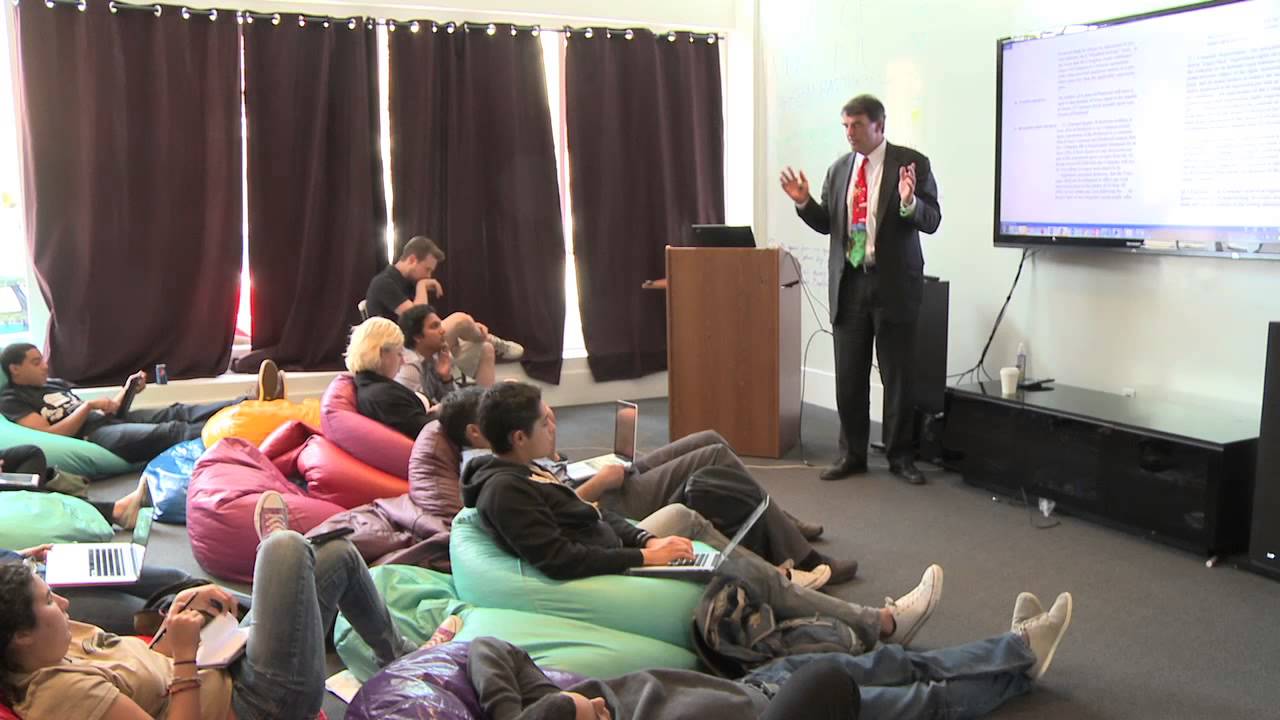
Tim Draper discusses startup financing and term sheets, covering anti-dilution protection, preferred vs. common shares, liquidation preferences, and board composition. He addresses how founders can negotiate these protections and the practical costs of legal disputes over equity terms.
Chapters
Okay, this is anti-dilution protection, proportional anti-dilution protection for stock splits, stock dividends, combinations, recaps. This hits on Mohamed's point. You turn it into 70— he's got 30% and he wants to issue new shares so that he has now 60% or 70%, let's say 60%. What this says is— 60% of 30%. If he does that, if he has 2 for every 1, then I as an investor also get 2 for every 1. So I'll get another share for every share I have to protect me against you going ahead and issuing yourself a whole bunch of shares.
Even if I buy them?
If I issue shares and buy them myself?
Even if you issue shares and buy them, because common shares might be at a penny and preferred shares might be at a dollar. What about dividends? Oh, and this also protects you against— well, stock splits and stock dividends are pretty much the same thing. It's like you've got a dividend and you give— you say, we're going to issue 10% of your shares, we're going to give you that much more, just as a Christmas bonus. Well, everybody ends up being the same. after that. Here are some more shares. Yeah, if every single team gets a point, it doesn't really matter, except that the overall highest score, you might be able to outscore like the last class. Okay. Yeah.
So if founders bootstrap and then they have like a year or something, like they raise money, they also get the first share in this case?
Yeah, there are occasions where founders are so confident and investors so much want to get into it that the investors will go, okay, I'll take common shares. Like right now, I would be happy to get Twitter common shares, right? Who cares? The preferences don't mean anything. The thing is going to be worth $10 billion. So if you're far enough along, then you can get away with issuing common shares. It's interesting though, it's kind of weird because if you were doing a private round of Twitter or whatever, they have crazy terms in those Series D, E, F deals. They're crazy terms.
Like what?
2x liquidation preference, you gotta have, converts at 2x, 2/3 of the price of the IPO. They do all sorts of crazy things.
But it's for the benefit of the owner rather than the investor in that one, right?
Depends on who's— yeah. Well, but the investor, like even if the owner's got a great company like Twitter, but the investor is putting in $100 million, investor gets a little nervous. He doesn't want to lose it. So there are certain protections he puts in there. Makes it a little bit— Trickier. By keeping it preferred, he can layer on whatever terms he really wants. If it's common, they're just common. You can't change the terms of a common share. A common share is a common share. Okay, yeah.
When people are negotiating these things, is it like, there's always an attorney present for everyone, right?
No.
I try to do it without an attorney. And if it's a small enough deal, it doesn't pay off to have an attorney. Attorney costs you more than the amount of money you're bringing in. So sometimes that's why notes are great, because I can give you a note. Here's $5,000 and you go— and no attorney has to look at it. Here's $5,000. You owe me $5,000 plus interest and it converts to this many shares. Done. Not a big deal. But when it gets to this stage, you usually have at least one attorney or if both of you— this is my rule. If you have one attorney that writes the whole thing up and tries to do it fairly, it might cost you $5,000. If you have 2 attorneys, it will cost each of you $15,000. If you have 3 attorneys, it will cost each of you $60,000. The more they get to talk to each other, the more they can bill you. And by the way, we're having an attorney come in after this, you can ask him about that. Okay, this is voting rights. The holders of a share of preferred will have a right to that number of votes Of common. So preferred shares and common shares have the same voting power, but there are certain times when they don't. Okay, these are called registration rights. By the way, some of these rights are going to change over time because we've got this new legislation out there, so different kinds of registration are going to happen in different situations. Is somebody's phone like a fire alarm? That's great, Mickey. Use the crickets thing, much better. So here people say, okay, if investors holding at least 40% of the preferred A, in this case me, I'm the only one, I own at least 40%, or common issued upon the conversion of preferred, requests that the company file a registration statement for at least 20% of their shares, or a lesser percentage, the company will use its best efforts to show— to cause such shares to be registered. Registering means available to the public to be traded, okay. So they register them, register for an IPO, register for—
A new stock.
There are lower forms that still, that are lower than the IPO that still allow people to make those shares tradable. So this basically says, look, I own more than 40% of the preferred here, I want you to register these shares because I want to sell some of them. And you're forced to do it in this case. But you don't have to do it before May 2002. That is a very old term sheet. This would say 2020 or something, 2024 would be typical. And then, or a year following the IPO. So sometimes companies go public, but their shares don't trade much. And let's say I've got 20% of the company and I'm an investor and I'm just going, God, this is so tough. I'm never getting my money out of here because only 1 millionth of 1% of the company has ever traded. So by forcing a registration, it forces the company to make it so that that Why does it say the company will use its best efforts?
It seems so vague.
Best efforts is a legal term that usually means that they're going to do their best, but not— but they don't have to. It's not thou shalt, it's instead like, I'll try.
Where else would you be able to trade it if it doesn't sell on the public markets? Like what other—
Well, see, that's the thing, they can't. Because we'll talk about transfers of shares, it's even hard sometimes to transfer shares if you want to pass them to your kids or gift them to your school or whatever.
Yeah.
So Goldman Sachs had this special fund for Facebook investors prior to the IPO, right? So question one being whether they were selling preferred stock or common stock? And question 2 being, how did they enable this whole—
I don't remember, but I'm almost sure that was preferred stock because it was still— oh wait, Facebook was so hot, it may have been common stock. That may have been common stock. What was the second question?
The second question, how did they enable this process even before pre-IPO and how could they sell the stock? How did they package this? Fund or whatever.
Oh, they went to Facebook and they said, hey, we're going to take you public, and before we take you public, we think you need another $50 million in the bank. And so then Facebook goes, well, okay, I guess that's what I got to do with Goldman. And then Goldman goes off and they sell— this is really bad. This is why you guys, one of your jobs You've got a lot of jobs. One of your jobs is to disintermediate the investment banks. I mean, disintermediate the venture guys, that's happening anyway, but disintermediate the investment banks. It's a problem. It can be a problem.
Are we—
We're out of time, and we have a wonderful lawyer who's going to come tell us everything else. Actually, there aren't too many other things that I really need to cover. Piggyback registration rights mean Mohammed, if you want to sell some of your shares, I get to sell an equal percentage of mine. And some of the rest of these things are pretty much details. Let's see if there's anything I really want to cover. Oh, you look at your board of directors and who's on it. There's transfer of rights, that's transfer of stock. Right of first offer, sometimes investors have a lot of money to invest and they're making a small investment in you. They want to make sure that they have a first right of refusal or right of first offer so that the company comes back to them for that first and next investment. And sometimes, They say, okay, I'm going to invest $150,000 in you and that's going to be 10% of your business, but I want to be able to invest 20% in your next round. I want that right, 20% of your next round. It might end up being 3% of your business, but I just want that right. At what valuation? We don't fix the valuation.
Who would decide?
Oh, the market decides. New investors. Usually it's much healthier to always get a new investor each time you're out raising money. Go get somebody else. They'll set the price, they'll set the terms, and then you can bring that to your existing investors. The only time that you go back to your existing investors is when you are out of money and out of options. And then you go, hey, we're screwed.
Yeah.
So that's double pro rata or that doesn't—
That's considered double pro rata and it's really nothing, it's not much to give up. It's just that the investor thinks, I need that right. Yeah, and occasionally, I mean, I came up with a term that was kind of fun which was, I also want to be able to dictate where 5% of your IPO goes. Just a term the investment bankers didn't like.
Good.
Co-sale is very much like piggyback. And proprietary information and inventions agreement is something that you have to sign because you basically are saying, I'm throwing it all into this company. And so this company is going to own all the patents and and all that. And that— oh, and this is a term sheet, and if you sign it, it's still a legal document, but generally it is written up by lawyers and they make it a much larger document than just this term sheet. And— oh, here it is, directed shares. Draper Fisher Jurvetson reserves the right to direct up to 5% of the company's offered shares in an IPO. That's basically never worked out for us, but there you go. Yeah.
As an investor, you make your money by being valued eventually, or you can make money on the way, like dividends or something?
We generally only make money when the company is sold or goes IPO. Otherwise, we're in there with you for the duration. So our interests and your interests are as much aligned as they could be. They're not always perfectly aligned because I might have cash to put in and you might be running out of cash. We'd have a different interest. Yeah, final question because we can pick it up some other time.
Double ratchet in these terms as well?
Okay, ratchet is anti-dilution. What that means is, If I pay $1 a share and then the company is not looking too good and somebody else comes in and says, I want $0.50 a share, and the company goes, yeah, we need— Mike goes, we need the money. And then I say, okay, but we have that anti-dilution protection. I get twice as many shares. So they are issued to me to protect my investment. Turns out it's more effective for me to always, as an investor, to always think about the upside and never the downside, because if things are going badly— It's not worth it. Yeah. Oh, by the way, I don't know what it is about humans, but they are always, they will fight to the death to be right Or to get that last scrap of cheese. Go after the big scraps of cheese. If a company is going under, it's all yours, guys. If there is nothing left, very little left, okay, who is going to get the chairs? As opposed to fighting for that extra piece of some company that's about to go public. And it's weird because people get in— if things are going badly, they get mad. Their heads turn red and they lose perspective and that anger makes them want to lash out. And so they fight for that last thing. But everybody, first of all, you'll be better liked and you'll probably do a lot better by just when things are going bad, just go— I don't need it.
More from Tim


He Sold His Car to Build This Startup, Then Pitched It for $1M 😳 #Startups #AI

This Startup Moves Your Crypto BEFORE Hackers Can Steal It 😳 #Crypto #Cybersecurity




15 Months Without Refrigeration?! This Startup Thinks It Can Go Global 🥥 #FoodTech #Startups



