How to Hack Yourself Into a Startup Accelerator | Vungle Co-Founder Jack Smith
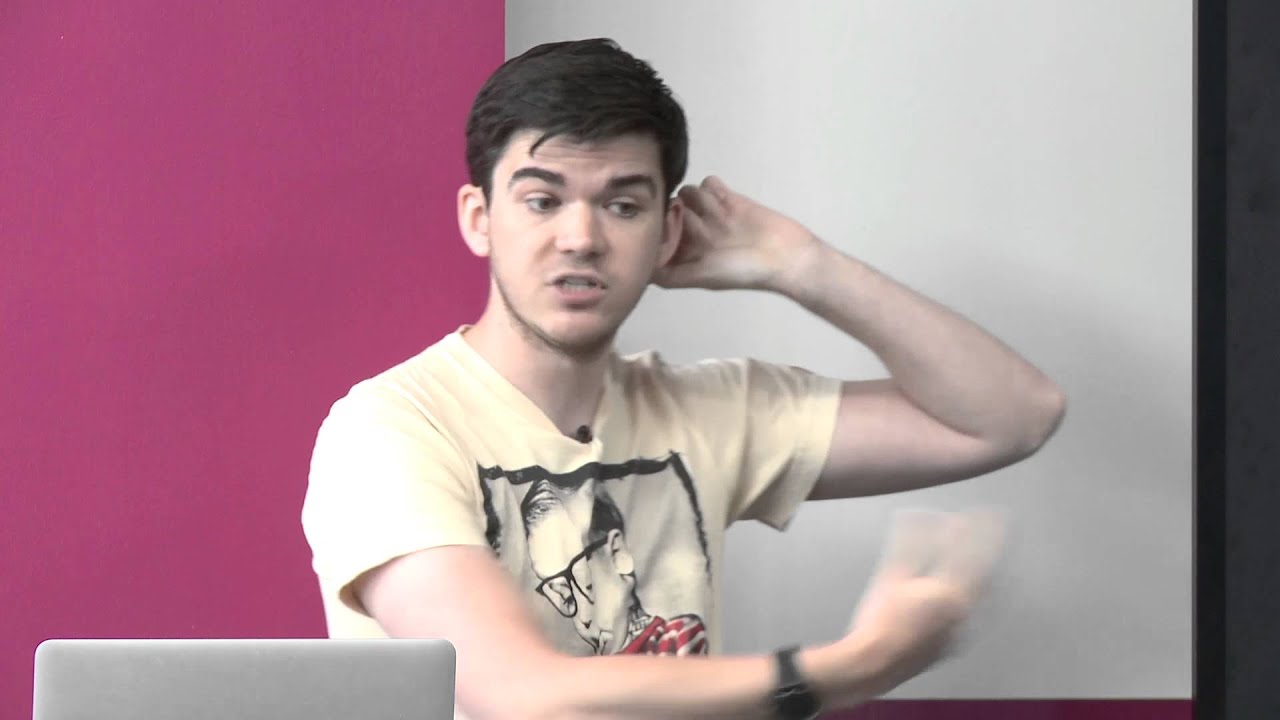
Jack Smith and his co-founder got into AngelPad with a $10,000 budget by reverse-engineering LinkedIn's ad system to reach founder Tomas with a personalized video pitch. They exploited undocumented quirks like minimum audience size and URL swapping to show him an ad with his own face. Smith later used the same $20-per-campaign technique to reach executives at Spotify, Rovio, and Color.
Chapters
Like, basically it was me and my business partner. We were in an office, maybe like if you blocked off that wall to that wall, like just that back section. It was like tiny. And at the time we were bootstrapping our business. We had about $10,000. My business partner, he'd taken a loan from his girlfriend and managed to convince his university lecturer to give a tiny amount of cash as well. And so we were in this tiny office running stuff with no money, and then one day I was just reading TechCrunch, and I saw this article, and it said, hey, there's this incubator, a bit like kind of Y Combinator, like a school for startups, in San Francisco, and they're giving every company that joins $100,000. And then basically at the bottom of the article it said, There's one spot left for someone reading this article. So I said to my business partner, I was like, hey man, like, look what we've managed to do with no money. Imagine what we could do with $100,000. We should apply. And he's like, nah man, there's no point, because they were on their Twitter account, they put like, hey, we just got 2,000 applications in the last 24 hours. So he's like, you know, there's no way we'll be able to stand out from the noise. There's no point in even applying. I was like, come on, man, we might as well give it a try. And so we had this objective, like, get into AngelPad. And then whenever I'm in the audience and I'm hearing a story, I don't like to just— sometimes people are just like, okay, and then we got into Y Combinator and then everything went amazing. If I'm listening to a story, I want to know, like, all right, what's the exact tactics that happened? People glamorize stories. People change history in their heads. So what I want to do today, I'm going to show you exactly what I did and kind of take you exactly into my head, seeing this article that there's one spot left, exactly what I did. So basically, we had this objective, get into AngelPad. And then we were thinking, how can we stand out from these 2,000 other people applying for one spot? And so we basically thought, who's the guy running this? And the guy running it was called Tomas. So it would kind of be comparable like Sam Altman runs Y Combinator, Tomas runs AngelPad. So we're thinking, how can we get on his radar? Now, I'd actually been experimenting a bit with LinkedIn advertising leading up to this. I hadn't ever used it for anything like this, but I'd kind of been messing around with it. And I think there's lots of opportunities as you guys think about your startups. There's lots of opportunities rather than just going with Google AdWords, which if you think about it, Google AdWords has been going like, I don't know, like 10+ years. So kind of now it's kind of maxed out because you're competing against everyone else. There's often much more opportunities in new platforms. So I also spoke to someone recently that was just using Pinterest ads. Very well for their business. Because when you have a new platform, like if Pinterest Ads just launches at the time, like LinkedIn Ads was very new, there's often kind of loopholes in the system, like bugs, or you're also not competing with the whole world. So there's maybe better opportunities for prices and stuff. So I thought, okay, LinkedIn Ads, it's kind of brand new at the time, there's less competition because it's, it's newer than like Google AdWords, and this guy who's judging this competition, you'd imagine that he's going to be using this kind of thing as he's judging applications and stuff. So whenever you're finding a new platform, in this case it was LinkedIn, what I like to do is kind of find the rules that exist, and then I can see how to kind of bend the rules and break the rules a bit. And so With regards to LinkedIn, if you've not seen an ad on LinkedIn before, basically, when you're going on linkedin.com, you kind of just have these ads that come up on the side of the screen, just like with a picture and a title and stuff. And so that was the first step, like, find the rules of the ad unit. Because it's one thing what any company tells you is the rules. It's another thing actually finding out for yourself. So basically, I found out these rules. And the way I found them out is just by typing random shit into the system and seeing what it accepted and what it rejected. And what I identified was that you had to have a title less than 25 characters, short description, and a picture 50 by 50 pixels. Now, one bonus point— I didn't actually use this part for my particular hack, but basically, you could set the ad making it look like it came from any company, even not your own company. So, basically, if you were Uber, you could make an ad making it look like it came from Lyft. They just didn't actually check if you owned the company or not. Okay, and so the next step was basically finding out the— so, when you're— if you've created an ad on— you might have created an ad on Facebook Ads or Google Ads, and you choose how am I going to target my ad. Now, LinkedIn lets you do some really cool stuff. You can target people based on job title and by what company they work for and kind of very specific stuff. So me being me, like, I love to break stuff. I probably should have been a QA tester. And basically, when you are doing this targeting, So if we're doing, let's say, Apple employees in California, you have a number. It shows you, all right, your ad is going to reach this number of people. So I thought, okay, well, what happens if I target job title CEO, company Vungle? So that number on the right basically said 1. So what do you think happened? Nothing. Unsurprisingly, It basically gave an error message saying, look, you can't run an ad targeting one person. It's not targeting enough people. You've got to target more people. So I added another company. So now the ad was targeting 2 people. And I submitted that. But again, it's basically saying, look, it's not big enough. And I kind of went through adding another one, so targeting 3. It's not working. 4. So this number on the right, I was basically just seeing the number on the right increase just manually one by one, adding it up so the number on the right kept increasing by 1, and I kept trying to submit. So this one, just keep on adding different ones, because each company only has one CEO. So I knew that I'm laying on one person each time. OK. And then I don't know how much time I've got, but if it's all right with you guys, I want to keep going through this process because this is what I did. So we're just gonna keep adding one more person. So this one is 7, and then it worked. Like, I don't know why, like if this was just a bug in the system or no one had actually gone through this process before or whatever, but basically the minimum number of people that you had to target an ad to on LinkedIn for it to accept it was was 7, just like a totally arbitrary random number. But I only found that out by going through the process of just trying to break the system. If I'd just taken it at face level, like, OK, well, you have to target it to loads of people, I never would have found it out. I just had to go through this process of doing it one by one. And then, so basically, having found out the minimum number of people to target an ad to, That meant that I could now basically run an ad targeting one individual person because I could identify who I want to target, let's say CEO at Vungle, and then just bring up the number to 7 by just adding in like 6 random companies who I don't even really care if they, they see the ad, you know, like CEO of some obscure tiny company. And the last step to create an ad on LinkedIn is that you need to decide how to pay for your ad. Now, if you've ever used, again, Facebook ads or Google AdWords, etc., you basically have 2 options. Here LinkedIn suggested, hey, we suggest you pay on a cost-per-click basis. So pay every time someone clicks one of your ads, and we suggest the bid amount is like $8. But the thing is, because I was only targeting 7 people, it made much more sense to bid on the other option available, CPM. And CPM basically means cost per 1,000 people, cost per 1,000 impressions. So it made much more sense for me to bid, they suggest, $2.52 for every 1,000 people that see it. Part of the kind of finding the rules on LinkedIn was looking at the review process for their ads. So basically what happened is I saw whenever I submitted an ad, they basically said, hey, it's under review, we'll get back to you in 24 hours. And what that showed me is, again, because it was such a new platform— when these new platforms come out, they're not all fully built out. Like, if you try and submit an ad to Google, it's just all going to be like all— it's all automated reviewing your ad because they've had so many things go through it. Here, the fact they were saying we'll get back to you in 24 hours showed me they were still doing a manual review process. So what that meant is it's a human reviewing it. So what I did is I used a URL shortener. So basically I created— because some of the stuff, as you'll see in a second, was probably not exactly in line with their terms and conditions and stuff, I created a really innocent-looking ad pointing to just some stock landing page. I'd wait for them to manually approve it, and then I'd basically just change where that URL pointed to after they'd manually approved it. That was smart. So, bringing this all back together, like, jumping back to the story, as I said, so there's me and my business partner, 3 interns, and we're in a tiny office. And I've just been reading TechCrunch and seeing there's this one spot left to get $100,000 in America. Basically what I did is I put all of that kind of learnings from that LinkedIn bit— as I said, I've been playing around with it a bit but never had something to capitalize on it— I brought together all those learnings and thinking, how can I get Tomas's attention? I created a campaign on LinkedIn with a picture of his face as the ad, because this fits all the rules that we identified. It's a 50 by 50 pixel image, the title is less than 75 characters, so it fits all the rules. So basically, having created this ad, again, I knew how to target it. So basically, I created the ad targeting Tomas, And all his, like, he used to work at Google, so people that used to work with him, I targeted co-investors of his, etc. So basically, if you were browsing LinkedIn that day— Yeah. So I'd seen the ad on a Thursday, and this was all happening the same day because it was not any thought gone into this really. It was just kind of like, oh, this is a cool opportunity. Let's spend like— it took about 3 hours total to Just create an ad campaign and target it to these different people. So basically, if you were someone connected to him browsing LinkedIn that day, you were scrolling through LinkedIn and you see a picture of his face saying, hey, we've got an urgent message for Tomas. So obviously it jumps out. You're like, what the hell is this? You click it, and it took you to a landing page. Again, this took about half an hour maybe. So this just has a video. We did it in one take. I just took out my phone and I started filming my business partner. And I was like, all right, pitch into the phone why we deserve this last spot. So you'd go to this landing page and we're basically just in this video talking directly to Tomas. We're like, Tomas, you're a legend. We deserve this last spot. We won't let you down. This is my phone number. This is my email address. Give me a call. And at that point, so Thursday, I just kind of created it a few hours and then we kind of went to sleep. Because it's a different time zone. It's about 8 hours time difference, so they weren't awake in America yet. We just kind of went to sleep and kind of forgot about it, really. The next day, I just got a kind of 2-line email. It's just like— I've seen the video. Let's chat. And so I just got a call, and he's like, hey, is that Jack? And I'm like, yeah. He's like, hey, this is Tomas. Seen your video. Can chat. But first, take it down now. He's like, everyone is calling me about this. So basically, he told us later on he'd been on a flight from New York to San Francisco and obviously hadn't had internet. So he's basically just getting off the flight, and he was just checking his emails on his iPhone. And he'd had about 20 emails from people, basically like, these kids really want to speak to you. And so basically, we'd seen the ad on a Thursday. The Friday, had this phone call. And then over the course of the next week, we had 2 more Skype calls with him. And then he basically, a week After seeing the ad, he basically said, "All right, guys. I've decided." He sent us email like, "Hey, can we have another Skype call? I've decided who's got the last spot." And we're like, "Man, do you have to reject us on camera? Like we've got our team of interns here. Can't you just like phone us to reject us?" And he's like, "No, like let's let's do a Skype call." And we're like, "Okay." And he's like, "Okay, guys. Look, I've give." He said, "We've had people come to Angel Pad before from other countries." and then they just immediately go back to their home country after AngelPad finishes, and our investors don't really like it. So, look, if you're going to be doing this, then you have to move to America permanently. And I'd never really thought about America, but we were kind of all in, so we were just like, all right, yeah, we'll move to America. That's fine. And so then he's like, okay, guys, well, you've got the last spot. And so we're just high-fiving around the office. And he's like, this was Thursday, he's like, okay, well, it starts on Monday. So just get the first flight to San Francisco. And so basically, that is just how I originally ended up moving to America. This was 4 and a half years ago. I'd never really thought about moving to America, but just, I think when an opportunity like this comes up, you don't take too much time to think. You just kind of jump on it. So maybe the best thing about this ad campaign was, you might remember early on, one of the parts I said was the how to pay for the ad. So this campaign, if you see on the right, we were paying not cost per click, it was cost per 1,000 impressions. So this particular campaign that was targeting Tomas, 5 people saw it, 2 people clicked it, Which was some ads. And so the total cost for it was $0.01 for the ad campaign. Wow. We created some others targeting other people, but again, the cost was less than $10, because this is the sort of thing where you're just finding an arbitrage in the system. Now, just to show that that wasn't kind of like a one-off, or I know stories often can be embellished, just to give some other examples about how I ended up using this hack. Basically, at the time, we didn't really have a business with Vungle. We had a feature. And we were kind of making videos for apps. And so one day, I was just reading the news. And at the time, this app called Color had raised like $40 million. So we were like, OK, how can we get Color as a client of ours? And so— We created an ad targeting the CEO of Colour just with his face, targeting it to all his employees. And then, yeah, got an email from him and he's like, we already have someone we're working with, but let's see if we can work with you. And then so he introduced me to someone on his team and that one cost $2.78 for that campaign. And then Rovio, everyone's of Rovio, obviously. So we were like, all right, how can we get Rovio as a client? And so Michael is the CEO of Rovio, and so we created a campaign targeting all his employees and their investors, etc., saying, hey, can you help us contact him? Now, we didn't get the CEO of Rovio to reply, but one of the vice presidents at Rovio kind of reached out to us afterwards. So that one worked at least. That was It was $3.24. And then lastly, like Spotify. Obviously everyone's heard of Spotify. So this one was like, okay, we want Spotify as a client, and just put their logo on it. And we did actually get Spotify as a client. So one of their team reached out and they were like, okay, we've been talking about it in our office. Let's chat. That one was a bit more expensive though. That was $16.34. So, just to summarize, because I think you can't— if you try and do this, like, this bit has— I've talked a few times about how I did this and written it up now, etc. So, this was a few years ago, so you can't recreate exactly what I did because it's kind of long gone now, but I think you can kind of use the process that I just described think about opportunities in your businesses for kind of underutilized platforms. So I've spoken to other companies like that have managed to utilize things like Etsy or Instagram ads or things like Pinterest ads, etc., because when a platform is so new, like if Pinterest, they just launched an ad platform like a month ago, If you start experimenting with it, everyone's at a level playing field. You know, like, it came out a month ago, so there's no Pinterest ad experts. Google Ads, sure, there's people with 10 years' experience in Google Ads, but there's no one with 10 years' experience in these platforms that are just launching. So I think there's much more opportunity to look at those kind of platforms. What's the most important thing you've learned
More from Tim


He Sold His Car to Build This Startup, Then Pitched It for $1M 😳 #Startups #AI

This Startup Moves Your Crypto BEFORE Hackers Can Steal It 😳 #Crypto #Cybersecurity




15 Months Without Refrigeration?! This Startup Thinks It Can Go Global 🥥 #FoodTech #Startups



