How to Interview Customers for Optimal Feedback (Part 1) | Mentor David Bland
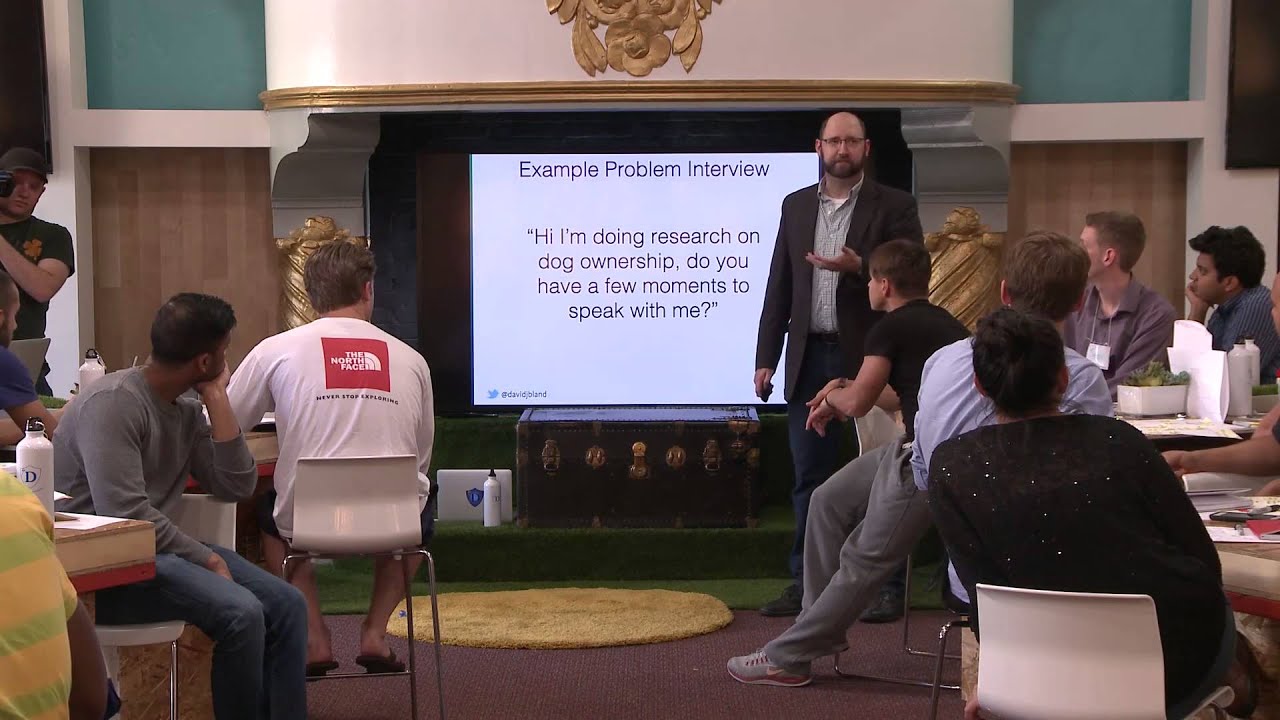
David Bland teaches founders how to run customer interviews that actually work. He explains why interviews beat focus groups, how to spot real problems versus made-up ones, and why asking for stories beats asking what people want. He covers recruiting through LinkedIn and Craigslist, screening for honest answers, and when to pivot on problem, segment, or solution.
Chapters
Basically, what I was trying to get you to, thinking about, here's where our risks are, what are we gonna do next, right? So, one really simple way is to think, okay, here's how much learning I'm gonna get, and here's how long it's gonna take me. So, if you put up all the different things you could do, right? A focus group, probably not what you're gonna do first. It's gonna take a long time, and you might not learn a lot, right? Focus groups are kind of more traditional marketing. Not that they're not valuable, but they're probably not valuable for where you are in your journey. But customer interviews, pretty simple, right? It's gonna say, hey, where's my customer segment? Where are they, online, offline? How do I find them? And what would I do? How would I conduct an interview to extract the learning from them with the fewest words possible and start to understand, right? I work with a lot of companies, and this is where we always start. We start with customer interviews. Now, you might say, I'm really bad at doing interviews, or To be honest, we're all bad at doing interviews at first. But you're not pitching your solution, you're actually doing an interview. And I'll talk a little bit about that. Because there's difference, there's a difference from pitching out what your solution is and talking to people about what their problems are and how painful they are. But this is almost always the highest value thing that you can do right away. You can do 10, 15, 20 of those. You can do other things too. You can do ads, you can do landing pages. You know, there's a lot of concierge stuff like Wizard of Oz kind of experiments you could run. But this is usually the highest value thing that you can do. So when I talk about customer interviews, there's 2 different aspects to this. I actually decouple them into problem interviews and solution interviews. Problem interviews, you're only interviewing them about their problem, OK? You're trying to make sure— like you just listed out some problems here on your canvas. Are those real problems? I don't know. Maybe they are. Maybe they're not. How would you find out? You're going to have to talk to people and see if these are problems they even care about. You could have them stack rank them. You could have them tell a story about the last time they tried to do something. What was difficult about that? What kind of problems did you have? Just start seeing if those even are aligning at all, right? 'Cause when we talk about pivoting, and I know we talk about this a lot, you know, you're typically pivoting on customer problem or solution early on. You're like, okay, I have this customer segment, but they have a different problem. It's more painful. And I really care about this customer, so I'm actually gonna solve this other problem, okay? That would be a pivot on the problem. Or you found the problem, but it's a customer segment that you didn't expect that has that problem. Like you interviewed 15 people, none of them had that problem, but this other segment does, so you pivot on the customer segment. And then once you get the customer problem down, you might pivot on the solution because the solution you're providing them isn't quite engaging them. It's not something that they need. It's not quite right. Therefore, you pivot on the solution, but chances are you're all passionate about one of those more than the other. Where you have to be careful is if you're passionate about the solution first, just be mindful. I love all you, and you're really awesome, and you're gonna be really successful, but if you lead with, I'm so passionate about the solution, it's gonna be really hard for you to understand and get that feedback of, you know, that solution I'm so passionate about, and I love, and I spend all these nights and weekends working on, doesn't solve a real problem or a painful enough problem. That's a really tough place to be in. I've been in a couple startups that were there. It wasn't very fun. So what are some example things? And I've been talking about this. So for my fake pet accessory startup, like, hey, I'm going to do some research. You don't even have to pitch your startup. You can just be like, hey, I'm doing research, right? Another way is to reach out to people on LinkedIn and other areas that you think are experts and be like, hey, I see you're an expert in this. Do you have some time to talk about this and this and this? Because I'm doing some research. People love to talk about what they're good at. They will talk to you all day, right? So you don't even have to lead with, it's not disingenuous. You don't have to lead with, I'm the startup and this is the solution I have and I wanna talk to you. You can be like, hey, I see you're an expert in, I don't know, 3D printing. I'd like to ask you some questions. I'm doing some research on 3D printing. You'd be surprised how often that works, okay? So for me, I wanna know, do they own a dog? Cuz it's a pet startup, right? Now if they have 100 dogs, they still might not be my segment, right? You need to have some qualifying questions. A lot of the advising I do with teams and with startups, we'll do things like recruit people off Craigslist, for example. But even when you're recruiting off Craigslist, there's some professional Craigslisters out there that they're gonna answer whatever to just get that gift card or whatever you are offering them. Right, so you have to weed them out some ways. So what we typically do is we put in like a survey or some kind of form, and in the multiple choice, we'll put questions that they should never be answering, right? These aren't real questions, these aren't real answers. Like, I was doing this on, for cars, and we put in forward reclining seats. If your seats recline into the steering wheel, you have a really messed up car, right? And people still were like, yeah, I have forward reclining seats. Like, no, no, you don't. We'd make up stereo systems that didn't exist, and people checked these. That was a signal for us, like these people are not people we wanna spend time interviewing. They're probably just wanting a gift card, okay? So when you're putting and trying to screen people, and there's a lot of time and effort in this, right? Like you have to figure out how to write a Craigslist posting. You have to figure out scheduling and getting people on your calendar. Are you gonna Skype with them, Google Hangout? Are you gonna go meet them in person? Are they meeting you? All of these things take a lot of time, and then people reschedule on you or they bail on you. It's very time intensive, so you wanna make sure you're talking to the right people. So there are interesting ways that you can just filter out the people that probably aren't your segment, okay? Having them tell a story. Can you tell me the last time you did blah, right? Have them tell you their stories. You'd be surprised by, like, the 5th person, you'll start hearing themes. You'll start hearing, like, the same thing said a different way. And what I recommend is not doing these on your own, if possible. Like, you could do these and record them, but a better way might be, like, bring a friend with you and have them scribe, and you can do the interview, okay? It's really hard unless you have this superpower— I don't— is to be able to say, look, I'm asking you a question, and I'm actively listening to what you're saying, Without thinking about the next question that I wanna ask you, and then trying to take notes. It's really hard to do by yourself, and if you record them all, then you have to sit through them all. You have to basically sit through them all the time again, and very few people wanna do that. So I would recommend doing them in pairs if you can. Asking them what's difficult about their experience. Once they tell you a story, what was difficult about that? What was painful about that? What did you do, right? If they say something like, oh, I just ignored it and it went away, well, that's a signal. Maybe it's not that painful. Or they said, oh, I tried to find something. I went here and here and here and here and here, and I couldn't find the solution, and I gave up. Or even better, I built my own thing that's cobbled together with duct tape, and it sucks, and it was never gonna work, but it's the only thing. It was so painful that I had to create this thing. Okay? Another question I like is like, if you could wave a magic wand, how would you solve this problem? It's a great— it gets them thinking creatively without all the constraints. And it might help inspire you on like, oh, well, maybe I can actually go build this in a different way. What you don't want is asking people to provide you solutions in a feature-framed way. It's really challenging. I know I almost— it sounds conflicting, right? Like you're telling me to talk to people but not listen to them. In a way, I'm not. I'm telling you to talk to people, listen to them, but don't necessarily go and build what they just told you to build, right? People are really bad at describing what the solution is in detail, because what you don't want to do is go build that thing and then go back to them and they still don't use it. And then you basically go through that cycle until you run out of money, which is not fun. So in between that feedback of that conversation and what you build is design. You're going to have to do design work. And that's really important, and you'll figure that out, or you can hire people that'll help you. But that's where the design comes in. It's not just, I'm gonna tell you a bunch of features, and I'm gonna go build those features, and then it's gonna be a successful product. That's not how it works. But it's still really important that you go talk to people and understand what kind of problems they have. How would they use your solution is really interesting. So this is all very problem-focused. You can also switch to solution-focused where later down the road you can say, Hey, we've built this thing, or here's some wireframes I have, or here's a paper prototype. Can you tell me what you think of this? That's going to be more— you're soliciting the feedback from the solution, right? But it's really important to hang out in the problem space a little bit too. Because if you pitch with a solution, sometimes you get a lukewarm response. People are just trying to be nice to you, but they're never going to be your customer. And that's really, really challenging and heartbreaking. So I have a question. Another thing I like ending up with is wrapping up with is, can you refer me to anyone else? And that's great because people will actually, if they think it's a painful enough problem and they love what you're saying, they'll tell you other people like them that you could interview, and they'll put you in touch with them. It doesn't always happen, but it is a nice referral that they will actually send you to other people that you can interview. Some people don't feel comfortable doing that, so don't take offense. If they're not willing to do that. But it is something nice to wrap up with that, hey, that might be a signal. If no one's referring me, maybe it's not a painful enough problem. If people are referring me, maybe they actually care enough to introduce me to their friends and their family who will talk to me. Thank you.
More from Tim


He Sold His Car to Build This Startup, Then Pitched It for $1M 😳 #Startups #AI

This Startup Moves Your Crypto BEFORE Hackers Can Steal It 😳 #Crypto #Cybersecurity




15 Months Without Refrigeration?! This Startup Thinks It Can Go Global 🥥 #FoodTech #Startups



