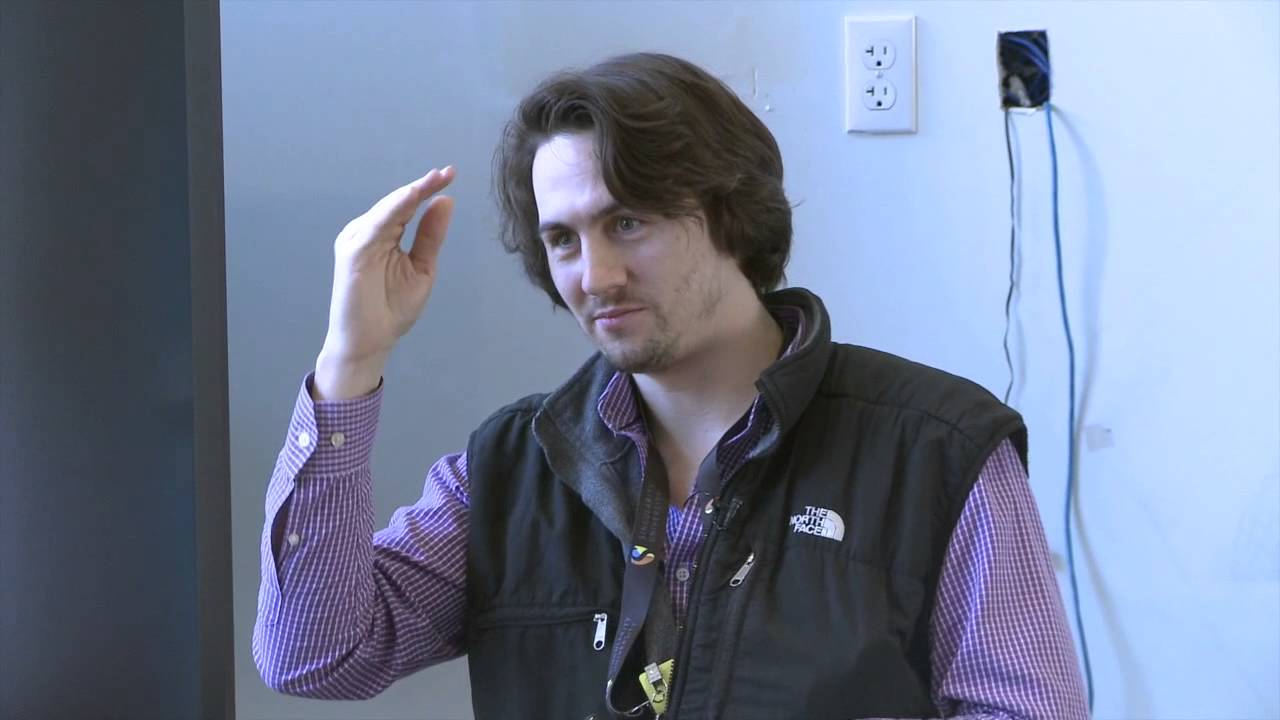
Austen Heinz, founder of Cambrian Genomics, discusses synthetic biology and gene editing, including the possibility of turning chickens into dinosaur-like creatures. He covers how population sequencing can remove rare disease variants, why GMOs face public backlash, and his vision for democratizing genetic engineering so individuals can engineer organisms in their own gardens.
Chapters
This is going to keep getting weirder, so don't worry. So this addresses your point. There are so many things— since all life— we are, what, like 98% similar to a chicken? All life has pretty much the same code with slight variations, so we express different things at different points. Even if you look at a human when we're in development, You know, at 4 or 5 weeks, we look like a dinosaur. We got tails and, you know, who knows what else, right? So since life is so much similar, and since we are probably very similar to dinosaurs that lived 65 million years ago, then there's no reason why we shouldn't be able to take pretty much any living organism, you know, any mammal or bird, And convert that organism into a totally different creature. Why dinosaurs? Well, it's cool for one. I like that. But also, I mean, if you can take, you know, a really domesticated chicken who's just walking around and tiny and change that thing into a 30-foot-tall beast with claws and teeth? I think if you can do that, you're gonna know a little bit about what those genes are doing, right? You gotta build it to understand it. And what's cool about this is there's no dino DNA left, so we have to create all those features just through mucking about with the existing stuff. And so we may stumble on to dinosaurs that look exactly like dinosaurs, but the DNA code could have been very different. To understand our DNA code, it's basically just a fossil record of fuck-ups throughout time. It works because the ones that don't work die, but that doesn't mean the code is any good. It's not, you know, it's never been refactored, it's ugly, it's got elements that insert themselves Like, parasitic DNA elements are jumping around our chromosomes right now, inserting themselves and just creating a bunch of junk and increasing the amount of junk DNA that we have. Also, even as we age, our gametes, our sperm cells mutate, divide, and our code deteriorates. That works if there's selective pressure, but as you know, There isn't, except for the most chronic of childhood diseases that don't let you get to adulthood and reproduce. So the only cure for this is what? Simple. What?
Just gene modify ourselves from now on.
Exactly. So you have a lot of companies that have step 1 done. I don't know if you guys have met with Counsyl or Natera or any of the sequencing companies that take couples who want to have children, sequence them, or sequence their embryos, right? But what's cool is that, you know, even before we build a Chickasaurus, we don't really need to know what causes diseases to know how to fix them. How could— how does that— how does that make sense? Anyone know, like, how you can not know what caused disease but fix it?
Just compare a sick one to a healthy one?
Exactly. So you have the sequence information for everyone, and each individual you'll see has like 100 to maybe 1,000 what are called single nucleotide polymorphisms, or single letter changes or fuck-ups in their code. Right? So you basically look for these things that are really rare, maybe only exist in that person and don't exist across a larger population. And maybe they're important, maybe they're not. But by simply making people the average of the population, well, we've never seen a human that is just average. You know, maybe they're boring and they have no personality, but you know what, I'm guessing it's not like that. I'm guessing a perfectly average human, just one without mistakes, probably like 6'5, incredibly good looking, and IQ like off the charts. 'Cause they don't have mistakes. They don't have the little mess-ups that, you know, minus 5 on a calculus test, right?
Yeah.
So in the future, we'll be able to correct virtually all disease without even knowing what the hell causes disease, which is really cool. Like autism and some— and Parkinsonism, and a lot of these are spectrum disorders that involve mutations across several genes. So what's cool about this is you don't need to know, you just remove the, the variants that occur in a very small percentage of the population.
Yeah? What do you say to people that bring up like, oh, you You shouldn't try to play God, and what do you say to those kind of people?
Well, I mean, we open up our— I've got a guy who opens up my packages for me now. But yeah, the environmental groups actually went pretty crazy after— especially with some of these articles. I mean, this article and the Nature article is basically about the environmental backlash that we had. But surprisingly, glowing plants are FDA, USDA, APHIS approved for sale in the United States, so we were able to get through regulatory approval. The issue is that you have these idiotic environmental groups, and maybe that's too harsh, or maybe it's not harsh enough.
Totally.
You have these people with no scientific backgrounds that want to do something good, and so a lot of times you'll see some of the more activist ones, like say, protesting outside of a nuclear reactor, even though, you know, I'm not going to go into— open that can of worms, but maybe I will. Do it! Do it! So you have— if you think about it, you look at the number of people that are killed by the world's primary energy source, coal, you have tens of thousands of people dying just Like in the mines getting the coal. Then you have millions and millions and millions of people dying all over the world all the time from breathing polluted air. If you go to Northeast Asia, you will suffer. It is a horrible place that's just getting worse because it is covered in particulate matter that comes from coal burning in northeastern China. You've got air blowing out of the Mongolian desert collecting particles like these coal and other stuff coming from manufacturing in that area blowing over Korea. You know, luckily it kind of dissipates over Japan, but it's starting to hit Japan. It's even starting to hit California. It's a disgusting thing that kills lots and lots of people. If you look throughout history, the total number of people ever harmed or killed by nuclear power, even around Chernobyl, maybe like, I think, a dozen maybe, they didn't just die, but they had some effects that shortened their lifetimes, and most of them got cancer. But you're looking at a dozen people over the last 100 years versus millions and millions of people that are in hospitals right now, just in Asia. It's absurd, right? So you have to think about things scientifically, but you can understand where environmentalists come from. Corporations do have their interests, and many times their interests are not aligned with, you know, what's best for the general population. And in the case of genetically modified organisms, you know, they're mostly made by the giant corporations. So people hate GMO mostly because of that, and there is some good reason. I mean, Monsanto, I think, produced Agent Orange back in the '60s, and now if you go to Vietnam, you still have people walking around with 6 arms and stuff. So it's understandable. So I think the way that we get around this is maybe not— people are really so lazy, scientific literacy, people maybe aren't gonna open a book. You can't make people open a book. But if you take the power away from the large corporation and you put it in the hands of millions of people, and you allow everyone to control their genetic destiny as well as the destiny of all the plants in their gardens and the living things around them, that change in control will make people trust it. Because they can determine the foods that they eat. They can grow, they can engineer their own foods. And by having that in their hands, they'll realize that maybe some of this thinking about GMOs was wrong. Maybe we've been doing GMOs for hundreds of years. I think corn, for instance, was like a tiny little plant in Mexico about like this big.
Right.
And it looked nothing like what it does now, right? Everything that we currently eat has been highly genetically modified.