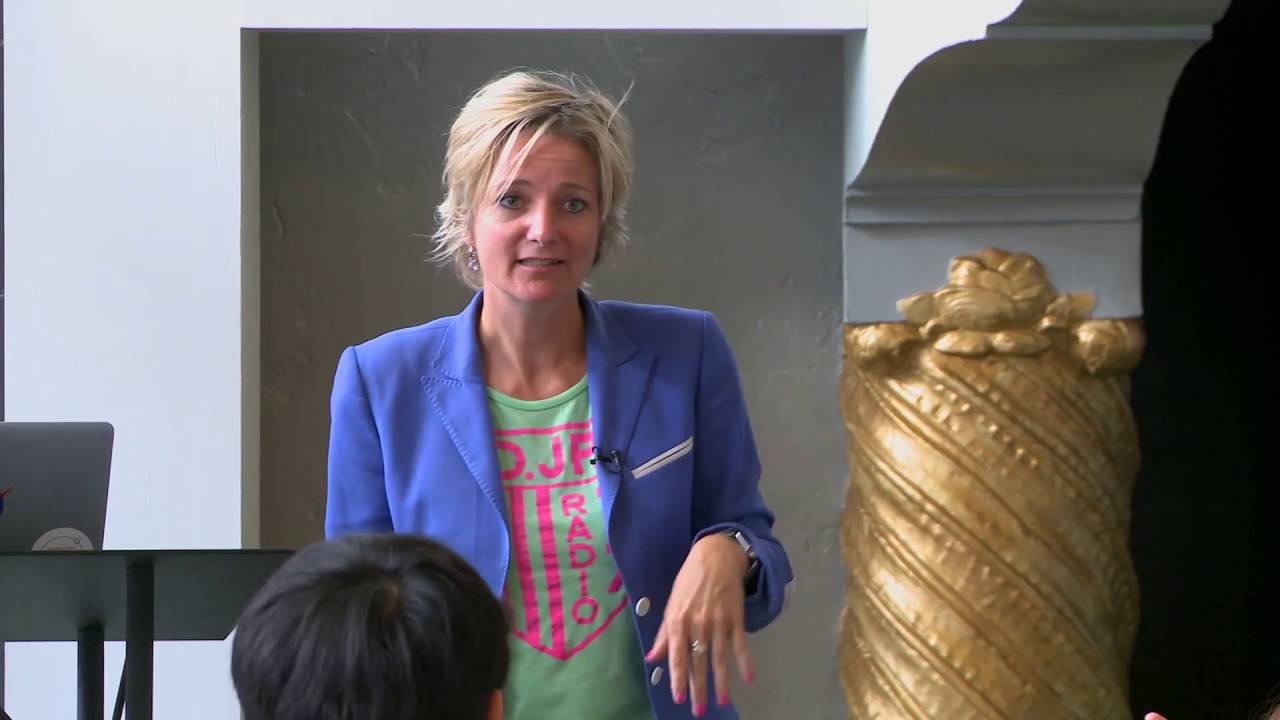
Maaike Doyer shows how to cut through pointless meetings with mandatory agendas, visual tools like flip charts and sticky notes, and simplified thinking hats that force people to surface pros and cons. She walks through examples like using post-its to agree on a contract and deciding whether to move to San Francisco.
Chapters
And what's interesting is how to stop the blah blah. I mean, this is one of our icons actually, because that's what we're all about, like stop the talking. Because who of you, which one of you has been into large companies, like large organizations, or do you remember all those horrible meetings? Like blah blah blah blah blah blah. Yeah, exactly right. No beginning, no ends, right? And that happens every everywhere, and unfortunately also in startups when you start to grow, this is also happening. So how to stop the blah blah? I mean, I really don't have any patience at all, so I hate the blah blah. But there luckily are a couple of tricks that you can use, especially in those meetings. I mean, of course it all starts with making sure you prepare every meeting. And you might know that within Microsoft, for example, if the agenda is not sent out 24 hours before the meeting, the meeting will be canceled. Only because of the fact there's no agenda. Great, right? It works because most meetings start without an agenda. That's, and that's, yeah. So what are you gonna talk about? No clue. Let's have coffee together. Oh yeah. So it's, so, so having that agenda is, is a very important one. The other thing that you, that you also see in meetings and Not so much meetings, but it's also in general with your team when you're building your strategies, like think like a designer. Make sure that you allow people to have different options and allow people to have different opinions, right? It all depends on which phase you are, of course. Think like a designer, awesome one, but I guess you're all into design thinking, right? You're all pretty familiar with that? Yep. Another one to stop the blah blah: drawing is the new writing. Start to work visual. And I mean, Francie here, she's an amazing visual person, as she will show you something later on. But I am not. I mean, I'm a number person, so that's always my excuse for not being able to draw. But even I can draw. And especially in those blah blah meetings, the endless blah blah meetings, what happens a lot is is everybody has their own notebook and writes down a couple of things. By the end of the meeting, no one knows what's in the other person's notebook. No one actually knows what the real agreement is, like sort of, right? But it's not clearly communicated. What we often do, we make sure for every meeting that we have, every workshop that we have, there's a flip chart in front of the room. And I always say, if it's not on the flip chart, It's not been set. So sometimes, I mean, sometimes I have, you have these big, big discussions during strategy sessions, right? It happens, of course, all the time. And sometimes I'm like, I have no clue where this conversation is going. I don't have a clue. I'll just take my pen and I start to write down what I hear. I just write down the sentences because my drawing skills are not that good. She would draw it, I would just write it. Because that is still visual. I write it down, clear capital letters. And sometimes I'm like, what you just said, can you capture, can you repeat so I can write it down? Or like, can you make it shorter so I can write it down in one sentence? And then all of a sudden people start to think different, like, oh yeah, okay, if it needs to be on the flip because otherwise it's not said, how can I summarize what I've been saying? The other great part is if you write it down, People will shut up because, ah, my opinion—I've been heard. My opinion is out here on the board, so it's set and everybody can see it. So then I don't need to repeat hundred times what my statement is, and the other people will just build upon what's been said there. So use a board, write it down, and at the end, what's really easy—you never need to send around minutes because that's just another burden. stupid admin task. You just take a picture of the flip, send it around, and you're done, right? So those kind of things, especially in large companies, right?
Exactly.
Yeah, yeah. But also in small teams. I mean, I remember recently we had some conversations. Fancy recently joined us, and we're literally like, hey, how do we build out a contract, right? We did it with Post-its. We took a picture of the Post-it, shared it with each other, and there's the agreement, right? Right? It's, it's, of course, we'll write it up in a legal document. You need to do that in the end, but if you have those type of conversations with each other, you just write it down, but make it visual that there's no, I forgot the English word, ruis, how would you say that? That there's no ruis op de lijn, no noise, that's it, right? No noise in between you, that you have clearly on that piece of paper what it is about, right? So, work visual. And if you can make some real nice drawings with it, it works even better. Yellow hat, black hat, do you know the De Bono Thinking Hats? Yeah? Been using them?
I have before, yeah.
Yeah? How have you been using them?
In school we did it. So when we were working in teams and projects, we would sometimes try to use the different hats to think through things.
Yeah.
Yeah.
There are in total 6 hats. I typically use those 2 to make it easy, right? Because 6 is a lot, so then people get confused. So I use these 2, the yellow hat and the black hat. Where the black hat is all about, no, it will never work, we've tried it before, you know, let's not do this. And the yellow hat is everything is possible, right? It's all positive, the sun is shining. and so on. What is really another wonderful trick to stop the blah blah in sessions is let everybody come up with their options. So first it's open, no judgment, let's come up with their options, and then look at a specific option and then say to each other, okay, yellow hats, what do we really like about that? So everybody is only allowed to say what they like about it. Let's do it for 5 minutes or 10 minutes. Right? Let's, and then again, write it down, right? Don't just say it, but put it on sticky notes, put it out there on the wall, write it down, the yellow hats. And after that, let's all put up our black hats for another 5 minutes or 10 minutes. What do we not like about that? Because then there's not only one person, because there's always a black-hatted person in every meeting, eh?
Yeah.
You know those people, eh? But in this way, everybody is forced to take both yellow and black hats. And if you see it out there literally written down, you can take a step back, have a look like, okay, what do we say? All right, we can park this option. Now let's walk over to the next option. Let's explain what it is about and let's do another yellow hat and black hat session. It will really help you. I mean, even, I even use it private sometimes as well. When I was going to San Francisco 2 years ago or so together with my husband, We were like, are we moving out to San Francisco or not? Because he also got an amazing job offer in Europe. So we're like, shit, that's also amazing. What are we gonna do? We literally pulled out the options and we did a yellow hat, black hat session together, just with a couple of Post-its. And that's how we made the decision. Well, looking at all those options, looking at the yellow hats and the black hats, San Francisco is option number 1. That's what we wanna go for, and here we are, right? So it helped us to make decisions. So you can use it everywhere. Right, and for all small things, yellow hat, black hat.
Did it turn out okay for him? Sorry? Did it turn out okay for him?
Yeah, yeah, so far so good. So far so good, yeah. No, so definitely, he's, he had the luck that he started with, he worked at a huge bank, a lot of blah blah, right? And so I was happy he had to quit there anyway. And so he started to work for a startup, a Dutch startup that wanted to open up here here in the US, but as it happens with startups, some of them implode, right? So that's what's been happening to this startup. So they definitely put all their US plans on hold, which is okay. So he has a job interview actually right now as we speak. So I'm curious how that will end. I'll hear later on. So another thing in how to stop the blah blah is to have this common language. Because we said before, the business plans, they don't work. However, you still need to make the thinking steps that you normally do within a business plan. But you need to do it in a different way, because writing down the words doesn't work. You need to have a common language.