How to use rhythm in your life | Rahman Jamaal
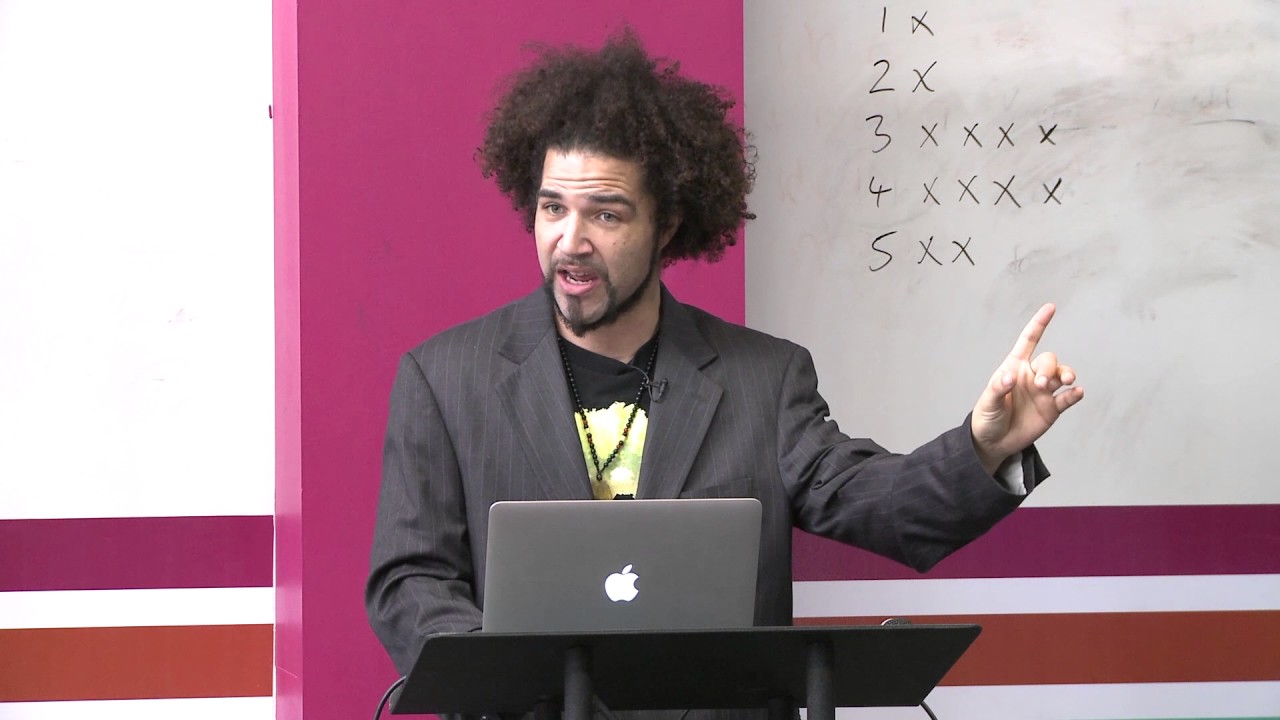
Rahman Jamaal shows how rap's rhythmic patterns improve public speaking and memorization. Map quarter notes, eighth notes, and sixteenth notes onto your speech to control tempo and enunciation. Clear diction and deliberate slowing keep ideas flowing and audiences engaged.
Chapters
Well, clap it up for yourselves. That was— you guys helped me reach my goal for you, my intention. Everybody did that. And I hope you guys felt something new within yourself to know that this is possible, right? Just with time and repetition, you can get a skill that a lot of people just kind of respect automatically, just based off of the things that, that that was shared today. So use— know this as, you know, you don't have to become a rapper in your career to be able to communicate through it or, you know, just to be able to express yourself more confidently. Because public speaking, right, is everyone's— it's like the biggest fear for most people in America. But if you know, it's like if you can do this, well then speaking just becomes, you know, a little bit easier, I've found. So what did you want to?
I just want to hear the build up.
The build up again?
Yeah.
Okay. So in the in the numbers or in the raps?
Whatever you did before.
The beginning? Okay. All right. Cameras out. All right. So you can start your phrase in quarter notes or eighths when any term you can speak can be turned into three then start wording in sixteenth notes while you're turning. Turning up the speed till you're learning with me to start earning degrees as a sturdy MC who can burn any beat like a mechanical animal with flammable mandibles holding the end of a candle to the stem of a cannonball bursting with heat till you're thirsty and need a big slurpee. You see me reversing the speed back into 16th notes 'cause the purpose of MCing is to take instrumentals and break down the tempo so everyone can follow what we also call flow. If you don't know, now you know. All right, so yeah. And so any other— we can grab a seat right now. We got just like a couple minutes left. I just kind of want to hear from you guys. I'm just kind of curious. We can maybe just go around and what's one thing that you either learned about hip-hop hip-hop or rap that you didn't know, or something that you learned about yourself that maybe you weren't keyed in on just yet. I'm just kind of curious to get your guys' thoughts. Turn this down here.
Yeah?
I learned that—
You got to rap it, though.
I'll give you guys a break on that, but yes, you can, right?
I learned that you You can use rap if you are trying to learn something or to like make your elevator pitch. You can use rap to get the ideas out and kind of start to learn them and memorize them, and then you can do it as a pitch, but you already used that thing to figure it out.
That's a great— that is a great point, and I didn't mention that. I've used rap, like I started writing raps in school for like assignments. like history reports or whatever, you know, I had to do, I'd just write them as raps. It actually helped me memorize the content better. So, absolutely, if you're doing a pitch, if you can memorize it as a rap, well then, you know, then you could just have a conversation and in your head it's like you have those. It really helps with memorization too.
I feel like, what are they called?
Say rhythmic notation or rhythmic subdivision or just—
You're an actual famous rapper, so it's funny to break it down in that way. Because when I heard raps before today, I was always just like, oh, it's whatever. But now I can actually break it down, like, that's how it works.
Yep, yep, yep. And a lot of rappers, they just come up doing it naturally. I don't know anybody that really has broken down the music theory behind rap outside of what I do, but it's very helpful. 'Cause they are, they're doing complex rhythm things, and it's all music, yeah, for sure.
Did you write that one?
Huh?
What?
Which one? Oh, you guys are reading my stuff, it's all out there for you to see. This right here, oh shit, sorry guys, that came from a— just cover that up. No, that was— I write about all sorts of things, that came from something my girlfriend said that, I was like, yeah, these guys like all trying to mack on me, and it's like, yeah, but who are you besides someone trying to get in my pants? You know, so I was like— but she said it like that, so I was like, I'm gonna write that in a rap. That sounds like a good rap. What else? Yep. I was having trouble with the transition, but I think I nailed it. Very good, very good. Yep.
I think what I was learning from this was actually patience. Normally when I speak, I sometimes speed up at the end of the word, especially during pitches when I get nervous.
For sure.
And so having this is kind of a technique now that I can use to say, okay, don't speed up the tempo because I know a lot of people start— at least to me, when I get nervous, everything just gets hard. It gives me a way to at least in my brain say, okay, no, no, time it out and pace it so it actually can be a little bit more pronounced.
Yes, absolutely. I'm so glad that you said that because that's something that I've discovered in the process too, is that, you know, we— a lot of times the key to freestyling and always having something else to say, not running out of things to say, is not— is actually to slow your speech down. 'Cause if you can get comfortable and have the patience to speak slower than you can think, then your brain's always gonna have the next thing to say, the next, you know, part of what you want to say there ready for you. But the listener doesn't know what's in your head, so you could say it as slow as you want, and as long as you're engaging them, you know, like, like what you just said, a couple of you guys— or who was it? Oh, I think you busted it. You're like, this makes me Really uncomfortable, right? Like even though he's going slow, we were all keyed in. You know, like what's going to be the next thing that he says? So the patience is a huge, huge thing.
Yeah, like when you talk, you really exaggerate the like everything is exaggerated. I feel like when I talk, I mumble a lot. So something else I'm trying to learn too, watching you rant, is everything is very exaggerated. So you can tell like where the words end.
Mm-hmm, mm-hmm. Yeah, and I've heard from very famous song engineers, for example Eminem's song engineer told me one time in the studio, like, your enunciation is so important. The reason why Eminem was kind of like a new voice in hip-hop when he first came out is because he was so clear with his diction. It's like you could hear every single word, there was no question, and And that's what he says, he's like, you know, for rappers that are trying to sell a lot of records, be clear, use your enunciation. With the speed, it's like a muscle, you know, it builds up in time, but you can even build those muscles up going slow, just being very deliberate, right? Good stuff. Awesome. Well, I will end it and say that you guys, I do make a lot of music, I have a lot of stuff on YouTube. So the— I'll give you guys some links here. So one, if you guys want to see what I've been able to do in schools all around the Bay Area and also worldwide, is you can go to rapforceacademy.com, and there's actually on here If you go to audio lessons, I have like an at-home study kind of thing, right? So you can kind of listen to that. And workshops and schools, you can kind of just see all of this stuff. And my name, so you guys have the spelling of it, is R-A-H-M-A-N J-A-M A-A-L. If you guys pop that into YouTube or Google, you'll— my SoundCloud will pop up, videos. I do have a project out. It was really cool to hear a lot of people from Brazil.
Who's from Brazil?
Awesome. So I just, I have a project out with a young rapper from Brazil, from São Paulo, and the album is multilingual. So I'm rapping in English, he's rapping in Portuguese and English, you get to hear Portuguese in a very— his style is very clean, he likes to rap fast. I've been blown away traveling around the world hearing how different languages sound in rhythm, in music, in rap, and it's just amazing because I don't have to necessarily understand what somebody is saying to be able to feel it and for it to sound good. So it really, you know, music is a universal It's a universal language, and it can connect people who don't even speak the same language. That's why it's really amazing to be able to go around the world and you find people that do hip-hop, whether it's dance, whether it's rapping, or whatnot, and there's this immediate recognition. So I hope you guys are, you know, if you didn't already know, are coming away with this sense that hip-hop is definitely so much more than what just the media and the industry feeds to us. It's really a unifier in culture. And so as you guys go out and you're building your businesses worldwide, hopefully in diverse environments, it's something that catches everybody's attention and can be used for that purpose. So if you know some things about the history, like Grandmaster Flash and the Furious Five and the message, people are going to recognize that. And you'll have something to build off of in conversations and stuff. stuff like that and build good relationships. All right? So thank you so much. I had a lot of fun with you guys.
Thank you.
More from Tim


He Sold His Car to Build This Startup, Then Pitched It for $1M 😳 #Startups #AI

This Startup Moves Your Crypto BEFORE Hackers Can Steal It 😳 #Crypto #Cybersecurity




15 Months Without Refrigeration?! This Startup Thinks It Can Go Global 🥥 #FoodTech #Startups



