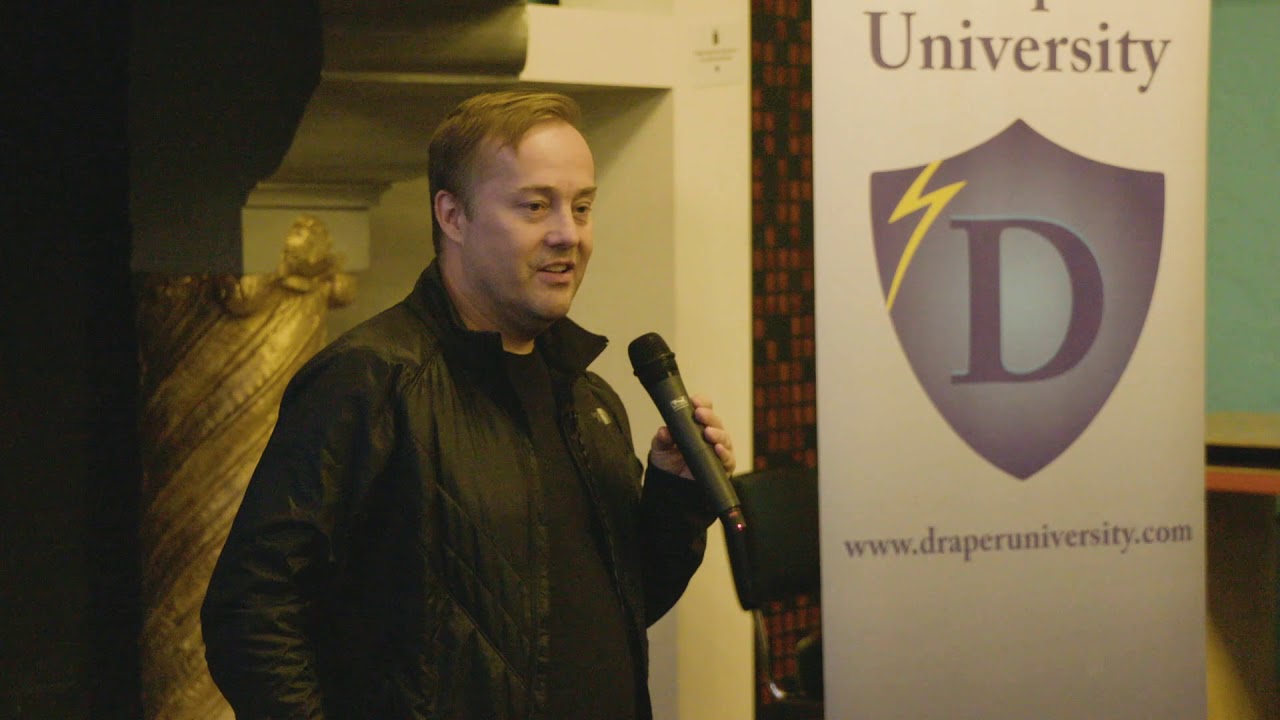
Jason Calacanis explains how he judges a founder's grit: consistent monthly updates showing real traction, and months of observation before committing. He stresses that ideas mean nothing without a built team and product people actually want, and that founders should spend less time on TV and more on Treehouse, Lynda, or Coursera to stay competitive.
Hi, my name is Sonia. I work across the street at Wolk, and I wanted to know how you determine if somebody has grit or resilience if you've never worked with them.
How do you determine if a person has grit or resilience if you've never worked with them? Well, you could ask them 20 or 30 questions, ask them to put you on their monthly update to investors, and only invest in them after 6 or 12 months. That tends to be what I do, and it works. So now my new thing is in the book, there's a chapter. I'm not sure what chapter it is. I think it might be chapter 28 on the value of monthly updates. Somebody can look it up. And the value of monthly updates— now I tell people, if you want to get a meeting with me, show me a chart, an email of your growth, show me your traction. And if you don't have traction yet, put me on your monthly update. And if you put me on your monthly update, maybe after 2, 3, 4 updates, if it's going up and to the right or spiky, but it's interesting and I see you're focused, yeah, maybe we'll have coffee. So that's the big hack is people want to see consistency and they want to invest in founders over time who are not giving up, who are resilient. And you have to know when to approach angels. You should have done— you should have a ton of information on a potential investor before you decide to email them. I cannot tell you how many people email me and go, may I buy you a coffee and tell you my ideas? Total population of people who have great ideas is the entire planet Earth. In fact, everybody has a million-dollar idea. every day. Even people with extremely low IQs have million-dollar ideas. Now, billion-dollar ideas or $10 billion ideas, those might be a smaller subset of people, but everybody's got ideas.
It means nothing.
What matters is that you have ideas that then lead to you building teams that then build prototypes and products that small groups of people test and love. And find joy in. And then that's when you contact investors so that you're not in the bucket of, I'm an idea person, or I want to talk about my idea. And if I only had coffee with you or Elon Musk or Mary Meeker or this person, whoever the person you want to have coffee with is, it's meaningless to have coffee with somebody to talk about ideas. You're disqualifying yourself. That's like me saying, like, I want to play for the Knicks. And I only hit 15% of my 3-point shots. The coach of the Knicks says— coach of the Knicks is not going to go, you know what, if you join the Knicks and we have you work with our coach in another 3 or 4 years, you're going to hit 30% from 3-point range.
Right.
No, it's your job to go hit 30 or 40% from 3-point range. So don't put yourself in the bucket of weak founders. You want to be in the bucket of strong founders. Strong founders can build their own products. Or if you're not a developer, learn how to be a product manager. If you're not a product manager or a developer, learn how to be a sales executive or be so damn charismatic that you can get 2 developers and a designer to work with you as you build the business plan and the model and the sales plan and raise the money. If you can't convince— if you're in this room and you can't convince 2 or 3 other people to work on your idea with you for free, To build a prototype, you've disqualified yourself from the startup game. Remember what I said in the beginning: you're entitled to nothing, zero. The world has changed. There is no guaranteed employment. There is no guaranteed safety net. You are up against every other market on the planet. If you're a designer, you're up against five ten dollar an hour designers in Eastern Europe. If those Eastern Europe ones are up against $5 and $10 designers a day in Mumbai or Manila, wherever. You know, work is moving all around the planet and everything you need to learn is online already. You have no excuse. Treehouse, Lynda, Coursera, edX, Khan Academy, O'Reilly Books. Any— if I catch any of you watching Game of Thrones or Breaking Bad, you should just delete your Netflix accounts. You should only be working on skills now. Maybe treat yourself to a movie on the weekend if you learn skills. Average American, 5 hours of television a day. Average bill for their television, $125 a month. Americans are wasting $1,500 a year And wait for it— 150 hours a month, 1,800 hours a year, a second full-time job watching television. And we're wondering why people are not getting jobs, we're wondering why people are not competing on a global basis. There are people in India, Pakistan, Philippines, China, South America, name the location, who are sitting there studying those YouTube videos, sitting there studying the MIT OpenCourseWare, and they're acquiring those skills. And they're not watching 20 different TV shows a week and keeping up with all that bullshit or going to Coachella. They're just adding skills and they will kick your ass. And the work will just flow to them. So take the work seriously. In the book, I say over and over again, do the work. I had a 3-year average in high school of 71. I could barely get into a good college. I worked at night, but I out-hustled everybody when I got into my career. Just out-hustled them. It's all about hustle and resiliency. Not raw intelligence, not IQ, not who your parents are. It's about hustle and skills and resiliency. And you have those because you're here. You've chosen to come to Silicon Valley to be part of this program and try to make something of yourself. So you have my respect. But being here and getting here That's like 10% of it. Now let's see what you do with this opportunity. Let's see if you work hard. Let's see if you get rid of your TV set and trade it in for a treehouse or Linda account. And let's see what your skills are. Skills. I'll just keep saying it. You need to have mad skills. And, and acquiring the skills before you need them and without permission. You don't need permission to add those skills. Just add them. Don't wait. Okay, now I want everybody to read the book, and then I want you to write notes in the book. This book is written in order to train people of how to be angel investors, but there is a secret to this book if you're an entrepreneur. And you listen to one of the 10 greatest angel investors of all time teach the next generation of angel investors, you'll be in the secret club of how we make decisions. And then you can understand what angels are going through and become really good partners to them. Okay, you can reverse engineer it, but don't try to game it. You don't need to game angels. What they want to see is that you have skills, you're resilient, You're working on a product that matters to you, right? You have a product that matters to you. We call it not product-market fit, but founder-product fit. A founder working on a product they don't care about will quit no matter how big the market is. Founder-product fit, super important. Remember I talked before how every day sucks as an entrepreneur? It sucks less if you're working on something you care deeply about. In fact, that is the secret. So I think that's all we have time for. I wish you luck in your careers. I'm jason@calicanis.com. I have a podcast, This Week in Startups. I have a second podcast called Angel, and you can all listen to that and hear my voice in your ears for 2, 3 hours a week. Pushing you. Work harder. Get more skills. Don't give up. Don't listen to the haters. Be a creator. Remember, you're either creating or you're waiting. You don't need anybody's permission. Just go change the world. Don't stop. You made it here. This is the credo. of innovation. Everybody here is rooting for you. Get the skills, okay? Read the book. You promise you'll read the book? I'm looking for a yes, Captain.
Yes, Captain.
Okay, now will you write a review if you like it?
Oh yeah.
Looking for a yes, Captain.
Yes, Captain.
All right, good. I got 200 reviews. I'm trying to get to 300. I even— I have to work hard here. I'm trying to, trying to get those 5-star reviews up. And hey, um, I just want to give a quick round of applause to my partner Brian Alvey. He was my writing coach on the book.
All right.
Tell Tim Draper I said hello. He owes me a phone call. All right. Good luck, everybody.