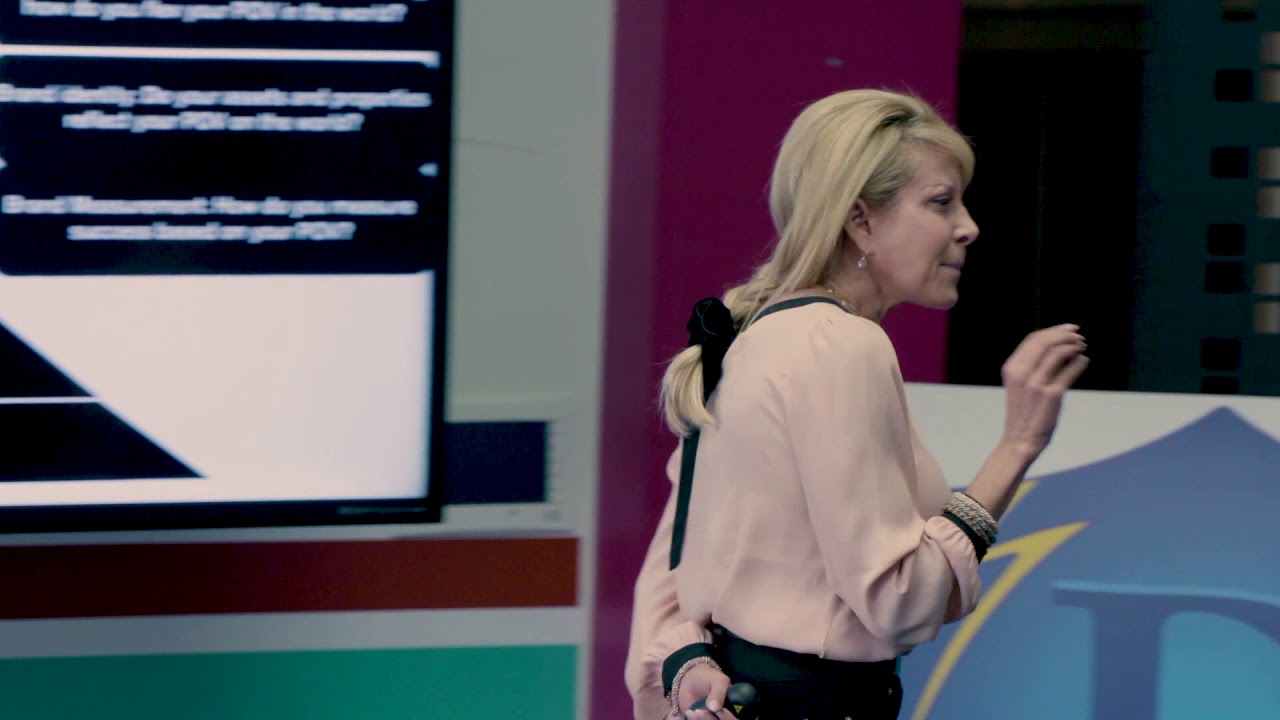
Jillian Manus walks through how Structure Capital builds brand architecture, including 48-hour hackathons to define company purpose, culture, and positioning. She leads exercises where products describe themselves in five words to clarify their emotional narrative.
Chapters
Okay, the why. The first why is why is you, who are you? The second why is brand narrative, okay? And I don't know, have you studied branding here? Yes. Okay, so you know that it's all about— yeah, okay. I teach this, teach this all over the world actually. This is a brand structure and architecture that we created at our fund, which is Structure Capital, what we do is we create brand hackathons. We take our companies and we put them into 48 hours of deep dive. And we have them answer these questions, which basically you would think is just very easy to answer, but not so much. We start with culture, top-down, bottom-up brand, and then we get to the brand point of view. These are what's happening in the culture we're aligning with or addressing. You think that's very easy, but the fact is that that actually takes a lot of thought because it's not only on the micro level and the macro level, it's on the micro level. And it has to relate back to the why. What's the problem? Why did I build this? What's the emotional capacity of my product? One of the things that I teach is if your product were to talk, okay, and it would say 5 things about itself, it would describe itself with 5 words, 5 words. Give me a word that your product would describe itself. So with me, I think I'm gritty. Okay? Okay. Tell me one word that your product— how your product would describe itself. Badass. Okay. Efficient. Efficient. Loathing. Loathing? Loving. Oh, loving. That's a good— better. Most of the time you worry about her, but okay, loving. Driven. Nifty. Nifty? Right. Okay. Smart? Smart. Dedicated? Please, I'm going to put it into your— Simple? Yeah. Okay. Now, take it one more level down, all right? Because there are many products, okay, that are simple, that are efficient, that are loving, that are kind. Give me something that's a little bit less expected. Eccentric. Eccentric. Valuable. Not evil? No, valuable. Oh, valuable. Gee, I'm really not thinking very well. I've got loathing and not evil. Okay. Explorative. Explorative. Okay. Savior. Savior. That's fascinating. Smooth. Smooth. That's my favorite Santana music. That's my favorite, favorite, That's my favorite. Go ahead. Hot. Hot. Okay. And hot not to touch, right? Hot to experience, right? Okay. Big. Big. I don't want loving. I want something else. Community. Keep going. Passion. Keep going. Okay. By the end of this, you all have, you know, I want one word that describes that describes your product, that your product would talk about itself, not you talking about your product, your product talking. I am this. And guess what? I'm going to ask each one of you. So I know you look very comfortable, but in a second you're not going to be so comfortable because you're going to be like— and by the way, it can be uncomfortable. It can be— I had a woman actually describe her her thing as neurotic. And I thought that was so compelling. And then when she told me what her product was, I was like, that's so— I could understand. So it's not you describing the product, it's how the product would describe itself. And she explained why the neuroses of this made complete sense. So that's one of the ways that I teach in terms of the brand. It's the emotional piece, it's emotional connection to the brand. But switch it. Have the brand start to talk to you. Have the brand start to personify itself. Okay.