Keeping it Simple | Justin Wohlstadter
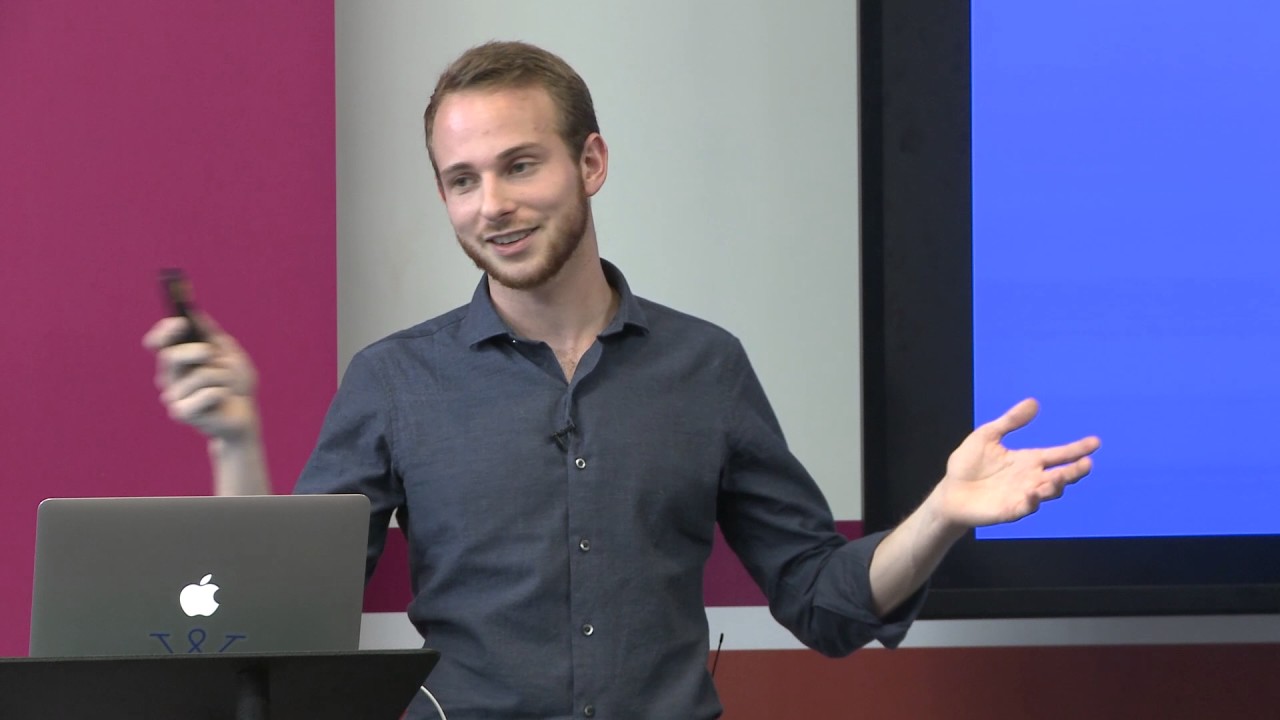
Justin Wohlstadter, co-founder of Wonder, built a research platform that charges a flat $19 fee instead of the hundreds or thousands users pay for reports from Gartner or CB Insights. The core lesson: keep the product simple. One question, one price, direct payment from users who actually want the answer.
Chapters
Right? And that's why we're really excited about what we're doing, because people actually find this thing extremely valuable, because we save them a ton of time and we find them stuff they haven't been able to find and are therefore willing to pay for it. There's all sorts of nuances around the pricing model that we screwed up on, and I'm happy to get into. But yeah, that's the basics.
Yeah, I just want to talk about the research side of it. Is part of your vision to kind of like democratize real research? Because as you know, a lot of research that people do in these top universities actually becomes— you have to pay for it to get access to it. So if you have research in the backend solving this problem, does that mean that people can have access to that? Is that part of your vision?
That's exactly the vision, right? So you have all this research right now which is held up by companies like Gartner and CB Insights and LexisNexis.
Right?
Can we get more people access to that?
Right?
And on a basic level, you know, right now, Wonders is time arbitrage, right? That example I gave before of the consultant who's getting paid three to four hundred bucks an hour—if we can save him an hour or two for nineteen dollars—is obvious cost savings there, right? But tomorrow, what we're going to do is, you know, short term, is we'll get our researchers access to that Gartner report or. That LexisNexis article. They will be able to get you the insight they need— you need in that overview, right? You saw that 5-paragraph overview they write or whatever, and then they'll link directly to the study at the bottom. And it's a win-win, right? You, for $19, without having to pay that $1,000 for that Gartner report, will get access to the stats you need, the data you need. And Gartner or whomever will get, you know, visibility and will get access to So it's a win-win for everyone, and we're really excited to do that because that increases the value exponentially. Does Gartner look at it as a win-win like that as well? I hope so. We will see. I mean, so, you know, look, breaking into large companies is obviously very difficult, and we have yet to scratch the surface on it. But from Gartner's perspective, They pay money to get in front of qualified leads all the time. And who's more qualified, someone who types in a few keywords into Google, or someone who asks a question about an exact stat and space that is covered by a Gartner report? And if we can have Gartner's link at the bottom, the logo and all that, they have huge access to an incredibly focused demographic that wants that data. So yeah.
Have you heard of Whalepath?
Yes.
So I made like $700 working off it last, uh, a few months ago.
What's the difference between you and Whalepath? First of all, I hope you become a Wonder researcher. Um, so yeah, there are a few companies like Whalepath and Hourly Nerd that are basically market research, uh, companies. Um, there's a number of differences. You know, number one is you can ask any type of question on Wonder. It doesn't have It doesn't have to be a market sizing, market analysis question. Number 2, the way WhalePath is structured is it's a bid estimate and a project system, right? So basically, I'm an analyst at a hedge fund. I want to go in and I want to do, you know, a $5,000 project to get research on this space, right? So I'll put out a bid for $5,000. You and others will bid on it, right, for $700 or $1,000, right? I will then, as a customer, pick 3 of them over like a 1-week period or a 2-week period or whatever the timeframe is. And then you'll go about doing the research, right? With Wonder, you ask a question and you're done. That's it, right? Now, we don't have the depth that they have, right? So you have to ask multiple Wonder questions. And it's honestly right now for a different demographic. But we believe that keeping it simple and for us taking the risk on the back end is a better value proposition. So yeah.
So first of all, I have to say that this was absolutely It's really crazy for me to watch because I actually had the same exact idea. No jokes, like absolutely identical. And I spent so much time thinking about it, researching it, right? And the second I realized that this model is not going to work unless users have to pay for it, I sort of— I had other ideas too, but I sort of just lost interest. And, you know, I went through the same exact things. I did the browser thing where I was thinking about of it that I realized I found on iOS. It was really interesting watching this. So now I'm working on something that also revolves around the idea that there's too much information and what really matters is action. So it would be great to talk to you after about this.
Yes.
But my question for now is, so you said when you guys started with your car version, right, you had a box, right? It was that simple. You had a box where people answered questions. How did you actually— was your marketplace already developed? Were you a bunch of researchers waiting for any types of questions, or did you manually curate the right question to the right person in your really early stages, or how did that work?
Yeah, no, I was the research network. Me and a few of our early team members, I don't think our investors knew this, like, because we had them asking questions and like we were the ones answering them. So yeah, like any marketplace, it's hard to get started. You know, it wasn't until we knew we had a large velocity of questions that we actually went out and recruited researchers, put up job postings and all that. And by the way, if anyone here is interested in doing Wonder research, just email research@askwonder.com. We'd love to, we'd love to have you. But it's interesting, to your earlier point, there is a big stigma right now with charging for things, right? Like, people are afraid of getting You know, someone to part with dollars for whatever it is they're doing. And that's, in my mind— I mean, in hindsight, right? Because I was scared too. But in my mind, it's just so dangerous, right? Because then everyone's relying on these advertising models, which are not sustainable and require large volumes of traffic. Whereas, you know, you walk down the street to Phil's Coffee here, and you give them $3, and they give you a coffee, right?
Right.
And you value the coffee, right? Like, you value the coffee, so you're willing to give them $3. It's an easy transaction. You are their customer, right? Whereas when you have advertising, your user is not your customer. The advertiser is the customer, right? And that creates very weird incentives and dynamics. So I would encourage you, you know, I think also, by the way, it's a great litmus test for value, right? Like, that's what matters at the end of the day. Like, are you— have you actually built something of value? And the best way to test that is to actually get someone to hand you money. Right? So anyway, yeah.
I was curious to know how does the research part work? So I submit a question, the researcher sees the question, and they want to take it. Do they do the Googling for me, or do you have like a library full of like archives that they can search up? How does that work?
Yeah, so one of the big lessons I've learned, which I will get into, maybe the first lesson, is to keep it simple. Keep it simple. In the beginning, let's see if that was— oh no, that wasn't the first one. So, you know, we'll go back to be tenacious. Keep it simple. So I'll jump right into this, but basically in the beginning, and you can see like the previous versions, we tried to build really complex things up front, right? And even when we launched Wunder, we were like, okay, well, we're gonna build this complicated routing system, right? And all this stuff for our researchers and databases they can search and all this stuff. That's not true. At the end of the day, you don't need it, right, to start, right? And I remember us interviewing a lot of librarians who have access to this service called Ask a Librarian. So when you ask a question of a reference desk at a library, they can search previous questions. No one uses this, right? So not to say that it's not valuable, and we have built some of that stuff, but to get this off the ground, we didn't need any of that. And another example of this, by the way, is a routing system, right? So you'd think the most efficient thing to do when you're launching something like this is to get experts in a bunch of different areas. When you ask a question, we'll detect what it's about using natural language processing, and then we'll send that question to a specific person, right? Turns out marketplaces are efficient, right? So instead, we just post stuff in a dashboard that acts like a marketplace, and we let the researcher grab what they're interested in. And it works, right? It can be optimized, and we have optimized it since, and we have routing system-related stuff, but we didn't need it to make it successful. And that's really powerful. That's probably one of the biggest lessons I've learned is just don't overthink things, don't overbuild things, don't overcomplicate things, whether it's with respect to the product or the pricing model or the funding strategy, all of this. I over-optimized way too many times, and it's just stupid, and it's a waste of time.
But for the research, do they Google this up, or how does the research—
Yeah, so we hire people who are expert researchers, which means that most of them have really good research skills. A lot of them already have access to proprietary databases, because we're hiring people who are PhDs at Harvard. Harvard supplies them with access to the databases they need, like LexisNexis. So we actually, in the beginning, didn't have to. So part of it is Googling, right? But really, like, for us to have a strong value prop, it's not just paying someone to Google for you, right? It's paying someone to actually analyze data over a number of databases, to synthesize it for you, to pull out the key insights, and to give you something of real value.
Got it.
More from Tim


He Sold His Car to Build This Startup, Then Pitched It for $1M 😳 #Startups #AI

This Startup Moves Your Crypto BEFORE Hackers Can Steal It 😳 #Crypto #Cybersecurity




15 Months Without Refrigeration?! This Startup Thinks It Can Go Global 🥥 #FoodTech #Startups



