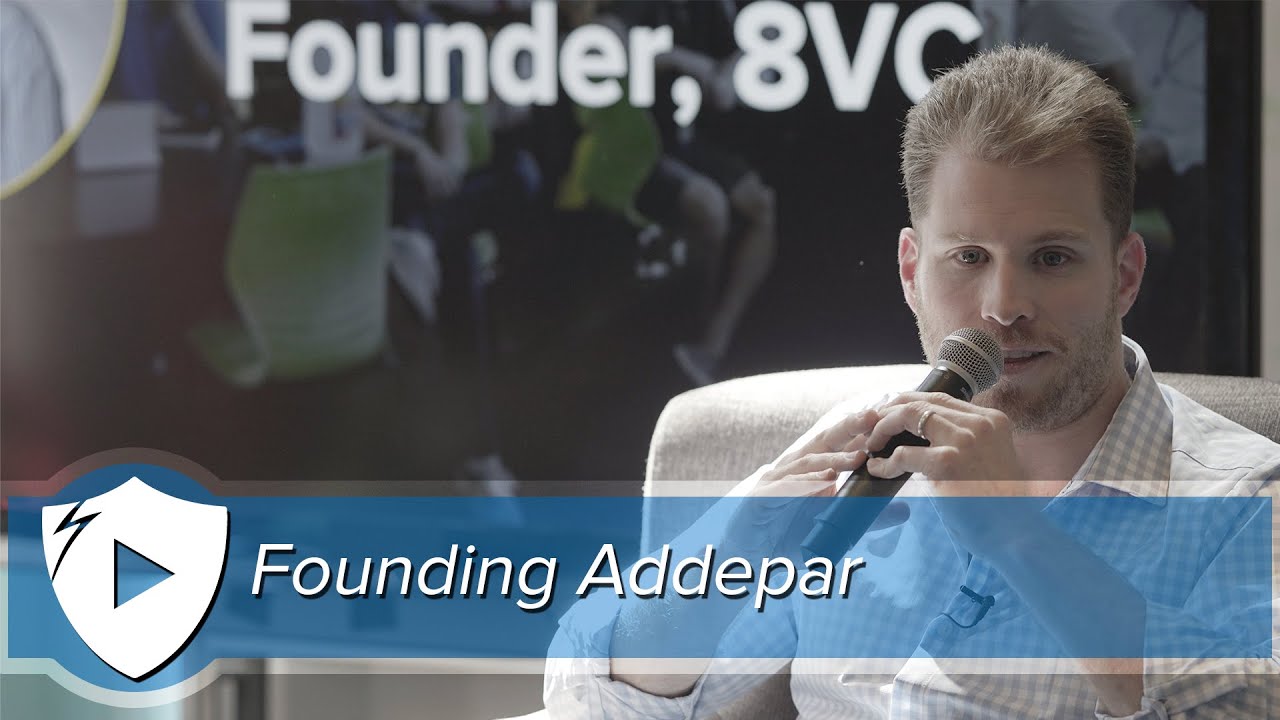
This content was created by Tim Draper. This content was uploaded by Tim Draper. This is a YouTube interview titled "Lessons Learned from Palantir | Joe Lonsdale, Palantir & 8VC Co-Founder" (uploaded May 6, 2019). The excerpt contains an interview-style conversation between Joe Lonsdale and an interviewer (labeled SPEAKER A) in which Lonsdale reflects on his time at Palantir, why he transitioned out, and subsequent ventures including Addepar (wealth-management infrastructure), the celebrity social project littlemonsters.com, OpenGov, and his fund. Topics include lessons from second-time founding, the importance of replacing founders responsibly, managing multiple projects, and lessons learned from early startup experiences.
What was one of the biggest lessons, I guess, you took from Palantir as you moved forward, and what made you transition out of Palantir? Sure.
Well, I, you know, we started off the commercial side of Palantir, and we're very focused on finance. And I had this mission for a platform to fix a lot of parts of global finance. And Palantir's system was so valuable selling in other ways that it didn't make sense for Palantir to do that. So I started Atapar separately in order to accomplish that. I don't know if you guys follow Addepar at all. It's kind of an esoteric part of the world. It's wealth management technology, but it runs infrastructure now for a lot, for about 300 family offices and like 30 banks, and we're growing really fast. We have about $1.2 trillion on the platform, and it's infrastructure I'm really passionate about because I believe that by owning that infrastructure, we actually could make a lot of finance more fair and more data-driven. So that's something I've been working a bunch on in the last 10 years, and I wanted to work on that separately is why I left. The other reason, I mean, I'd vested my shares, I had good ownership, I'd replaced myself very successfully, so I felt it was in good hands. I think it's inappropriate for a founder to leave a company if it's not already working really well and they haven't replaced themselves. People who jump out as a founder early on before something's working, I think that's a really negative signal, and it's really unfortunate most of the time. I see that happen a lot. There's a lot of young people who are just very irresponsible, in my view, these days. I spent a lot of time making sure I left correctly before I did that, and it was clear it was time to work on my next thing.
You think it was a lot easier to start Atapar with the resources you had?
Oh, yeah. I think that's a great question. The second-time founding thing is really interesting. One thing I'll tell you is you always under— when something works, there's a lot of reasons it works, and it's hard to know exactly why. And I definitely underestimated how many huge advantages I had from some of the people around me. So, like, my roommate Stefan from Stanford was, like, someone I'd known for a long time. He's still a Palantir now. He wasn't working on the new thing with me. And him not being there, there are certain things with prototyping and graphics and just all sorts of cultural things that he was so good at that I didn't have. And I didn't know to miss it quite that much until it wasn't there. And same thing with Karp and others I'd worked with. And of course, the second time, you get a lot more people willing to support you. But, but it, but it's, it's, there's just still like a whole set of new challenges. I mean, always there's things I want to do better and differently, but then you kind of, you kind of realize what you, what you had going before too, sometimes when you, when you do it. So it's a, it's, it's, it's, it's, it's actually, I've seen, it's very rare to have, to be able to succeed the second time. And I did make a lot of mistakes. Fortunately, we were able to get it where Appart is doing really well now. But it's, yeah, it's, it's, it's, it's, there's a whole new set of challenges second time around.
Back to one of the questions I asked before, right before you joined Palantir, That was one of the big projects that you went forward with after leaving Palantir. Were there other things that you tried that perhaps didn't work, and then you came to Addepar?
Addepar, I did it right away, and then I ended up shifting to Chairman. Then I tried building a few things. The one thing that really didn't work, a little bit embarrassing, but one of my friends got to know Lady Gaga really well, and she wanted to build a social network for all of her fans. We built something called littlemonsters.com for Lady Gaga. It was fun. She would come and— this is before the MeToo era, so she'd sit in the laps of the engineers and she'd hang out at the office. It was very entertaining. I think we got so caught up in the celebrity side of it— I was the chairman and helping out there— that the business model wasn't ever quite what it should have been. We tried to expand beyond her, and she was so unique and her fans were so unique that it wasn't really working at all for all the other celebrities. Ended up the business model and the spend, it just didn't end up working out as a company. It was very fun, but there's certain things. You got to be really careful in dealing with celebrities is one thing. There's nothing wrong with her, but just when you build these things.
Right.
The other thing I built after Atapar that I really focused on was called OpenGov, which was based on this mission to fix how the backends of cities work. OpenGov is in about 2,000 cities now and is working really well. I'm really proud of the team there. That's functional. While I was doing that in Addepar, I ended up starting my fund, and so I'm chairman of those, but I'm working on my fund now.
So it all was kind of simultaneous?
Well, no, no, I was— no, this is really important, actually. One of my rules that I put in place when I was at Palantir and I was trying to help Peter with a bunch of different projects in 2008, and a lot of things kind of went haywire, it was a very tough year for me, and one of the rules I put in place is I'm only responsible for the failure of one thing at a time. I think it's really important. But basically, if there's 2 things that could fail and they're both your fault, you've not set things up correctly, is my view, at least for me now. Maybe some people— I know Elon's CEO of a couple things, so he's doing a good job of that. But my basic rule is that there's one thing at a time that I'm really responsible for. So for a long time, that was Palantir. Then for 3 years, I was CEO of Addepar, and I helped get other things going, but there was always someone else who was responsible for them. Right now, I'm responsible for my fund and for APC being the best fund. So you're saying that you're not responsible for the economy?