Marketing Strategies | Margot Micallef
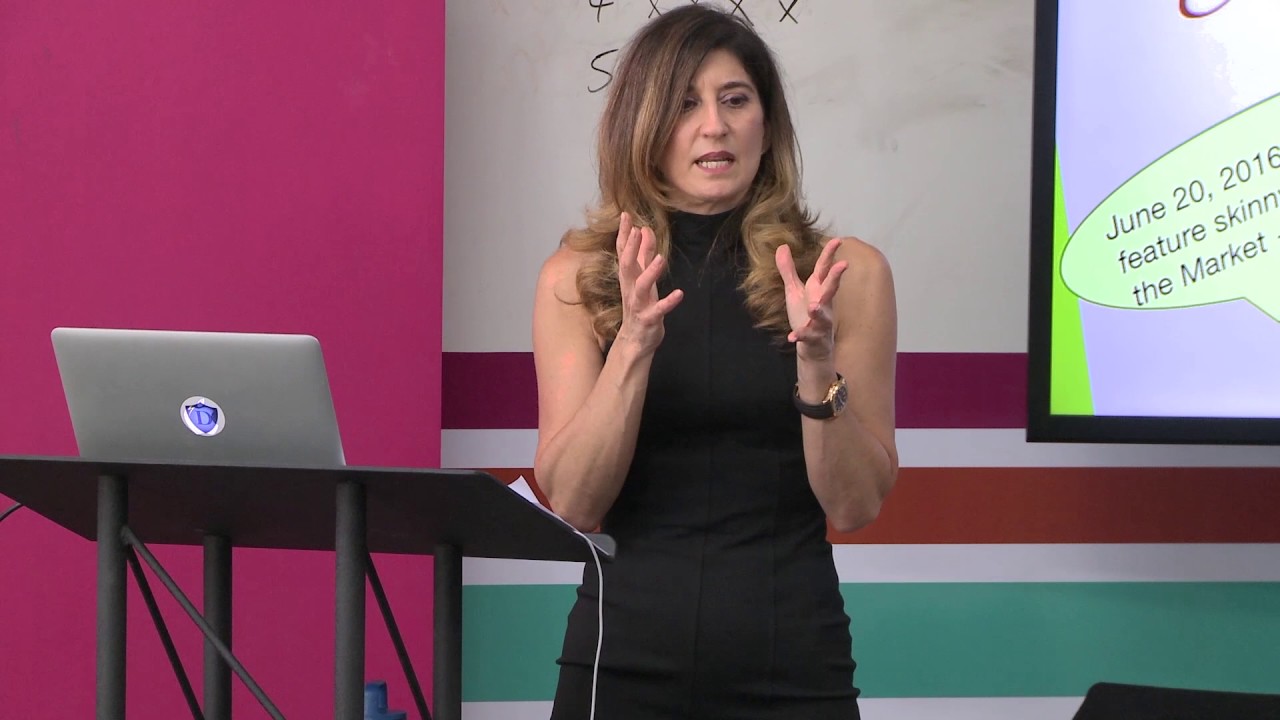
Margot Micallef built Gabriella's Kitchen by starting with a guerrilla food-truck sampling campaign, then layered in blogger endorsements, PR, and social media. She found that micro-influencers like dietitians and athletes worked better than celebrities, and that older audiences preferred expert blogs over Twitter and Instagram.
Chapters
So the first one is our food truck. So we were completely unknown. And so we started with a food truck. And we basically took our food truck around to different communities and gave our product away. So wherever there was a crowd, whether it was in a parking lot, on a street corner, at Venice Beach in Los Angeles, wherever there was a crowd, we would park our truck. And we would just give the product away. We had ambassadors who would talk about it. We would give coupons away. And we would start to create the demand and the awareness. So I'm just going to show you a video.
Oops.
I keep thinking this is a touchscreen. Please join us as Skinny Pasta takes to the streets of Los Angeles. You'll meet our founder, learn about our delicious high-protein pasta, and see people discovering that they can love pasta again. Hi there, my name is Margot Michailoff. I'm the founder and CEO of Gabriella's Kitchen. My sister and I started the company a number of years ago because we had given up eating pasta.
I try to limit the amount of carbs that I have, which includes the pasta, but I love it. Even though I need carbohydrates so that I can keep my energy up when I'm dancing, I try to steer away from, you know, processed things as far as like pasta because, you know, I gotta stay in shape.
Pasta and skinny are never associated together. I said to my sister, there's got to be a pasta out there that is nutritious and delicious. So I went on a hunt and I came back and I found nothing.
For me to be interested in eating pasta, it really would have to entail some type of health benefit.
If I could find a pasta that was low carb, had good protein, and was super healthy, then I'd be back into it for sure. I said to my sister, we have to create something ourselves. Protein in pasta, that seems counterintuitive.
Any kind of pasta that's low in carbs, that's, that's, it's hard to believe. There are other protein pastas out there and usually they just have that weird kind of like Yeah. And it's just like so off-putting.
It's got to be delicious and then nutritious, and so we're really excited that we can offer both. Mangia pasta?
Yes, for breakfast, lunch, and dinner.
Good for you. We'll try this.
I'm really excited to try it.
Mmm.
Say ahh.
Skinny pasta is like ridiculously delicious. I'm not a big like whole grain pasta kind of guy, but this is pretty damn good. I finished my plate. The skinny pasta was really delicious and the texture was great and I couldn't tell the difference at all.
Full of flavor that it doesn't leave me wanting more. It gives me everything that I want but without the calories.
Skinny pasta is what I'm looking for. Enjoying pasta and watching my weight. High protein, low carb, that's exactly what we need for our lifestyle.
Yeah.
It'll be a healthy dinner for both of us to enjoy. Ah. And we can have enough energy to do other things after.
This is amazing! I can't— I'm so excited. You've sold me.
With skinny pasta, I could definitely learn to love eating pasta again.
Riami pasta. Skinny pasta will make you love pasta again.
Skinny pasta.
Whoops, did I cancel everything there, Joe?
No, if you swipe back 2, I think you'll get back to it. Let me see.
Sorry, go ahead. Oh, yeah.
One more and then you'll be back in the presentation.
Swipe over, Joe.
Okay.
Oh, thank you. Yes.
Who created your marketing?
Our marketing The video?
The message, the color, who created it?
We actually worked with a number of different people. So we worked with a firm in the US initially. And we had some of our own ideas. And we've also got an internal staff of people. So we did use outside people. It wasn't me. Because I have some common sense around marketing, but I really know nothing about it. And marketing is like cooking or acting or painting. Everybody has an opinion. Unless you're really an expert, you really don't know what you're doing. Your opinion is really nothing more than an opinion. But we worked with some really good people to come up with the concept. And our colors, the design, the messaging, probably 6 or 7 different people and firms in total.
Super awesome.
Money well spent.
Yeah. Color.
What's that? No, no, just learning about colors and their meaning. Yeah, there is meaning around colors. Absolutely. So one of our other strategies is our blogger strategy. So what we did with our blogger strategy was, and I can show you, I can distribute this catalog. This is just some of the blogging activity that we chronicled, and you can take a look at it and just pass it on. It's kind of dull if you want to just sit and flip pages. But what we wanted to do was we wanted to influence the decision-making And the idea behind bloggers and experts is that you get a third-party validation of your product. And it's not you that's pushing the message. It's somebody else. And we already know, and we have known, that marketing and advertising has been very successful using celebrities and others to flog products. And there's an aspirational element to it as well. But nowadays, bloggers, who often reach smaller groups, is a much more affordable way to actually get a third-party expert to endorse your product. So our bloggers will be dietitians, wellness experts, athletes, chefs, anyone that can impact the target market that we've identified. And they will just blog about us. They'll tweet about us. They'll endorse us. You'll see some of the messages that they've conveyed. They've recommended us. And some of them will have as few as 10,000 followers, and some of them will have hundreds of thousands of followers. So it's a great way to get your message across, and it's relatively inexpensive compared to trying to find a celebrity who will actually endorse your product. There's also a movement afoot with consumers where they are becoming less and less influenced by celebrities who they know are being paid to endorse a product versus bloggers or someone who is not getting paid. We just give them a product, they taste it, and they speak authentically and honestly about the product. And it's more influential because people know this is really the opinion of the person that they have put some faith into. So that's our blogger strategy. We've had a lot of success with that.
Can I ask you a question? Yeah, of course. How has your engagement with the 50+ segment been blogging? I work in the senior space, so I'm curious, especially online, what kind of traction are you getting? What kind of engagement are you getting?
We get less engagement with the older population, but they do read blogs. So they won't read some of the— they'll probably focus more on the expert blogs, so dietitians, wellness experts, physicians, things like that, than they will with just the lifestyle blogs. But they do, in fact, read blogs and are impacted by blogs. Less so by Twitter, which I'll talk about, Instagram, and some of those other social media channels.
Cool. Thank you.
Sure. Our other strategy was our PR strategy. And PR is actually a really great way to get your message across. It's much less expensive than advertising. It's a third-party endorsement. It's considered earned media. And you have the risk that the reporter, the journalist, is going to write their own message, and it may not actually streamline with what you're trying to convey. But it's a great way to get your message across. We use a PR firm with offices in LA and New York, and we have a person on staff who does our PR work, and we're actively in the market. So these are just some of the media outlets that have features I've got some examples here of an article that was covered in just a local magazine. And the things that we talk about— so this is just an article, a travel article that talks about me and what I do as CEO of Gabriella's Kitchen when I travel, what kinds of things I would take with me and what my go-to things are. So it's not necessarily always about the product because we also have a story and a backstory. We want to share that story. It's about our team. It's about me. It's about my sister, as well as about the product and some of the attributes and features of the product.
Just out of curiosity, how are you reaching out to these large media companies and convincing them to do a story with you?
A lot of it is timing. And timing is everything when you're in business. If you have a good idea, if it's not the right timing, you're not going to get anybody's interest. And so right now, there's such a strong movement where consumers are moving into the Better For You Health space, media is all over our story. So they like our backstory, you know, they like the authenticity of it, they like how we got started, they like that we're mission-based, you know, they like that we're honoring my sister, and we've had no trouble at all attracting them. So we are expecting to get on Good Morning America. We met with them a couple months ago. We met with Katie Couric. We met with— well, we got into the Wall Street Journal. We've been on KTLA a couple of times in Los Angeles. So there's a lot of high-profile media, Shape magazine, that have spoken to us that are interested in our story. So they're responding to what consumers are looking for. If you don't have a story that consumers are interested in, it falls on deaf ears. But so far it's been quite successful. And of course you've got to use a PR firm. It's really tough to just pitch your own story.
More from Tim


He Sold His Car to Build This Startup, Then Pitched It for $1M 😳 #Startups #AI

This Startup Moves Your Crypto BEFORE Hackers Can Steal It 😳 #Crypto #Cybersecurity




15 Months Without Refrigeration?! This Startup Thinks It Can Go Global 🥥 #FoodTech #Startups



