Mathbreakers | Vivian Tan
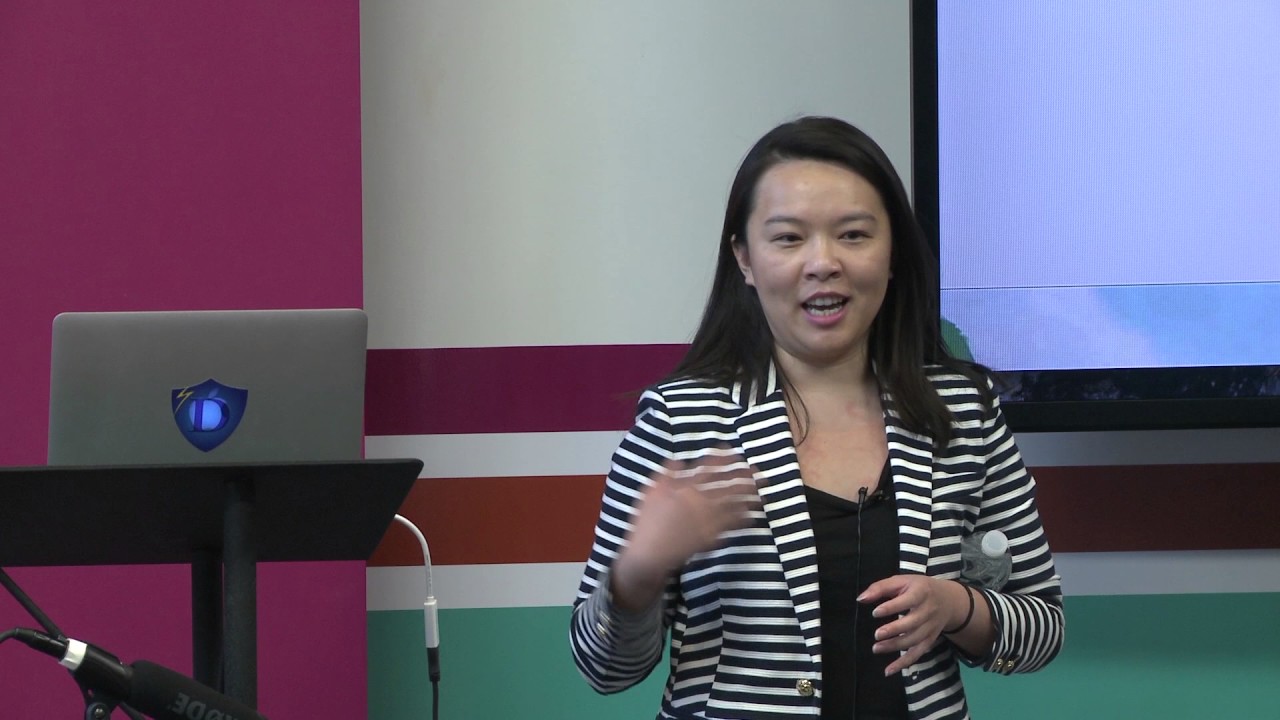
Vivian Tan and her co-founders built Mathbreakers, a 3D game that teaches math through puzzles where numbers combine and disappear at zero. The team includes an attorney, a real-estate developer, and a game designer who taught themselves Unity. Stanford professor Jo Boaler validated their approach.
Chapters
Hey, good morning everyone. Hi.
Can you— hi. Sorry.
It's all right. Can you all hear me? I can't even tell if this is on.
It's for the cameras.
Oh, excellent. Sounds good. So I don't know how many people had a chance to check out Math Breakers yet, so I'm going to put on a video that I love to show everyone of not just the gameplay itself, but lots of really cute kids getting psyched about math. So let's start with that.
Let's see.
Are you guys ready to play Math Breakers?
Yeah!
Math Breakers is a 3D math exploration game that teaches about number sense, fractions, operators, and negatives. We built a world full of adventure and puzzles to inspire young minds through the power of play. Our vision is to help learners everywhere visualize math concepts on many different levels, and eventually even things like calculus and set theory.
Math is all around us. It's a really intrinsic part of today's world. In fact, it's more mathematical now than it's ever been. So we want students engaged in a real mathematical environment. We have a large-scale math crisis in the US with about 2/3 of kids failing math. Half of middle school students say they would rather be What I really like about Math Breakers is it lets students explore with math, which it turns out to be really important for them to do.
It all starts with a basic interaction. When 2 numbers touch, they combine. And when the result is 0, they disappear.
This should be our homework. Oh, it's really true.
I actually remember our math.
This should be like our homework. This should be what we do during math class, but it should be like a different version of it. Yay, so many things to do! Ooh, sandbox play!
So, how do you like the game so far?
It's epic!
Yeah.
In this world, every interaction is built on top of another. So whether you're defeating an enemy, solving a puzzle, or unlocking a new magic spell, math is literally everywhere. The world is made of it. So just by playing in the world, you're also working with math.
I study mathematics, uh, and really love and have a passion for mathematics. And I think it allows students to really play with and discover in a way where it's playful and gives them ownership over the things that they understand. To me, it's really beautiful and allows students to hopefully fall in love with mathematics the way that I have. And I think it's a really powerful tool that has a lot of potential to extend other areas of mathematics.
It's great. I mean, my son loves playing games, and when you incorporate the math into the game, they love it. They're learning without realizing they're learning and it becomes part of their subconscious mind.
We've tested our game at a number of different schools and the results have been amazing.
It is something that I would let them play because it's a learning game.
So what if this was your math homework?
How would you like that?
Awesome! I think we've not heard the best part yet. Yeah, like there's a geometry version and an algebra version.
You should make an app for iPads and iPhones. So that was actually our Kickstarter video from last year showing a prototype of MathBakers.
Yes.
We've been working on the game for about 2 years now, and it was really born from a deep love of video games and knowing that we could accomplish so much more with this medium than just pure entertainment. So luckily with iPads, kids nowadays have a lot more access to apps and things that teach them basic math concepts and also get to hone their skills in a lot of, you know, math subjects. But between my team and I, we always felt like that wasn't quite enough. It wasn't— it didn't have the same pull for us as really immersive games that you could dig into and touch a lot of things, interact, and most importantly, grow as a character. So one of the things that we think truly sets Math Breakers apart is the fact that you get to evolve your character. You get to power up. So as you learn more things about mathematics, your character becomes progressively more badass in our opinion because you get to gather a lot of cool tools and armors and swords and everything. So we grew up playing games like Oregon Trail and lots of—
Oh boy.
Yeah.
Anyone here old enough to have remembered Oregon Trail? Okay, good, good. I feel so lonely up here now. So we wanted to create something as iconic as You have died of dysentery one day, but, you know, for the math world. For the math world. We're not quite there yet. Still working on a catchphrase for that. But we wanted to stick to this generation of kids growing up where one day, maybe in high school or something, they say, hey, I want to revisit a certain math concept. Instead of flipping over a textbook, they can just pop into this immersive world of math and then, you know, pick up some tools, pick up some Number Balls, fight some monsters, and that would be their go-to place to revisit mathematics. So, let me backtrack a little bit. One of the reasons why I really like telling people about how this game got started in the first place is that our founding team is a very unlikely trio of math educators. First of all, none of us have any formal training in mathematics, no formal training in education. 2/3 of the team has had no formal training in game development or programming. And yet the entire team works on the product and are all advocates and evangelists of this form of math learning. One of the lame jokes I like to tell So, what's really cool about how this game got started is that between the 3 of us, you got an almost attorney, you have a former real estate developer, and an indie game designer walking into a classroom and telling teachers, hey, we want to educate your children with— through a video game. So, as you can imagine, that doesn't get the best of results.
Right.
People are like, how do you know what you're talking about? Like, how do you even get started. So I think what has going for us in that area is that between my 3 co-founders— 2 other co-founders and I is that we're all hardcore gaming nerds. We grew up with this medium. We— we're very familiar with what engages people in video games and what doesn't. And using that as our guide, we kind of— That's a good point.
Yeah.
Built the video game of our own dreams really to say, hey, if I— when we were growing up and we were learning mathematics, it's like if something didn't make sense to us, how did we visualize that in our heads and how did we transform that into like a mini-game we play with ourselves and use that for teaching ourselves how to relay the topic and then realize, okay, what do we pulled all these ideas together and made an interactive version out of this. And that's how the game came together. And it's interesting because, like I said, most of us are outsiders. I went to law school, supposed to have become an attorney, but I taught myself how to use Unity, how to make video games. My co-founder was in real estate, also spent all of his—
15 years.
free time building video games and learning— and learning programming on his own. So, when we met a couple of years ago as part of a hackerspace in Mountain View called Hacker Dojo, and we realized we have a lot of things in common where we're all passionate about using games as a medium to teach and that they're really a lack of anything like this in the market right now. And that's how we got started. And then working on the game, one of the best parts about this is that instead of just kind of creating in a vacuum, we went out to a lot of kids' science-related events like Hack the Future and then just put our test products in front of kids and see what they enjoyed and what they didn't, and the game evolved from there on. And then finally we realized, okay, so we're a bunch of amateurs building this video game. How do we make ourselves look legit? So we started looking for educators who might share our similar vision, and then we started going to Stanford frequently, talking to professors, being like, hey, What are your thoughts on the future of education? If you could teach in any medium you could, what is your dream? And then we had the good fortune of meeting Dr. Jo Boaler, who has this amazing MOOC in Stanford, and she teaches math through a lot of games and activities. And then she told us that this is sort of The sort of games that she has envisioned for teaching math because instead of just doing drills, you get to interact and touch a lot of numbers in the world and intuitively build a lot of math sense and concepts that don't become apparent immediately, but as you move on to higher levels of mathematics, all these things start stringing together and you see how the greater picture works.
So—
More from Tim


He Sold His Car to Build This Startup, Then Pitched It for $1M 😳 #Startups #AI

This Startup Moves Your Crypto BEFORE Hackers Can Steal It 😳 #Crypto #Cybersecurity




15 Months Without Refrigeration?! This Startup Thinks It Can Go Global 🥥 #FoodTech #Startups



