Meet the Drapers Season 6 Episode 8: Sri Lanka
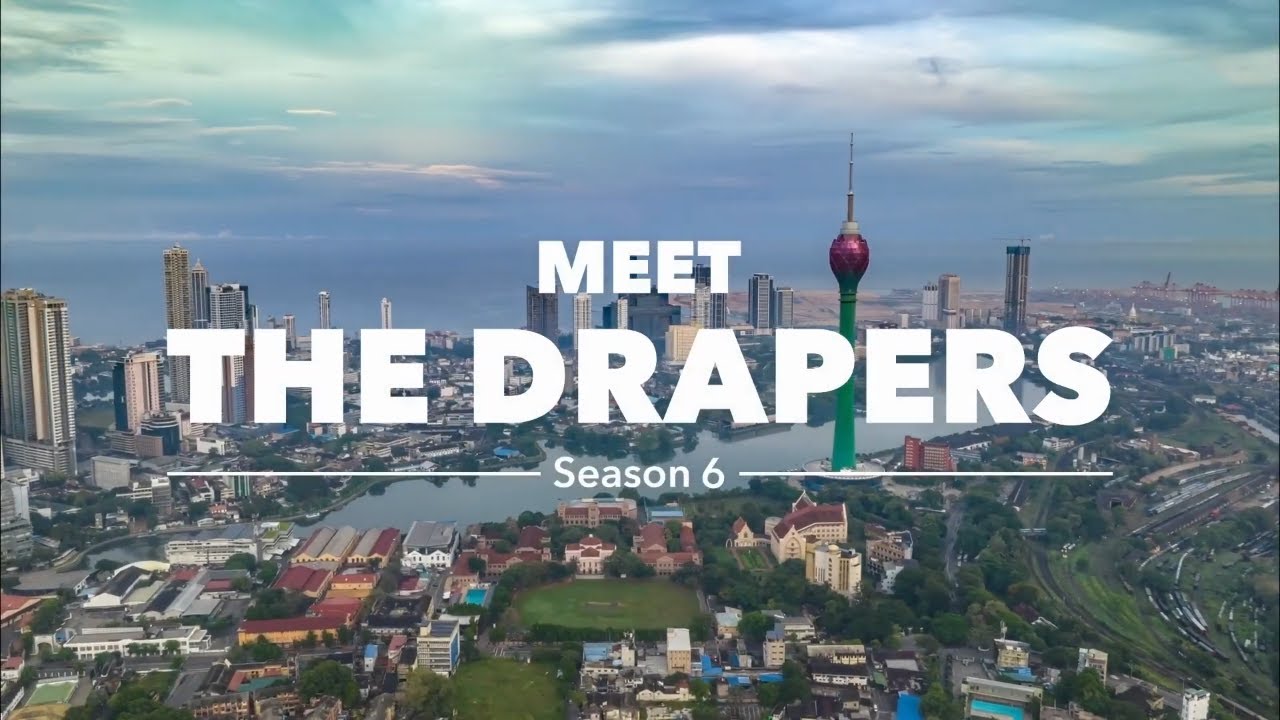
The episode of Tim Draper's reality series "Meet the Drapers" is filmed in Sri Lanka and showcases four local startups competing for a $1 million prize. Tim Draper, along with judges Love Yadav, Uranie Noshika and guest judges, introduces the entrepreneurs, evaluates their pitches, and provides feedback. The featured companies are: Noots Coconut Smoothies (a premium, dairy‑free coconut‑milk smoothie range), Spectrify AI (a hardware‑software platform that uses spectroscopy and AI to provide quality‑control analytics for agriculture), Roda (an electric bike with a smartphone‑controlled lock, battery‑management and gamified health/CO₂ tracking), and HyperClade (a no‑code blockchain/NFT platform for businesses). Each pitch includes product details, market sizing, distribution strategy, pricing, margins, and growth plans. Judges probe business models, unit economics, scalability, and local versus export focus, while also commenting on Sri Lanka’s economic challenges, talent pool, and the resilience of its entrepreneurs. The episode ends with Spectrify AI, Roda, and HyperClade advancing to the semifinals, while the audience is invited to vote for the remaining finalist.
Chapters
Tesla, Skype, Hotmail, Coinbase.
What do these revolutionary companies have in common?
Billionaire venture capitalist Tim Draper, who invests in big ideas before they become the next big thing. Now he's traveling the globe to find game-changing startups. Entrepreneurs from 10 countries and 6 continents will share their ideas for changing the world. There are some entrepreneurs everywhere, and they all have a different approach, and those cultures bring more creativity. Then 12 finalists will fly to Silicon Valley to compete for a once-in-a-lifetime chance to launch their company on a global scale.
100,000 units?
But only one can walk away with the grand prize—
$1 million.
It's go time.
This is a true entrepreneur here. Meet groundbreaking technology. We've built Denmark's first flying car. I've seen 15 of these. How are you gonna be better?
Meet innovation.
The blockchain is built for trust. The sky's the limit. Meet the Drapers. We are here in Sri Lanka. We have some amazing entrepreneurs. There's great opportunity here. We're in a hurry. You think I can try? Yes, okay, let's do it. Analyze the data and figure it out. Then you crack the code.
There's my card.
I'll check it out today.
Yes, perfect.
It's for local. It's going to be a hub for entrepreneurship.
We are— I'm loving the smoothie sandwich.
Hey, I'm Dulara de Alves. I'm the CEO and managing director at Notes Coconut Smoothies. the world's first coconut smoothie range in the world.
My name is Lakshan De Silva. I'm co-founder and CFO of Spectrify AI. We're trying to solve the issue of quality control and quality assurance across the agricultural supply chain.
Hey, my name is Iyaz, the founder and CEO of Roda, a sustainable urban mobility startup.
Hi, my name is Kalena. I'm the co-founder of Hyperclave, making blockchain accessible.
How would it feel if Tim chose you to win the million dollars?
Um, I think it'd be great. I think I'd be ecstatic. With this money, we can do a lot of things, especially in getting Loots out there to the world.
The destination is part of the journey, so I would cherish that. Even that network, just like meeting, greeting, understanding, move around with folks from other parts of the world, that experience by itself would be of actually more value than the $1 million.
I have so many ideas. With the million dollars, I totally believe that I can actually execute on these plans.
That would be wonderful. There would be a lot to learn from him, from his investments, from his companies, so it would be very exciting. I think it will be life-changing as well.
Welcome, everybody, to Meet the Drapers. This is so exciting. We're here in Sri Lanka and we have some amazing entrepreneurs to hear and to see and for you to judge. Go to meetthedrapers.com. You can judge them, you can vote, play our game. Today I have 2 absolutely amazing guest judges, Polly Draper and Bill Draper. Oh no, I'm sorry, we have substitute judges, but they're not. They are now a part of the Draper family. Love, Yadav. Love, Yadav. Love is his name. He is a leading investment banker here in Sri Lanka, the most loving and generous and wonderful investment banker of our times. And one of the new investments that he's made is in Hatch. And we are right here at Hatch where we are hatching lots of interesting companies, lots of interesting ideas. It is the best incubator here in Sri Lanka. They're working with The Draper Startup House is going to be a hub for entrepreneurship. Welcome, Love.
Thank you very much, Tim. Welcome to Sri Lanka. I think I've been here in Sri Lanka for 6 years now and I'm still here. It's a feat in itself. We've seen it all now, so I think we are all going up from here now. It's a good time for you to be here.
I'm impressed that an investment banker stayed and wasn't a part of the big brain drain. Good for you. And we have— and I'm going to blow her name again. Uranie Noshika. It was decent. One of the 3 of us was Miss Sri Lanka, and still absolutely amazingly gorgeous. I just heard her age.
22 plus.
Yep. Her successful career has seen many awards, including Best Supporting Actress. Oh, awesome. Oh my gosh. And Most Supporting Actress in State Television Awards. So you're a TV star too?
Yes.
You're everything. You do it all.
I'm like the total package.
If you were an entrepreneur, what would you do?
I'd start up a talent agency. In Sri Lanka, we don't have talent agencies to manage actors, producers, directors, add value to the artists in the country.
Love, tell us why you're staying in Sri Lanka. Is there something that excites you?
I love living and dealing with investments in frontier markets. And these are the countries where you have the maximum alpha creation opportunities. So from my point of view, countries like Sri Lanka is good news. I keep on finding reasons to stay back in. So I'm here for a long haul.
Nireni, you've never been on a show like this. What kinds of things are you thinking as you kind of wandered out here?
I would want to look at it from a consumer perspective and see how well it's relatable to the current situation in the country because we need dollars.
Yes. Come to Sri Lanka. Check it out. I think you'll have a great time.
It's a beautiful island.
With that, let's bring on the first entrepreneur. But before we do, let's see what's going on behind the scenes.
I don't come from an entrepreneurship family. So in Sri Lanka, much of entrepreneurship happens to be a generational profession. So for me to come from an outside business family and to become a first-generation entrepreneur is something that my family members, my fiancée, and my friends, I think, are inspired by and look up to. And I really do hope that others in Sri Lanka also get inspired. That's what's always motivated me, is always to do something bigger and to uplift an entire community. I always knew I wanted to follow my passions, to integrate something authentic, something premium of Sri Lanka with the rest of the world. Sri Lanka historically has not been portrayed as a country that does research and development. We wanted to introduce a product that was novel to the world and develop it right here where all the coconuts come from. It's going to change the image of Sri Lanka from what is generally known as a low-wage, commoditized agri set of industries to what will now be a value-added industry. It can really take a large place in the world. I do feel fairly confident. I'm ready about the pitch. I'm confident on, on the products that we have. I'm also excited to see the questions that they ask, a mentality and attitude and how they, how they respond. We're looking forward to that.
Let's bring out our first entrepreneur, Dulara de Alves. From Noots Coconut Smoothies. Give us your pitch.
When I initially walked in, I felt calm. Tim smiled, and so did the other judges, Jurini and Love. So I felt good about the start. I would like to introduce you to Noots, the world's first coconut smoothie range, packed fresh right here in Sri Lanka using organic coconut milk as a base and 3 tropical fruit ingredients. What we saw was a lack of a dairy-free alternative with an entirely coconut milk base. But now, why is that important? Other than the mere fact that the coconut industry is trending, it is the only plant-based milk that has the same healthy fats as mother's breast milk. So we decided to start an R&D process to upscale what we had at the time of formulation, to apply technology that was not previously used in Sri Lanka. And now we're working closely with the distributor to aggressively enter the retail and online market.
So why is this different? Why are you special?
They did Stop me at, what, the 30-40% mark to ask several questions. So this is the only coconut smoothie in the world, only dairy-free, plant-based drink with a coconut milk base, zero preservatives, as well as 3 tropical ingredients right here.
Now when we were in India, we cut off some coconuts and drank them, and some were just watery and some was the sweet kind. What kind do you put in there?
I think there was an initial misconception that it was a product based out of coconut water, which it is not. To be honest, this is entirely different from water. The whole market is flooded with coconut water. If it's coconut milk, it's used for either cooking or baking, never as a dairy alternative.
So all your ingredients are locally sourced, or—
We do add about 2 to 3 grams of organic cane sugar. Just 3 organic ingredients: organic coconut milk as a base and the natural fruit, which we source fresh, and about 2 to 3 grams of organic cane sugar.
Now you have a couple of SKUs there.
We have 3 SKUs.
What are they all about?
Real mango, real pineapple, and real papaya.
And in Sri Lanka, you know, it's a smoothie— just making a smoothie, it takes about 30 seconds, like 40 seconds or whatever. Why would a person pay extra?
You have to first try it. Always be prepared for something outside the presentation. First one is the mango.
It's like a tequila shot, love. It's just Bottoms up. Cheers.
When they tried the products, what was in my mind actually what I wanted them to feel was as if they just made it at home.
That tastes like a coconut smoothie.
It's nice.
Just like you made at home, right?
Oh, I see what you're saying is that it has that natural ingredients.
Also, it's fresh. I think we've convinced.
What are your plans? How are you going to distribute this?
Through 3 channels: retail, food servicing, which is Horeca— hotels, restaurants, cafes— and the last one being online. The Sri Lankan market is very small and the per capita consumption is too low. But when I was in Germany, what I saw was people were buying it at €2.35. 2 pallets sold out just in 10 days. The market is out there.
And your cost to make it was what?
So we have about a 50% gross margin.
So 50% on When you go direct?
No, no, no, no, no. Actually, 50% when we go through a distributor who then sells it to a retailer who then sells it to the consumer.
You spoke about 20% GP margin earlier on.
That was our current business.
Is this business structured as a separate corporate entity or as a roll-up of your—
It's a trademark owned by the company.
So you're raising this capital in the holdco or for the Roots?
That's up for discussion. Some of the questions that they needed clarification included more details about the parent company that we launched Roots through. It is good that they asked. The way we presented it, it is very much possible to confuse both. But it was important for us to convey that we were just more than a startup. We are proven entrepreneurs.
Well, is there growth in the base business? Is there hope, or is this where all the juice is?
Sure.
So the base business is what we grew from 4 years ago, $250,000 to $2 million in the last financial year. So not that there isn't growth, but it is a cyclical industry.
And how did you get started? Did you have money?
So I pitched to an angel investor. and a plantation owner who backed me, and then we started off. So we are also number 1 now on Google for B2B queries. So if you type most places in the world coconut oil exporters in Sri Lanka, we come to the top.
So you don't want to expand in Sri Lanka given the market is very small and you're only focusing on the export?
Well, the potential for this market. So if you look at the world dairy alternative market, it's $35 billion, and we believe we can dominate the industry with this product.
Are you starting just distributing within Sri Lanka, or are you trying to go worldwide?
What are you trying to do? Worldwide is the ultimate objective. In Sri Lanka, we'll sell it in pockets.
So you start here and then move out?
Yes, we're already selling in Sri Lanka at a few upscale, like Good Market, English Cake Company.
And what's the shelf life?
15 months.
15 months? It can sit there on the shelf? It has to be refrigerated, right?
Nope, 15 months ambient, but served chilled and shaken.
By the way, Rini here said that my eyebrows look like they come off a coconut.
Doesn't this resemble his Terrific.
Well, thank you so much for coming and being on Meet the Drapers. Looking for great things from you.
And focus on the local market also, because we need to create— you can create a lot of job opportunities.
You know, we are further inspired and motivated to continue on our Noots journey, knowing that even the 3 judges, they like the product. Just the Draper Show and the world knowing about Noots Coconut Smoothies and perhaps also wanting to try it is also something that we very much look forward to. We believe we have an opportunity here to scale what could be a unicorn.
Coming up on Meet the Drapers. Who's the CEO?
We're actually in the process of hiring, like, a CEO.
Why aren't you CEO? Welcome back to Meet the Drapers.
Being an entrepreneur anywhere in the world has its risks and rewards.
It's a whole package being an entrepreneur in Sri Lanka. It has been a very challenging journey for a lot of us here.
It is no secret that, you know, we— our country as an entirety is going through a financial meltdown. Obviously, there's a misallocation of resources and there's lack of efficiency.
Doing business can be a little bit harder, but it proves your mettle. If you really want to solve a problem, this is the perfect test ground to solve that problem.
I would say the businesses that are being built here are resilient for anything that can be thrown at them.
If you can overcome it, the feeling of being successful as an entrepreneur in Sri Lanka is very high because entrepreneurship rate in Sri Lanka is very low.
It's a perfect testbed. I think there's pros and cons, and more pros than cons, which is why I'm here.
So, what'd you think? You can go to meetthedrapers.com and you can check it out. Well, Love, what did you think of this company?
I love the energy Dulara had. It looked like he came from conviction, and the product is super. The pineapple coconut milk was absolutely brilliant. So I like that.
How about you, Yareeni?
We Sri Lankans, making a smoothie at home is like, it's so easy. So for him to push it to the local market, I think it's a bit of a challenge. But Sri Lanka is a tropical country, so the market is out there. But I think he should focus on Sri Lanka also because he can create a lot of job opportunities for a lot of people. But I love the product. It tastes, it's actually like a homemade smoothie. I will buy it.
It's about $2.50. How does that feel?
₹1,000 for a smoothie.
A little high.
But anyway, now the fruit prices also have gone up in Sri Lanka. So I think it's a reasonable price.
A little bit on the upper edge for a non-alcoholic beverage.
You know, your first comment about, well, what about the base business? Which one am I backing?
Absolutely.
Those are always kind of a big issue, making sure that we get the entrepreneur completely focused On the one thing.
Absolutely. I'm pretty concerned about whenever I'm looking at, I don't look at holding company structures. I want to look at individual corporates when I come and invest in them.
Well, let's bring on the next entrepreneur. But before we do, let's see what's going on behind the scenes. I've actually been behind the scenes now.
So we are going to a tea factory. An area which is known for, like, good quality tea. We're taking our data scientists, our food scientists, we're running through how the process takes place through our device. We're trying to do a demonstration to them that the moisture testing could be done then and there to quality parameters. This is the first time we're actually going for it, so we're actually excited. So it's a new plant as well. So, I mean, this is my 4th company. I like the challenge. I like problem solving. I feel like it gives me a sense of purpose, a purpose that is bigger than myself. For me, I don't know what else I'd be doing if I'm not doing this. When I decided to move back home to Sri Lanka, like after 8 years in the States, one thing that carried with me is as someone who's, you know, wanting to give back to the country. Sri Lanka is a small country, so society can progress when it's inclusive growth. And you kind of promote inclusive growth by enabling people to lead the best possible life they want to lead. We had many hardships coming with COVID economic crisis in Sri Lanka. Despite all that, we persevered. We all knew, okay, times are tough, but tough people are going to last, but not tough times. I just want to say Sri Lanka is a resilient nation, and, you know, we'll come back out of this stronger than we went in. We're cautiously optimistic, but being an optimist is part and parcel of being an entrepreneur. So it's Great to be here. It's a once-in-a-lifetime opportunity. I mean, Tim is like a veteran in the industry, comes from like a legacy background in VCs. So having him visit Sri Lanka in itself is, in these times of hardship, it's quite like a big deal for us. And for me personally, to represent my startup, which believes in ideals of freedom, enabling people to have a dignified form of life, and having that opportunity in front of a global audience with that whole ecosystem system that Tim Draper has created, that's just like a once-in-a-lifetime opportunity. I feel honored. I consider it a privilege and a pleasure. So looking forward to that experience.
Rakshan, tell us about Spectrify AI.
English, please.
Of course, yes.
You know, the applause, like the lights, everything like sets a very kind of a Hollywood atmosphere. And knowing Tim and his like affiliation with, you know, Tinseltown of sorts, it was exciting. Good afternoon, folks. Pleasure to be here. I'm Lakshan from Team Spectrify. Spectral analysis is how light interacts with matter. So that's a little bit about the tech. And we also use artificial intelligence. The problem, if you take the world agricultural output, over 30% of the output goes to waste due to lack of quality control. It's not just in tea, it's not just in spices, it's across the board. It prevents people from moving up the value chain, creates like a loop for those at the bottom of the pyramid to exist in this like, you know, poverty-stricken atmosphere. So our unique solution involves the hardware component and the software component. And using our spectral device, we look at the parameters that affect quality, whether it be moisture, pesticides, sugar, caffeine. And then we use our software, which is the AI component, To figure out what are the parameters that matter for each industry. For example, tea would have an XYZ requirement with regards to moisture, whereas spices would have something else. Rubber would have something else. Coconut, wine, across the board, we could customize it.
And this is a spectral analysis. This is like using those NMR spectroscopy. Yeah. NMR technology has been around a long, long time. Why is this special?
That made me feel like okay now I just. For example, in tea, what has happened is it has not got digitized for the past 150 years. It's a massive industry globally, and ultimately we are creating an AI model which deters, like, what quality comes from where, depending on the weather, depending on the geography, and depending even on the demographic tendencies to consume tea. And that's just for tea. This industry specification goes across the board.
So no one has done this and used spectroscopy for food ever?
It has been done, but not in the minuscule infusion with software. It has been done at a hardware industrial level, very industrialized. It's not incentivizing those folks to kind of move up.
So is there AI involved in the software? Is there artificial intelligence making the decisions as to whether there's something bad in there?
Exactly. So it like triggers, for example, in tea, 8% moisture is like, that means like the shelf life comes down. It affects the appearance, it affects the taste. Investing in a Tesla after investing in a Hotmail, Skype, these are the same questions he probably asked those folks. Your mind needs to be fast enough and you need to understand the product well, which was exciting and intimidating at the same time.
Now you say it's tea, spices, coconut, rubber.
Yeah.
Rubber doesn't— one of these things is not like the others.
Oh yeah, that's exactly right.
That's a whole different market to sell to rubber makers.
Yeah.
So how did you get started?
Yeah, because what we do is we speak to the industry and like from there when they say like, okay, we have this parameter, bespoke our AI model to capture data from the analysis, like on how the interaction happens.
Have you sold any of these yet?
Yes, we have.
So what are your revenues right now?
We've sold 5 devices. This is at the tech services level.
What's your margin on $2 million?
We have a margin of 33%.
Why is it so low if you're the only game in town?
Yeah, right now we have a lot of CapEx because what we're trying to do is our SaaS model is going to be agnostic.
Well, I'm just wondering why you aren't charging more.
That was a surprising question. It's startup winter. People are not getting funding. With that intuition in the background, I just want to show that, you know, we're kind of a sedated set of people trying to do something cool. We should. It's just like most of these industries, especially agriculture, does not have a context to using tech heavily. It's a labor game. If you look at this part of the world, most folks are like tea estates, You know, rubber estates. It's a very, very archaic system. So we're trying to disrupt it by incentivizing like in a measured sense. Yeah.
Are you only planning on automating the system because now the tea is not the main export?
Exactly. So when we started this product, the reason was Sri Lanka used to be the number one exporter of tea and now we're number five. It's quite obvious we can't compete on quantity. We can only compete on quality, and you can compete on quality by moving up the value chain.
How long you're looking at achieving that?
In our timeline, you could see within the next 12 months we're planning on—
Within a year, you should have it done.
Yeah, but we've been actually doing this for the last 6 months. So it was a lot of back and forth because we had quite a few issues in this country, as you know. But despite all that, we persevered.
You know, our exports have gone to India and Bangladesh. Have they digitized?
They have not. That's the thing. I feel like these were genuinely curious questions. You know, it became more conversational. The moment we solve it for Sri Lanka, it's not Sri Lanka-focused. We could do this for India. We could do this for Bangladesh, Vietnam, Indonesia, Kenya.
You can't even do it.
It's a tech export we'll be exporting to leapfrog into other industries across other geographies to expand on.
Now tell me about your business model.
It's a subscription service. Every time we do a value addition, for example, we're starting off with moisture, so there'll be a premium product so we could upsell. And at the point of our technology evolving, the AI model, we're going to extract that and be agnostic of the device, which is a more scalable model with like a margin cost of like zero.
Can you charge per scan?
Yeah, we do.
Oh, you do?
Yeah, we do. Those kind of questions I felt like, you know, he was on the same wavelength, same frequency as I was in terms of my presentation. It's like a very small amount, but that, you know, that's the volume game.
Is the entire tech stack built in Sri Lanka?
Yeah, tech stack is built in Sri Lanka.
And your CTO, what's the background to that person?
So they come from a deep blockchain and AI background.
How long was it in the process to like sort of implement this?
We started about a year and a half ago. It took a lot of convincing. So we actually partner with like the apex bodies to use us as an industry Any government support you getting for this project? This part of the world, we try to be very private sector oriented. We do partner with the governing bodies because we need the regulatory endorsement.
What's your role in the business?
I'm the CFO. I come from a fintech background, so I understand like how the incentives work.
Who's the CEO?
We're actually in the process of hiring like a CEO.
Ooh, no leader.
Like, I mean, as a co-founder, I do day to day.
Are you full-time?
I'm full-time.
So why aren't you CEO?
I know Tim has the ability to like you know raise a sharp focus because for agriculture I come from a financial economics background. We need someone like at a more measured level.
How has the feedback so far?
It's been great. It's really been great. I mean every day we're packed with like site visits. Within the next three months we want to cover like at least 25 percent of the Sri Lankan market, after which we're going to look at Indonesia, Bangladesh, and Kenya. So we actually have the device. I have my two colleagues.
So we place the spectrometer on top of the tea sample. There's a light illuminated from the surface of the device to the tea sample, and we get a reflected light back. We have connected this device to a mobile application using Bluetooth. So this is the reflectance and the absorption spectrum we get.
So you just leave it there, you don't run the tea over a conveyor belt and scan it as it goes by?
That's the industrial design we're going to incorporate. Conveyor belt is a very easy plug-and-play.
And this is 99% accurate?
You know, it's really cool. I mean, You got that little device and it records and it goes right up onto your phone. There may be a consumer or at least a classroom application.
So, I mean, there is a real life. So we're trying to incorporate the tech into the phone where it becomes agnostic of the device.
Get a CEO. It's a lot easier to fund somebody who's there. You want a leader who's willing to take the heat. Okay, good job. Thank you.
It was a cool experience. I mean, it was something which I'll cherish for time to come, and maybe it'll be an inflection point in my entrepreneurial journey, saying, hey, this is the day I kind of, you know, had this experience with Tim, and it's a new reality for me. This is like, you know what, like the whole human experience is about, as profound as it may sound.
Coming up on Meet the Drapers. Ooh, that's a little depressing.
Um.
Welcome back to Meet the Drapers.
Sri Lanka has a lot to offer, a lot of potential for investment, a lot to offer to the world.
The next 5 years, I think connectivity, internet connectivity, technology-based startups coming to Sri Lanka because we have a really good talent pool.
There is vast amount of opportunities in fields such as manufacturing and agriculture. And it's something that the younger entrepreneurs with their younger visions, eye towards innovation, technology, should also seek out and be a part of.
Sri Lanka is like 30% of the labor force is in agriculture. I think as a country we have not infused technology both into agriculture as well as into other domains.
I think more technology is going to come here, most things are going to be built here.
That's what will really drive an economy and a country forward.
I really hope that Sri Sri Lanka will find its way and become the pearl of Indian Ocean again.
I can't wait for it.
Tell me what you thought of Spectrify AI.
It's a brilliant idea because tea industry is not digitized. So if you can implement that, give it out to the Southeast Asian region, I think it's a stable sort of a business. And plus, we will benefit. Tea, rubber, coconut was the main exports. And unfortunately now it has shifted to garments.
Does anybody really care? I mean, I have a cup of tea, it's just a cup of tea.
No! How many health benefits? How many health benefits?
It's very important.
You need to have a cup of tea before you leave, and then you'll be a tea lover.
Well, I need a good cup and a bad cup so I know what the difference is. What did you think of him, the business?
Domestically, this This is extremely scalable. These sort of ideas globally are going to revolutionize how we look at, look at food as such and create efficiency across the system.
So since I don't really understand the tea business, I looked at it and I thought, that's a really fun device. I mean, I should have tried it on the crystal ball. I think it could be a fun thing. It might have quite a big market. I'm pretty excited about it. Let's hear from our next entrepreneur. But before we do, let's see what's going on Behind the scenes. Oh my gosh, it goes all over. This is amazing. They're crawling all over your face. We're late to the president's meeting, so I think we can get there faster on these. You know the way?
Yes, yes, of course.
Okay.
Apparently everybody else is waiting for their cars, but I just told that, you know, we can go faster on the road there. We're going to race them. Yeah, to the President's office.
We're in a hurry.
I always wanted to solve problems. From growing up, I've always thought that way. And one of the biggest problems in my life personally was transportation. Last year, this time, fuel was a huge problem. Transportation— people didn't move because there was no petrol because of the economic crisis. That really impacted my life. And I felt like, you know what, this is a problem that is definitely shared by at least a million people in Sri Lanka alone. And we wanted to build something that is Sri Lankan. It's also a proud statement that, hey, Sri Lanka is not just known for tea, but we also can be known for technology. There's nobody else doing it, so I need to do it, and I need to be the first in doing it. It's really hard to do something like this, a startup, but to do something, a startup, in a country that is undergoing economic, political, and social crisis. I think that if this comes through, if we survive this, and we will, it's going to be amazing. Now with the Tim Draper Show, to be able to share this message, I'm forever grateful, and I think it's going to be really fun. Tim is a huge proponent, a huge fan. He rode the bike yesterday. Now I'm on the show, I'm going to be pitching. To be able to get that kind of notoriety with the million dollars, I feel like this is our next evolution to this region. It's going to be awesome.
Whoa!
Whoa!
Nice!
Sexy!
Thank you very much.
I rode a Rota from here to the president's office, I guess, or his house. Guards didn't know what to do. Total chaos. But it was really fun, and this is a great device. It's an extraordinary vehicle. And I shouldn't be pitching it. Ayaz, go ahead. Tell us your pitch.
You've done half the job, so that's great. I just felt, you know what? I've got this. Sustainable living is the only metric that we need to care about for future human survival.
Ooh, that's a little depressing.
Yeah, of course. Sustainable living is very important.
It's the only thing.
I was a bit nervous. Urban mobility is what we're focused on. I firsthand felt the inefficiencies. Of public transport, so I built Rother. Rother is electric bicycle, but with a very key differentiator that we connect to the smartphone. Right now, you can lock the bike just by swiping. Done, and you can unlock it with your fingerprint. We connect to the smartphone to enable unprecedented safety and security, and also encourage unsedentary lifestyle.
You're creating this to a niche market. Everyone doesn't know how to operate from phone, like especially when you would take it to masses.
I would disagree because it's it's okay. I was nervous, obviously, from a country perspective. Like, the purpose of Rother is is not to build an e-bike company. It's about to be able to give mobility to everybody. Sri Lanka, we have one of the biggest smartphone penetration in this region. It's a very simple setup to be able to connect, and even without the phone, you can actually use it.
But we have these charging issues, right? The charging facilities. How?
I agree, but it's more than 88% better than. Efficient than an electric vehicle because it takes four hours to fully charge and only costs less than twenty-five rupees.
So four hours of charging, how how many kilometers?
Sixty kilometers.
What's the cost of this bike?
Around nine hundred dollars, which is about three hundred thirty-nine thousand rupees.
What is the integration device which connects the bike to the phone?
We have a device that is patent pending that we built that connects the bike to the phone. In the future, we want to connect the same device to all the other bikes. So we retrofit our app to What else does the phone do? You can measure your carbon emissions, you can measure your calories. We basically want to take these points and be able to aggregate those and, you know, sell it to brands. Geolocation-based activities like games.
Games? You're gonna crash.
I should polish my answers. So, no, think about Pokémon Go. Going in the road, but you have, say, geolocation-based, like a treasure map. Imagine that. This is what we envision.
So what's the market segment for this bike?
Basically people like me. Young professionals who don't want to drive. Nothing makes me happy except for this. Mental health, like depression, like there's a huge link between traffic and depression. So sustainable living, like live sustainably, live healthy, that is one thing. That is first thing.
You've spoken about sustainability of this entire project coming in. Sustainability is multiple aspects. Have you considered shared mobility with this kind of a bike in in Sri Lanka?
Roda is not an e-bike manufacturer. We are a company that is focused on urban mobility. Mobility that is offering products and services. We start with the bike. In Sri Lanka, a bicycle is a poor man's transport. We need to change that mindset.
So my phone could turn on that bike?
Any phone can turn on.
Any turn— so you could do shared mobility with your phone?
Yeah, so because the phone, you have an app, you just have to log into that.
Are you only thinking of Sri Lanka?
This is a Sri Lankan baby. It started in Sri Lanka during the COVID So I think there's always that Sri Lankan element to Rode that Our market is basically a $10 billion market. We want to dominate this market.
How do you define dominate? That's a very strong word.
Um, tech products is, is a very niche. Not a lot of countries do it, not a lot of people do it. The fact that there is that messaging going out there, hey, you know what, in Sri Lanka there's a tech product, you know, it's kind of cool. Domination is basically to be able to be known.
What percentage of your bike is manufactured locally?
About 40%.
So how do you define that 40%?
Everything that you see right now is designed, made in Sri Lanka.
Sure.
Tires, this one steel frame, seat, the motor, the battery, some of the electronics that we bring down. Even the battery now we're going to start like manufacturing it here.
What's the lifespan of a battery?
So right now this battery has a lifespan of about 3 to 4 years before it starts to degrade very quickly.
How many of these have been made? Have you actually sold and delivered?
To date, We've sold 150 plus bikes and we've delivered up to now 61 bikes. We have our next batch coming, going out in next month.
What period of time were the 61 bikes?
Couple months. So it's like we usually take ask for 90 days.
Whatever we do, whatever the fields we are in, we have a serve, a purpose to serve humanity. What's your purpose?
That really got me a little bit emotional, to be honest. This comes from a very deep place. That question really like hit me. Giving the tools to changemakers to do what they want to do.
Well. Thank you so much for being on Meet the Drapers.
Thank you very much.
Thanks for this.
Loved your presentation.
Thank you very much.
Thank you very much.
Thank you.
Let me take my bike in.
I want to get on it and see.
Of course.
Let me see.
Let's do it. Let's do it.
Do I look hot and sexy in this bike?
This is really extraordinary. Ride it. You'll like it. Go, go, go.
I hope I don't crash again. Oh, yeah.
Okay.
All right.
Oh my God.
Go out on dates in this bike, darling.
Absolutely.
I think this opportunity itself is amazing. People also relate to the problem. I think it'd be really cool to be able to go take Ro there to wherever the next— the final or semifinal is. And it's pretty cool. It's going to be pretty cool.
How was the ride?
Nice. But it's amazing because I think awesome presentation. Hats off to him. He convinced me 100%. I think this is extremely economical. Anyone can afford it. Eco-friendly for a country like Sri Lanka. I think for the younger generation especially, this is an ideal product.
It's brilliant. I think if one takes a step back and look at what happened in Sri Lanka last six to seven months back, I think the idea of Roda was born even before. For that, the vision which he says he speaks from his heart of whatever I know up till now, and the business model is fantastic, and it taps into the right market as such. That's a great product.
How's the pricing?
It's $1,000, which is what three four hundred thousand approximately four hundred thousand four hundred thousand.
I think it's it's a long-term investment because maintenance fees compared to a vehicle maintaining a vehicle or a trishaw is basically nothing. If you're looking at the long term, that four hundred thousand or whatever he spends, he benefits. for about 5, 6 years, but he said battery life is about 4 years. So I think it's a great product. Um, it'll appeal to younger generation, and we'll see more, more Roda bikes on the streets very soon.
I'll tell you, for me it seemed very inexpensive because I paid a lot more than that for my electric assist bike, and it's not much better than what this experience was. In fact, this is really stable, and, and you saw the wheels You can take it on a beach. It was a very smooth and very stable ride. So we've got one more entrepreneur. Let's bring him on. But before we do, what do we do?
Coffee sprints.
Let's see what's going on.
I'm adding something.
Behind the scenes. All right. Behind the scenes.
Hi, my name is Kalena. I'm the co-founder of HyperClade. I was in uni and I was studying computer science and engineering. And while I was doing that, I was really inspired to start my own company. The university has this concept called hackathon. You would take about 24 hours, come up with a concept, come up with an MVP, pitch that idea, and present it. And I absolutely loved it. So I realized that that's where my passion was. The founders of Hyperglade got together for another project, and we saw the potential of NFTs beyond artwork. I woke up to Today, uh, not expecting this, and I met Tim in the morning. We had a session right here. Tim liked what we were doing, and I have done pictures before, so I'm not that nervous. Pretty confident I can do a good job.
Coming up on Meet the Drapers. Which is it gonna be? Welcome back to Meet the Drapers. We're ready and we want the full tour. I can do it. I have driven a motorcycle before. I drove. Yeah, this is an amazing Buddhist temple. I see, so that makes a temple. There's so many Buddhas around, all sorts, like arms, and it's amazing. That was really great.
Nice to meet you.
Thank you for the ride and letting, letting me ride it. I enjoyed all of my time in Sri Lanka. Kalana, tell us about Hyperglade.
30 minutes before the pitch started, I was told that I had to get ready and present. So I was really excited and also kind of nervous. Basically, I didn't have much time to prepare at all. I hope I'll do a good job. Hyperglade is a company that's making blockchain accessible to all. NFT was this beautiful way of providing tangibility for digital assets. We are coming up with a no-code blockchain platform that can allow anybody to launch their own real-world blockchain utility through NFT within a few minutes. We saw companies like Starbucks using NFTs for loyalty. So many different use cases of blockchain came through NFTs. It shouldn't be limited to developers who are well-versed in blockchain. With the Hyperglade platform, you simply pay a subscription. The interface is super simple. We have provided services to launch blockchain utility for other companies. We have done proof of attendance, transparency in fundraising using blockchain, merchandising. We have also launched a marketplace That allows creators to launch their own NFT within a matter of few clicks. Our journey is to make blockchain accessible to all, and I hope you join in.
Tell me how you get connected to fiat currency. Are you working with the bank?
So we have a partnership with Mastercard, and we are using their portal MPGS for the payment processing.
And how a normal person would come to know about this?
When it comes to NFT and blockchain, you find a lot of people who walk deep into computer science, blockchain, and the technology, and this could sometimes create a gap. We are targeting businesses. This is a B2B platform. If you have a phone and an email, you can use our solution.
Hospitality is one of the largest sectors in Sri Lanka. What is the use case for the hospitality sector, and how are you going to make money out of that?
This particular question was something that I was more than well prepared for. We have one client that is in the works for us, and what they want to do is they want to turn their loyalty program into a blockchain-based system. Tourists can come to the country, they can use the loyalty program, get all the benefits, and they can go home and tell their friends, hey, I have this loyalty, do you want it? Simply transfer it. It's on the blockchain, it's a token, you can simply transfer it, and his friend will now be a new customer for that business. You're gonna get $100.
How do you make money? How does HyperGlimpse make money?
We charge a subscription from the businesses, average of $150 $150 to $300 based on how many NFTs they want to launch.
$150 to $300 a month. What if they launch 2 NFTs, but one's a huge deal? I mean, do you get extra money if it's a big success?
Yes. If they are trying to sell the NFTs on our platform, we'll take a 1% commission. But if they already have the NFTs, they can simply import that and use our platform as a way of providing utility.
You have a digital exchange as well to sell on a platform?
No, like a marketplace.
Okay, market.
We have already built that component.
Is anybody else doing a no-code NFT, and if so, how do you compare?
It's something that I knew in my core. It's a question that I had answered to myself. I have tested a lot of products out there. A lot of competition that we have seen is focusing on one utility, but what we have made is a platform that have different kinds of utility, and it's heavily customizable.
If you survive this NFT crash and being in Sri Lanka during this financial crash, I think you're going to come out very strong out the other end.
Thank you very much. I love how he understands blockchain as an industry and as a concept for the future. He's not looking at the short-term benefits, but the long-term benefits and how it can basically transform.
Have you got revenue? You have any revenue coming?
We have revenue coming in.
What is it? How much?
Currently, in the last three months, it's been fifteen thousand dollars. These are all from the service as projects.
It sounds to me like a very promising, you know, very futuristic. You know those cartoons have created and all that.
Pictures are only like ten percent of the total NFT market.
Okay.
There's so much more to it.
So much more to it.
Terrific. Thanks so much for being on this show.
Terrific.
I try to be as casual as possible, so I think this is the chillest pitch that I have done in my life. I think I managed to keep my calm and do the pitch.
So what did everybody think of Hyperglade? What did you think?
It's futuristic. Born in Sri Lanka and at a very low-cost development, these guys have done a tremendous job and I support them.
Yeah.
Do you believe that the NFT market is a thing, or do you think it's sort of like a trendy thing and now it's gone?
No, I think it was a blip and it's going to catch up back again. And I, and I'm personally investing in NFTs myself, and a few of my businesses, I'm getting a few of the international teams to create those NFTs, and I might as well use them next time onwards.
Yeah, whatever you both say, darlings, I'm okay with it. I agree because I don't get the subject, let me be honest.
So Yeah, I thought he was terrific. I think it's a great startup. He does have a specific area where he's a general purpose— easy, easy, easy.
Okay.
Easy to use. Yeah, I like the guy. I thought it was great. Okay, so now we want to hear from you. I want to know what you all thought of all of these entrepreneurs. Terrific. Well, let's bring them on. And let's see what the crystal ball has to say, and we'll see how it goes. Here's the lineup. We've got the best 4 entrepreneurs from all of Sri Lanka, and we're really pleased to be here. Thank you so much. All 4 of you really performed well. These are 4 companies that are all definitely fundable. We've got to send one of you forward, and I'm still struggling with it. But the good news is we can rely on this crystal ball. So with that, Newts— those were delicious. And the thing that blew us away was the 15 months of shelf life. We couldn't believe it. That means that you can ship it anywhere in the world. It's a really interesting thing. It's easy to copy, so that's a difficult thing.
Not easy. At all.
Not easy.
Not easy.
Terrific. We're going to go on to Spectrify AI. We thought this was really exciting. Two of the judges are big tea drinkers, and they really understand how important it is for Sri Lanka to get back on top. So we think that this is pretty interesting. I also think it'll be good for schools, for fun, for trying stuff and measuring it. And you're onto something. It's going to be a pretty big market. Moving on, we have Rhoda. I. I personally have a real bias toward this one because riding the bike was really, really great. It's great for the environment. It's exciting. You have so much competition out there. Give me the one thing that's special about your bike that all the other manufacturers don't have.
So it's not about the bike. It's about how we integrate the bike and the phone to be able to communicate that language. We've basically deconstructed that language, and then you can use that to fix onto any e-bike. So it's about trying to offer products and services along that line.
Terrific. And Hyperglade, the idea of no-code is well known, and the idea of NFTs are well known, and putting those 2 together is kind of a new idea. And making it super easy for people to go ahead and program their NFTs is terrific. The big question with you is, what's the market? Is there going to be a market for NFTs? I think so. Some people don't. It could go either way. I don't know what the crystal ball is going to think, but I think I'm excited for you. This was really very exciting. I had no idea we were going to see such interesting companies come out of Sri Lanka when I came here. Sri Lanka's got a big piece of my heart now, and thank you all, and thanks for being a part of it. And now it's down to the crystal ball. Who's going on to the semifinals? The good news is they, the audience out there, can vote to get whoever didn't get on up to the finale. Make sure you vote, play our game. With that, the crystal ball, and it's sending off 5. Which is it gonna be?
Gonna do this on his brain.
SpectraFi AI, you're moving up. Congratulations!
I'm totally stoked. You know, it's like awesome. It's a great feeling. Great to have been a part of this journey. So excited for the next steps.
You know, we are further inspired and motivated to continue on our notes journey. The ability to take it all the way from Sri Lanka to the world would not only uplift the company, but it will uplift the entire Sri Lanka supply chain.
Sri Lanka is in need of foreign currency at the moment. So whatever they're bringing, they are going to benefit a lot personally, and also they're going to help out the country. It's going to help the country a lot.
It will really show like, okay, hey, we are a company, we are a country that has so much talent that's building products.
Thank you all so much. See us next time on Meet the Drapers. Thanks so much.
Thank you so much.
We want to provide that space, that creative opportunity, that space for entrepreneurs to get together and build their business together. I think the most unique fact that they have is the drive to just get it done. One of the core elements and core ideas that we have is creativity for most of the entrepreneurs here.
Connecting with talent, like-minded people, it's been really important for us. For me personally, it's more about the community. Being surrounded by a community of people who are also kind of taking risks and trying new things, being innovative, has been really beneficial for me personally, but for our business growth as well.
More from Tim


He Sold His Car to Build This Startup, Then Pitched It for $1M 😳 #Startups #AI

This Startup Moves Your Crypto BEFORE Hackers Can Steal It 😳 #Crypto #Cybersecurity




15 Months Without Refrigeration?! This Startup Thinks It Can Go Global 🥥 #FoodTech #Startups



