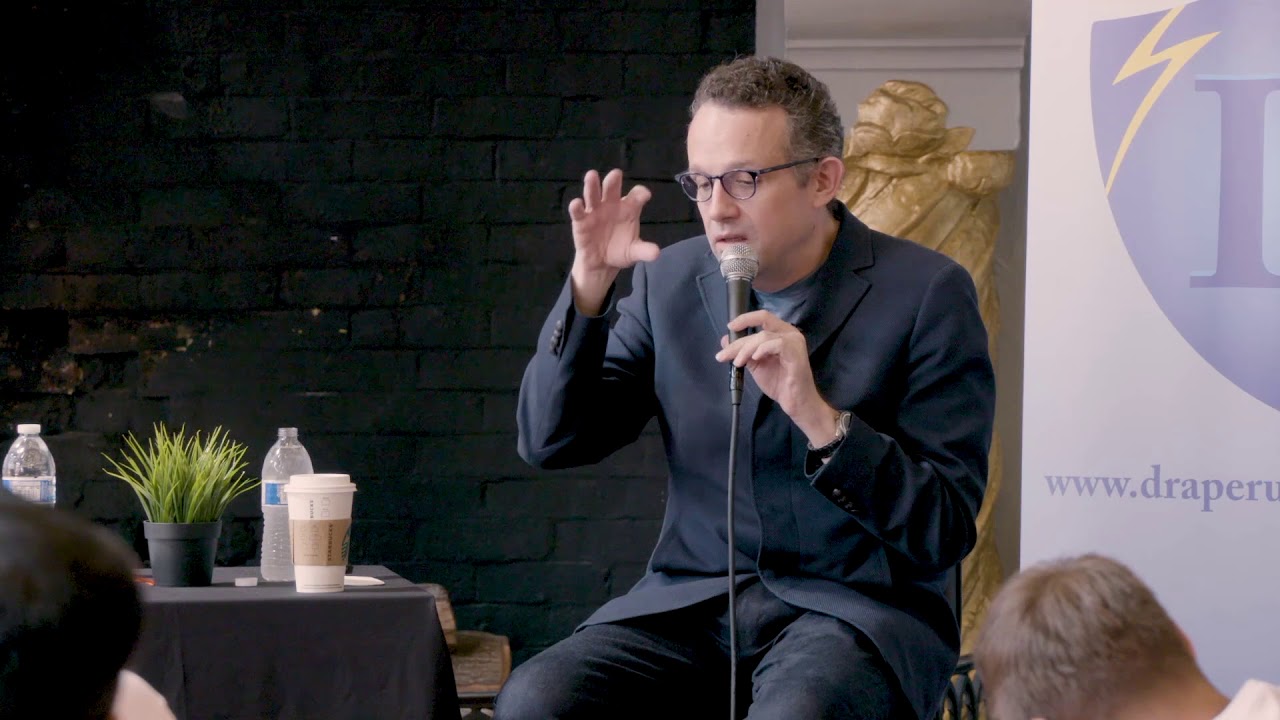
Phil Libin explains why Evernote started with a "minimal awesome product" instead of a stripped-down MVP. Synchronization across devices was the killer feature that made it work, and early funding came from friends and family before investors who actually used the product.
A lot of these guys and girls are building their first MVP. What was that MVP for Evernote? The very first version of the product you guys built, and then how'd you iterate on it, and based on what?
Well, Evernote has a pretty complicated history because, again, there was already some shareware stuff that was called Evernote. That was a different product that was made by Stefan's team, and it was a pretty messy the beginning. So when we kind of reformed the company, we started more or less from scratch, and we said, okay, it's going to be a new product. And so we thought a lot about the MVP. But I kind of don't believe in MVP thinking. I don't like this framing. I think instead of the minimum viable product, you really have to think about the minimal awesome product. What's the fastest time to make something great. And you can make something great before it's good. Evernote was great well before it was good. And that's a characteristic, I think, of a lot of successful products, is something about it is awesome, something about it is great, even if the whole thing isn't actually all that good yet. But good, you have time to refine. You can make it better and better, but you have to capture— You have to capture someone's imagination, someone's attention with great. So we kind of said, like, what are the smallest things that we need to do to just, like, be amazing? And we didn't think about table stakes, like the table stakes we're willing to not have at the table. And back then it was, well, it needs to be synchronized everywhere without you having to do anything, because nothing else was doing that at the time. Like right now, of course, like you just take that for granted, but in 2007, There wasn't anything that you just did stuff on your phone or on your computer or on a different computer, and it was all everywhere. You didn't have to think about where it was. You didn't have to do anything. You didn't have to carry USB sticks around. You didn't have to FTP stuff to each other. It was literally nothing like that that was in mainstream usage. And so we said, the thing that's going to make it awesome is I just did something on my phone, and then I put my phone down, and then I went to my computer, and it's there. How did that happen? That's amazing. And so we built that, and we made sure that was working. And then everything else was actually— in almost every other way, we were behind other note-taking tools in terms of how many layers of folders and flags and categorizations we had and all that stuff. We were really primitive on everything. But our killer feature was you had it everywhere on all of your devices without thinking about it. And that made it great. And then we spent the next— You know, 6 years trying to make it good.
So during that time, were you guys pitching investors? And I understand that at that time, most phones already had a note-taking app. What were some of the investors telling you during these meetings?
So we were really bad with investors. We had no institutional money. Excuse me. Our pitch was, yeah, basically I would come into VCs in Silicon Valley and say, we're making this thing that's going to let you write stuff down on a computer or a phone, and we're going to give it away for free. And I mean, that just was a really bad pitch. And sometimes investors would ask, well, so what's your competition? And that's when, yeah, we had the world's worst answer. Every device already has a pretty good note-taking app for free, so our competition is infinite. So, yeah, so we didn't get any money. So, all of our early investment was all from us. So, luckily, we had already sold 2 companies, we had some money, we believed in it, so we did quite a lot of friends and family. And then Stéphane had sold previous companies, and so all of the founders had— this wasn't It was no one's first company, it was all of us, it was like second, third, or fourth. So we were able to fund some of it ourselves, and then we had friends and family, and then institutional money came from just all sorts of crazy places. Like, we had these Calgary oil barons invested, we had Docomo, which was the big Japanese telecom company, invested, there was a big Russian bank that invested. And And what all of them had in common was that they were all users of the product or some early version of the product. So all of our investors were fans. They were all just using the product, and we didn't have to explain it to them. They got it because they were using it. And that never changed, actually. We raised almost $400 million total, and I don't think we took a penny, even large institutional rounds. I don't think we ever took a penny from anyone that wasn't a fan of the product first. What was the most important lesson you learned from your early investors?