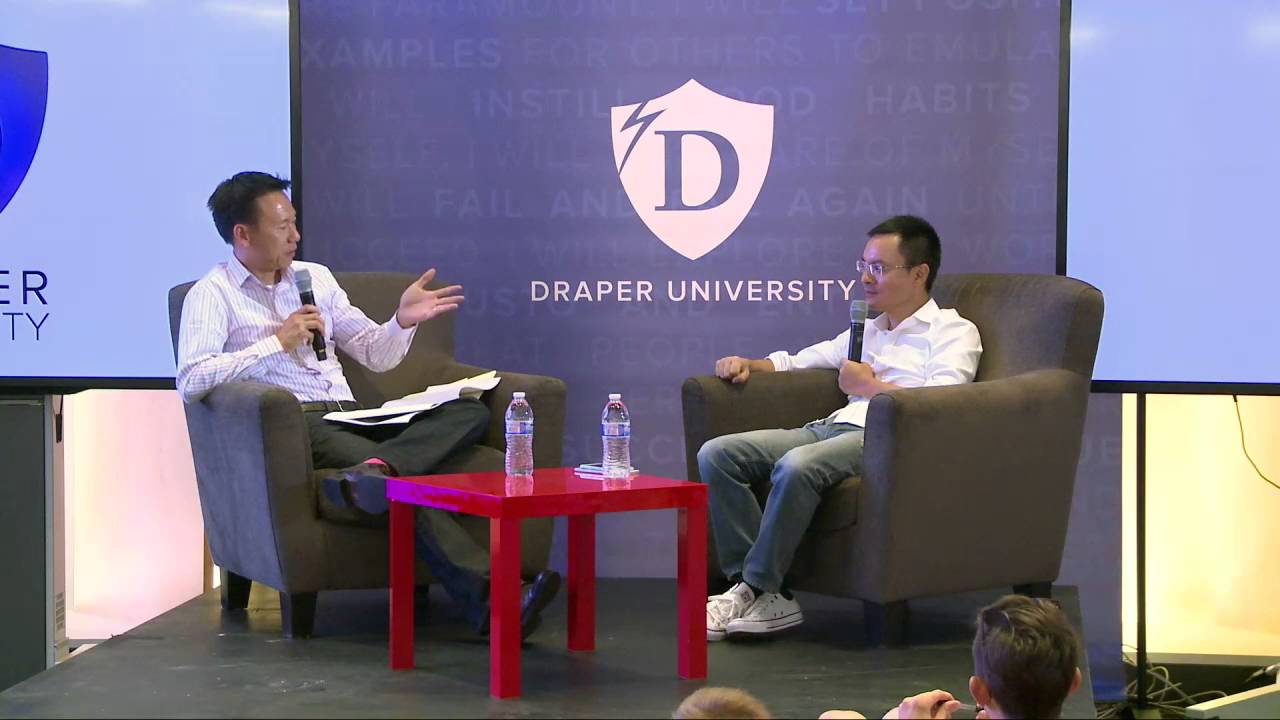
Richard Liu discusses what makes companies succeed, using Xunlei as a case study. He emphasizes founder commitment and conviction, and lays out three essentials: a large market, correct timing, and network effects that drive 20x user growth.
Chapters
So going back a little bit, so Xiaomi is obviously a huge, the largest unicorn on the planet right now.
Yeah.
But maybe some of the other, what was your first successful investment and what did you learn from it? I remember one of the first interesting deals you told me about was Xunlei.
Yeah. Well, the Xunlei guy is quite interesting. When I just joined the industry, that's in the year 2000, right? So I met the founder during some kind of, you know, the summit, investor summit or something like that. And that guy's name is Sean. I met him. He's Chinese and studied in the United States, graduated from Duke with a master's degree, and moved to Silicon Valley and worked as a programmer here. And in the year 2000, the first time I met him in China, And he presented some exciting idea, and he said, "I had a great team—the guy from the team member from from from Yahoo and from like Microsoft, something like that." And then my question is, "Okay, that looks great. When will you go back to China?" Because the business plan is we're startup in China. And then he said, "Yeah, I will go back and move all the family and my team member going back to China." And then six months later. is gone because all the people have high opportunity cost. And then internet bubble burst, and they have no guts. After 2 or 3 years later, Sean go back to China, and then we reconnected with each other. And I The question I asked him, why you actually same business plan? Why you just this time you going back? He said he learned if the people without commitment, that's no power at all. So he said this time I have no VC, but I decide move whole family from United States to China first. Show my commitment, and then I want I want to really do something great. So that's something I I think you know I realize the real entrepreneur is different from others is that you guys are minority because most of people they have no gut and no commitment, and they chase up the opportunity. but they have no belief. And the real belief in your heart, that's the fire in your heart, can push you to do something without too many, you know, excuses.
Mm-hmm.
So you have no excuses. You just follow your real, you know, the fire in your heart. So Sean showed me the commitment. I showed my respect to him. And then that company is quite interesting. He has the technology like a peer-to-peer and a search engine technology. He used search engine to build up the index of all the multimedia content. For example, one particular multimedia content, his search engine can tell you how many identical source over the whole internet. They used the search engine to build up that index. And then he not, not like Google to use the search page ranking, He used the ranking to decide if you want to download one content. He can download one same content from multiple resources at the same time using the P2P technologies. So that's the technology, that's the initial idea. That's the big vision, but it's starting from a very small step. The first step is collaborate with the online game. So, that's the history.
Right.
And I remember, I find out, you know, most of my successful investments, they have the 20 times phenomenon. Means in one single year, if they find out the right networking effect, the whole user base can increase 20 times, like UCWeb, like Xunlei.
On that note, maybe tell me about the most recent, I think, the real estate investment. I don't know how much of that— feel free to disclose whatever has been public. Most recent interesting projects.
I think I would like to maybe brief the case study. Andy knows my investment recently, but I would like to share probably one framework with you guys, how we Identify the opportunity, how we decide to invest in this company or not. I think 3 things are very important. The first thing is that we try to bet on the things really big. Because at that point, I don't know whether you guys know or not, but basically I find out that a lot of entrepreneurs, they spend too much time on something too small. So how to screen and make judgment what sector or what opportunity or what business plan you want to jump into that? One criteria is whether it's big enough. Whether it's big enough or not, that's very important things. In our screen, you know, the criteria. First, You must think very big because my LP is very greedy. They want 50 times, 100 times, 200 times multiple from single successful investment.
It is a high-risk asset class, so you do have to have high return.
Same as the entrepreneur here. Sometimes a lot of entrepreneurs approached us. Our final conclusion is that It's a viable business plan, it's nice, but it's small and beautiful. It's not deserve the risk-taking investor like us to commit.
Mm-hmm.
So, you must think big question. That's first. The second thing is that, you know, choose the right timing. Because as early-stage venture capital investor, We found out that a lot of, you know, our investment failed because we just too early to bet some deals. Early to, you know, because we are visionary, we think about, you know, the big trend, what happened with the next 3 or 5 years. But we are too visionary and And you jump into and commit into one sector, but the customer is not ready, the market is not ready, or technology is not ready. So timing is something that is even tougher than the size and the trend. We have a lot of, you know, similar cases like that.
But do you think there are some cases where if you're too early, if you're a very persistent entrepreneur who would last 10, 12 years, does that make up for timing?
I think that's a good question, but it all matters about the possibility of the successful rate. I mean, if you are— you have very long time too early and you have to persist for a very long time, that means the possibility to success will be low because the morale will be very low.
Yeah.
And you have— it's very hard for you to create the momentum. And sometimes you are the earlier one, you persistently just try to survive, and then when the timing comes in and some new players jump into with the greater momentum and a high morale, you will become the weak player. Yeah. Or you cannot just survive to the timing because sometimes you don't know when will be really boom, you know. So timing is the second very tough and critical question.