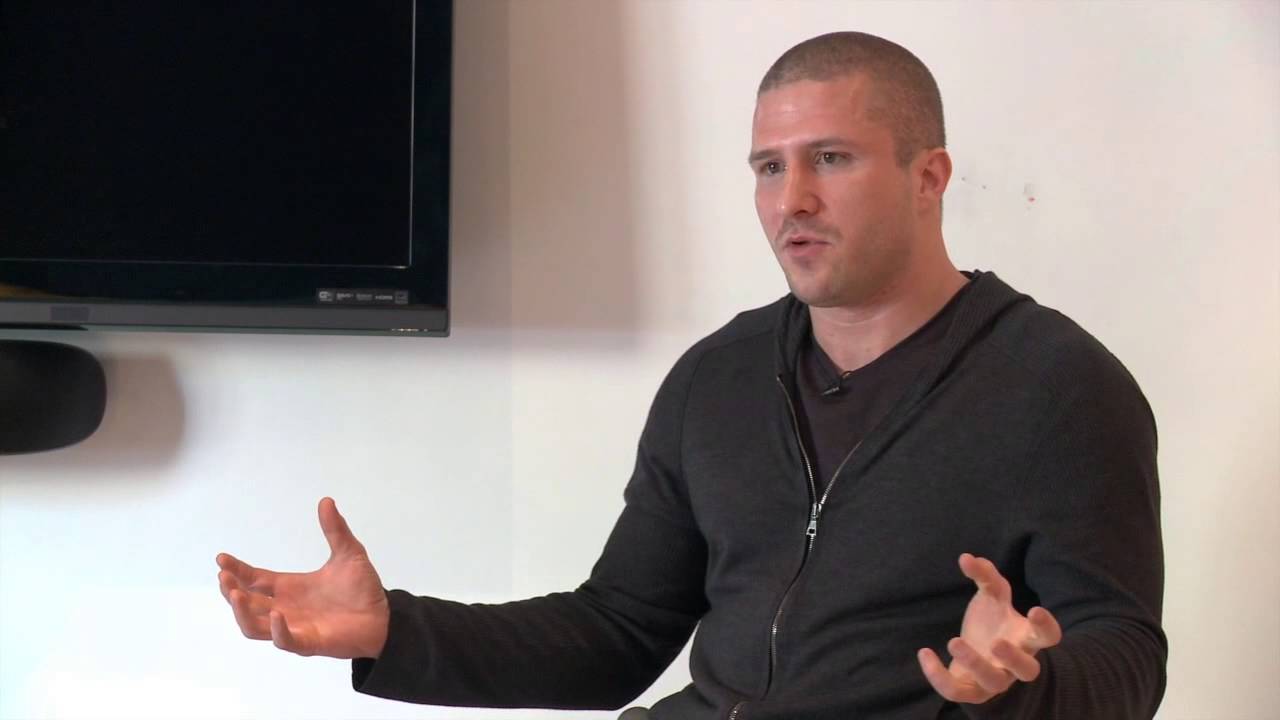
In this talk, Shawn Fanning stresses that selecting a co‑founder is a foundational decision that can make or break a startup. He argues that founders should look for complementary skill sets and a shared high‑level vision, especially an understanding of customer psychology. Using his partnership with Sean Parker on the social‑meeting app Airtime as a case study, Fanning illustrates how a non‑technical, business‑oriented co‑founder can balance a technical founder’s expertise. He walks through the challenges of designing a platform for meeting new people, contrasting online dynamics (e.g., Chatroulette) with real‑world social interactions, and emphasizes the need to study real‑world behavior rather than merely iterating on existing online models. The core takeaway is that a successful co‑founder relationship hinges on clear role agreements, a meta‑level focus on user motivations, and the willingness to explore unconventional product designs.
Chapters
The first thing, like, have you guys ever read that article, I think it might have been Venture Hacks, where they say fire your co-founder? Have you guys heard of this? Yeah. It's basically stressing that the importance of choosing the person you work with upfront is so important that if you're not really seriously thinking about the nature of that partnership and the importance of that being the right pairing, that you're in for a really difficult ride. So starting at even that initial, decision to choose your counterpart, it's so important that you find somebody that complements you. And as I have a hard time talking about some of this stuff because sometimes it seems like trivial stuff, but it's stuff that even having done it for over 10 years, it's easy to still make these mistakes because they are hard conversations. So growing the team from just an individual, and I'll use myself as an example and then go through from maybe 0 to 20, 25, So choosing a counterpart, I've worked with— I worked with Sean Parker who is my current partner in my main startup and who is sort of more of a high-level thinker, businessman, not really a technologist. And I've worked with excellent kind of specialists, computer scientists as co-founders and kind of the most important thing around the dynamic starting off with the first 2 was that there was a kind of an agreement on who would kind of maintain the perspective, the high-level perspective on what's going on. And when I say high-level, I mean kind of the meta— understanding the psychology of the customer. So to give like a tangible example, my current startup Airtime relates to people meeting new people and that Seems like a pretty simple, kind of well-understood area, but the reality is 2 people who have never met, there's an incredibly complex dynamic. And as you get into kind of the social interaction around the fears and the motivation around one person approaching another person, the anxiety of being shot down, how social validation works, how social ranking works, and how validation transfers. There's so much that you can dive into and learn from other products like in the case of Chatroulette, which degraded into what everyone knows about now. The novelty there was that it had eliminated the approach that 2 people were being introduced by a third party, just as at a party you'd be introduced by a host. And the conversation was staged in such a way that there was no agenda. There was a kind of fresh, clear starting point for 2 people to engage in conversation. So for me, working with Parker, who I had worked with 10 years prior, we had been kind of thinking about the question of why is it so hard to build a general, service for meeting new people that does not deteriorate into a dating site or a porn site? What is it that makes this particular problem— and Sean and I having met online, met through IRC and having used other communities, Usenet and things, know there's a lot of substantive interaction. Why is it such a hard and challenging problem to design something that would facilitate all of these engagements? And the reality is that the success of that partnership came from the ability to think through this bigger picture stuff and look at the real world to draw our inspiration. So rather than thinking about how Facebook works and how introductions work online, we think about what happens when you run into somebody on the street or approach someone new. What is that dynamic like? You don't have a profile of everything that you're interested in, all of your personal interests written on your shirt. It's actually up to you to disclose what you're about piece by piece and shape that profile. perspective. So there are so many things that are actually in the physical world very different from the way the online world works and were we to just sit and try and focus on evolving what already exists, it would have been a much less interesting product or solution. So for us, that partnership was— a big part of it was about thinking through the bigger picture, trying to understand our customers, understanding the psychology, the motivations and trying to dissect why it hasn't worked and what maybe will distinguish between it being kind of a moderate success and us ending up in this kind of purgatory I described earlier or building something that actually becomes a massive success on a large platform that facilitates all types of interaction. And the distinction there again comes back to trying to truly have an understanding for what your product is providing, why you're choosing to start off with the product that you release initially and how you choose to phase that. Product over time.