On Changing Laws to Keep Getaround in the Game | Getaround Founder Jessica Scorpio
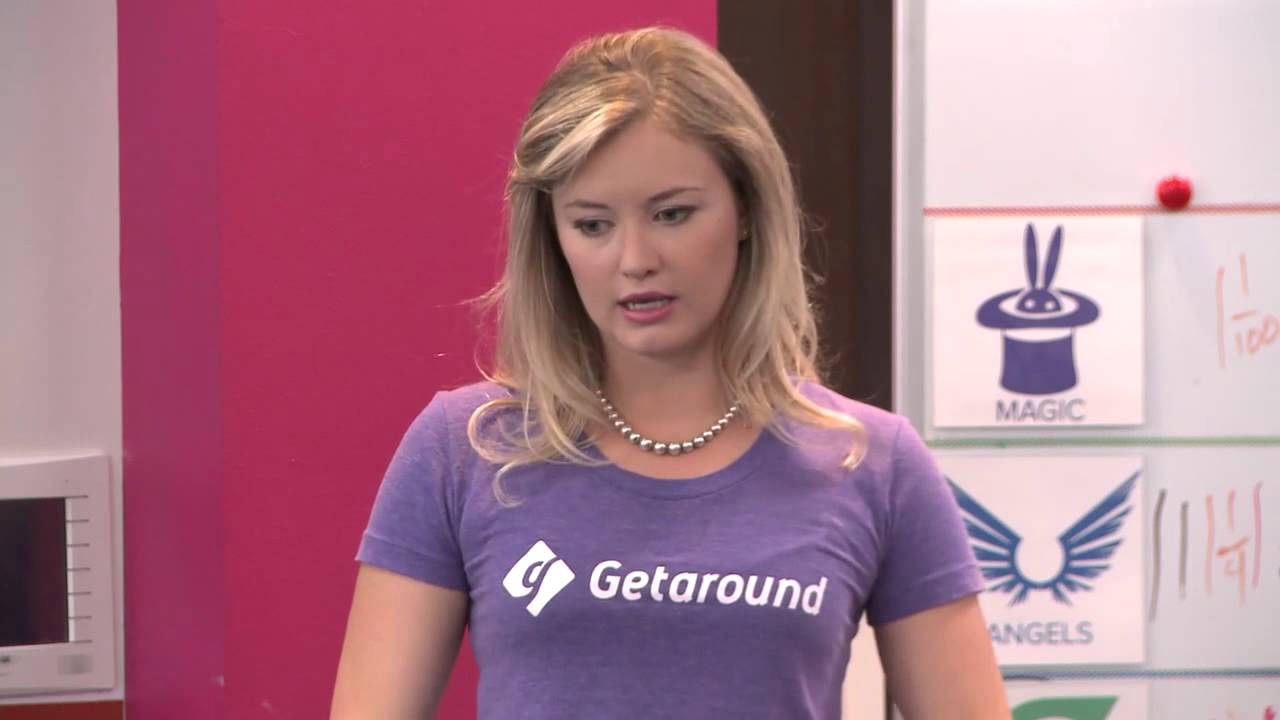
Jessica Scorpio, Getaround co-founder, shares how the company went from a ten-car pilot at Singularity University to a public launch. The team built smartphone-unlock hardware, convinced Berkshire Hathaway to insure peer-to-peer car sharing, and lobbied California to legalize it. TechCrunch Disrupt launch brought 5,000 sign-ups overnight.
Chapters
Then the real work started, and we kind of dove right in. Basically, with this problem, we had to imagine, okay, so how can you get people to share cars? And so the existing standard was basically through a fleet model, and so we were inspired by what Zipcar and other car-sharing operators had done, but we just felt that that was a drop in the bucket in comparison to what you could do if you would mobilize and empower individuals everywhere to car share. And so our original vision, and it's still our mission, to enable people to car share everywhere. But what we've found out and what we've had to do is really focus down on getting it to work on a micro level before trying to, you know, eat the whole apple or go everywhere. And so this is Getaround. This is one of our cars. As I mentioned, we have all kinds of cars, so we're probably the most diverse car-sharing network in the world. With, you know, where we operate, we have cars pretty much on every street corner, if not 10 in a building. And that's been part of our secret sauce to really get it to be sticky and get it to be a great experience. With Getaround specifically, we had to overcome 3 main challenges to get to market. We actually developed hardware technology. Passed legislation, state legislation. We passed laws to get this to happen. And we also had to develop a one-of-a-kind insurance policy, which was extremely difficult because we were just these kids from California who had a dream, who didn't really know anything about insurance or the automotive sector. So insurance took us about a year to get that deal done because we were developing something that had never been done before. And the insurance companies just didn't know how to write a policy to let us operate. But the important thing here is that basically you have cars, and you have to figure out the system of how to match people with those cars. So the first kind of thing I want to share with you in terms of being successful is to get proof of concept quickly. Figure out a way to test your idea on a small scale. And then scale up from there. Because if it's not working with 10 customers, it's never gonna work with 1,000 customers. If you don't— you can have costs higher than you would normally want in the early stages, but make sure there's not something fundamentally broken with the system, and just get enough proof that you can get to the next stage. So at every stage of your startup, you're gonna just take it to the next level and prove things. So, I kind of mentioned this, but let's go into it. So some of the early feedback we got, a couple main questions was, what about insurance? Which is what really set us on the course to getting a top-notch insurance policy. And then, this is crazy. You want me to share my car with a stranger? And so we said, yes. But literally over and over again, the brightest minds, a lot of very smart people said, great idea. I don't think it will work. It's way too hard, and I would never share my car. And so we said, well, we think some people will, and we're going to go and find those people. So this is the lesson: start small, launch big. And this is something that we've really worked hard on and had success with. So basically, we really started small. To take a step back there, we did our initial pilot. At Singularity University, and in our year, the International Space University was co-located with us. So we had a few hundred students of all ages, basically 19 to 50, that were on campus. And what we did for our small proof of concept was we actually got 10 cars and about 100 people to share over about a month period. So basically, we found 10 owners who said, I'll share my car. This was a bit of a trusted network, so it wasn't complete strangers. But for all intents and purposes, they were all strangers. And the other piece of this puzzle is Getaround today is extremely seamless. It's all from an app. You walk up, unlock the car with your phone. And that was the dream. But when we started just at Singularity, we were prototyping hardware, but we didn't have the hardware solution yet. So it was a very high friction— test in the proof of concept stage where you actually had to meet up, basically text someone, meet up, hand off the keys, and then do that at the end. So just to share someone's car for 2 hours or a day, there was a lot of legwork involved. But that was actually a really good signal to us because there's such a high need for cars in certain areas that people are willing to even do that. And so that was our proof of concept. When we ended up launching— so I told you some of the hurdles we went through: legislation, insurance, hardware, technology, finding some crazy people who wanted to share cars. Then we ended up launching pretty big, and we didn't know it was going to be as big as it was. Definitely what I've heard from various other founders is if your first launch doesn't go well, just keep trying. No one's going to notice, so just launch and launch and launch. We were very lucky that our launch, we came out with a really big bang. We— well, I will say it's actually an interesting story there. We ended up launching at TechCrunch Disrupt a few years ago. And it was a great world stage for us to launch on. We got a lot of press, and we got a lot of awareness. But initially, we were not allowed to participate. Initially, we were told, oh no, you're already operating. You're out there. You're launched. We said, uh-uh-uh. We're not launched. We've been so stealthy and so quiet. And what happened was TechCrunch wrote an article on us that we refused to comment on. And so they said we were launched. But anyway, just another example. Do not give up. This is your biggest passion. You're going to have to fight as hard as you can to make it work. But it really pays off. So we started small. We launched. from where we initially couldn't find 10 or 20 people to do it, we had 5,000 people sign up to do it overnight. So getting the right launch where you focus on a really good presentation, where you focus on pitching press and getting press articles lined up, can really, really pay off. So this is the next story I wanna jump into. I already talked about it a lot, but I'll dig into it a bit more. So in terms of launching. Getaround's just one of the hardest companies you can possibly think of because we do legislation. We do— it's a marketplace. So marketplaces are super hard. You have to get the supply side and the demand side right. You have to— we do operations. We do claims. It's a really interesting business that has a lot of mix of technology, marketing, market development, and operations. So It took us a while to get all those things working in sync and in concert, but now they do. Early on, our biggest hurdle was actually finding insurance, which I've talked a little bit about. Originally, we thought we had some good connections in the insurance industry. So we basically went out and talked to those people. And the really interesting thing about the insurance story is that the common knowledge about insurance is that you can insure anything. And so starting a company where you need insurance, you're like, well, if we can raise money, and we can package it up, and we just tell them how much does it cost, then we'll pay it. But what we quickly learned is that's not exactly the case. And typically, insurance products are highly regulated. Hey, Indy. You want to get up here? This is a good spot for you. Come on. He likes to be comfortable. You're good. So, yeah, basically with insurance, I'll just kind of get to the punchline. We ended up talking to at least 200 insurance companies. And big ones, small ones, commercial carriers only. We cold-called. We sent letter packages. We door knocked. We just did a lot of crazy stuff because mostly everyone said no. People rejected us. And they— we got one very positive indicator around insurance, which was that, come back to us in a year or 2 with operating history. So here's the catch-22 with— you can kind of face it a lot with investors or with insurance in this case, where they say, I like your idea, but I want to see more traction. Insurance specifically, I mean, this is a little hilarious. Okay guys, I want to show you operating history. I want to show you traction. But you won't give me insurance. So actually what we did with the carrier we were able to get the furthest along with, they ended up doing, I believe it was a 3-month pilot so that we could get started. They could see something. Realistically, it's a funny request because in insurance you want— 3 months. Like hundreds of thousands of miles. You need very high volume to really make any actuarial decisions. But it was still a language that they could get comfortable with and that let us get what we needed. But what's funny is the way we actually finally got our insurance deal done, and luckily this just comes from my background in politics and us just being as scrappy as possible, trying everything we possibly could, was that we ended up turning to the law. Okay. Well, the insurance companies that— basically, we ended up partnering with Berkshire Hathaway. They said, I love this idea, but the one sticking point we have is this kind of gray area as we see it, which is when the renter is driving the car, who's going to insure the car? And we said, well, you are. Like, you saw the quotes you gave us. We're going to pay all that. And isn't that what we're talking about? They said, well, yeah, but you know, it's insurance. And when you go— And you have an accident, then everyone gets into it. And so we said, okay, well, we'll go. We have another idea. So we're going to go to the California State Legislature. We're going to get some partners. We're going to get out there and tell our story and see if— the time is now for this idea. Car sharing has existed for at least 10 years. Many people before us have talked about this. We didn't know when we started it. We thought, if we don't pour everything we have into this idea, it'll never exist in the world. And I actually do believe that is really true because we had to overcome so many hurdles to make it successful. But basically, this law was just one of those hurdles. We spent about 6 or 8 months talking to the stakeholders, getting it to the floor, and then getting it passed. And then it— with most laws, they actually go into effect the year after. So if you pass something this year. It will go into effect January 1st, 2016, which is pretty interesting. In some cases, laws can get passed and go into effect immediately, but there are certain cases on a state-by-state basis that restrict that. So in this case, timing was pretty good for us, and we were able to get the law. And then that gave us so much credibility that these big insurance companies really took notice. So not only were they already saying, call me back in a year once you have some operating history, Now, they— we were insurance news and we were car news. And it— people have different perceptions around laws, but definitely passing a law is a big feat. And we've since passed it in various other states. So we don't see the legislation as a requirement. In a way, it just helps consumers get on board since it's kind of an endorsement and it's illegal. Like, it's a legal right now to share your car in California, which is a pretty cool thing. Because we could have just become big and then figured out how to address these things retroactively. But because we took a long-term approach to the business, we've done various things that have been big investments that have led us actually— what we think— create a very sustainable long-term business. And that's one thing we're really excited about. Thank you.
More from Tim


He Sold His Car to Build This Startup, Then Pitched It for $1M 😳 #Startups #AI

This Startup Moves Your Crypto BEFORE Hackers Can Steal It 😳 #Crypto #Cybersecurity




15 Months Without Refrigeration?! This Startup Thinks It Can Go Global 🥥 #FoodTech #Startups



