Part 6 Revenue Model & Your Team | Pitching Workshop
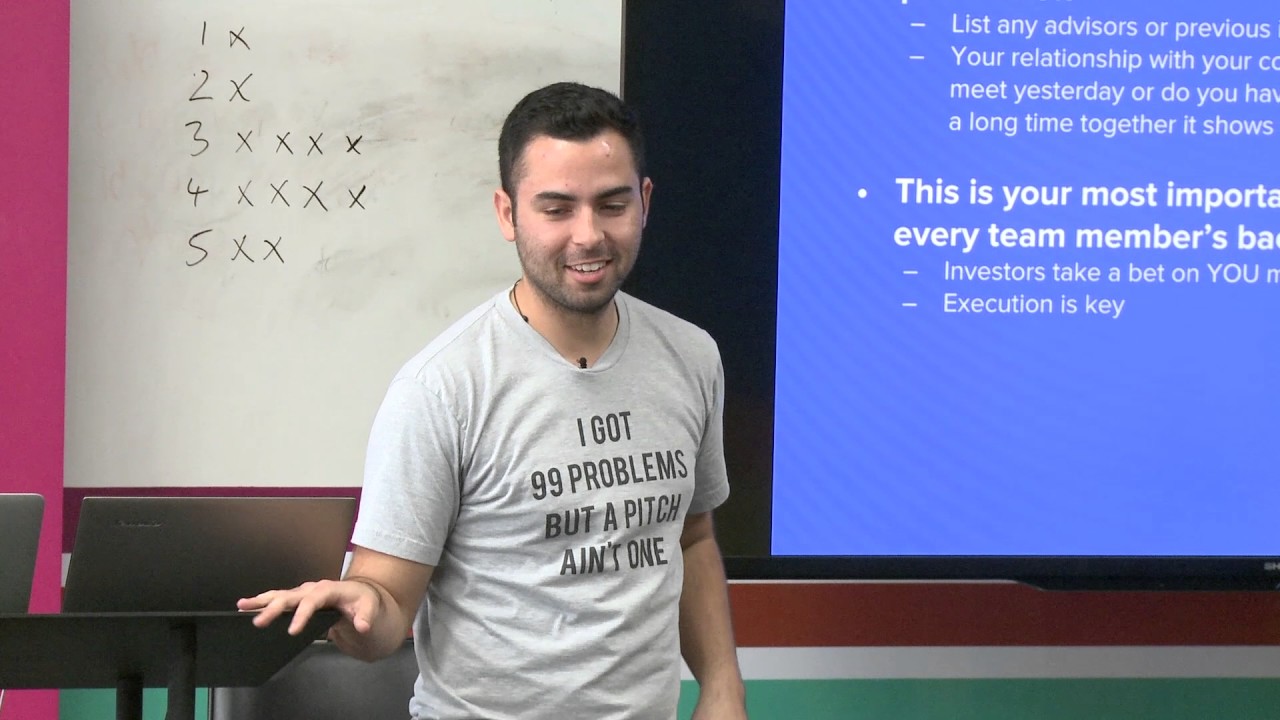
Tim Draper leads a workshop on pitching to investors, covering revenue models, pricing, five-year projections, and why your team slide matters. Founders learn how to show skin in the game, make a clear ask, and recruit advisors and customers during pitch events.
Chapters
Okay, so after that, revenue model. How are you going to make money? This is where you talk about your price points. Are you B2B, B2C? Investors really care about this because at the end of the day, they want to make their money back, and that's all. And then after that, you want to have your 5-year projections. Like I said earlier, know your numbers and then also be able to back it up. And hopefully you can show that the investor's going to get at least 10 times their money back because, you know, they invest in countless companies and they need that one home run to And this is where you want to show off all your charts, like you talked about the hockey stick curve. So include mostly visuals on this slide.
All right, and then my favorite slide is actually the team slide. I think it's one of the most important ones. There's been countless companies where they start off with a specific product and they end up with something completely different. But the investor invested in the actual team rather than the specific product or company. So I think, I mean, this is really, for me, it's one of the best slides, really showing who your team is, the bond that you guys have together, why you guys are the perfect people to make this happen. And when shit gets rough, how are you guys going to deal with it and pivot into something else? Or that chemistry that you guys have together. So show off your team if you're pitching. You can pitch yourself a little bit, but I usually like talking a lot about my team. The engineers that I have, the experiences I've had with them, just showing that chemistry. Did you meet your co-founder yesterday at a bar and you just decided to do something together? Or have you guys had experiences together, built the actual relationship? So I think this is a super important slide. I don't know, how was it for you guys being co-founders?
We knew each other from middle school, so we had a long history, which is helpful. And then we worked really hard on building out our executive team over time too. We've got some super talented people. And you're right. The investors are definitely investing in those people. And the team slide's important. For us in our new deck, we're putting the team slide earlier in the deck than we normally do because it's such a strong story.
Got it.
Strong point. Cool.
You also applied to a lot of accelerators. And investors look at this too. They always ask, have you guys worked together in the past? I'm sure you guys started a company before, right? Together.
Starting our second company right now, but yeah, we started right.
So you guys, yeah, so everything working on favor for five and a half years together. All right, cool. A strong relationship. Do you have a co-founder, Ed, or a good team right now? Yes, and actually it's funny because when I started, I had a co-founder, and a few months later he left. So I passed through this problem, but then the guys who we hired in the beginning, they became partners, and then we were. And we back-tested through the whole process.
Cool.
Let's just do a little activity. Can one of you brag very— like a lot about your co-founder, for example? Can you brag about her? Anything that she's done in the past? Sure.
Yeah. I can brag about her.
Cool.
Yeah, let's do it.
She's a really strong leader, first of all. So she put together a really strong vision And we've got a really great team together. So yeah, with her passion, she managed to get a crazy good team on board.
Mm-hmm.
And she's a total pitch master, I would say. So she has a really strong presence in front of camera or in front of people and can talk really well about product or anything in regards to the business. Ashley.
Mhm.
And, uh, uh, she's— I mean, she's really good to work with. Like, like, we have a really good company culture, and I think a big part is, uh, is, uh, due to her putting in the right people and, you know, us all being together. Yeah, super hardworking and, you know, like a good role model for everybody else in the company. To put in all the best work that we can. And there's a lot more.
Good. I mean, I think that's a really good activity. I don't know if you guys have any rock stars in your team that you want to talk about. Maybe you've recruited, or one of your co-founders. Anybody want to— you guys are on camera, so maybe they'll see this. Do you have any—
Is there anyone on your guys' teams that came from the industry you're working on, had a track record, and that's why you guys saw this as a market opportunity and be like, this person did XYZ for this big bank and they realized that something was different for this area and so we want to attack it and he already has this experience or something like that. You don't have that?
No one? Yeah, just I want to hear one of them. Just, yeah, go ahead.
So we managed to, after like 2 or 3 months of market validation, we went to Bangkok to build an in-house dev team there because we were bootstrapping We didn't have much money, and so we wanted to have a lower rate. And in that process, we managed to pick up Martin, who was the CEO of a pretty large travel management company in Asia Pacific. And he started as an advisor first. And after we worked together for a bit, he confirmed all of our hypotheses and stuff. And then after like 2 months or something, he quit his job at the agency as a CEO managing like 1,000 people and joined us as a COO. And yeah, he's been working with us ever since, managing all the travel supply, all the operations, and he also He also brings in this very strong experience from a large corporate culture. And he's still very flexible at the same time. So we have structure that is very flexible. So everybody benefits from his experience.
Perfect. Very nice. Showing how much skin you have in the game, just like that, that he quit his job just to join this new startup, how much risk he took. The investor's already taking a big risk on you. So what risk are you taking, or your team? So that's really good to point out too. So basically, this is like the last— one of the last things in the pitch or a normal type of structure. If you've already pitched to them, told them a story, your problem, solution, they've literally known your whole life story about your company, ask them for something. If it's with an investor, you know, how much are you raising? What can that investor do for you? If you've done your homework correctly, then you know that they invest in these areas. This is what I need from you. Or maybe partnerships. They may introduce you to someone else or to a different investor. So always have a plan. Always have an ask. Even when you're pitching to a group of people, have an ask for them. So know your audience. Whether that ask is, hey guys, just come onto the website after this and sign up, or install the app right now. Always have an ask. If you took their time and they invested in you by hearing you, they're more willing to actually just do what you're telling them.
Let's see.
Then—
Yeah, this is obviously the last slide. End your slide on this and just have all your contact information. They need a way to reach you. And then also, after that, you can also have an appendix. One thing I've noticed from pitching my idea all the time is that I get asked the same questions over and over and over again. So once you do this, you start getting a sense of what people are going to ask. So here you can have a slide ready to go. Say they want to look at a 10-year forecast, not 5. Bam, there it is. And there's always going to be a Q&A session, so be ready for that.
In terms of, for example, for pitching events, I don't know if you guys will ever pitch to a large group of people. But even when we're with investors, what really works out really well is trying to acquire customers at every type of pitching opportunity. I think it shows the investor that you truly care about the growth of your company and bringing people in. So for example, when you were at the bar and you're sitting with somebody, you're actually trying for them to get them on board. So during pitch events, we usually have a thing where I'll put up Sign up now and you get 30% discount on your first month just for being in this room. So that helps me acquire customers, shows the investor that I— if there's investors in the crowd, shows investors that I truly care about acquiring customers, that that's my main focus. So that's a really cool strategy that we've seen work over the past few years here very well.
Cool.
Cool. So this was pretty much the outline or structure of a regular pitch. Hopefully you guys got a few good tips out of it. What we're going to do later on tonight is everybody's going to get a chance to pitch their business. Even if we're not that good at pitching, we're going to get really good at it. So it'll be interactive and stuff. But right now, I'm going to hand it off to Joe.
Hi.
More from Tim


He Sold His Car to Build This Startup, Then Pitched It for $1M 😳 #Startups #AI

This Startup Moves Your Crypto BEFORE Hackers Can Steal It 😳 #Crypto #Cybersecurity




15 Months Without Refrigeration?! This Startup Thinks It Can Go Global 🥥 #FoodTech #Startups



