Partnering and The Future of 23andMe | Emily Dabrant Conley
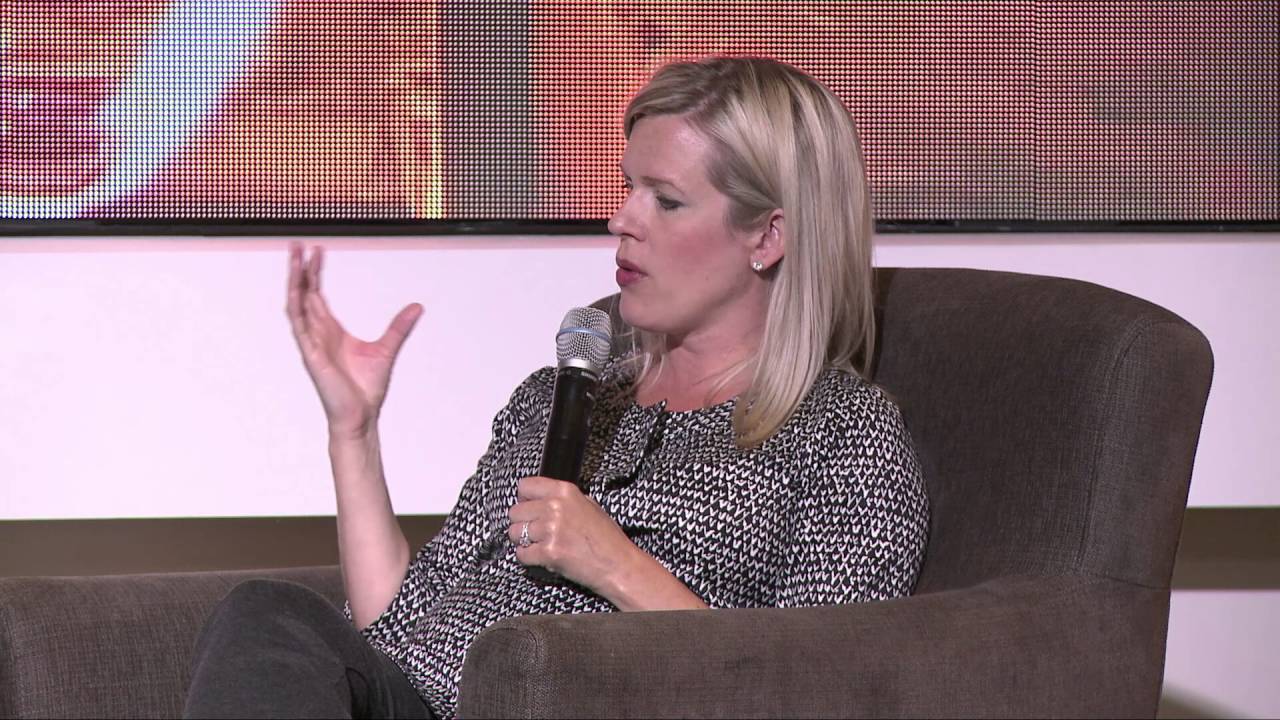
Emily Dabrant Conley, a senior leader at 23andMe, explains how the company partners with pharmaceutical firms, prices its genetic tests, and launched an internal drug division. The company shifted from flat fees to milestone and royalty deals with pharma partners. 23andMe's genetic database gives it an edge in developing its own therapies alongside external partnerships.
Chapters
So how do these deals come by? Can you just break it down a little bit? Like, are you going and knocking on the doors of pharma companies? Are they based off connections that you guys already have? Are the pharma executives coming to 23andMe's door? So just the anatomy of a deal, can you just sort of break it down?
Yeah, a mix of both. I mean, we've been talking to pharma companies for a long time, and luckily we have senior leadership at the company that's really, really connected. And so it's certainly a mix of, you know, We know a lot of people in the industry. That said, we've spent a lot of time kind of proactively going out and approaching companies, and we've really had to prove ourselves. So the atmosphere, even 5 years ago, our database at that time was, I don't know, tiny, maybe 100,000 people. We're now well over a million people. So 5 years ago, pharma was interested but very skeptical, and we had to do small, small deals with them to kind of prove what our capabilities were. And then as those things succeeded, we really started to gain momentum among multiple different companies that we were working with. That, you know, they started with a small project, and then that went well, and then they wanted to do something bigger, and then bigger and bigger. And so there's been, I would say, a bit of a snowballing effect. And simultaneously as that, we've been partnering more and projects have gone well, the database itself, kind of the asset, has also grown really significantly. And so that's That's made it, you know, certainly helpful. I would say present day, it's kind of a mix of, you know, us approaching some entities if we have something specific on, you know, say we have information on a particular disease and we know there's a company that works on that disease, then we can go out really proactively and say we have something that, you know, that you may be interested in. And then there are other conversations that just kind of evolve through, you know, spending time at JPMorgan and that sort of thing.
Great. Can you talk a bit about how you think about pricing your consumer tests and give a sense of how the revenue breaks down? How much is coming from these deals with the partnerships and how much is coming just straight from sales of the consumer tests? And how do you then pick a price for the consumer tests such that it's going to be affordable? So what are the dynamics around that?
Yeah, and I can't get into too much detail. I mean, just given we're still a privately held company, so we don't disclose a lot about pricing. But from the consumer test standpoint, we really— so our mission is really for people to be able to access and understand this information. And so we've always sought a DTC path. We have never been interested in being reimbursed by insurance companies or requiring a physician to order the test. We feel like that's a barrier between you and your data. And so it's been important for us to have that price be as low as possible. When we first launched, the test cost $1,000 because the technology was very expensive and we had very small volumes. And over time, as the technology— and this is just something that's happened in genetics, it's much cheaper now to do genetics assays— that cost has come down. There are still some fixed costs associated with what we do that are not going to be scaled based on volume. And one of the things that we've— has been— this ties back to the regulatory component— is that we're now an FDA-regulated medical device. And that process, both the process of gaining the clearance and the process of maintaining ourselves as a regulated product, is costly. And so that adds, that certainly adds some cost to the product itself. And that's something to think about as you're thinking, if you're launching a product and you're thinking about the regulatory piece of it, to not ignore that because it will affect your COGS. And then I think you asked on the pharma side.
Mm-hm.
We don't really disclose very much about those deals. The model there has shifted somewhat. Early days, we were really kind of fee-for-service. And as we've proven out the value of the data, we've shifted to a model where people— where we're now able to get backend milestone payments if we're successful with a partner, or even royalties if we develop a drug or diagnostic together. satisfying, I think, to move towards that model and to feel like incentives are really aligned. In the fee-for-service model, there's not that kind of alignment that you feel. But now, if we do something and it's a win for our partner, it's also a win for us.
Great. So to the third part of your business, the newest part, which is the drug discovery part, how do you see that as fitting in with the other parts of your model? And is there at all a sense that, well, now in some ways we're competing with some of our partners? Or is it just that you guys are going to do a stage that they're not doing? I guess my question is, why did you feel that you needed to start your own drug discovery unit as opposed to continuing to partner with pharma? What can 23andMe do that you don't think that big pharma is already doing? And how do you make sure that you aren't ending up in competition with one of your partners?
Those are all really great questions. And I think for us, we're an interesting company in that we have these 3 business models. That all really tie together. So you have to have the consumer to generate the data. You have to have an engaging product to then be able to create this database that you can then mine for drug targets. And then you hope that you learn things about genetics that you can then port back to the customer that add value for them, whether it's a new therapy or even just a new insight about, hey, we just learned this gene is associated with Parkinson's, and we now can tell that's something that can strengthen our product. So they're very related. In terms of competition with partners, I mean, I think part of, you know, as a company we've always really believed in genetics as holding the key to better understanding disease. And Anne talks about, imagine if you had all the data of the world, like everyone's health data and genetic information, their medical records and their Fitbit data and all of it, that it's like really a lot of disease understanding is a data problem in many ways. And so if we just had all that data and we were mining it in the right ways, that there's a lot of optimism about what that could mean. And I, as I'm a scientist myself, I wholeheartedly agree with that. And I think with pharma, while we've been successful there, there are benefits to doing some of that ourselves. First and foremost, we're pretty small and nimble. So, and the database, it's, you know, it's, we're working in it every day, so we know it in a way that our partners don't. And we're actually not able to provide that individual data to our partners as part of our privacy terms and consent. So, you know, we certainly saw an opportunity to be able to mine the database and move quickly, and then to be able to, you know, profit from that hopefully in, by, creating new therapies in different ways than what we were doing on the pharma side. So it does, it has affected our partnering strategy. We, before starting our therapeutics division, we were partnering really broadly across all therapeutic areas, and we have narrowed that a bit as we've started to kind of hone in on exactly what we will be pursuing. Ultimately, I actually think it opens up more partnering for us because there will be Like, we're a small company, so we can only take on so many different targets or programs. And then there will be things that we will want to out-license to pharma. And there will also be things at various stages where we may take something into phase 3, but then out-license, you know, then partner on the commercialization, or etc. And so I actually see this opening up more partnering for us as time goes on.
Great. I do want to open up for questions shortly, but I just want to ask you one more, which is how do you make decisions on how much to share as a private company. And there definitely have been other health startups in Silicon Valley that have gotten criticized for not being transparent, not explaining how their technology works, or not having enough data out there. So how do you balance being transparent, and do you think, you know, with, you know, keeping what you want to keep in-house?
Right.
And also, do you think that it's different being in the health sector as opposed to other industries in terms of what the bar is for transparency?
I mean, transparency is so fundamental. That's how we do science. I mean, you know, I come from a field where we publish things, so, and then, and those things that get published are reviewed by our peers scientifically, so they're vetted. And that's something that we have really celebrated at 23andMe, both about the product itself, so it's not a black box. We tell you exactly what genetic variants we're testing you for. We tell you exactly what scientific publications we're basing the interpretation off of. And then in terms of on the research side, to be publishing the findings that we have. So I think when you're talking about the actual product, transparency is so important. And this is why we have a patent system. So if there are things that are proprietary, that you can file patents on those things and protect them as you need to, but that your customers understand, and certainly your colleagues can understand what you're providing. So that we feel strongly about. I mean, I think there's another piece to your question that's more on the business side of things, how the balance between what you share on deal details and things like that. And I think for us, it's important to talk about the things that we're doing. And it's also important to kind of make sure that we're not oversharing and protect ourselves kind of as we move towards some type of liquidity event at some point. So we kind of are thinking about having the future in mind.
Great. And on the future, my last question for you is just if you can talk about what the next steps are for the company in the next year, and then also looking into the future, what are you thinking about building?
Yeah, we have a lot on our plate. I heard someone say— there's like a famous quote that small companies don't usually die of starvation, they die of indigestion. And so cautionary to those of you thinking about launching businesses that it's easy to take on too much. And I think we've taken on— we are constantly taking on a lot. I don't think we have too much on our plate right now, but we We have a good amount. And so we need to execute on the things that we've set as priorities. So we have more work to do with FDA in order to continue to release new reports for our product. So that's a real core focus. We have a lot of partnerships with pharma that we need to continue to execute on. And then the therapeutics initiative, we're making a lot of progress there. So I think for us, it's kind of keeping our eye on the prize, making sure that we're setting realistic goals and continuing to meet those again and again and again. Because there's, you know, we have a big vision as a company. We want to revolutionize healthcare and change the way drug discovery is done. And so to meet those big goals, it's a lot of small steps on the way.
More from Tim


He Sold His Car to Build This Startup, Then Pitched It for $1M 😳 #Startups #AI

This Startup Moves Your Crypto BEFORE Hackers Can Steal It 😳 #Crypto #Cybersecurity




15 Months Without Refrigeration?! This Startup Thinks It Can Go Global 🥥 #FoodTech #Startups



