Pitch Competition Greg Simon Loyyal | Blockchain: Out of the Labs
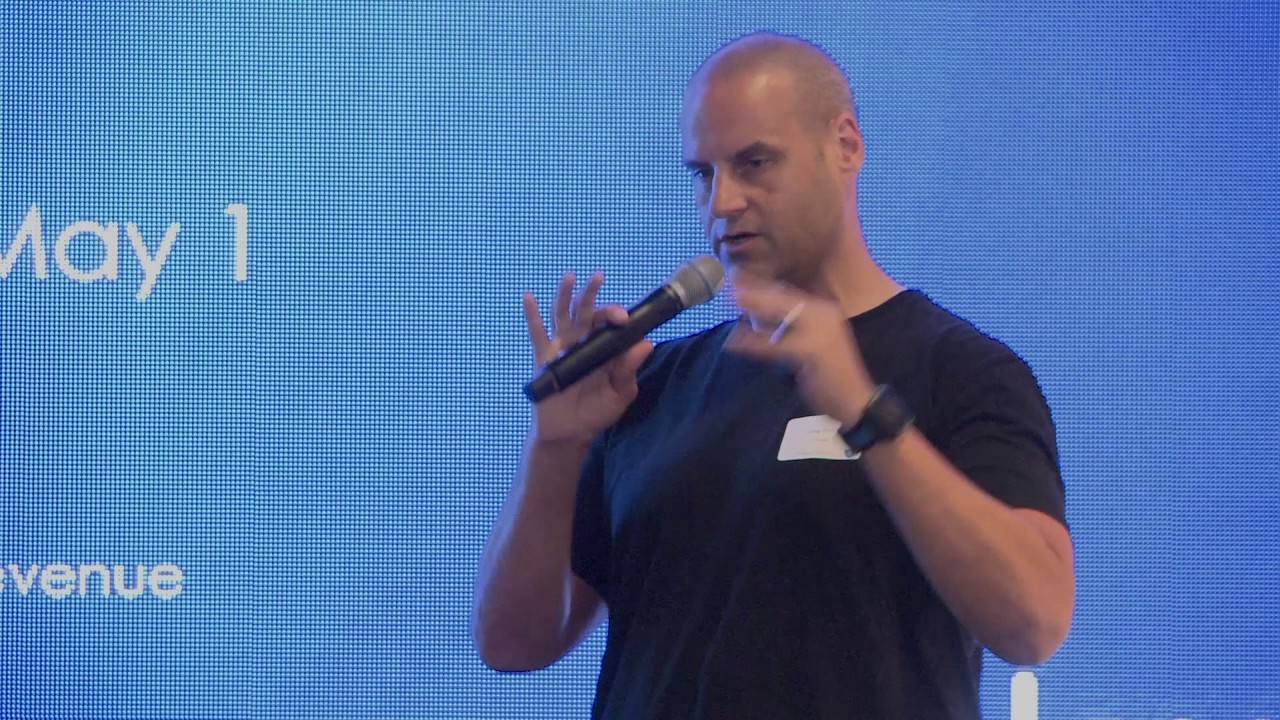
Greg Simon pitches Loyyal, a blockchain loyalty platform built on IBM Fabric targeting the $100B+ market. The company has pilots with Emirates Skyward Miles and Dubai Points, partners including IBM and Deloitte, and is running at $720K annual revenue from licensing.
Chapters
Hello, my name is Greg Simon. I'm the CEO and co-founder of Loyal. We are the internet of loyalty. Although we use blockchain for our company, we consider ourselves to be a loyalty solution provider first and a blockchain company second. We are a Delaware C corporation. We incorporated 3 years ago, so we've been around for a while. The initial market opportunity that we're solving, or the market we're entering, is the loyalty industry.
It's $117 billion per year in 2016.
2014.
It's grown a bit since then, and we plan to expand that tremendously with our offering. So we're solving initially 4 problems in this industry. As consumers, you're probably familiar with most of them. The fragmentation— it's difficult to take a mile and spend it as cash somewhere else. The lack of scalability in programs— it's confusing for us. And most importantly, for the large programs, breakage, which is the Points that have been issued that aren't recorded on the balance sheet as a liability. I'm a CPA, so I kind of get this, but if it sounds like jargon, basically when you earn a point, it's supposed to be recorded as a future performance obligation on the issuer's balance sheet. The accounting rules here are very lax, so they generally don't report about 20-30% of that. So when you're getting to $4 or $5 or $6 billion of liability, you're potentially looking at $2 or $3 billion that isn't appearing on that balance sheet. So the solution we're providing for that— let's just focus on the middle part here, our capabilities. We have a private permission blockchain built on IBM Fabric that is live, and we're basically offering 5 things initially to this market. Scalability— there's a certain amount of cost involved in trusting your network participant who's issuing or redeeming your points on your behalf. We reduce that cost significantly. Dynamic and personalized. By utilizing smart contracts, we can turn the reward into something like a personalized concierge, where the definition of the value can be dynamic according to who you are and your lifestyle. Multi-branded programs. I like to pick on American Express Plenty program for example here. If I go into a Macy's store in the Plenty program, currently all I earn is a Plenty point. If we migrate this to blockchain, because the reward becomes an identifiable object, as opposed to now it's not. We can put unique characteristics just on those tokens, and now I'm earning Macy's PowerBack Lending Points. Real-time interoperability, and the liability management part is the critical part. These programs want to reduce that liability in a way that will encourage customer engagement and also credit. So our pipeline, we launched last May with a rewards program that Deloitte is operating called Dcoin. That's gone to live production. They have 2,000 employees actively using that today. Plans are to expand that to 60,000 employees next year, and they're reselling that to their clients, which is a key point there. We've been working with Emirates Airlines on Skyward Miles proof of concept since last June. We launched Dubai Points program in December and have licensed it out to a third party. We will sign up our first reseller in the first quarter, and we're going to reseller migration Full this year. Quickly, because I'm running out of time. So we operate on a bar model, and that means that we don't sell directly to the client. We use resellers to leverage their existing relationships, and we charge them a licensing fee. The resellers that we currently have signed up that are selling for us: IBM, Capgemini, Deloitte, Accenture, PwC, Argon Data, which is in Brazil, Quidam, and our lead investor PineNet. We're targeting 10 bars by 2008.
18.
Our roadmap, you can see we launched with our first protocol last year. We recently upgraded that to IBM Fabric. Our current run rate is $720,000 on a monthly licensing fee. That will go up to $1.2 million in a few months. Our team is our magic. A few of them are here. And we are doing Series A raise. It's led by a company called INET, which is a major system integrator in Saudi Arabia. We have strong presence in Dubai. Thank you, Greg.
Okay.
So you said your run rate is $170,000 a month?
Our run rate now is $60,000 per month, so $720,000 annually.
$720,000 annually. And when you say that, is that money into you or is that like— How does the business work? The retailer has, or whoever your VAR is, has some sort of special points?
We don't do that. It's a flat monthly rate because our expenses aren't variable based on transaction volume because the users are securing it, not us. So we charge a flat monthly rate. We're doing the migration to the VAR model now. Previously, we did do the direct client engagement. So Deloitte and Emirates are paying us a monthly licensing fee regardless of transaction volume. But Quidim, our third client, is a reseller, and we're charging them a slightly higher licensing fee. But now they use that license to bring on a client that we've authorized them to use our platform.
Are you going to create some sort of a marketplace between all of these so that the points from one place, points from another place, From IBM, or the ones from Starbucks, or wherever else.
We facilitate that. That's right. So think of us as an internet. Their existing networks are intranets. It was very important for all of them to retain 100% control of their programs. So the issuance and the rules and all of that, nothing like that changes. But because they have this internet now connecting all the different islands, they can permission someone else to come in and work with them. And that's one of the things that we facilitate.
So I've seen a lot of loyalty programs. It's a big business. What pain are you solving? If I walked in and said, hey, what's driving you crazy? And then this solves it.
Unfortunately, it's not the consumer's pain that we solve because—
I'm talking about the person that runs it because that's your customer.
Right. So it depends on who it is. Our initial market approach is the large programs with a large liability and a lot of breakage. For them, what we're offering is the ability to accelerate redemption velocity, To allow for liquidity of trading amongst consumers, and that velocity, that redemption then comes back below full value less breakage. Because that's all they really care about right now. So imagine if you have $5 billion of liabilities, suddenly everybody's redeeming more points, and you have to revise up your estimate to $5.5 billion. Now the CFO's out of work. So what they want to do is bring that liability down to something smaller in a way that doesn't necessarily damage the consumers. Like, not a full devaluation.
Walk me through the logic of moving over to a value-added reseller model, and how are you incentivizing value-added resellers to go out and push your product and aligning them with the message you want them to be delivering to end customers?
Sure.
So we started out with the direct engagement model. With our seed round, we hired 2 loyalty industry experts last June who had the relationships, and we started all that communication and dialogue. that helped us with Deloitte, helped us with Emirates, but it's certainly not scalable, right? So I can't hire 20 salespeople and have them go out with a 1-year lead time talking to all these different program operators. Our plan was always to do the reselling model. We pulled it forward because the lead time is very long. So we initially approached Deloitte, who, as everyone probably knows, is quite active in blockchain. IBM, as we migrated to Fabric, has a very strong interest in promoting us. There, it depends on who the reseller is. For the consultants, it's the consulting fee. So they implement the program and then they've got all these other things that they can do with that client. And promotion of Fabric. And the others each have their own, I guess, reason why they want to be the reseller. The way the economics work is the reseller, who's usually the system integrator, they're the primary engagement partner with the client. So we're secondary behind them.
Okay.
So the client doesn't actually contract directly with us. We charge the licensing fee to the reseller, and then they can charge whatever they want beyond that. The resellers wanted to be in control. We only wanted the monthly fee, so that's how we structured it. Any other quick questions?
Yeah, so multipoint breakage and diff guard breakage are very similar the way it's handled. Most companies want the breakage. Why would they— I mean, it's better to have a A big balance sheet with, you know, high breakage amount than to have a smaller one with low breakage, ultimately.
That's the way that, you know, that's the way merchants think about it.
Tell me your thinking as to why they want to switch to that, to the latter model. Sure.
Well, we don't really know gift cards. We don't do that primarily because I didn't want to compete against you when you're doing gift. But, you know, we focus on just traditional loyalty programs. And you're right, if it's a small program, it doesn't really matter. If you've got $500 million of a liability, 30% breakage, it's not a big deal. But when you're at the airlines or like the major hotels and you're looking at $5, $6 billion that you show— or maybe let's use American Express. American Express membership rewards liability is about $6 billion. So the real line is probably $8 or $9, right? So that part they don't see. It's okay as long as there's an unexpected change of behavior. So if that unexpected change of behavior happens in the wrong direction, then they have to revise that estimate. And when you get to these very large numbers, the same percentage change is a greater absolute amount of dollar. So they want to bring it down to a smaller amount so that risk of a 0.1% change in behavior, instead of being $100 million, is like $10 million. Thank you. So our next presenting company will be Digital Marketing Services.
More from Tim


He Sold His Car to Build This Startup, Then Pitched It for $1M 😳 #Startups #AI

This Startup Moves Your Crypto BEFORE Hackers Can Steal It 😳 #Crypto #Cybersecurity




15 Months Without Refrigeration?! This Startup Thinks It Can Go Global 🥥 #FoodTech #Startups



