Heidi Yu walks through app promotion from pre-launch waitlists through post-install retention, with a free SDK for tracking installs, referrals, and performance. She uses case studies from food delivery to casual games to show how to measure ad spend against actual revenue and iterate based on user feedback.
Chapters
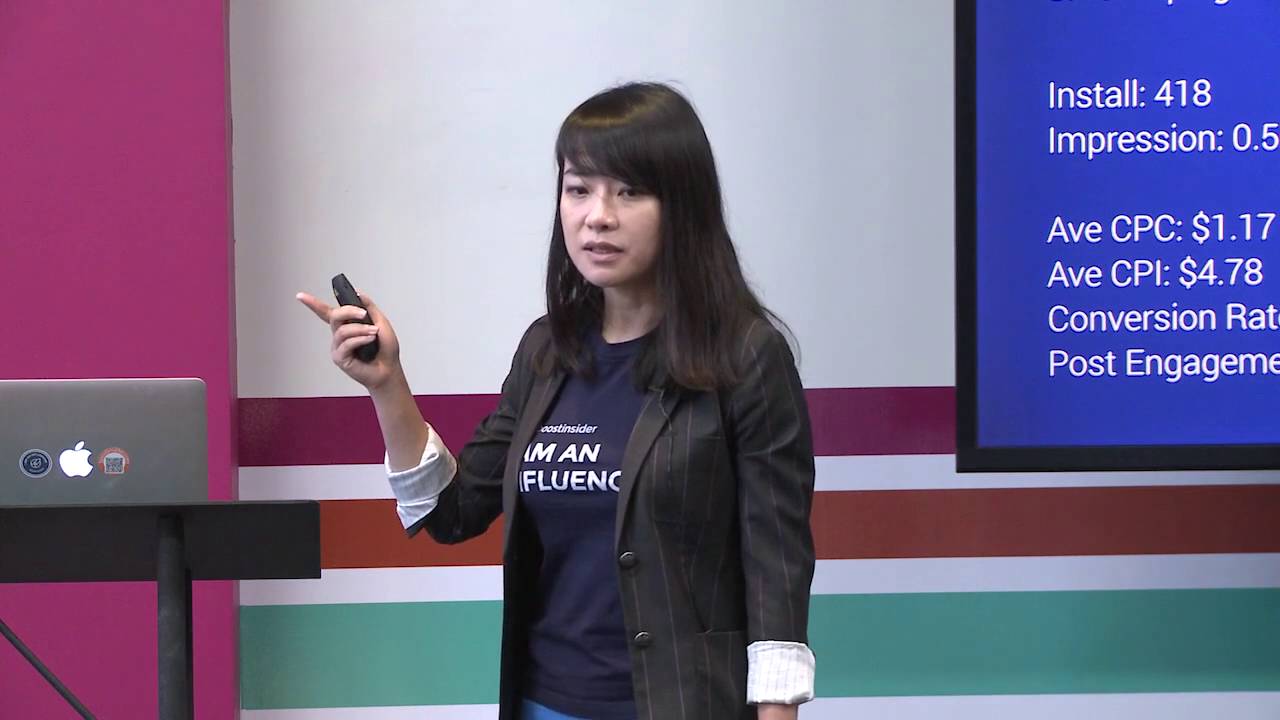
So a little bit something not about how you guys can use it, but in general also, how to promote your app or your stuff is that before it's launched, you want to warm up. A lot of people do the launch, right? They do the launch and have the waitlist, have the email, have people to sign up, or have people to go to your Facebook to like it, to be your followers. When you launch it, You are expecting installation and registration that time. When people, after they install it, you want people engaged. You want them to use it, to play it, to tell their friends, and give you feedback. After they give you a lot of feedback, you say, okay, it's the time I'm gathering all the information and doing the next version. So, always have this in mind. Actually save you a lot of time later and save you the development cost. You always do a little by little but always have the feedback from the users. Don't have to, still, I still recommend people to go to the Starbucks to talk with people and say, hey, can you tell me the feedback of what do you think about this one? This is cool, but however, how to do that at scale and automatically? There's so many ways you guys can think about. So we also, if you are doing the app, we also provide the free SDK for you guys to use to not only track the installation and retention and manage your users doing the referral programs, but also we also use a deep linking thing. If you have so many items in your app, you definitely can see which content will get you the most results. Plus you. Plus you. Sorry. Yeah, no worries. So, and also when you have some money, you are spending the money, do you prefer to spend $2 to get $4 to make $2, or do you prefer to spend $20 to get $20 and make $20? When you are at that scale, you might think about this as well. So just share a couple of case studies also. Some of those guys are startups. Some of those guys already have money. But for different type of companies, I just share some little insights with you guys. Cannot tell you their names, but however, like a local company who's a food delivery company, they're using our service. They only launched in San Francisco. So they want San Francisco influencers to check it out. and people to check it out. So they had a campaign there, a little bit campaign, and they have a little bit over 400 downloads from the San Francisco area. And those are the numbers there. So people check it out, there's so many likes and stuff going on. And you can see those conversations here as well. So definitely you can see, okay, what I can do better to improve my product. What is post-engagement rate? Post-engagement is, It's more like somebody posted it, how many likes you have, how many comments you have, and also we also track that. So for this one, for Instagram, there's no place you can click other than the profile place. So we don't really, so we track that way, but however, the engagement is like posts from likes, from comments, interactions. Okay. Yeah. We also helped an Indian company to launch their music app here in the US. And they have 4,000 downloads. The conversion's pretty cool, actually. A lot of American musicians upload their music to their app, very, very fast to localize their app. If you're doing something similar to this, it might be also cool to launch your campaign on our site. Also, t-shirt companies. This is really cool. I like this app a lot. So you have the app, go there to upload the photo, the app will print a t-shirt to you and mail it to your home. So that one gets so popular, and they compare us with Facebook ads. They also, they have money to spend, both us and also Facebook ads. So they have 4,000 downloads, and actually they sold a bunch in that first week. So when they spend money on Facebook, they spend $2,000, for example, $2,000 on Facebook, they sold 1,000. So that's considered as 0.5. So GMV/ad cost, that means gross merchandise value. So when they spend money with us, actually they spend some money, but the conversion rate is 1.05, which they got the money already back. This is a good one. So when your product's really ready, actually that will be a good fit. To go to the market. Indiegogo campaign, this is cool. It's a water purifier device for families. So actually that one catch a lot of people care about what they eat, what they drink, and their life. So the conversion is super cool and they get funded day one. Got featured by Indiegogo as well. This is another one. It's really cool. This is a casual game. They're using us for several times. They have tons of downloads. And we're not the only channel they are using somehow. So they use, they probably use all the stuff I just mentioned about earlier, and they reach the top of iOS Store and stay there for 5 days. So.