Putting Art into S T E M | Brent Bushnell
Brent Bushnell and Eric Rand, co-founders of 2 Minute Circuits, discuss their STEAM Carnival project and how hands-on making inspires kids to invent. They share prototyping lessons, including an anecdote about a button wall, and explain why early selling and varied experiences matter for creative work.
Chapters
And whatnot. But if we look at experiential and, you know, entertainment has sort of tracked— I mean, for me growing up, you know, every single new bit of technology that was released sort of tracked Super Mario Brothers, right? It got cooler and cooler as you got off of one screen and, you know, of course there was this other disturbing trend that kind of went with like the number of buttons on the controller sort of increasing complexity. Which, you know, for me, I sort of opted out like right about here. But you look at it, there is really this trend in entertainment about increasing your immersion. A book, you're this passive observer doing all the imagining. A movie, the imagining has been done for you, but you're still sort of a passive observer. Video games might give you a little bit of control with your thumbs. Maybe you can dance in front of your screen now with your Kinect or your Wii. VR, super awesome, right? Now all of a sudden you're really in it. The kind of crazy thing about VR is, You know, the downside risk for doing it badly is people throw up, right? You can't— you make a bad movie, like, people are like, oh, that sucked. But then you make a bad thing in VR, and people are like, you know, going to the bathroom. So, but, you know, you might ask yourself, like, well, what about after VR? Like, well, okay, AR, a couple years out, that could be interesting. But you know what? You know what's the most immersive of all? Real life! Real life, highest res. This is as good as it gets, people. Yep, this is super awesome. Yeah, really good. So, you know, how can we use all of those tools, all those things to sort of augment our existing experience? You know, those cheap sensors, the fact that we've all got a supercomputer in our pocket enables a whole bunch of new kinds of experiences, new kinds of things. And the quotes keep coming. Mark Cuban, next generation of entertainment is experiential. They've funded a bunch of stuff off of Shark Tank around this sort of space, haunted houses and whatnot. And, you know, especially at a time when You can be really iterative about this stuff, and you can test it quickly, see what people like, what they don't like. You guys are super familiar with that stuff. We're big fans, God, I'm sorry about that. I'm gonna just mute that, all right. Big fan of this quote, inspiration comes during work, not before it. And the idea is not that I'm like on the couch, and I'm just like, oh, light bulb moment, I'm gonna do this. No, you are actively engaged in some project. The muting didn't work. But you're actively engaged in some project, and it's only then that you realize, like, wow, people have been doing it like this? This so needs to change. This should be done much differently. We've got to really shift our approach here. But you are actively engaged in that thing, and that's where the inspiration strikes. So, you know, if the old-school way of thinking was you read, you learn how to read so you can then, you know, read lots of books in order to learn, we think it's a much more hands-on approach, right? You should be learning how to code, learning how to make, learn how to build. And then actively start building stuff. I don't care what you start building, but just start something. You know, my dad used to always give us a hard time. He's like, I don't care if your idea is a million-dollar idea, make $1 this weekend, right? Get one customer. So don't go, you know, don't over— and I'm an engineer, there's probably engineers in the room— don't think like an engineer of like, I can solve that problem, I'm gonna start building it. No, go and sell it. Build the marketing materials, get a customer, and then go and build it, because you don't actually know if anybody wants this thing anyway. And, you know, much better to be able to bet it like that. So we got big fans— became big fans of this term STEAM, for science, technology, engineering, and art, math, right? Add the art into STEM as a way to kind of rebrand it, get this stuff to be super exciting. And we felt like we maybe had an opportunity to help kind of rebrand the way kids think about engineering and science. And so we thought for a second, we were like, You know, we've done tons of other people's events, huge events for Amazon and Intel and the Super Bowl, and, you know, we should do our own event. So let's— but if we're gonna do our own event, we're like, okay, well, it should definitely be a carnival. Let's make this all, you know, high-tech interactive, all this sort of fun entertainment. But no investor is going to fund a carnival. We're sure of that. Definitely not gonna happen. So let's put it on Kickstarter. Of course, the thing that we sort of didn't really grasp at the time was, you know, you get— we put something on Kickstarter for You know, say a watch, and anybody can be your customer in the whole world. And we were like, hey, we wanna throw an event. It's only, we don't know when or where. Wanna buy a ticket? It was pretty funny, but let me show you the video because that sort of helped. I'm Eric Rand, and I'm Brent Bushnell, co-founders of 2 Minute Circuits, and this is our Los Angeles workshop.
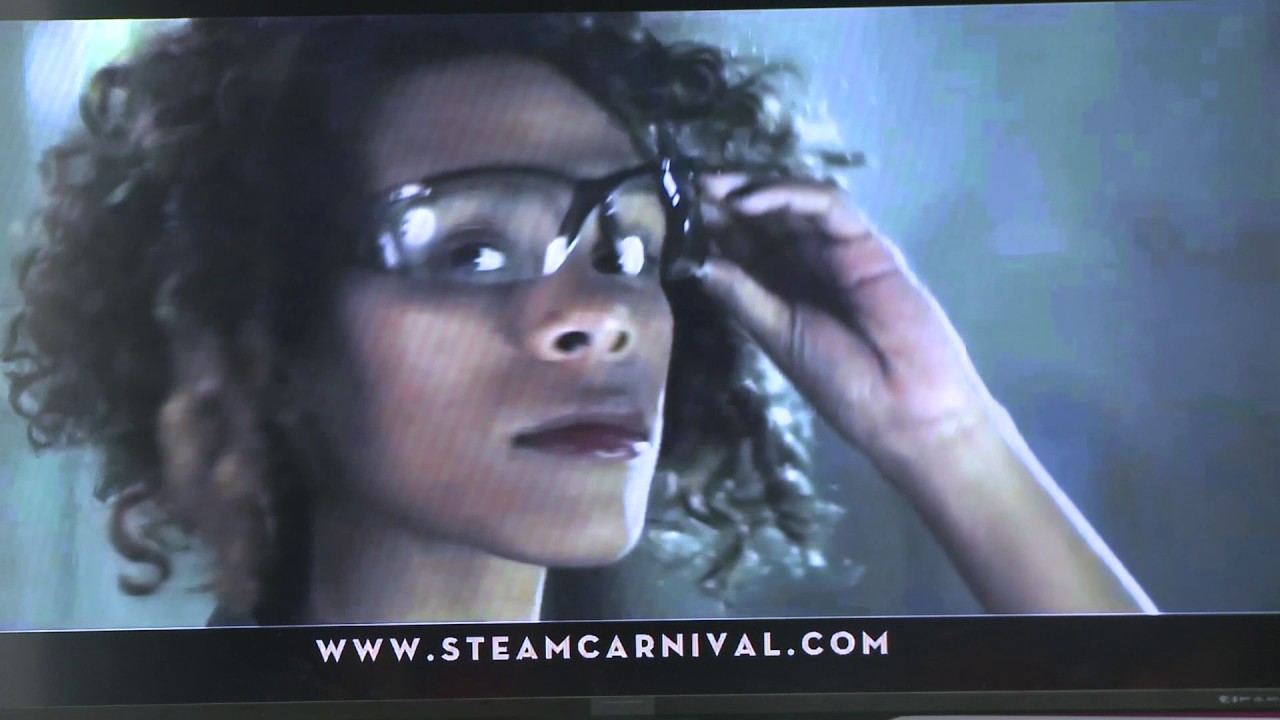
We set out to reimagine the carnival, the carnival of the future. The Steam Carnival is a modern traveling circus featuring high-tech games filled with lasers, robots, and fire. It'll open in Los Angeles and travel to San Francisco next spring.
We missed that by a year. Ah, remember that button wall? I have a story there. Okay.
Okay, sorry.
So that button wall that you saw, that was like version 4. They spun around. So we'd made it a 2-player game. And in order to do this, you would— it was like whack-a-mole meets Twister. You've got to— one person's on either side and you're basically hitting the buttons. And you've got to hit them all at the same time. So with 2 buttons, it's sort of easy. As it gets to 3 and 4, you're using your head and your knees and it's sort of complex. Well, we thought, God, let's mount them on gears. And then as someone's doing a really complex move, you could spin the gears and make it hard for them. And that was totally true. It was really fun and whatnot. The downside, people's fingers would sort of get caught in the gears.
Oh.
Sometimes you just have to build that stuff to figure it out. We now have a new version. It doesn't maim people. It's awesome. We love it. And it's just as fun, or mostly as fun. So we called the thing Steam Carnival. It actually did— the Kickstarter did work, surprisingly. Surprisingly, at $25 tickets, we raised $100 grand. And the part that was nuts was we ended up in all this different media, you know, Time and USA Today and whatever. But the one that was the most funny was Martha Stewart tweeted about it. And we were like, oh my God, we've made it! Martha Stewart is tweeting about us! It didn't actually really make a big difference. But something about that. And so this is our overpromising rendering. So it really doesn't look like that at all, but God, wouldn't that be awesome? Yeah, it doesn't look like that. More like this. But we did this in— So we did the first one in LA last year. It was sort of a prototype. This is a photo from it. But I'm really happy to say we're actually bringing it to San Francisco in like 3 weeks, so I am stressed out of my mind right now. But yeah, we'll be at Pier 48, if you know where that is, right next to AT&T Park. We've filled literally 2 football fields with stuff. So it's sort of nuts. So we've got a whole program. We deploy this curriculum to schools. We bus in thousands of kids, and then we open it to the public for everybody. We're really focused on inspiring inventors. How do we get kids excited about inventing, get kids excited about You know, going out there, there's no shortage of hard problems in the world, but definitely a shortage of talented creative people to solve them. What does it mean to be an inventor? Well, I mean, for us, you need sort of a fundamental toolbox: creativity and design thinking, programming, basic electronics with sensors so you can detect the world, actuators so you can affect it, and then fabrication and tool use. And frankly, with that toolset, like, you could basically build everything in this room. I mean, except for the humans, but everything else. You know? And for us, we sort of have this whole approach to staying creative that we try to implement in our shop, and I hope that maybe some of this stuff ends up being useful for you guys. One of them is around random input. So if you're going to have a creative moment, you're only ever drawing on your own life experience, right? So your life experience could be wake up, go to work, go to work, come home, go to bed. And that will be sort of this much life experience to sort of draw on. But now, if you sort of make it an active process, an active practice of exposing yourself to as much different stuff as possible, you're going to have a lot of different content to draw from. Now, one of my favorites is conference— is trade show conference crashing. And I highly encourage you to do this. Next time you're in Vegas, you'll be there maybe for CES or whatever, ask the cabbie for their list of conferences. They all have one. It's an 8.5 by 11 sheet of paper. And, you know, for them it makes sense for them to know where the conferences are because that's where they're going to want to set their cars and whatever. And there's 30 conferences going on in LA, or in Las Vegas, all the time. And so, you know, the packaging convention, the actuary convention, the whatever. And, you know, I have lots of techniques for how you can get into conferences without need, you know, without advance notice. But I won't do it when we're on camera. But there really are some easy ways to do this. These things are low-security operations. I have another friend who, you know, one way he goes about it is travel like a peasant. There's a group in New York called Acumen, and they will say, hey, you know, give me your cell phone, give me your wallet, give me all your stuff. Here's $5. Go get a breast exam by the end of the day, you know, or, you know, go try to do some menial sort And it's amazing, but really being forced, even in your own city, being forced out of your comfort zone to be able to kind of be resourceful and sort those kinds of things out, wonderful source of creativity. A friend of mine who's a writer, whenever he's got writer's block, he just gets on the bus, doesn't know where he's going, and then he just sort of watches everybody get on and see what their story, you know, imagining what their story is. And then, of course, he ends up at some random destination and has to figure out how to get home. So it's really— I always loved that one. So, I'm curious,
More from Tim


He Sold His Car to Build This Startup, Then Pitched It for $1M 😳 #Startups #AI

This Startup Moves Your Crypto BEFORE Hackers Can Steal It 😳 #Crypto #Cybersecurity




15 Months Without Refrigeration?! This Startup Thinks It Can Go Global 🥥 #FoodTech #Startups



