Q&A Part 1 | Jason Will
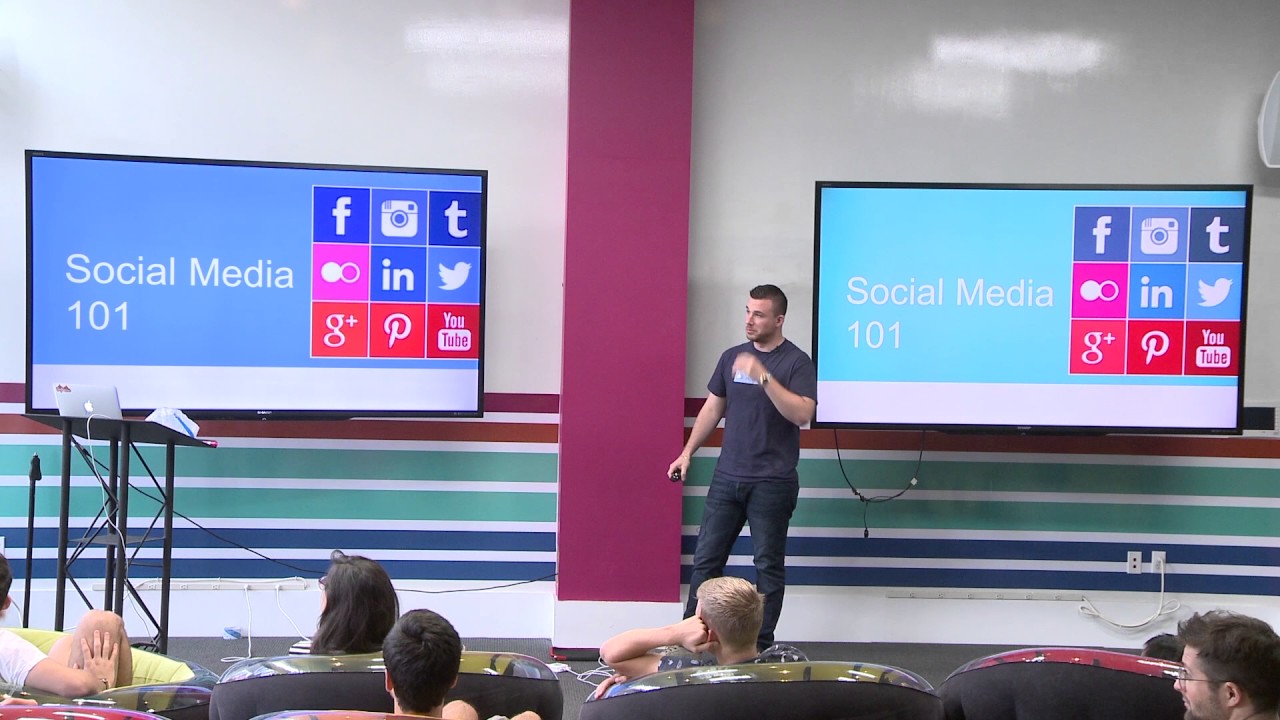
Jason Will created Zipkick to give influencers like chefs and sommeliers a unified voice for restaurant and travel recommendations. He discusses VR's future, live streaming's authenticity, and Snapchat's non-clickable links problem. He predicts Snapchat will rival Facebook in five years and expects Google to acquire Twitter.
Chapters
Social media's played a big role? Oh, absolutely. And actually, it's gotten worse because of the introduction of advertising, right? So just to kind of give people an idea of— at Zipkick, the reason why we even started that to begin with is because of the saturation online. So to kind of give an answer to this and give an example is that social media is very saturated. And it's very hard for people to get their message out. So what we did was is that we identified influencers around the world that are these very talented folks. I mean, chefs, sommeliers, mixologists, food bloggers, travel bloggers. And we gave them a consolidated platform to voice their recommendations for the best places to eat and drink around the world. And the reason why we started that is because, like you said, I mean, it's more and more difficult not only to expand your personal brand, but it's even harder to monetize if this is something that you plan on monetizing. So with that being said, I think you're gonna see a start or some sort of evolution, right, where you see these spinoffs from social media that you take a lot of the great producers of content and you give them a platform where they have a unique voice. And I think we're just gonna be one of many eventually that play in a space like that. So any other questions? I have a question. Come on, who has questions? Go ahead. How do you view the difference from VR, virtual reality, and digital reality? Well, virtual reality in its infancy, right, which we're seeing right now, is going to be more of a— you get to experience things that otherwise you, let's say, wouldn't be able to experience in Sort of a real understanding of what that experience is like. As far as the evolution of that, it would be interesting to figure out whether or not that you'll eventually be able to connect with people through social and be able to have these experiences simultaneously with other people. I think realistically that's where it would go at some point in time once the integration with social media happens. You know, imagine that we're out on a, let's say, African safari or something like that, and all your friends are experiencing this thing in VR with you. It might be kind of cool. But we're probably a few years off from actually seeing the evolution of that, just because we're very much in the infancy of the adoption of VR. With the rise of popularity of live streaming events, how do you think that's going to inherently change how we market stuff? Well, so it's a gift and a curse at the same time, right? Because it's more authentic when it's live, obviously, because you can't stage that and things. But on the flip side, you're going to start to see what real life actually looks like. Unfortunately, something was captured on Facebook Live a few months ago in Minnesota. There was an incident between an officer and somebody living there. If it wasn't for Facebook Live, that may have never made its way to the public. So it's a gift in the sense that it adds more transparency and authenticity and reality to actually what goes on in this world. But the flip side of that is, is there an invasion of privacy in certain cases? Are there other things that do creep up? I remember when Google Glass first came out, a friend of mine, he was sitting at the airport and I was talking to him and he's like— I can't remember who it was, but Jennifer Aniston or somebody was in front of him and he was just live on his Google Glass. And nobody knew. So it was a little weird and creepy at the same time, but yet it was like, oh, OK, I guess this is what we now have as the evolution of streaming. Any other questions? Yeah. Hi.
On Facebook Live, someone was talking about Snapchat and if their followers, if they have a lot of followers on that specific social media, how would they market on Snapchat and gain more followers if that's their main—
Sure, so the main way to market on Snapchat right now is either through the geofilters or through the sponsored filters that you can actually create. I mean, I'm sure everybody's seen those with Taco Bell and you can put this cool thing over your face. That's the main way people are marketing right now, but what I've also seen a lot of people do is actually even just within the text that you place over your photos, you'll put an symbol, you'll put a link, or not a link, but you'll put the actual URL spelled out within there. So a lot of people are trying to drive traffic that way, but I think the part that's going to hold Snapchat back, at least in the interim right now, is that they don't have anything that's clickable, so it's hard for you to track the conversion. So until they figure out this sort of ability to track the conversion, I think you're going to see a smaller uptick in the adoption of marketing on a place like Snapchat. Any other— yeah? Do you think it would compare to something like Twitter with analytics instead of Snapchat where you gain another app or platform? It's actually better because it's the better modern version of Periscope, Blab, Facebook Live, all these things. And I'm always a big fan of platforms that have people that are younger actually take to the platform. Because think about Facebook in 2004 when it came out, if anybody remembers when we first created an account in 2004, it was like the super cool thing to do, but you could see the evolution as it got better and better and better over the course of time. So You have this demographic of these tweens that are really into Snapchat. And what you're doing is you're almost conditioning their behavior at that age. So you could imagine when you start rolling out features and things for them to do, whether it's buy things or interact with things, you really have a significant upside because they've already been conditioned to do something. So I think it'll be powerful in about 4 to 5 years more than it is today. Like significantly more, like Facebook size. As far as longevity goes, do you see Twitter being a boss for the next 5, 10 years? Do you see Instagram falling off? Who do you see being the big mover? I've always thought, and Scott and I, our brand ambassador, always talked about that Google was going to buy Twitter because Google actually started indexing tweets, which if nobody is familiar with what that means is that You know, what SEO used to be for websites, now tweets have become equivalent to that on Google search, which is actually a very significant deal because you have to buy actual, you know, AdWords and keywords and things like that through Google normally. But if you're a tweeting machine, now you're starting to come up on the search results. So I see that as actually the next biggest thing that we will see happen. I actually think you're gonna see the drop-off of a couple of the live streaming players. So whether or not that there's a different solution than Periscope through an acquisition or something like that, or there's a drop-off of a thing like Blab, or there's— because there's so much live streaming now. And even before this, I'd called Jordan, I'm like, do you wanna Facebook Live or do you wanna YouTube Live this? Either one of them's fine. It just depends on really who you're trying to gravitate towards. So I think you'll see a slowdown in that.
Yeah.
And you'll see more of an uptick in the hybrid of social media live streaming where people can actually like turn themselves into a personality. So, yeah. What social media stream do you tend to focus on the most? I don't have a choice to focus on less than the 3 that I do, which are Facebook, Twitter, and Instagram. The majority of our recruiting for Zipkick happens on Instagram, but we have the largest presence overall on Twitter. as a community. I think collectively we probably have anywhere from 2.5 to 3 million followers as a community, which are direct followers, not just foofy numbers. But Facebook is always gonna be there as something you have to be a part of because you now have every demographic on that platform. Like just last week my dad created a Twitter account and it was like the scariest thing but the weirdest thing at the same time because it was like, Whoa, this makes me feel like it's now becoming like Facebook all over again, where like a meteor had to hit the earth for like our parents to start adopting it, right? So, um, I don't know, it's just— it's— Facebook has tightened the algorithm so hard on the marketing side and the ability to actually get reach that it's drawn a lot of people away from it because it's just not cost-effective anymore. So I think you have to have a solution that's unique on every platform And you have to really understand where your audience is because the people that love Instagram, truth be told, they hate Twitter and pretty much vice versa. Like the diehard people, I'm saying on Instagram, diehard people on Twitter, they really just don't mesh. So why would you limit your audience? You kind of have to be on all 3, yeah. Is there a new streaming service
More from Tim


He Sold His Car to Build This Startup, Then Pitched It for $1M 😳 #Startups #AI

This Startup Moves Your Crypto BEFORE Hackers Can Steal It 😳 #Crypto #Cybersecurity




15 Months Without Refrigeration?! This Startup Thinks It Can Go Global 🥥 #FoodTech #Startups



