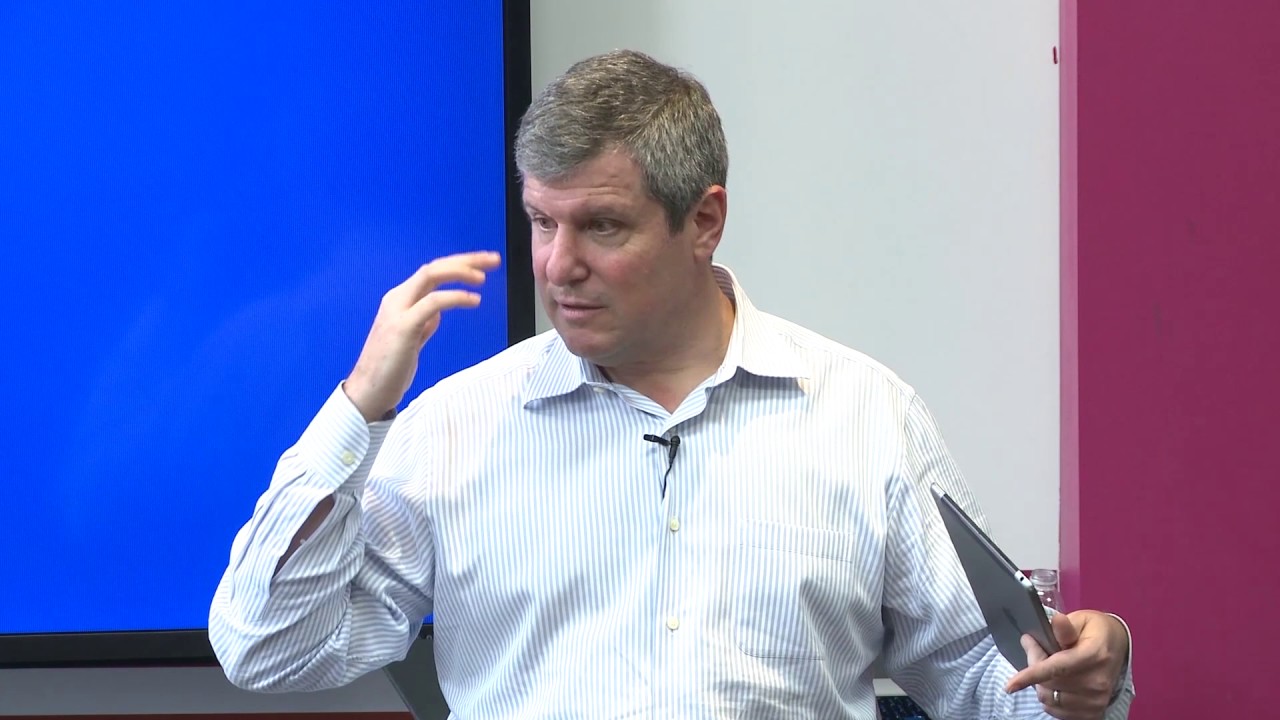
Doug Mellinger answers audience questions about entrepreneurship, finding first customers, and scaling nonprofits. He discusses validation strategies, work habits, and his involvement with XPRIZE, the Weitzman Institute, and Seven Hills Foundation.
Chapters
Just to add to your definition of an entrepreneur, have you ever heard the quote, entrepreneurs work 80 hours a week so that they don't have to work 40?
Listen, you know, what is even the definition of work? I mean, I love spending time building stuff. I love that. It's not work. I'll go to— I love movies, so I do that. I love reading. I love spending time with friends. I love spending time with my kids and my wife. I love just traveling and all this stuff. But I love working. I love travel to work. I mean, I just came from 9 countries in the last 14 days, and I'm leaving for another around-the-world trip literally on Saturday for the next 14 days. And a lot of people think that I'm completely nuts, but I'm just so energized by it that I don't like any downtime. So I go from morning to dinners, and it's enjoyable to me. What time do you wake up? I'd like to be able to sleep till like 6:20, but I oftentimes get up earlier. I really like I like to have about 6.5, 7 hours sleep. 8, I just don't know how to sleep 8 hours. But it would be great if I could. I wouldn't mind doing it. But when I'm not sleeping, I like doing other things.
You made a great point when you said, if you're going to succeed, who else is not going to? I don't think you meant our competitors. I think you meant maybe who was losing out on that interaction. Could you delve into that a bit more?
Yeah, I mean, if you guys are going to have products or services that you're selling, and let's say it's something new and there's not even a competitor, well, people are either going to decide to spend money on this and not spend something on another category, whether it's a person, they might buy that and not buy something else, or somebody's going to have to decide to go into their savings. It's literally as simple as that. That's economics. And it's that question that people just don't spend the time to think through. And it's a critical issue because money just doesn't appear. It's got to come from someplace. So that's what I meant by that.
You mentioned before about the There are a lot of philanthropic venture capital kind of societies out there. Do you have 2 or 3 that you could possibly recommend to some of us in that social enterprise space?
In terms of great organizations or models?
Yeah, that would be possibly—
So I do love models of philanthropy. I think that there are some that shoot well above their belt, I call it. One is the XPRIZE Foundation. And what I love about the XPRIZE is that it's a model of philanthropy that's called incentive prize. What they have perfected is how to take $10 million or $20 million or $30 million and put it out as a carrot and get dozens or 100+ people and organizations around the world to try to solve a problem where collectively they'll spend $100 or $200 million to win $20 million. You're only paying somebody if they succeed. That's an unbelievable model. The Weitzman Institute, I think, is an unbelievable model because what they've perfected is how to get people from different mindsets and different backgrounds to work together effectively to solve big problems. Other— what are some other ones that I really love? Ones that are trying to take impact capital, so where some people might be out there begging, for many organizations they'll have the ability to raise debt and shorten the cycle of raising that because it's a chicken and egg problem. If you can't get the money, you can't build the facility or you can't launch the program, but if you get the money, you can. And then if you do so, you get fee-based income that could easily pay for the debt. So there's an organization called Seven Hills Foundation who merged about 100 not-for-profits together and they ended up solving a much broader sector of the problem set they were going after and brought their average operating expenses across the 100 firms from over 15% to 7%. So now they went from a million-dollar organization to now a $300+ million organization, saving 8% of the $300 million, so $24 million that would have been in infrastructure expense that they can now spend on R&D or on building endowment or whatever. So scale matters in a lot of these things. And that's another major focus I think you're going to see. Last question.
Last question. Can you tell us more about your experience like getting first customer and how did you find a solution for their problem? Because I think as you mentioned, you kind of observed that someone actually would pay for that. So can you just go into details about like getting that first customer and how you actually solved the problem?
Yeah. Once I had the sense of the direction I wanted to be, for example, in PRT, was I went out and did a lot of research and found the CIO Magazine listed the top 100 largest IT organizations out there and who the leader was, and I just started making the phone calls. A lot of it was grit from that perspective. In the sense of Foundation Source, when we did that, It was— I identified what I thought my problem was with private foundations, then I went out to a group of a couple dozen other people, asked them, they identified some of the similar issues, and then we designed a model that we thought could solve it, and then we went out and built it. So we invested 9 months of building it before we came back to market to show people. But then it was literally, in some cases, Guaranteeing, if this isn't going to make your life better, I'll give you all your money back, and some of those early beta-type customers. It's really just turning over lots and lots of rocks. Guys, unfortunately, I've got to find a way to the airport because I've got to make my flight or else I miss dinner tonight. I really appreciate your time.
Thank you.
Happy to stay in touch. I'll make sure they have my contact information, and good luck with it.