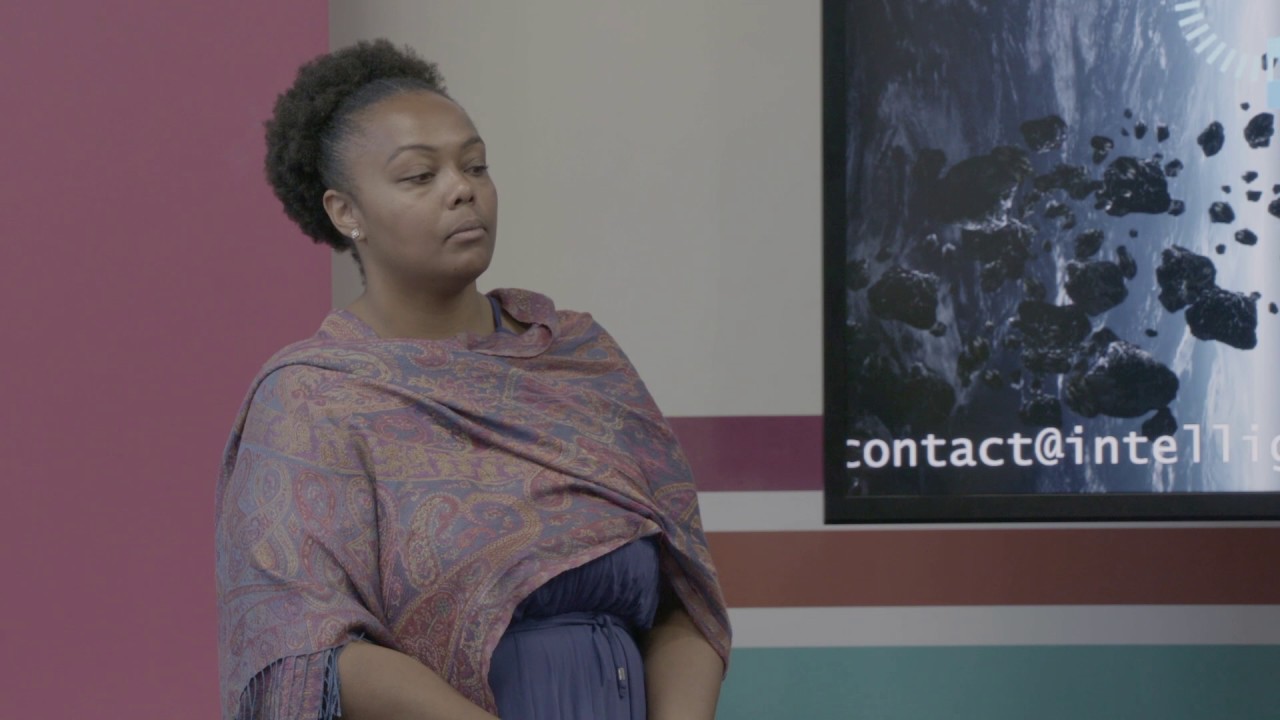
Christianna Taylor discusses deep-space challenges: Mars trips take nine months one-way, satellite debris creates waste when salvaged, and radiation hardening is a major design concern. Warp drive research at NASA Johnson and AI-driven reuse strategies for large satellites could help solve these problems.
Chapters
So would it just—
sci-fi going further out could be like turn the moon into like a super nuclear factory? That sounds like a horrible idea to me. And I'm like, no offense to all my nuclear people out there, but I don't know. All right, so sci-fi going way out there. So the MSR track Star Wars, and I'm not going to debate with you which one's better. I don't care. I personally watch both of them, whatever. Sci-fi going out. The biggest issue is— It takes so long to get places. So if we want to go to Mars, it takes about 9 months, I want to say, to get to Mars. Then you have to wait another 2 years because you're at the closest pass to come back to Earth. So you're talking like an almost 3.5-year trip out to Mars. Have you sent enough food and water for humans, let alone however many humans you need to colonize Mars? That's one of the biggest issues. So that's where, you know, in Star Trek you have warp drive. That's what warp drive did. It's like, hey, open up the cosmos. You know, here comes the Vulcan. Show us some cool stuff. That's what warp drive does. Millennium Falcon did the jumps, you know, that's— they solved that problem of how— of distance with warp drive. So when we get warp drive, the— what we call faster-than-light engines, which people are working on, NASA Johnson is working on that, I know Princeton has some pretty cool technology. The mathematics for those was actually solved back in the '90s by a medical I want to say he's in Brazil or he's in South America somewhere. But he solved the math behind it, I swear, back in the '90s. So people are looking at it and working at it. But true sci-fi, true like Star Trek, Star Wars, we're really doing this until we get that distance problem solved. We're talking 5 years away to get anywhere true.
I just don't get the salvaging part.
I mean, we can salvage the parts of the old satellites, but we can't mail it to the Deep Space Industries wants to get stuff out of asteroids one day, so—
Is it possible to melt stuff?
I mean, they have 2— there's 2 whole entire companies that are built towards that. So that's not my specific area. And I'm not privy to their technology. I'm sure they're not letting anyone be privy to their technology as to how they plan on doing that. But then that said, we do have 3D printing in space. And I don't know exactly how they're doing it.
Once we salvage the parts, there will be still parts left. So we are not actually recycling that much. We are just making more garbage out of the satellite. Oh, OK.
So I understand your question.
Once you take one part out of the satellite, then all of this part—
The rest of the satellite?
Yeah, would be bigger.
So, OK. Yeah, I understand what your question is, or your perspective. And you're asking why do we need to do that? out how else we can reuse it. Something that's actually really a major problem for spacecraft in general is what we call radiation hardening. So the further out you get, the higher the radiation field is for you, basically because the Earth's gravitational field protects us from the sun's radiation. We have like the solar flares and whatnot. Well, sorry.
Good.
I'm used to talking to you. So excuse me. You have solar flares that come that actually interrupt satellites and that can actually fry components. We have what we call a sun cycle that's about 14 years. So when you actually design for spacecraft, You're designing it for what you call solar max versus solar min. So one thing that you could possibly do is actually utilize it just for shielding. If you put a dead satellite in front of you so you're always— so it's always facing the Sun, that's shielding. You can use it for what we call shading. So in the Lagrange— the second Lagrange point is where I believe they put the Spitzer Telescope, and that's always in the Earth's— give me one moment, let me make sure.
Yeah.
Second Lagrange point, and that's always in the Earth's shadow, so it literally is always cooler than And like other— it's always going to be cooler. So when you need shallow impact and like low thermal effects, we will launch— the second we launch one, it's someplace that we put it. So use it as shielding if you want. Use it as shielding.
Use it as shading.
The point is that these are reuse cases that if you're— if it's just floating out there, what can we utilize to work with them? And to put it into perspective, yes, the smaller ones that are coming up are very small. Like, you know, we're talking maybe this big or so.
And they can be— they're really powerful.
But the old ones, those are like bus-sized. They are huge. What can you do with that? And I'm hoping that AI is going to help me figure that out, and that's what I'm talking about with the savage part. I'm just wondering, what are some of the cool things that you think are possible with AI? Just looking forward. Cool things possible with AI.
Hmm.
I'm ex— all right, maybe this is sci-fi in me, but I love space, and I love— I guess I like those extreme environments. I would really love to see what AI can do to design like an underwater city, underwater work. I'd love to see what AI can do when it comes to mapping our ocean floors and seeing what else is down there, because think of all the ships that were lost, especially— I'm a huge history buff, so I would love to be able to see what other ships are down there. I would love for AI to figure out algorithms and sensors and things like that to figure out what's going on in the Arctic and Antarctic. I would love for— like, for that matter, I think AI is probably doing it right now to look for ancient ruins. So I personally love to see how technology can be utilized to understand our past and our history. So whether that's, you know, looking at the tectonic plates, looking at Pangea, looking at ancient civilizations, like there's— and this is, you know, this is like, you know, just hardcore, like, oh, here's something physical, figure that out. What about like all those like languages that are are dead to us. I would love for an AI to just go, go solve that. And you're going to find it's somebody's grocery list from the Stone Age. That's cool stuff to me. I love how we can— yes, technology is awesome. I can get anything I want when I want it delivered on service, personalization, blah, blah, blah. But I would love to see it applied to history and sociology. And some of those history buffs, especially World War I history buffs, they actually go to France to find old— Bullet casings. Like, I would love for AI to be able to go find all those historic artifacts and be able to catalog them automatically so we already know, you know what, this is that type of casing. This probably came from that type of gun. We can actually track that gun back to that soldier. And you know that soldier has an entire ancestry. Like, that's stuff I'd like to see. I personally would love to see it applied to history. Any questions? All right. It's wonderful to meet you guys.