Q&A with a Saas Engineer | CEO/Founder of EverString, Vincent Yang
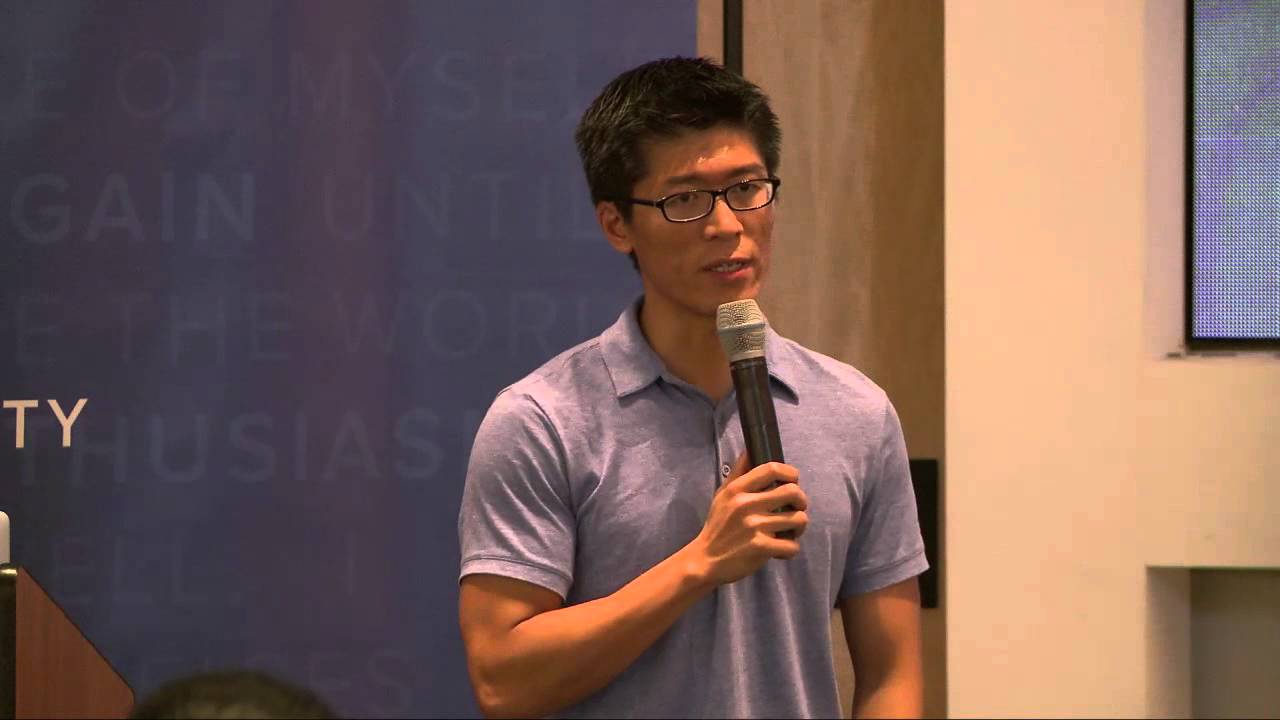
Vincent Yang, CEO of EverString, answers questions about moving from China to Silicon Valley, building B2B software, and fundraising through Series B. He discusses technical choices like Python and Hadoop, early customer wins like RelateIQ, and managing a founding team.
Chapters
Hi, Vincent. This is Sophie. So I'm wondering, like, how easy is this, or if you have any suggestions if we want to move our career from China to here in Silicon Valley. I'm sure it's not easy for many people, so I would like to hear you share more on this.
Yeah, I think you and I have the same background, right? I was growing up over there as well. I only moved to the US about 5 years ago, and I think it's ideal you first come here to study. Going to a US school will be very beneficial to have the networks, etc. And obviously, I would recommend Stanford, which is closer and much more convenient. It's the closest to Sand Hill Street, which is the street with all the VCs, much easier to raise money. I remember, so when I was studying over there, basically all the VCs come to— I was recommended to Lightspeed by a classmate.
Oh, really?
And then Lightspeed asks all the classmates, hey, in your class, who do you think has some interesting ideas? So they always come to the class like that. I think that could be a very interesting first step. But having said that, I also saw a lot of Chinese-born or international-born entrepreneurs start business directly. Israel is a good example. All the Israeli companies are started right over there, but they aim at having global domination in the first step. So that's also— it's also doable. There's a company in China, it's called— I think it's called Liebao. So they do the Clean Master that has 600 million users. They're all based in China, and then the market is global. Like Webex is done and developed in China. Hulu, all of the engineers sit in China. So it's still doable.
Thank you.
Hi, Vincent. I think what you're doing is amazing. And I was just wondering, how many companies— are you working with any companies that are in the entertainment sector, mainly broadcast and television? Because one thing I realized when I was working in England is that a lot of the broadcast companies are trying to figure out ways that they can market better. And obviously, they have Netflix as a competitor, and all these other online streaming platforms.
Correct.
So for them, the main— kind of point of getting customers and getting leads is marketing and figuring out what's the best strategy and what works best. So is that an area you'd be going into?
Yeah, that's a good question. So we will be going into the B2C space. So right now we focus a lot on B2B, company selling to company, because we're very good in understanding how to analyze companies. But we just hired the guy as our head of machine learning. He formerly was the first one that wrote the algorithm for Netflix. on the Netflix recommendation engine. So he just joined us to lead our machine learning practice. So that definitely will help us to go into the B2C space.
Awesome. Also, I was wondering if I could speak to you later, 'cause I'm trying to get into the B2B market. So you'd be fantastic to talk to.
Thank you. Definitely.
As long as you're not becoming our competitor, definitely willing to share. Okay.
Hi. I'd also like to speak to you afterwards, preferably for half an hour. But how did you understand your market when you just went in, when you just started?
Yeah, so very good question. I think we didn't do a good job on understanding market from top down. So I saw 2 types of entrepreneurs. One is bottom up. So they saw a need that they themselves wanted to solve, and then they started a company around it. This is Everstream, I would call Everstream version 1.0. I saw a need when I was working in private equity that I need to find companies, and I started a company around it. But the good part of that is you have full passion, you can work days and nights on it. But, but the cons for that is you never see what the big market is, and then we quickly failed because the market is not big enough. I also saw some entrepreneurs, they start top-down. They have no passion about any industries. They do the top-down analysis. Like Jeff Bezos was one of the most successful entrepreneurs to do that approach. So you can read some of his books about that, Everything Stores. So he basically analyzed every single industry and identified the books and publishing industry as something that he wanted to disrupt because the market is very scattered, the market is very big, the market is very old school. So that was a very successful case over there.
And what do you think is stopping your clients from doing all of this by themselves?
Yeah, that's pretty hard. All of the company can build CRMs themselves too, right? But it takes a lot of time, and data science is a hard thing. So we provide not only very good machine learning tools but also getting all the data. So as of today, every single US company, European companies, there's the Evergreen crawler behind it analyzing their website every single day. So that takes us about a year and a half to do so. And then the cloud infrastructure is pretty huge, right? We spent $3 million in cloud infrastructure last year. So for a small— now, as a small client, you only need to pay us $50K, and then you get all the prediction services without worrying about the data, model, infrastructure, cloud computing, etc. So it's much easier.
And one more question. How did you acquire your first customer?
Oh, that's pretty hard. Like hustling a lot and begging a lot as well. So our first customer is a company called RelateIQ. And it was recently acquired by Salesforce for $400 million. So the first time when I knew RealIQ, I got a friend working there. So that's why we go there. And then we definitely hustle a lot to say, hey, use our software. We're gonna do here and there. They said, this is great. But the key thing to use our software is you need to give us your sales data. And RealIQ doesn't want to do so because it's chicken and egg. They're like, show me a prediction. And we're like, we have to see your data, then we show a prediction. So on this part, we waited for 3 months. But once we see their data, we do a very good job on that, and then getting the next customer is much easier. So one of the things we believe is sell before you build. I'm sure you're very familiar with the Lean Startup method. Don't build anything before you have 3 contracts in your pocket. Those contracts are not something that you say, hey, my cousin said he's very interested to use, but really contract with the hard dollars and have people sign for you.
All right, thanks.
Hello, I'm Mo Jia. I'm also from China.
Um, I want to dive in a little bit deeper, um, in your hard period basically, um, several months ago. I, I'm pretty sure at some point you're gonna— you'll probably lose hope in what you're doing already, like, um, and maybe part of your team also got really frustrated, don't know what they're doing, things like that. I want to know How did you deal with the situation? How did you overcome that?
Yeah, that's a very, very good question. So I think startup is very much like a roller coaster. So you feel frustrated once every 2 days. And then it's a real experience. One day you feel like the company is going IPO, the second day you feel like, oh shit, the business is tanking. So what I did, a couple of things. One is I did a lot of meditation during that time period. So meditation really helps me to look truly inside versus outside, and then that helps me a lot. And then the other thing that I did a lot, well, it's not— so let's say if you had a bad day, basically you just— sometimes I just stop working and go home. I play a lot of video games, and that distraction helps sometimes. But always, every time when I had some distraction, the next day when I wake up, It's all gone. So it's a new day and you start fighting. So exercising a lot as well. I like to do a lot of endurance sports, like swimming a long distance and running a long distance. I think that helps as well. That really gives you more persistence. And because I think a few days ago Airbnb releases their rejection letter by the first 5 investors, right, Amit? I forgot the site.
Yeah.
When you look at that situation, How can people believe that becomes Airbnb like 5 years after? So you have to keep persistent. And having one dream is very important. One of the biggest dreams that I always had for 10 years is using machine learning, using data mining to hopefully change the way how people function, change the way how businesses function. I was doing that all the time. So with that mission in mind, and you might not— the product you build might not be right. It's totally fine. The people you hire might not be right. It's totally okay. But as long as the vision you have, the dream you have, you persist on it, I think one day it's gonna become true. For us, the vision is one day artificial intelligence is gonna change the way how corporates make decisions. It's definitely gonna happen. Whether it's because of Evergreen we built it or because somewhere else, it depends. But this big trend is there, and we wanna be part of that. Thank you.
What about your team? How did you comfort them when they wanted to leave or got frustrated?
So there are 2 types of team members. I think in the early days, most of the team members, they are like myself, right? They sacrifice a lot. They come here with 10% of their paycheck and then they work almost 24 hours a day. So for those guys, they will motivate themselves. So you don't need to worry too much. When a company grows bigger, there are definitely a lot of people coming in that are employees. They don't think in the longer term. So for those, sometimes I feel like there's someone saying being an entrepreneur is very lonely, which I agree. There's a lot of feelings and expressions that you cannot share to anyone else. So sometimes when I feel sad, you can never say in the office, you can never even show it. You just have to cry somewhere else, although I never cried, but you have to keep it to yourself. And so that is very important. Yeah, thank you.
Hi, Vincent. Thank you for the presentation. So I'm also interested in machine learning and NLP. But what strikes me about— what was very interesting to me about you is like you don't have a computer science background. How did you go about creating the prototype? And what algorithms did you use for your predictive analysis? Did you use Hadoop, R, or what technology did you use for that?
Right, so I don't have a CS degree, but I have a— my undergrad was in mathematics. So when I was a math major, 50% of my time was spent on software development. So even like a long time ago, L'Oreal, all of their HR management system was developed by myself in the early days. So I think with that background of CS, it helps a lot to be able to prototype early on. When it comes to machine learning, we don't use R and we don't use MATLAB because those are the off-the-shelf tools. So we built the algorithms ourselves using Python directly. And then our backend is— of course, everything has to be on Hadoop because otherwise the scalability is a big issue.
I see.
And the database we use is Hive. I'm sure you might have heard of that. And also we use a lot of Storm and Spark. Those are the queuing systems for you to do real-time machine learning. So those type of things.
Oh yeah.
And so in terms of, because my solution, I need a good understanding of machine learning and NLP, what would you recommend and which people would you recommend I talk to to give me that understanding?
Yeah, I think some headhunters will be able to help you to hire some co-founders in that space. And all else is when I was back in school, I went to a lot of the the parties, but I only go to the parties where it's a party for PhDs in like CS in Stanford. And that helps a lot to meet the people. I found one of my early, early co-founders in that party, and then he has been with us since then. So he's been very, very helpful into these things. Thank you.
Hi. In the early stages when you're looking to build out your platform and a lot of your revenue or projections for what you— when you talk to investors, is contingent on actually building the platform and then talking to the B2B to determine exactly how much value you can be to them.
Right.
How do you look to transition through that phase as quickly as possible? Is it more a case of bootstrapping, or do you need to just kind of develop some projections or some metrics to try and encourage the investors that this is what we expect to do for them and this is how long it's gonna take?
Yeah, I think it depends on the stage of when you raise money. In the angel round, we raised about $1.6 million angel round as well, led by Sequoia and IDG Ventures. So in the angel round, they don't look at financial at all. And I remember one of our angel investors, I talked to him for 40 minutes and he invests $1 million right after 40 minutes. I think the angel round is more about your passion. To explain to him what's the vision and why do you quit your job and quit all the— why do you forgive all the opportunity costs to do so? So that's all what it needs. And then for the Series A round, it's more about to have some minimum, minimum proving point. So Series A investor, I don't think they're going to look a lot about your financial projections because it's all fake, right? Because you don't have such a long operating history, your financial history is short as well. But the thing you need to prove is The product-market fit. You need to have a product, whether it's B2B or B2C. For B2C, it's more about you have the active users in a relatively growing scale. For B2B, you're gonna have 1 or 2 customers not only using it, but you have to have them pay. Because it's very easy to have your brother-in-law to use your products for free, but have somebody pay $20,000 and sign a contract, that helps a lot. We only used 2 contracts to show it to the investor and raise our Series A rounds.
Thank you.
And then for Series B rounds, and it's even harder. For Series B rounds, it's not about bullshitting, it's not about market proven, it's about the execution capability. You need to show a strong team. So as of today, we have our VP of Finance and VP of Marketing and VP of Sales and Director of Customer Success in major, major functions. You need to have what they call the gray hair. You need to have the gray hair in charge of all of those. So you're not raising money? And also you need to have decent revenue. And then the B round is more looking at scalability. Can you take it from $10 million revenue to $100 million revenue? So I think those are the 3 different stages and what investors are looking at. It's very different.
In terms of time, how long was it between the different rounds, the C to the B?
Yeah, so I think the longest time is from angel to Series A because it really depends on how long it takes to prove the market. Yeah, for us, from angel round to Series A, it takes about 2 years. And from Series A, and we are very soon that we will be finishing our Series B round, it will be pretty big. And then I think it takes about 11 months. So for A and B, it sometimes is much shorter.
Thank you.
More from Tim


He Sold His Car to Build This Startup, Then Pitched It for $1M 😳 #Startups #AI

This Startup Moves Your Crypto BEFORE Hackers Can Steal It 😳 #Crypto #Cybersecurity




15 Months Without Refrigeration?! This Startup Thinks It Can Go Global 🥥 #FoodTech #Startups



