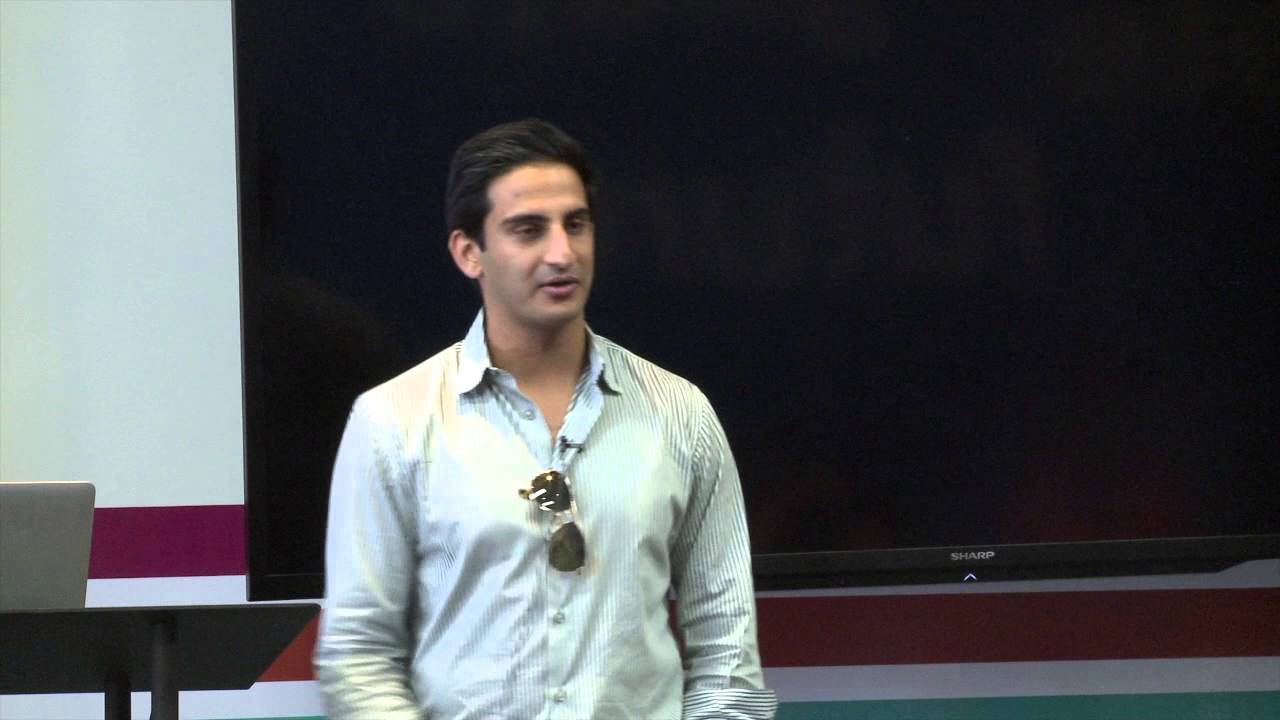
Manan Mehta founded Unshackled after shutting down his own startup over visa constraints. The program partners with universities like UC and UMass to fund immigrant founders and let them file H-1B visas while building companies. Early backing from Brad Feld and Jerry Yang helped unlock investor interest.
Chapters
The universities that have been doing it have been University of Massachusetts. Jeff Bussgang, he's a partner at Flybridge Capital. He's also a professor at Harvard Business School. He's one of our LPs. And the state of Massachusetts wrote a kind of a law when Governor Patrick devalved— none of this is important— to do this. But the state dried up their funding, and so the private sector had to fund it. So— They've taken leadership on it, kind of showed the rest of the country how to do it. Brad Feld is doing it in Colorado. But they both are LPs in our— investors in our fund and have asked us to bring this across and make it bigger. So we're going out there now talking to a lot more universities. End of the day, our vision is that we need one on the East Coast, one on the West Coast, right? Because where most founders want to be is either in the Boston, New York area because their customers are there, or they want to be in Silicon Valley. The most things that we see. So once we announce a partnership with the University of California school system, we're kind of done because we can pretty much keep most people that want to stay in the country. And what that also does is for your benefit, by securing a CAP exam, the only requirement that is there is that you may have to— you do work for the university technically. You are an employee of XYZ So they may have you mentor once a week, once a month to their accelerators. They may have you be an advisor, but that's what we're working with them on, making sure the requirement on that employee is not the same as a typical research.
Why does the university need you guys?
Funding. Funding and resources, right? So they're— I haven't seen a university that's been willing to allocate money this quickly out of their endowment. They may get there. We hope that we can get the endowment to be a co-investor, and we're talking to a few about that. But fundamentally, it's about, A, we enable the Silicon Valley connection, right, for the founders that actually want to be—
Yeah, yeah.
I mean, university is great and all, but it's very different than having somebody who's an actual VC being part of it. And then number 2, we provide the funding and resources for it. In the structure. So the reason why it's also important is we then file for something called a concurrent H-1B. Very complicated now, but they get the cap-exempt, we file for a concurrent, which then allows you to work in a for-profit job at Unshackled, and then we'll file for that typical H-1B in the lottery or prepare you for your O-1 or whatever else we can get you.
Can you talk a bit more about how you started it?
Yeah.
How did you find your founders, your partners, initial seed funding? How did you create the network, the scoutability around venture capitalists?
Yeah, that's a great question. And this is when I started, I said, you know, I feel more like an entrepreneur than I do as an investor because it was never our dream to be an investor. It was our dream to be an entrepreneur. So Unshackle started really when I had to shut my own company down because my co-founder on that company was a visa holder. My co-founder now on Unshackled, he is another visa holder. Him and I worked together for about 5 years at previous companies. He ran finance, I ran marketing. He had to navigate for about 2 years to figure out how he could start his company while on an H-1B. He was fortunate to have a wife that took a job as an H-1B visa holder. He went dependent on her, call it H-4.
H-4.
And then could do what he wants. You can't be compensated on an H-4 visa, but you can do what you want. And so between my experience and his experience, we started talking about in February of last year, and by March 31st or April 1st, it was pretty clear to us what we had to do. We had to spend time validating that this could be created. So as any entrepreneur in this room might recognize, You gotta do a lot of validation work very quickly, right? And so we spent a lot of time with attorneys. We spoke to folks formerly in the USCIS, Department of Homeland Security. We ended up opening up a booth at a conference that was targeting a lot of immigrants to see if people actually wanted it. Lo and behold, we got a lot of validation. Then got connected into Stanford and started speaking at Stanford GSB, where 40% of GSB students, the Graduate School of Business, are foreign nationals, so international students. And then we kind of worked a lot of the cultural groups, right? If you think about the Indians all have their organizations, the Chinese have their organizations, the Eastern Europeans have their organizations, the Latin Americans have their own organizations. If you start going to all these cultural organizations, I started finding a lot of immigrants, right? So that's how I got the word out on really who And then on the investor side, 6 out of the 81 were previously in our network, my father being one of them. And so it was quite a journey to get 81 people on board. I don't think we ever thought we'd get that many, but the way we did it was a story, a mission, and cold emails. I think we also were very targeted. In a few people. One of the things I tell a lot of founders is you got to find that one person that will take a bet on you, right, that has influence. Not somebody that's a rising star, but somebody that's got influence. And so for us, that was Brad Feld. Brad Feld is based out of Boulder, Colorado, been a very strong proponent of the Startup Visa Act, has invested his own money and energy behind it, and he had written a blog post about this cap-exempt model. We wrote back a response. We waited on it for 3 or 4 months and said, hey, Brad, this is what we're thinking about doing. We'd love to talk to you about it. We also then found 3 other people that hit him over 3 months about the same idea. So by the time we got to his inbox, he said, all right, sounds logical. Seen this a few times. Let's talk. He made half an hour for us. We had a call. He gave us some feedback. Had a follow-up call the following Monday. He said, all right, I'm in. Fly out to Boulder. I want to meet you guys, and then we'll go from there. The moment he committed, dominoes started falling. All of a sudden, you have Josh Kopelman from First Round Capital returning calls and saying, I'll invest. You have Bloomberg. You have structured capital. You have Jerry Yang now finding out about it. Influence is very, very important, and that's why When we built the fund, we recognized our immigrant founders don't have access to that. That's why the AD exists, because once our founders come in, they now get plugged into that influencer network who are positively biased to your story to help you. So it was a lot of different tactics, but I will say it always starts with usually one person that you can— we'll never forget who it was, and that's what the Valley's based on. It's a lot of close networks, and you'll also realize a lot of concentric circles of influence. There's a lot of overlap. This valley is extremely small. And so once you start getting into one or two of them, it tends to work, especially when you're doing something that's got a mission behind it. A lot of these wealthy people, they're not worried about money. They're worried about how can they do good in the world. So we were able to cater to that part.
So you mentioned that you were in Silicon Valley for 10 years.