Q&A with Watsi | Watsi Founder Grace Garey
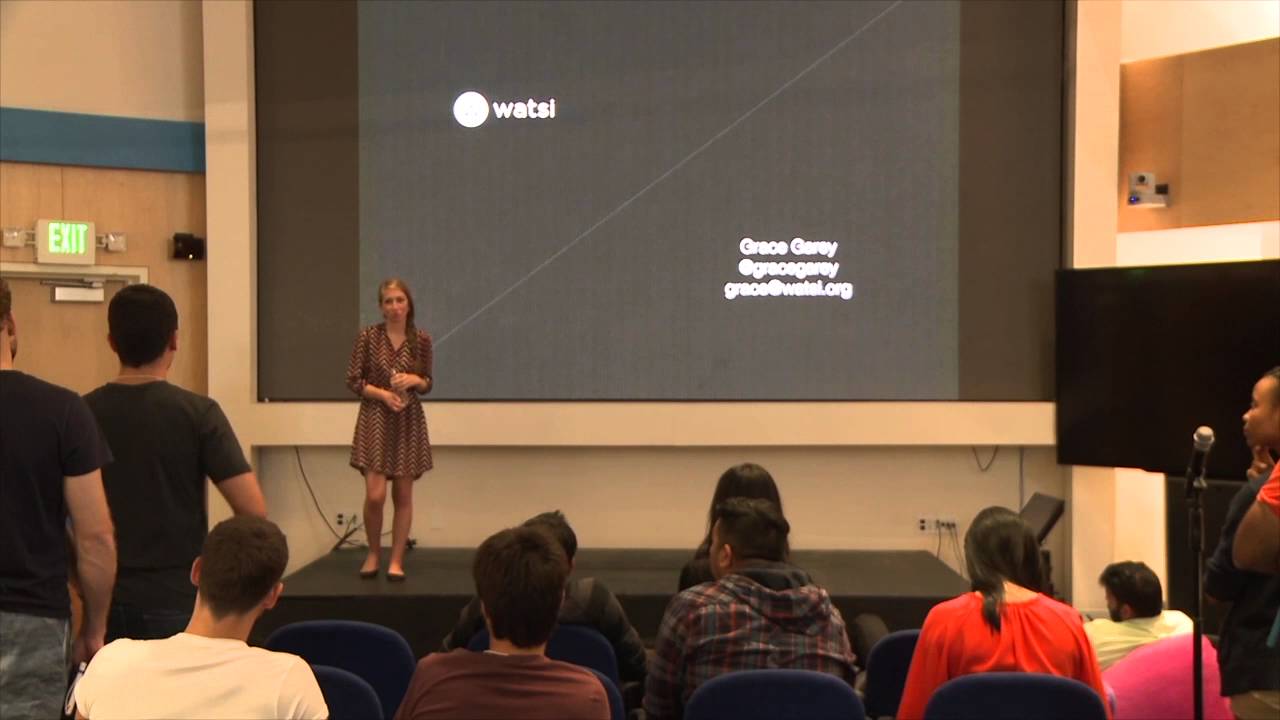
Grace Garey, founder of Watsi, explains how the crowdfunding platform for medical care works. Donors give an optional tip that generates 8% of revenue, and they're drawn to seeing exactly where money goes and real-time updates on patients. Watsi verifies every transaction with photos, timestamps, and automated checks.
Questions this video answers
We rely on optional donor tips that fund overhead (about 8% of total donation revenue) and raise philanthropic rounds from tech investors and foundations to cover infrastructure and engineering costs.
Donors are drawn by personal connections to patients, full transparency of where money goes, real‑time impact updates, and the ability to make a large health impact for a small amount.
Although it’s one‑to‑one, it supports hospitals by covering fair care costs, paying staff, and enabling investments in infrastructure, potentially scaling to government‑level health financing.
We collect detailed patient data, photos, signed waivers, timestamps, and run automated audits plus random manual checks to verify treatment delivery.
We aim to stay focused on healthcare in developing countries first; expansion into other causes or the US is considered only after we master this core mission.
Chapters
So the question was, how do we make money now? 2 ways. So on Watsi, when you donate to a patient, you can give an optional tip to fund our overhead. And we try to be really transparent, obviously, about where money is going. And the idea was that if we could tell people that 100% of your money, if it's $5, every single cent of that is gonna go to this patient, and if you fund our overhead, Here's what our overhead pays for. There's this whole conversation around nonprofit overhead and how it shouldn't be demonized, but also there are nonprofit CEOs taking quarter-million-dollar salaries, and that's bad. And our take on this is just tell people where the money's going and justify it. If a nonprofit CEO deserves to make a quarter of a million dollars, maybe she does. Talk about it and explain it. But that's actually helped us, I think, raise more money for our overhead. So we make about 8% of our total donation revenue in those optional tips right now. People just opting in. And for comparison, Kickstarter takes an 8% cut. So that's pretty decent. But like any other startup, there's sort of the scaling costs initially. So right now, we also raise what we call philanthropic rounds of funding to cover the cost of building this infrastructure and hiring engineers, and eventually the idea is that You know, the growth will continue, but the cost will sort of flatten out over time. So those are funded by technology investors, philanthropists, foundations have finally come around. They like us now. So that's good. Yeah.
Thank you for check check. Thank you for your talk. I'm just curious, who are your main donors and what is their main motivation? For donating to your platform? Because there's so many other crowdfunding platforms that people can donate to homeless people, to kids in rural countries or developing countries. I guess when they go onto your site, what's the main motivation to even donate?
Yeah, it's a really good question. So I think the biggest things are that people are really compelled by the fact that they can not only see where their money is going, but they can get to know the person who it supports. So a lot of people make a very emotional connection on Watsi. We talk to donors who, the demographics are interesting. We have a very techie audience right now, because we're at Y Combinator. It's starting to get more mainstream as we get better with distribution and awareness, but oftentimes you talk to donors about why did you donate, or why did you donate to this one patient, and the things that unify them there tend to be super personal. my mom is in remission from cancer, and this woman in Guatemala has cancer, or I'm from Ghana, and this patient is from Ghana, or I have some personal experience that I can relate to you. I have 2 little kids, and this little boy loves to play soccer like my kids do. But beyond that, I think it's a lot about— it's about the model. It's the idea that we're super transparent. People love that we publish all of our operations and financials publicly. They feel like they can trust Watsi as a connector. of them to another person. I think they also really love that they get real-time sort of impact feedback. So we send updates to donors on every patient they support, and that I think feels great too, that your money's not really going into a black hole. You can actually see what it's done. And as far as why Watsi or why healthcare versus anything else, I think for a lot of people it's just sort of, A, the universal empathy for a health problem. Everybody knows what it's like to be sick, and healthcare is one of those foundational things that almost everything else in our lives is built upon, and so it's one of those very basic things that I think most of us would agree everyone deserves access to, and then I think the other thing is there's this sort of striking opportunity to make a really huge difference for a relatively small amount of money, especially in healthcare, especially in the developing world. So we're funding sight-restoring procedures for $100, funding heart surgeries for $1,200. So I think people are just really surprised by how much of an impact they can make with money that actually feels like something they can part with.
Yeah. Hi, Grace.
Hey.
First of all, I think this Platform is really cool.
Oh, thank you.
And it's helping a lot of people, and I like the approach that is bottom up and actually helping directly to to the patients. My question is regarding international aid. Yeah. There's an inverse a relation inversely proportional to international international aid with economic development. So that happens in Probably just in an institutional level instead of this person-to-person type of funding. So my question is, how sustainable do you think this is going to be, and how is this going to affect or change the way we're aiding other countries?
That's an awesome question. That's one of the things that I thought about most when I was first working in DC and living in a couple other countries, which is like, It's really hard to get behind a program that you feel like you can run a million miles an hour behind because you're just like, you never know what dependencies you're creating or what negative externalities there are. And I think that caused a lot of people, definitely caused me to feel like, oh God, I'm just gonna do more harm than good. Maybe this isn't something that anyone should be doing. But we think about this a lot. And I think, so one thing is that, Despite the fact that it is on a one-to-one level, Watsi does actually impact institutions and systems more than I think we thought in the beginning, but it's actually something we're pretty excited about. I remember going to visit some of our first partners in East Africa for the first time, and this was really early on in Watsi, and we were thinking a lot about this stuff, and we sat down with the administrators of some of the hospitals that we were working with, I just sort of asked him, is there something else we should be funding? Should we be funding a new wing of a hospital or an ambulance or something that feels more systemic to help these healthcare systems emerge? And he looked at me and he was like, no. He's like, don't do anything else, because what you have to understand is that a hospital is like a business, and to sustain itself and grow, it needs to be able to collect a fair market price From the customer. And all of these hospitals that we're working with, and you find this a lot around the world, have these dual missions to provide high-quality healthcare to people in need. And the problem is that, like, to provide high-quality healthcare, you have to get paid a lot to, like, produce that quality. But to serve people in need, you need to be able to not charge them an arm and a leg and force them to, like, go into debt to pay out of pocket for healthcare because there's no safety net to spring for them. for them. And so all these hospitals end up either turning people away, they provide high-quality healthcare to a very small group of people that they can afford to cover the cost for, or they go into the red and don't invest in their own growth and the growth of their health system because they're just trying to react to people coming in the door, and they wanna be able to say yes. And so what he told us, and what we've sort of seen since, is that by covering the fair cost of care for every patient and making sure that surgeons are getting paid, and new doctors are getting trained, and supplies are being paid for, and they can invest in a community health worker program, and they can invest in tying up with other hospitals. We're actually enabling hospitals in these systems to sort of expand. So it's something that there's not totally a precedent for yet, because we're working in areas where the development of a health system is gonna happen a lot differently than the development of our health system here, for example. I actually think health systems in many developing countries have sort of an unfair advantage against health systems here, because they're gonna leapfrog all this crappy technology that we have. They're gonna go straight to electronic medical records. All of Watsi's partner hospitals are already using data to make decisions about care and all of this stuff. And I think another opportunity is thinking about the way that we fund healthcare. Every healthcare system, at a basic level, is just like, Crowdfunding. It's like taxation. Everybody pays a little bit into this pot, and then it gets paid out, and hopefully that covers the cost of care for people, but it's been too expensive to provide that kind of a service as a country develops. And it's not sustainable. Exactly. It's not sustainable because even if a company was gonna do that, the cost of collecting payments from someone way out in a rural area, and then bringing those payments back, and then going to get them if they need healthcare, it's just so expensive that they pass that cost on to the patient, and they can't afford to pay. And so, many of these countries are too small also to sustain that cost themselves, and also to spread out risk among enough people. So, long-winded way of saying, there's gonna be a global healthcare insurance system. There's gonna be a way that risk is distributed across much larger populations, and that somebody is in the middle collecting prepayments, even if they're super tiny, from patients and spreading things out. Hopefully, Wasi can support governments. Hopefully, I think it would make a lot more sense if in 5 or 10 years, if the Health Ministry of Kenya wants to allocate $15 million towards healthcare, instead of doing it through 15 subcontractors like they might do now and seeing maybe 10% of that actually end up with hospitals, they should do it through Wasi, because we're already working with all their hospitals, and 100% of that money can fund healthcare for people in their country. So we have lots of ideas about this, but it's a long way of saying we're thinking about it too.
Governments would be better off if they donate to Watsi instead of Watsi donating to— doing the funding to the government.
Yeah.
Because it's much more—
It's more direct.
Yeah.
Thank you.
We'll see.
Hi.
Hi. Allison Hendricks. I really liked your platform. the human aspect of it. So my question is, there's many issues around the world, like, i.e., brick kiln, like slave labor, slave labor, and I'm wondering if you guys are interested in expanding into these other industries, or if you feel like there's too much competition from Indiegogo and other platforms.
Yeah, that's a really good question. I think there are sort of 2 parts to our focus right now. One is just that we really want focus. We really want to be the best in the world at one thing before we consider moving on to anything else. This is sort of a classic trap that nonprofits fall into also, is that because you're constantly chasing funding, it's like if someone comes to Watsi and they're like, hey, we really like your platform, but we want to fund you guys expanding into education or into this other area, it's so tempting to be like, Oh, you like what we're doing? Okay, yeah, we'll take this money and we'll go do that too. We can be the best at everything. But then you just end up standing in a shallow pool, and you're not that great at anything. So that's one reason we really want to focus. The other one is just that we're curious to see what else springs up for other causes. And yeah, there's also— people ask us a lot, are you ever going to do Watsi in the United States? And that's one where we're like— It's less sort of competition, but more like the fundraising is just a little bit different. And I think I would love for Watsi to be everywhere eventually. I think right now we're just focused on developing countries and healthcare because you can have the most impact with the least amount of money. But it's also interesting because on Watsi we're usually fundraising for patients that don't have access to their own networks of people that could collectively raise enough money for their healthcare. If they weren't doing Watsi, they would be going out and taking out a loan with a crazy repayment rate, or they would be not getting care at all, whereas in the US, there's huge problems accessing healthcare here as well, but people, A, usually have access to the internet themselves. They can go on GiveForward or Indiegogo, and most people through their networks can raise more money here than somewhere else, but that all is gonna change a ton. In the next 5 years, every Watsi patient's gonna be on Facebook, So it's gonna be a lot different.
Yeah.
Thank you.
Thanks.
How do you ensure funds actually get to where they're meant to go? So like you and, you know, before there's like food drops, right? And then a rebel army comes in 50 cows and grabs all the rice or grabs all the food and takes off. How do you ensure that your funds are actually used appropriately?
Yeah, so a couple ways. One is through pretty unheard of transparency. So we promise that to our donors, but that also means that we impose that on our partners. So we ask our partners and provide technology for them to do this, to report on more than you get from any health system anywhere, right? So we get information about the patient name, age, condition, all this stuff, the doctor that submitted them, the date they were admitted, photos of the waivers that they signed, photo evidence of before or after treatment, all this kind of stuff. So there's a lot of transparency as sort of one forcing function. The other one is that we have been able to scale, and in some ways, hopefully this will be a big focus of ours in the next year or so, automate auditing and ongoing due diligence once we've partnered with an organization. So, There are certain things that we've historically manually checked for, like following up with a patient. We'll randomly select out of 10 patients, here's one that we wanna talk to them and verify XYZ, or we'll visit a partner and we'll do an unannounced series of interviews or whatever. We'll do auditing on data that we get. The treatment timeline is really important to us. It's like, did this happen 6 months ago or is it now? Are you backfilling patients? And we work with— the most trusted medical organizations in the world, so there's a lot that we can put in that, but being able to check timestamps on photos with a program that just runs this and flags inconsistencies for us has been a good way for us to scale and automate some of the auditing and due diligence on all of that data that we collect upfront. Thanks.
I really love the impact stories, and so I run a blog on CSR, corporate social responsibility. Oh cool, I would really love to feature that impact story.
Yeah, of course.
And coming— I mean, I have 2 quick questions. Uh, the first is the story behind the name WhatsApp, like how did you come up with the name?
Yeah.
Uh, and the second one is like, what are the challenges of What's your advice for starting a crowdfunding platform in nonprofits, especially if you don't have an NGO background or working with nonprofits? If you come from an IT background or tech background, if you wanted to start a crowdfunding platform?
Yeah. So the Watsi story is a good one. Chase, who had the original idea for Watsi, was a Peace Corps volunteer in Costa Rica, and he had an experience towards the end of his Peace Corps stint where he was on a bus and a woman got on the bus and started asking all of the local passengers for donations to pay for her son's healthcare. And he sort of tuned her out, right? Like, he sort of thought she was selling something. You sort of see this all the time. But then he noticed that every single Costa Rican farmer on the bus was pulling out all the money they had and giving it to her. And it was because she'd been carrying around her son's medical record with her and she'd been traveling from bus to bus to bus, they were now stopped in a town called Watse, asking people for support and telling them her story. And he'd had friends working in San Francisco and in tech, and he sort of made this connection. He was like, we can crowdfund creative projects on Kickstarter. We can crowdfund education projects on DonorsChoose. Why in the world is there no way to crowdfund healthcare for someone like this woman and her son? So that's how he came up with the idea, and he happened to be in a town called Watsi, and so the name stuck. As far as creating a crowdfunding platform, what's the hardest part? It's funny, because I think you asked from the perspective of someone who's in tech, and you're like, how do you do something when you don't know anything about nonprofits? For us, it was the opposite. It was like, we were nonprofit-y people, and we were like, okay, we know what we need to build, but how do we actually build this crowdfunding platform thing? So for us, the hardest part was actually finding someone to build the technology and figure out how all of these logistics should work on the backend and how could we make them really efficient and not just sort of throw people at a problem. If you're in tech, I would say, I think the most important thing for anyone who wants to do something useful for anyone else, whether it's a user of your app or a beneficiary of a nonprofit, program is to go spend a lot of time with the people you're trying to design something for. I think the biggest mistake that any failed company, and certainly malfunctioning nonprofit makes, is trying to produce some kind of a product when they haven't spent time with the people who are gonna use it, and they haven't asked them what they want. I think that informed probably most of our thinking around what's gonna be useful for hospitals? What do patients need? What are donors going to want out of this? Was really just putting ourselves in their shoes and going and spending a lot of time with the first hospitals to use Watsi, going to Guatemala and watching them, seeing where they get hung up on the process and seeing where we can make things easier for patients, seeing where patients don't understand Watsi and how can we help explain that better. I would say for someone who maybe doesn't know a lot about nonprofits, Figure out what you're interested in, and then before you decide what you think would be a cool solution, go spend some time with individual people who are having these problems or could benefit from a solution and see what their ideas are, because they're probably better than ours.
More from Tim


He Sold His Car to Build This Startup, Then Pitched It for $1M 😳 #Startups #AI

This Startup Moves Your Crypto BEFORE Hackers Can Steal It 😳 #Crypto #Cybersecurity




15 Months Without Refrigeration?! This Startup Thinks It Can Go Global 🥥 #FoodTech #Startups



