Richard Kastelein ICO's Q&A | Blockchain: Out of the Labs
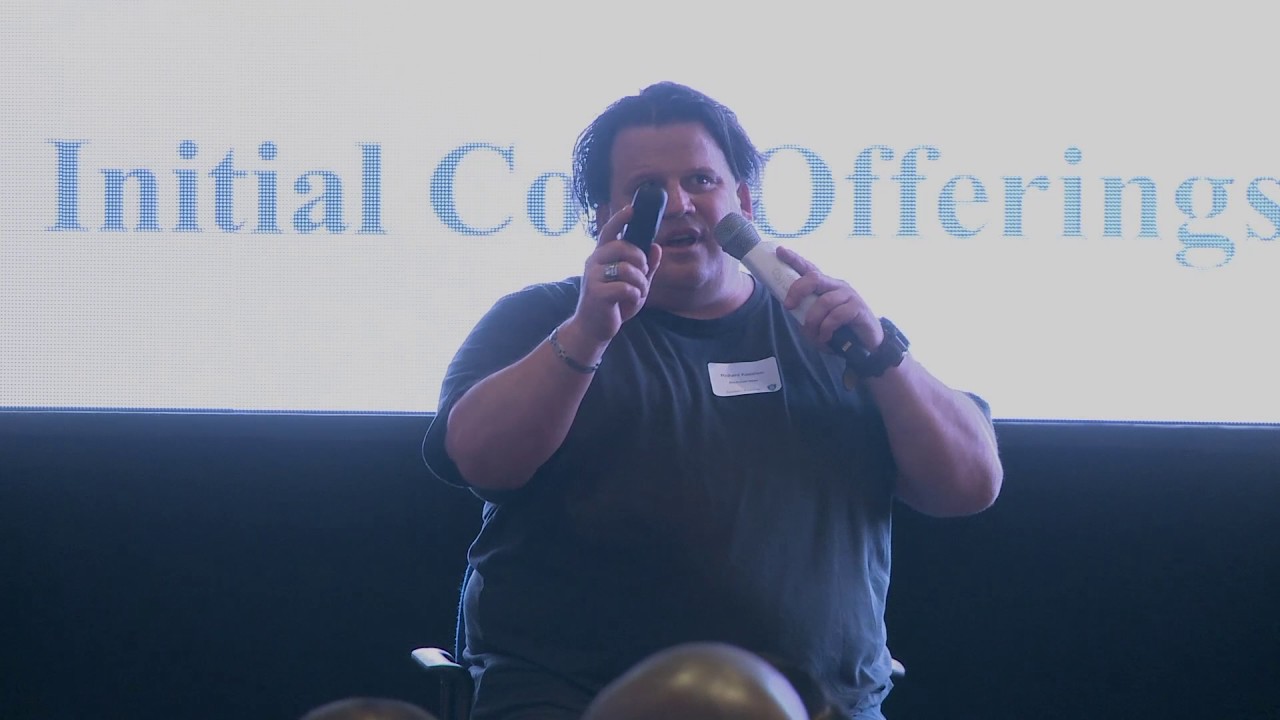
Richard Kastelein and Andrei Zanovsky discuss why Ethereum's ERC-20 standard dominates ICOs, the four-month typical development cycle for tokens, and whether most future tokens will be securities or utilities. They warn that U.S. regulatory restrictions could push innovation elsewhere, while Switzerland and Singapore offer friendlier frameworks.
Chapters
We have a few minutes here, we can probably open up for 3 or 4 questions. Hi, I'd like for you to expand on why people do an ICO, particularly on the Ethereum blockchain versus on the Bitcoin blockchain, let's say Omni, and maybe the differences between the ERC-20 token and the same.
Well, I think Brock Pierce said it best. He said the killer application for Ethereum is ICOs. Just basically the easiest, best, simplest, cleanest way to do an ICO. You could do it on Counterparty, you could do it on Bitcoin, I believe, I don't know, I can't be wrong, I haven't seen any on Bitcoin. So there are other ways, you can create your own coin if you want to from scratch. It just happens that Ethereum, you know, it's just the path that people are taking because the community is already so big as well. Now they have liquidity because their coin went from 30 cents at pre-ICO, ICO up to $50 or $70 now. So there's money in that community as well. Now, what are the institutional investors doing? That's what's also interesting. How are they fitting in? They smell the money, believe me. They, you know, and they're holding a lot more Bitcoin than people think. The hedge funds, they've got— they've already bought quite a bit, I believe. I've read some things about that. It's not just Chinese miners. But they're definitely moving into this space. and trying to figure out. We saw returns of over 2,000% on a couple of coins last year. So, anything else?
Yeah. Can I speak? Andrei Zanovsky, CEO of MBSafe. We are also an ICO services provider and participated in 5+ ICOs. I wanted to correct a couple of things, like it takes more than 3 months typically to prepare an ICO, and you say— you made an impression like it's just a couple of weeks. No, we take 4 months, yeah. Yeah.
2 for the pre-ICO and then 2 for the ICO.
Okay, and regarding the nature of the tokens, we see the trend that most of them in the near future will be something like securities, like shares of companies, and that it's not necessarily some, like, open source derivative.
Well, I would disagree with you, so.
Okay, fine.
I don't think that— I don't think it's in any ICO's interest to go into shares because you're gonna immediately get into securities issues. Especially if you want to deal with Americans, but also other regulatory systems that don't have token regulatory structures in place. You might get away with it in Switzerland, you might get away with it in Singapore, but if you're going to be dealing with other investors, you're taking a lot of risk when you're dealing with equity.
Well, let's chat about that a little bit.
Alright, cool. There's a question back there.
Yeah, so I was just thinking of the analogy to, say, Yale, obviously, and, you know, people who participate So, you're saying ICOs have particular rights that come along with equity. What kind of rights do people participate in?
Well, in the equity case of Ambisafe, you would have certain rights. In my case, it depends on this issue, but basically you wouldn't have any. There's no skin in the game for you, I'm afraid. Other than if you know me well enough, or you know them well enough, you might get in on the pre-ICO, the family and friend round, and make the most money. But having said that, there's another model as well that we worked on with Humanic where we built a foundation, but we also built a for-profit company in Luxembourg which is going to build an accelerator and incubator program to build on top of the platform itself. So there will be a core and a board running the core platform, and then we can modularize and bring in, okay, the people who want to— let's do let's form this for-profit company which will build the first peer-to-peer trading part of that network, or, you know, and then open it up to other people who want to build on top of this framework or this protocol that you built. And then there's opportunities for VC to invest in that side, on the for-profit side. So there's ways to set it up where you can have this foundation part, and you can also have, let's say, we call it profit with a purpose. Of course, we're working in the humanitarian space in this instance, but that's also a common model—
or not a common model, but a model that we're starting to see more of. Okay, great.
Thanks. Yeah. Hi. Yeah. Hi. 2 quick comments, I guess, which are also questions. First of all, I get really nervous when venture capitalists get really excited about something all at the same time. You saw finance get really excited about credit derivatives. It's just a small use case to something that created massive amounts of instability. I also was— I'm a blockchain homer. So in 2014, it was just a bunch of punk kids sitting at Galvanized drinking beer and eating pizza. And then in 2015, the business suits came in. It was the VC, the smart money. And in 2015, we saw investments in all these different blockchain startups that ended up doing nothing. And then 2016 was everyone sitting on their hands because they've been fleeced.
Yeah, well, which market are you talking about? America? Are you talking about global? Europe?
The United States, principally.
Yeah, that's my thing.
So a second thing, really quickly, and this is, again, trying to just be contentious with you because I appreciate what you're doing here. Here's the discussion with Mary Jo White of the SEC. You say, like Adam Draper did, ICO, that's software. And she says, no, it's not, it's equity.
Boom, done deal.
You just broke the law. Now all the ICOs are squelched. Let's prevent that kind of thing from happening. What would you say to Mary Jo White when that happens?
I would say, well, you're killing your innovation in your own country. Go double sell in Switzerland. The SEC is going to have to rethink this. They also have something called Hueys or Deweys, or there's another—
Sorry, just really quickly, not necessarily. They may not think that.
Well, they may not, but, you know, say You're going to be 3 years behind the Equity Crowdfunding Jobs Act. I mean, we were doing that in Europe already, in the UK, in the Netherlands, 3 years before Jobs Act finally came around. So it's either you get ahead of the curve or your regulatory systems are going to keep you with a ball and chain and behind the rest of the world. I'm sorry, but I'm going to be critical. I wrote a piece on VentureBeat a couple weeks ago about comparing the US and China. There's a lot of great innovation going on in the US, there's no doubt about it. Most of it's centered around Bitcoin and exchanges. and services around Bitcoin itself. They're not— there's not— you don't see much around health, you don't see much around like any of the other industries, like in Europe, say, where they're more focusing on what can, you know, Philips— what is Philips doing with health and blockchain in Amsterdam? Or what are the energy companies doing? And, you know, the way we're thinking about blockchain in other verticals. And then there's the ICO aspect, which is missing from the US. I mean, any Americans are having to go to Switzerland or Singapore to do this stuff, and then they're always going to have a risk. On multiple levels, multiple authorities, taxes, whatever. I mean, it's just not easy. And the question is, is the SEC going to— or is there some way to work within existing regulatory systems to make this fluid and make sure people are doing this legally? I mean, Pierce Brock did this legally. Okay, it was a weird ICO, like 99 people, accredited investors.
Yeah.
It's not really opening the door for the small guy either.
But c'est la vie, I don't know.
Thanks for the questions. Touching on this topic, currently issuing a security that does not exist, this is an SEC loophole. So my question is, are all of these ICOs based off of Ethereum? No, you can do Counterparty, you can base it on— you can build your own coin. If you build your own coin, actually, you're completely free of any issues. But it's just, what are they going to define this as? Is it a digital asset? Is it a token? Is it, you know, I mean, the Swiss have created new legislation, regulatory structure. Singapore has done the same to deal with this issue of what is a token asset and a digital asset. How can we make this work? And the Swiss have been very aggressive. Crypto Valley is what it is. It's where Ethereum is, it's where most people are going to do this stuff because they have the regulatory system in place. All right, we have time for one more question.
So I saw Brock Pierce do his ICO. Where is the secondary trading happening? And so in this case, Brock didn't go get engineers to build his own, right? He used some platform.
Well, we have for the trading Poloniex, Kraken, all these. You have like 20 or 30 different cryptocurrency exchanges. And they all have different currencies, but this is where you can go trade your Ethereum for Bitcoin or for whatever Brock's currency is. People want to sell it right away, they can just flog it off. It's kind of complicated. You have to kind of look what people are buying and selling for, and then you have to kind of pick what you want to sell it for, and then hopefully people will buy it at that rate. You know, it's a bit of a game. It's not just like you go in and sell it. Having said that, there are, you know, there are some services that are making it easier to transfer value between the different cryptocurrencies. Shapeshift is one.
Shapeshift.
I don't know if you've heard of them. I just tried it today. Ethereum to block— to Bitcoin was like dead easy. So you don't have to be a hardcore trader to move money in between currencies anymore. All right, thank you guys very much.
More from Tim


He Sold His Car to Build This Startup, Then Pitched It for $1M 😳 #Startups #AI

This Startup Moves Your Crypto BEFORE Hackers Can Steal It 😳 #Crypto #Cybersecurity




15 Months Without Refrigeration?! This Startup Thinks It Can Go Global 🥥 #FoodTech #Startups



