Risk, Freedom & Building Billion-Dollar Companies Before the World Believed - Divot Podcast #32
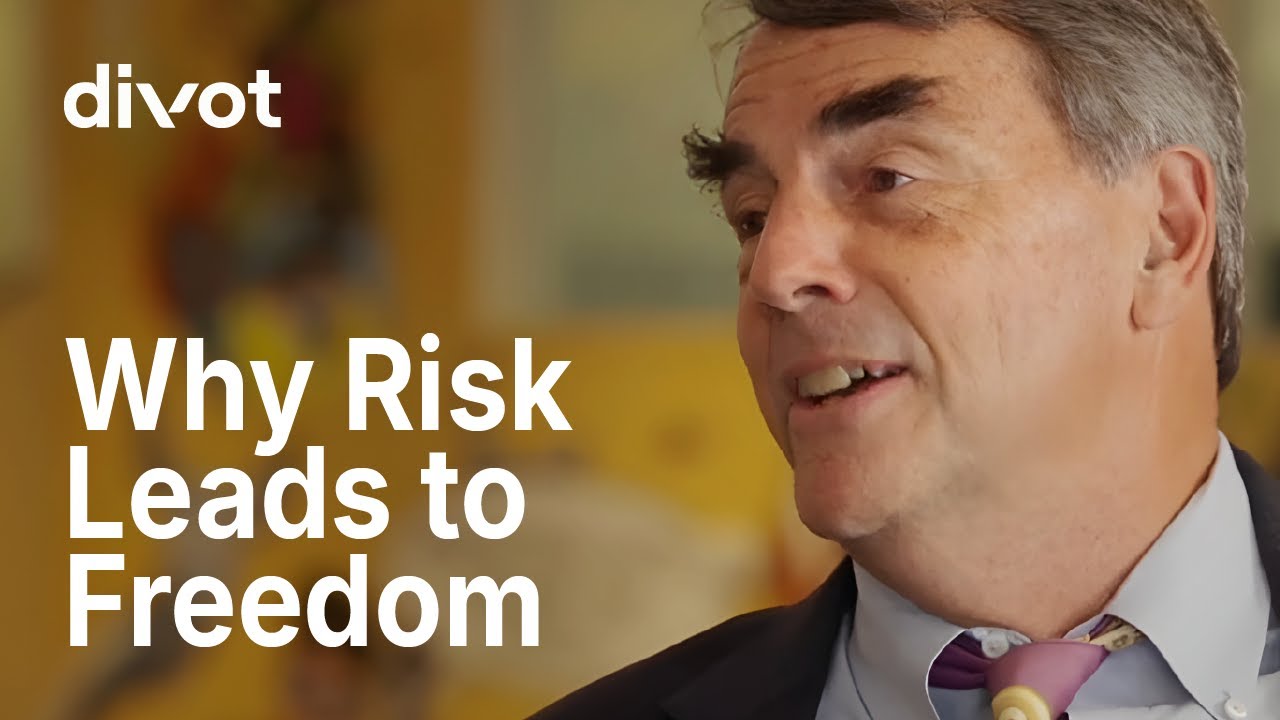
In this Divot podcast episode recorded at Hero City in San Mateo, venture capitalist Tim Draper discusses his philosophy of pushing boundaries, the mindset he cultivates at Draper University, and how he evaluates and backs entrepreneurs. He recounts his early and aggressive bets on Bitcoin, including the Silk Road auction, and explains his belief that Bitcoin is a superior store of value to fiat currencies. Draper describes the evolution of his media venture "Meet the Drapers," its crowdfunding model, and the lessons learned from regulatory push‑back. He reflects on missed opportunities (Facebook, Uber, Airbnb), the cyclical nature of Silicon Valley bubbles, and the importance of diversification and resilience. The conversation also covers his political activism in California—school‑voucher initiatives, attempts to split the state, and the Grow California project—along with his views on government spending, inflation, and the future of money. Draper shares personal anecdotes about risk, peer pressure, parenting, and his guiding principle of measuring life by how quickly he helps the world accelerate. Throughout, he emphasizes treating founders as superheroes, embracing failure, and taking hard tasks first.
Chapters
If you push the edge once, you get a lot of backlash. You push it twice, it's like crazy backlash. Push it 3 times, that's your personality, and you are allowed to push the edge.
Welcome to Divot, the community for people making their mark on the world, where each week I sit down with the greatest minds in business, tech, sports, and entertainment to uncover the moments, decisions, and lessons that shape their journey so you can shape yours. Go to divot.org to learn more. Subscribe on YouTube, Apple Podcasts, or Spotify.
Divot.
This episode is brought to you by Dell. Today we're in San Mateo, California at Hero City with Tim Draper of Draper Associates, DFJ, and Draper University. He's one of the most iconic venture capitalists in Silicon Valley and the world. Tim has backed transformational companies like Tesla, SpaceX, Skype, Robinhood, Twitch, And now combined, his investments are worth over $1 trillion. He's a graduate of Stanford and Harvard Business School. Tim pioneered viral marketing. He built the Draper Venture Network across more than 20 countries and became one of the earliest and strongest believers in Bitcoin, now recognized as one of the largest holders and loudest voices for decentralized innovation and economic freedom. Tim's mission is simple: champion entrepreneurs and expand freedom. He believes founders are the heroes who build the future. He backs those bold enough to challenge systems and create opportunity. He's even stepped into politics fighting for more innovative and free California, advocating for school choice, government reform, and civic innovation. I hope you enjoy it. Thanks for being here.
Great. Great to be with you here. Always been a big fan of Startup Grind, so I appreciate that. Great that I'm getting to be a part of Divot. Put your dent in the universe, which is like a divot.
It's appropriate, right? Yeah.
It's a, I put a lot of dents in our universe when I go golfing. I am a very bad golfer.
Have you picked it up later in life or were you always golfing or?
No, no, I haven't really golfed. I mean, maybe twice a year, whether I like it or not. Yeah.
That's all. It's hard to get good at golf if you—
Now I kind of do. There is a, like a 4-day period where we were investors in this Prairie Club golf courses, and we take over the course sometime in October. And so I have to play about 3 or 4 days a week, a year right there. And then beyond that, I think that's maybe one other round in a year.
Well, we're in this amazing Space where lots of dents are getting created. Lots of marks are being made here. Yeah.
You know, over here, this I bid on, which was you, you get Jim Lee to make you a, your, your own cartoon.
Yeah.
And when he, when he came in here, I said, well, I'm thinking about this wall. And he goes, I was thinking of something a little smaller. And we figured it out. And then my son came and said, I want to create Draper University of Villains. And I said, wait, why villains? We're heroes. He goes, no, the villains in comic books, they do all the cool stuff. So if you can see, there's a vertical takeoff and landing vehicle, there's an exoskeleton, there's ag bio, there's decentralized government, there's VR and AR, and then there's genetic engineering. All All covered with the villains of comic books.
Yeah. So you walk in here, we're in the middle of Silicon Valley, and it feels like you're in a comic book. Yeah, that's kind of what's going on.
But you know what's great about comic books is they're all about the future. And that's why I kind of like the idea of superheroes rather than heroes. Heroes makes you think about history, Henry Ford, Steve Jobs, whatever. But if you think about superheroes, they're the people who are going to do extraordinary things in the future. And so we look at our entrepreneurs and we think of them as superheroes.
When do I, as an entrepreneur, at what point do I become a superhero? Am I just like this superhero in training? It's like my origin story. It's just like naturally these other things have to happen because I don't feel like a superhero a lot of times.
We never use superhero in training because That's S-H-I-T. So we basically say you're a superhero from the word go. You're just a young one. We do have this thinking that you're a superhero, even if you're not a successful superhero yet. You just keep working at it. Eventually you become a successful superhero, and that's when they call you a unicorn. And we call you a rhino If you become a fat unicorn, if you get to $10 billion in market cap, you're a rhino. And if you get to a trillion in market cap, you're a chimera because it's very rare to see one.
I feel like one thing you've been really known for is helping people develop mindset, getting in the right mindset. It's like, for me, for years, I've just kind of thought a lot of that was like this woo-woo thing that people talk about to just like make money or something. But now, 15 years in, I really feel when I'm in the right mindset, I'm doing great things. And when I'm, when my mind is in the wrong place, when I'm letting the sort of the villain in my own head take over, then like everything, like immediately I can see a change. How do you think about mindset?
In the Sand Hill Road community, when I was doing, when I was building my venture business from the beginning, all the other venture capitalists, who were kind of friends of my dad, there weren't a lot of them. They all said entrepreneurship can't be taught. And whenever anybody says that can't be done, I think, huh, how would I do it? And so I thought about it, thought about it for years. And then when I decided to start a school, I didn't really know what kind of school I would create. And then I realized the only thing I could create, I don't know anything else.
Yeah.
create one for entrepreneurs. And it turns out we've been able to prove that you can create entrepreneurs from ordinary people. And that is extraordinary what we've been able to do over there. And it's just getting them realizing that it's okay to stick your neck out. It's okay to try new things, and it's okay to have a passion, a singular focus to your life, because then you can make that divot you're talking about.
How do you measure somebody going from being not entrepreneur to proving that they can be an entrepreneur? What is the data points that you look for?
We are looking for entrepreneurial success, and that's what we've found. We've had 6,000 people go through Hero training at Draper University. 24,000 have gone through some form of Draper University, but of those 6,000, 2,000 companies have been started. And over 30 are worth more than $100 million, and about 5 or 6 are now worth more than $1 billion. So, and our school is only 15 years old. So getting from 0 to $1 billion in less than 15 years is—
It's incredible.
You know, doesn't happen very often. And then the other thing that we learn is that Even if our entrepreneurs who go through our program don't go start a business, they'll go into a big company or something. They get promoted, promoted, promoted, promoted because they're taking risks. They're in a big organization and they're not afraid of being fired and they're not afraid of, you know, a little bit of collateral damage. They're just really focused on helping build that business up.
How do you think about taking risks? You've taken so many risks on so many different things, but how do you, when somebody says, you even talked about it a little bit, you even said, when somebody says I can't do something that makes me want to do it. But do you have a, do you look at risk in a different way? Do you see it in a different way that makes it so you don't get afraid of doing something crazy?
I used to have this group of partners and they're really brilliant people. And, uh, and I would do something crazy. And then they, at the first time I did it, they all looked at me like, this affects me. How can you do this? How can you, you know, ruin my reputation or whatever? And then the second time I do it, it's like, ow, this is crazy. What are you doing? You're ruining everything. Everything's great. And then the third time I do it, it's like, oh, that's just Tim. And so it's okay if you push the edge once, you get a lot of backlash. You push it twice, it's like crazy backlash. Push it 3 times, that's your personality and you are allowed to push the edge. And I think people have to sort of get through that 3rd time where people are rolling their eyes the 1st time, screaming at you the 2nd time, and the 3rd time, They are on board and they're saying, okay, this is who this guy is. Go for it. This is who he is. And they get behind me and they say, I don't know what he's doing, but it's going to work out. And that has been the case in many cases. Now, it doesn't always work out, but I've had a lot of failures. But recognizing that, hey, he's going off to start a school. Well, that's just him, whatever. And now it's one of our greatest sources of deal flow. I went off and started a show, Meet the Drapers.
Sure.
And that seemed a little crazy. The reason I did that though was because I was talking to Richard Edelman who runs the biggest PR firm in the world and I said, well, what do you recommend to people? And he said, be your own media company. And so I took that to heart and I tried about 4 or 5 different things. I had a podcast, I had this Twitch show, I did a bunch of things, none of them worked. And then I thought, I've, way back when I went to Hollywood and I suggested something like what my show is, and they all turned it down. About 15 years later, Shark Tank came out. And then when I saw that you could do crowdfunding at the same time as you did a show, I thought, oh my gosh, you can get the viewer to be in the game funding the companies they like and supporting the people they like. And they have to see it live. They don't want to see it recorded. And that really did take off. Then we had some bad reaction from the SEC with the old SEC. Yeah. And now the new SEC would probably be very welcome to it, but we've moved beyond that. We haven't, I mean, the show now reaches 300 million people around the world and it's about 10 million watch in any one episode and—
Unbelievable.
And I just do the funding rather than having the crowd do the funding. We're going to try something new in a year or two, or no, in about 6 months, we're going to try it in a year or two. You'll see it that will allow the audience to participate again. And so hopefully that all pans out.
And it's interesting how you talk about, hey, I have had some failures. Nobody, but nobody in the long run, nobody really remembers any of that stuff. Yeah. This is the other, like this thing that's dawned on me in the last few years is like whenever somebody's like, what are you worried about? I'm like, well, I remember when this happened, this happened. And they're like, no, I don't remember any of that. That's just you. You remember it because it happened to you and it's in your head. But like nobody else is thinking about that because everyone else has their own problems. So.
Well, moving forward is a skillset I think that you can learn, which is just, well, if you play golf, your divots, You don't want to remember the last shot.
Oh God, no, it is.
No. You play tennis, you don't want to remember the last point. You want to make sure that you're always kind of moving forward. What's next? What's next? Play chess, all of a sudden you're at a, in a great disadvantage. You thought you had an advantage. That's right. It, the game changes and then you go, okay, now I got to rethink it. I got to get out in front of it. Fantasy football, same kind of thing. So in life, Yeah. It's the same. You say, okay, that thing didn't work out. Close the door on that. Sometimes you have to do some backfilling because of it. Sometimes it's like, oh God, I really upset that guy. I better go back and talk to him, see if there's something I can do. Get him somebody else to do the job.
Mend a few bridges or something.
Mend a bridge, do whatever. But then you're off to the next thing. And that turns out to be really an effective way to run a business.
When I got to Silicon Valley in 2005, it was like this— I'd never been here. I didn't know anyone here. And it was like this sort of blank canvas of what had happened. But what I learned as the few years went on, I was like, oh, this is where the dot-com bubble and crash happened. Where are all those people? It was like almost all of them just evaporated. I never really met a lot of them. Some people, Like yourself and many other very, very successful people, like survive wave after wave after wave. But so many people kind of came and they made their one attempt, went home, disappeared. We're now seeing, we've now seen several waves since then with mobile, with SaaS, with subscription, with crypto, and now with AI. What do you see is different about this cycle from some of these other cycles we've seen? Or is it, does history repeat itself?
Well, I'll start with the one I am the most familiar with, which was the internet boom and bust. Because when the internet boom came, well, actually I was involved in the software bust back in '86 or whatever, but the internet boom, everybody was, you know, it was so excited and so many great things were going to happen and all that stuff. And they didn't happen overnight, which they never do. And so people were disheartened and they went down. And I was panicked because I was thinking, oh my gosh, all of Silicon Valley, these huge layoffs, enormous layoffs were happening all the way across the board. But having women in the workforce, all of a sudden it was like, well, maybe one of them was laid off, but the other one was still bringing food into the family. And so we didn't have a Great Depression when we had that big recession. And that was really a helpful thing because now you've hedged your bets by bringing women into the workforce. I think that's a really powerful force. As time goes on, some great things start to happen and that industry gets bigger and bigger and bigger and bigger than anybody ever imagined. Even at the top of the 1999 bubble, nobody imagined how big it would be now with $5 trillion businesses that are all tied to the internet. The next bubble was probably the marketplaces, and that was one of my biggest failures, the failures to act. I got outbid for Facebook. We somehow—
You were in the first, which one, the Accel deal or the Peter Thiel?
Before Accel. Yeah. And then I was talking with Accel, one of the people.
Yeah.
Theresa.
Sure.
And we, and I said, I think I'm going to do this Facebook thing. I didn't realize she was on the other side of the bargaining table negotiating against me after that.
You met with Mark Zuckerberg in those early days?
No, I was meeting with Sean Parker and he was going back and forth bidding us against each other.
Trying to get his best deal he could.
Yeah. And I finally said, ah, enough's enough. And I shouldn't have, I should have just gone to the end. Then I missed out on Uber and on Airbnb for different reasons. It tended to be internally we were having, you know, there were time conflicts around the organization. Some people had to deal with our LPs and some had to do other things. And so those things fell between the cracks. But so marketplaces, I kind of missed that. But Bitcoin, I was the first venture capitalist to buy any Bitcoin.
When was that?
Way back, it was $4-ish Bitcoin.
What year do you remember?
Yeah, 2011.
Wow.
And then I lost all that to the Mt. Gox thing. And then I bought back in for the one that became— made me famous, which was the—
The Silk Road money.
Silk Road money. And that was, you know, at that point it was $632. And that was actually, it was $618 was market. $632 was the—
They made you pay for it.
It was what I bid because I figured it's either going to go to the moon or it's going to fall away. And I think it's going to the moon. So if I pay 10% higher, at least I'll get one of these lots. And I ended up getting all 9 lots. I only was expecting to get 1 or 2. And so I was way over my skis.
Over leverage.
Oh boy. I was way over my skis too.
Really?
Yeah. Oh, this was like when I bought that and then it went straight down to $180. And I thought, well, you know, I, but I was still a believer. So I just kind of hung on for the ride.
Even after everything that happened, even after losing everything to Mt. Gox or seeing this thing?
Oh, actually that was the reason I was so committed. After losing it all to Mt. Gox, I thought, well, why isn't it gone? Why do people still want it? So then I did a lot of research and I went, oh, they're doing remittances to Africa. Big companies are able to pay employees in Bitcoin. Bitcoin is allowing people who are unbanked in Africa and Southeast Asia to be a part of the global economy.
Yeah.
And they were completely unbanked before and Bitcoin made it all possible. And then I started to look and I went, oh my gosh, you mean You don't need an accountant, you don't need a lawyer, you don't need a bookkeeper, you don't need an auditor, you don't need a tax collector. It can all be done on the blockchain. And I went, whoa, this is the future. This is going to be—
But no one told you it was the future. You just, you just what, connected those dots by just kind of doing the math? Were there, do you, were there other people that you talked to that you feel like understood it as well as you understood it?
And you're like, yeah, we had a, Right around my neighborhood, we had a little dinner and this guy invited us all to dinner. And I think he was the only one who didn't buy any, but I had already been buying. And the other people at the table—
Other successful people in the Valley or something?
Yeah, they were probably successful, but we were all talking about it and Bitcoin was the entire conversation. He was just trying to get the neighborhood together. Bitcoin was the entire conversation. And at that point we were kind of encouraging each other.
Yeah.
And I think that was kind of fundamental for some of the other guys at that table. But I had been already pretty deep in there for a while by the time we had that dinner. But it was kind of, There were other people that were starting to get more involved and more involved. I think it was just before the auction that we had that.
Okay.
Fed dinner.
I just remember you being on TV and in on videos and things saying Bitcoin's going to $100,000. Bitcoin's going to $100,000. And I—
Oh, first it was Bitcoin was $180.
Yeah.
I got on Fox Business and she said, well, what's, you know, give me some predictions. And I said, drones are going to be a big deal. And she's rolling her eyes. And I said, and Bitcoin's going to be $10,000 in 3 years. And she looks at me like, why did we have this guy on the show? I mean, literally it was like, what is he doing on the show? And 3 years to the day after that interview, Bitcoin hit $10,000. I was down in Argentina when it hit, talking to the president of Argentina about Bitcoin. And I said, just buy Bitcoin and then you'll be able to pay back the IMF and everything else. He didn't do it.
That prediction was right.
That was right on. So then about 3 months later, it dropped from $10,000 down to $4,000. And I said, when it was $4,000, I said, okay, $250,000 in 4 years. So that would've been 2022 that I predicted $250,000. And so I was way off, but I think the only reason I was so far off was, and I think I was basically 4 years off, maybe 5, but I think it was because I was not expecting the guy who was going to be the SEC chairman to be so opposed to it because he taught blockchain at MIT. And I thought he was, all of a sudden—
He would get it better than anybody.
Better than anybody. I thought this was a perfect slam dunk. And so I missed that completely. I didn't realize that they were like control-free regulators.
It was basically locked. I mean, crypto was like basically locked in the basement with threw away the key.
For those 4 years.
For those 4 years.
And now they've come, now it's like the mole coming out of the— You know, all of a sudden—
The underbrainer.
My eyes are kind of, oh, I guess I can see. And now the SEC is much more encouraging business, encouraging risk-taking, Bitcoin, crypto, all sorts of things are being reevaluated and reregulated.
Yeah.
And that is allowing us all to be at parity with the rest of the world. We had entrepreneurs come to me and say, here are all the things that I can do. And I'd, then I'd get all excited and I'd say, oh, that's fantastic. I can't wait to try it. And he said, oh no, we're geofencing the US because you're not, your SEC's not allowing this stuff. And so I was thinking, ah, what? And I got really jealous, really jealous of the people in El Salvador because they were already doing smart contract, They were just way ahead of us. Yeah. And now hopefully this will allow us to all catch up and then we'll see Bitcoin at $250,000 and that might take another 6 months.
Of the original 29,000-ish coins, Bitcoin that you bought as part of that, how much have you sold and how much do you still have left?
I didn't sell any of those.
None?
None. I bought more and then I put some of those to work. I was the first one to ever lend Bitcoin for Bitcoin interest ever. And I was the first one to ever take Bitcoin and invest in entrepreneurs. And I did that with Boost.
Yes.
With Boost VC, my—
Yeah, with Adam. Adam.
Your son. Yeah. We had about, there were about 8 Bitcoin companies and I funded them with Bitcoin.
Yeah.
And turns out the only 2 that really succeeded were the ones who only used the Bitcoin as needed. And so they were able to just roll with— ride it and roll with it. And so the other ones all went out of business. They cashed in, used, you know, blew through the money, and then the game was over.
When you've gone through these fluctuations, in the market. It was at $600, you bought it, then it drops to $100, then it swings back to $600, then it goes to $6,000, then it goes to $60,000. At what point do you say like, I need to take some chips off the table here? Or do you, or what has gone through your head to say like, no, I'm all in. I'm not going to sell anything. That, I mean, that's a pretty big idea not to sell anything.
See, I'm looking at it very differently than that. I'm not looking at it as an investor. I'm looking at it as a, transformative technology that is— and I'll give you this example. My dad gave me a million-dollar bill when I was about 10 years old and I go, million dollars, look, what can I do with it? And he goes, nothing. And I said, what do you mean? It's a million dollars. He said, that's a million Confederate dollars. The Confederates lost the war to the Union. They inflated their money. A million dollars wouldn't buy one single Union dollar, million Confederate dollars Wouldn't buy one single Confederate dollar. So I'm seeing in effect, in slow motion, the exact same thing.
Sure.
Because, okay, not only is a dollar today worth more than a dollar in a year, we lose it to inflation or usage or whatever, right? Or even stablecoins, you know, that actually is inflationary. And so the value of a dollar today versus, I mean, is, is a dollar, and in a year that's going to be 90 cents and 80 cents or whatever, and it'll keep dropping. But the value of Bitcoin continues to grow because the network continues to grow.
Yeah.
The bigger the network, the more powerful and effective the unit of currency Bitcoin is. And so not only is Bitcoin against the dollar, a really good bet, but it's, you're seeing the dollar fall as fast as you're seeing Bitcoin grow.
Hmm.
And that combination is going to, you know, it'll hit $250,000, but it's going to hit a million. It's going to hit $10 million on its way to where the dollar is no longer accepted, no longer worth it. And Bitcoin is the one source of store of value and currency for the world eventually. But there will probably be competitive currencies. But Bitcoin's 61% of the market for cryptocurrency. So I think there's kind of one big winner and then there are lots of little things.
You think there's no turning back for the dollar? Is there no way for the US to resurrect the dollar?
I think if you put a— if you told Congress, Here's your budget and everybody votes for a share of that budget, then people would hold, then the dollar still might be able to survive. But it is old technology.
Yeah.
And it's tied to banks and it's tied to governments. And even if you solve the problem one time, the government spending as a percentage of GDP is on a straight line up. It just keeps going higher. And that, by the way, that's the number to watch. Government spending is a percentage of GDP. It just keeps growing. And as that grows, government is spending more and more and more of the dollars, which means they're printing dollars, which means the dollars you hold are worth less and less. So why would I ever turn something that continues to expand in value into something that I know is decreasing in value?
How much would you recommend somebody holds in Bitcoin in their portfolio of cash and stocks and everything?
I don't think I am in any way qualified to recommend that.
Sure.
Not only am I not an RIA or a Series 7 holder, I am in— if anybody just followed my lead, they would be— you would look and say, That person is out of their minds. All I know is if you're a corporate and you just saw Silicon Valley Bank go out of business.
Yeah.
And you couldn't make— That was crazy. Yeah. And you couldn't make payroll on that Monday, you know that you've got to hold at least 4 weeks of payroll outside of the existing bank—
Bank infrastructure.
Government system.
Yeah.
So Bitcoin's a good bet for that. If you're a family, if you manage a family, you're trying to take care of a family.
Sure.
And you are— and if there is a chance that Silicon Valley Bank or another bank starts going out of business and there's a domino effect and nobody wants dollars anymore, You better have enough Bitcoin to keep your family alive for 6 months. That's, I think that's really important because you got to be able to get a Bitcoin job after that. And then if you're a government, all these governments are wising up because they're saying, hey, if our currency's not that great, you know, we need to put this in our treasury so that we have this store of value.
Yeah.
So that we can show that we're like a viable country. Because a lot of countries won't be viable because why, I mean, why would you ever hold Nigerian naira? I mean, it drops like 50% a year.
Yeah.
Or Venezuelan bolívar, that thing, what was it, 90% or something? It just disappeared in value. People are just like throwing these things around.
Sure.
No, it's a hot potato. Whereas Bitcoin is like a warm fuzzy bear. That just wants to hang out with you because you're just going, everything's good, baby. Things are good. I don't really need this. You know, but if you've got, if you've got a lot of fiat currencies, yeah, it's like quick. And then whenever you hear of a, of, you know, a really wise investor dissing Bitcoin, Why are they do—
why do they do that?
Because they have all the dollars. I mean, if, if you had one commodity and the world started to go toward another commodity, you'd be so against it.
Sure.
You'd be freaking out. I mean, and they do. They were.
Yeah. They, they just like, it's, it's not even that they like say, hey, don't do it. It's like they just like, they, they like try to curb it and like, you know, curb stomp people that are into Bitcoin. It's crazy.
Shakespeare, what do they say? Methinks you You detest too much, or you—
yes.
Yeah. You not detest. He thinks you something too much, like protest, protest, protesteth too much.
It's interesting you bring up the Silicon Valley Bank thing because that's probably one of the days I will never forget because I was sitting in my garage. It was like a little bit in the edge of COVID And I got this text from the most connected person in Silicon Valley I know at 9:30. And they said, how much money do we have in Silicon Valley Bank? Tens of millions.
Yeah.
Said, for our company, you need to get down there and get it out. Like when? Like this week? He said, no, this morning. And, and, and I, on the Ring camera, you can see me running into the house, not, not even knowing anything.
Right.
Getting the keys. And I get into the lobby of the bank. And I'm the only one there. And I tell the lady, I said, I need all my money out right now. She's like, well, that's not, it's impossible. I said, well, it's my money. It's our, I'm the steward for our company. It's our money. She's like, it's impossible. I'm like, you put it in duffel bags. I don't care how you get it. You get it. And I'm not leaving this lobby until you get it. And, you know, it ended up—
Were there a bunch of others in there?
Well, a 3-hour, within 2 hours, 3 hours.
You were there early.
I was the first person in the lobby.
Did you get the money?
I did. I got all the money out before the cutoff, but it was, you know, I mean, I had 15 calls from entrepreneurs saying, I'm in trouble.
We have—
Will not make payroll.
We're not going to make payroll on Monday. Everything I've got is in Silicon Valley Bank. Now we tell every entrepreneur, you got to put together a treasury. Some in the big banks and they go, yeah. And some in a small bank and they say, wait, why? I say, because the US government's not going to bail out a big bank. They'll bail out a small bank. And then some in Bitcoin. And they say, why? And I say, because if the banking system starts faltering, it's going to falter very quickly. And you, and you don't want to be that guy who's screaming and running into the bank saying, this is mine, get my money out of here, get it into Bitcoin. I, you know, you don't want to be that guy, right? You want to just have it.
It's too late. It's on, it's on.
It's too late by the time there's the, the mad rush to the banks.
Yeah. How do you keep doing something that you feel is right in your heart when so many smart people around you are saying, this is crazy? And it could be family members and it can be the people you trust most that you work with. And they're just like, what you're doing is insane. And then, but inside you feel like this is something I have to do.
You know, I've always, I don't know why, and it's probably because of something I had to tell you, thought for myself. And peer pressure has some effect, but not a strong effect on me. And it's because my dad made a bet with me not to drink or smoke or take drugs until I was 21 years old. And by that time, I didn't need it at all anyway. So he basically, I mean, the worst peer pressure was when I was in 6th grade.
Yeah.
And I got all sorts of peer pressure. I was watching as my friends would slowly stop inviting me to things or whatever because they were drinking or whatever. And I realized that peer pressure was a thing.
Yeah.
And that you can use it or you can resist it or you can whatever, but it is a thing. And it was very painful for me, but I Now I don't, you know, I kind of feel like, whoa, if we're all going off the cliff, I'm not sure we should all go off that cliff. Let me see, let me evaluate that cliff before I jump.
It's interesting. I'm the same way. And those, I have the same experiences and could be around. I didn't drink or smoke either and, or do drugs and they were happening all around me. I grew up in Europe. And, you know, kids are, there's vending machines with cigarettes and, you know, kids were smoking cigars at 7th grade or something insane. And it was just, but I wasn't what I was going to do and I never cared. I don't know. I don't know if that's something that maybe is a unique trait to entrepreneurs or builders. Maybe it's to anybody who's just sort of has a vision for what they want to do and then they just kind of can block out some of that noise around them.
You want to know something interesting is I think it's like 1% of the population of the US is teetotalers of the adult population.
Yeah.
1%, something like that. But fully one-third of the Forbes 400 are teetotalers.
Wow.
So maybe there's something to being able to think for yourself. Wow.
You've picked some of the best people to work with. You've worked with Elon very early, other incredible entrepreneurs. Is there, can you, can you know within minutes of meeting somebody, this is, this is one of, this could be one of these people. This is one of these people, or does it take this sort of exhaustive process of getting to know them?
And every time I've had this question asked to me before, and they always ask, How do you know?
Yeah.
And the answer is, I don't know. And what's great about that is I have a willingness to fail. So I am willing to say, okay, I'm going to invest in this guy. Now, it's easier for me to do that than any entrepreneur. Like an entrepreneur, they commit their life and it's everything.
To that one idea.
To that one idea. For me, I have a very diversified portfolio and I can put money into any number of different things. And if a few of them fail, I'm okay with that. I can live with that. It is interesting that some people, these brilliant people that I had as partners, had a really difficult time ever being wrong. Because they were always right in school. And I've gotten over all that. I feel like it's okay to be wrong sometimes and to face that. It's not—
It's part of the process. Yeah.
I mean, you fail at something, you still wake up the next morning. You got a full day ahead. You can do something else. It's okay.
I saw you backed Elizabeth Holmes from Theranos. She tweeted about you this past week about your sort of vision around Bitcoin. And, you know, she's an example of this, somebody that you backed very early and, you know, had this kind of meteoric rise and ultimately, you know, kind of very public failure with what she's doing. She's trying to rebuild her life in prison away from her 2 kids. I mean, from the things that you thought about like that company and where that was going versus where it ended up. Do you lose sleep over it? Do you say, well, you know, like I knew some percentage of these companies I invested in were going to fail and maybe I didn't know it was this one, but it ended up being that one. It's okay. How do you think about it?
I lose sleep whenever a great entrepreneur is put into jail. When they put CZ into jail, that bothered me a lot. When they put Elizabeth Holmes into jail, that bothered me a lot. The great entrepreneurs, And I, to this day, believe both of them were very much honest. Now, if they're liars and cheats and whatever, fine, put 'em away. But if they're good people trying to do good things for the world and it just doesn't work out, or something changes and they change a law and suddenly what they did was against the law, like CZ's case, I think I think that's a huge error because it scares other entrepreneurs that might have gone off to do something extraordinary, and we're keeping them from acting and doing stuff.
Yeah.
And so I am always going to be on the side of the true entrepreneur. Elizabeth came to me, she said, I want to change healthcare as we know it. Healthcare does need to be changed as we know it. As we know, big pharma keeps growing and our lives are shrinking.
It's insane.
I am, my odds of living longer are shrinking because—
And costing more.
And costing more. And somehow when a big industry is providing bad service at a high cost, it's time for an entrepreneurial solution to come in and change it. She was up against a lot and it came down hard on her.
You would back her again?
As chief science officer, I'm not sure I would as CEO. Yeah.
How the heck do we fix this wonderful state that we live in? I've lived here for 20 years longer than I've lived anywhere else in the world by far. My kids are born and raised here. My wife is from here. Like, we deeply care about this state. And when I go up and down the freeway or get off the plane in LA like I did last week and go to downtown LA or drive into San Francisco like I did A few days ago, I'm embarrassed. I'm embarrassed to be a member of this state. I love my country. I love where I live. I love my community where I live. And I feel kind of helpless about what's going on. And I go to other places around the world and I feel safer than I feel in the United States. And that doesn't make any sense to me.
Yeah. And the state you're mentioning is California, just in case some of our listeners and viewers for I don't know what state we're talking about. California is a mess and it has been driven by a socialist agenda for a long, long time. And socialists create poverty, they create starvation, they create crime, they create a culture of need instead of a culture of opportunity. They really, it never works. It didn't work in North Korea. It didn't work in Cuba. It didn't work anywhere. So just get over it. We're a capitalist state. It'll work. Everything's going to be fine.
Mm-hmm.
Capitalism solves all of those problems, but you just have to bear with it and it'll work. But I've tried several things in California. I put the school voucher initiative on to create a market system in education so that the money would follow the child and the parent would choose the school that was right for them. And I had my tires slashed by the teachers union. They spent $100 million to defeat my initiatives. It was 82% in favor when I started, but we only ended up with 30% of the vote. They spent so much money spreading fear. Then the next thing I did was I said, okay, how do I solve big problems like this? Solve them with entrepreneurs with new technologies that start little companies and then they grow. So I thought, okay, I'll start a little state, start with Santa Clara and San Mateo counties.
And then— I remember the time.
Everybody said, oh, you can't do that. That's, those are the 2 richest counties in the country. And then I thought, okay, how can we create a market system here? And so I thought, okay, break California into 6 states. So I went out and we got the signatures, got 1.2 million signatures ready to go on the ballot. The unions told the signature gatherers to discount my signatures. So we only qualified 750,000 and we needed 800,000. So off the ballot. And you have a certain time horizon to do it. Sure.
Before it expires.
It's really fast. And then you can't go back and do it. So that's done. So then I did some focus groups and it turns out that 6 Californias kind of blows people's minds. And I thought, okay, well, we need a market system. And, and 2 Californias would just double the bureaucracy. No question. So I thought, okay, 3 Californias. That didn't blow people's minds and it was going to be just about right. So. You know, and, and it was, it was fair because you, one gets San Francisco.
Every area got a little bit of the greatness of the state. Yeah.
One gets San Diego, one gets LA, and one gets San Francisco. So it was going to be fair and, and economically every, every way it was fair. And so I brought that up and I doubled the number of signatures so they couldn't pull that on me again. So we got to, through the Secretary of State, and we got the title and the summary, and we were about to go out on the ballot, and the polling had gone from 6% in favor to 12% in favor to 17% in favor to 27% in favor with 35% undecided. So it looked really good, like we were going to win this thing. And the union twisted the arms of the Supreme Court of California and the Supreme Court voted 6 to nothing to pull it off the ballot the day before they were printed. So there's a Proposition 8 and there's a Proposition 10 and there's no Proposition 9 and they just yanked it off the ballot. So you didn't get to vote on it. I didn't get to vote on it. So I'm looking and I'm saying, Well, they've got it all rigged. So how do they, how do they have it all rigged? Well, they have a pretty strong budget and they have people that go out on phone-a-thons and they have picketers and they have troublemakers and, um, tire slashers apparently. And so I thought, okay, what are we going to do? And now I'm talking to some people about building something called Grow California, which is going to be like Grow SF that really worked in San Francisco and making it so that there is always going to be money for the candidate who is willing to go for the growth politics, to think in terms of growing businesses, growing, encouraging growth, encouraging entrepreneurship, encouraging building businesses, building structures, encouraging all of that, and resisting the things that the unions have, the teachers union, the government unions have gotten in the way of. They're constantly trying to sort of manipulate the system to move it more toward a one-size-fits-all everybody thing, which is really socialism, and it doesn't work and it won't work. And so eventually, I believe that one of a couple of things will happen. One is maybe we'll be successful with Grow California. And the other is maybe the education system that's currently run by the teachers union will fall under its own weight and AI and the tutoring system and all that will start— Force change. Will start creating the change. So you'll get We have new technology that can improve California and it's coming from California. And hopefully we'll get there.
I've got 4 kids. You've got 4 kids. What advice do you have for me on raising children that are happy and healthy and still happy with me at the end of this thing?
Well, you have to know all People have to go through these paths that they have to take. And I don't know exactly what those paths are, but I do know that they need to break away during adolescence. They need to come back. They're going to be hyperactive when they're 10 and they're boys, and they're going to be manic depressive when they're 14 and they're girls. I wouldn't let any of that affect you. And as a parent, you just go through the tempest steadily as— like, you ever sail? When you're sailing, steady on the tiller through the hurricane. And then on the other end, they end up being great friends of yours and life goes on. It's great. Yeah. I love my kids. They're fantastic. And I love their kids. They're fantastic.
Outside of family, who's the person you most admire?
The ones that come to mind immediately are Elon and Steve Jobs because of the incredible impact that they have made and will make over the next 50 years on the world. So those would definitely be my 2 heroes. Entrepreneurs in general are generally my favorite people. They are doing something extraordinary. They're trying to make something happen. My dad has been my greatest mentor. And my mom, she was fabulous. And so I was just lucky. I started in a family that was just awesome and they, and we hopefully will be able to continue that chain.
If you could implant one idea into everyone in the world, what would it be?
Everybody has their own path. Don't try to be somebody else's path. You got your own path, you got your own skills.
Yeah.
You're unique. You can make it in the world. You know, have that confidence that you can make it in the world. We have an exercise at Draper University that is you got 24 hours, go get a job offer on paper from somebody you've never met before and get back here. And 93% of them came back with a job offer on paper. Didn't have to be any thing. Some of them were ridiculous jobs, but they were jobs. So 24 hours, you can always go get a job. And once you have that in your head, then the rest of it is like, okay, well, what was I? And don't sit there and contemplate what you were put on the earth for. Just keep going. Just like go do stuff. And then if something pops into your head, Then spread it to other people. It just, it helps. By the way, an idea, here's another one thing I'd say is an idea is like a keepsake. If you hide it, it disappears and you forget where it was. Same thing with an idea. So the best ideas are the ones you start spreading to the world and don't worry about who gets the credit. Just spread the great ideas to the world. Every time I give away one idea, I get 3 back. Just keeps coming.
Best advice for overcoming hard things?
Do them first. Do the hard stuff first. First thing you do every day, what's the hardest thing I got to do? Go do that one.
If you die and you meet God, what do you hope he says to you?
You're in.
Biggest impact you want to make on the world?
I think it's the entrepreneurs I fund that make the biggest impact. And so I want to just keep doing that and hopefully be able to get even more of an impact. Because I mean, Hotmail, those guys allowed us to communicate around the world for free. Skype, we're allowed to see each other and Voice communicate for free. I mean, those were huge impacts. We used to, I mean, back in the dark ages, we would write something on paper, lick poison, put it into this envelope thing, put it into a little box. That box would be picked up by a truck. And then we had like an 80% chance that it arrived in the US. If it went overseas, the chances were maybe 20%, maybe 10% that you actually ever heard back. And this was a major breakthrough. Now we're all communicating around the world. It's great. I think the world's going to be fantastic once we get rid of this, I call it the roar of the dying lion. President Xi, President Putin, all saying they want to conquer the world or whatever. It's just, they're trying to justify that we need a political leader in their country. And a country has an artificial barrier around it that is land-based. And who needs that? I mean, we should be able to walk freely around the world. And maybe if you put a barrier up, make it an economic barrier. Say, look, if you want to come to our country, you got to be working. And if you want any benefits, you got to be a taxpayer. Make it so that, make it a non-tariff barrier, make it a non-physical barrier. Just make it a barrier like, I'm not going to be able to get into that country unless I work hard and grow.
You're rewarded for doing something.
Yeah. You get the reward of coming in. I think that would be a better system around the world because I think we should be able to wander and adventure aimlessly in our quest.
I know you travel a lot. I know you do wander around the world. Accomplishment you're most proud of?
I've got 4 amazing kids and I got 10 amazing grandkids and the family is, I love my family. It's pretty great. And the business, I think it's the same. I think it's the Allowing the world to communicate for free without any friction, that I think has opened up the world in an amazing way. And then, and I did have a small part in that, in that I came up with viral marketing, the idea to put a message at the bottom of everybody's screen at Hotmail. Yeah.
I remember.
Yeah.
That's probably how I signed up. Yeah.
Yeah. I think it's how everybody, it's 3 billion people signed up.
Finally, in the words of Clay Christensen, how do you measure your life?
I think I measure it in how quickly I help the world advance. That's probably how I really, if I had to dig deep, that's really how I would say I helped it. If I can in some way, like in California, improve governance so that our economy can accelerate faster, because by the way, just a 1% increase in acceleration just compounds over time.
Yeah.
And you can, I mean, in 10 years do what might have taken you 30 years to do if you can accelerate The growth.
Yeah.
And there are all sorts of frictions to growth. It's like the Indian middens guys going around saying, oh, you can't do that because there was an Indian burial here, or you can't build that because it's a historic building, or you can't do that because it's near the lake, or you can't do that because— there are lots of can'ts out there that we really need to minimize. We need to make sure that first and foremost, we are trying to make it so people can make a living here.
Tim, appreciate you.
All right. My pleasure. Thank you.
More from Tim


He Sold His Car to Build This Startup, Then Pitched It for $1M 😳 #Startups #AI

This Startup Moves Your Crypto BEFORE Hackers Can Steal It 😳 #Crypto #Cybersecurity




15 Months Without Refrigeration?! This Startup Thinks It Can Go Global 🥥 #FoodTech #Startups



