Andra Keay traces 50 years of robotics from industrial cages to service robots in warehouses and hospitals. Industrial robots still dominate half of deployments, but the next wave is human-sized, compliant machines safe to work alongside people. GM paid $1 billion for Cruise Automation, and Roombas have sold 10 million units.
Chapters
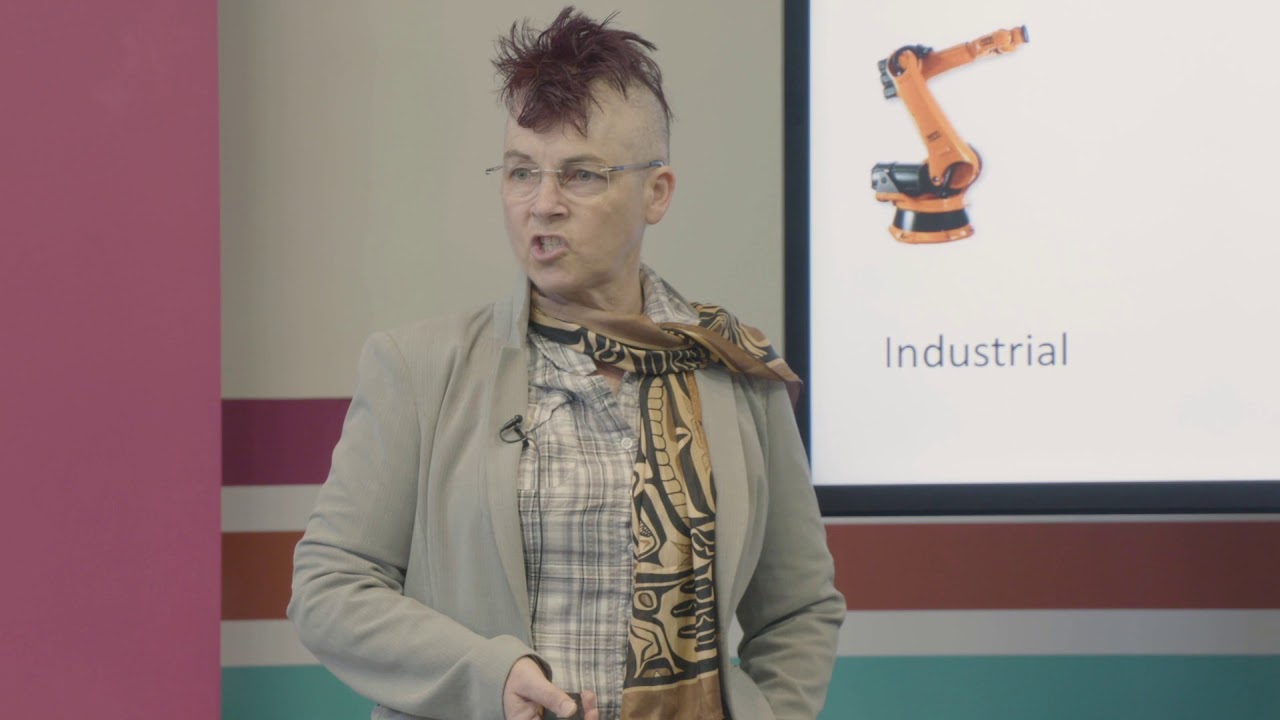
So the robotics industry is actually 50 years old. I run the industry group for robotics in the Bay Area, which just happens to be the largest cluster of innovative robotics in the world. And I get to see them all as startups. Maybe some of them you've heard of, like Savioke, hotel delivery robot. Cruise Automation, self-driving car robot. Well, self-driving cars are robots, yeah. And I remember when they were 2 people in hardware startup meetups talking about doing aftermarket add-ons for self-driving cars when the Google project was still kind of a bit fresh. Fast forward only 3 years and there's almost a $1 billion acquisition from General Motors. So some sections of robotics are starting to move ahead really quickly. Most of the startups that I see are in what I call the B2B2C or enterprise robotics space. It's still a little bit slow developing, but really this is the start of a new wave of robotics. It's very similar to, I think, the development of the PC industry in many ways. So we've had 50 years of this sort of robot. And has anybody seen industrial robots in action? Yeah. What kind of factory was that? A car factory. Car. Car factories. That is about 50% of them in the world. Do you know where the others were? Dangerous materials handling, mining, underground Australia. That's certainly a lot of the large robotics is developed in Australia. And some consumer electronics. Okay. 2012, Terry Gou from Foxconn said, I want to have 1 million robots in my factories by the end of 2014. Because there was a bit of scandal about bad working conditions. building Apple smartphones, right? But, you know, the newspapers went crazy. That was one of the headlines I was showing. They said, wow, robots are going to take over the factories, people are going to be out of work, Foxconn is putting 1 million robots into factories. The rest of us went, hold on. We know how many robots have been sold globally in the last 50 years. 1.5 million. Okay. So he's planning to scale up the robotics industry significantly in less than 2 years. That's just not going to happen. Not factory robots. Roombas, yes. So this is the time in which Roomba hit the 10 million mark. Most widely distributed robot in the world if you don't count your car. Okay, so here's the thing. And this is where we say this service robotics, industry is what's starting to grow now. The Roomba, it's consumer robotics, right? But it's really an outlier. People have been saying, so what is the next household robot? And basically Amazon Echo, Alexa, that's probably the closest thing. We're starting to see some different form factors, and I can talk more about that. But why do you think this section, and effectively what we call service robotics, is everything in between industrial and consumer. It's enterprise robotics primarily. Robotics that's B2B. OK? So why do you think B2B robotics is this next 50 years' growth area? Has anyone heard of the issue with structured and unstructured environments? OK. So industrial robots operate in a highly structured environment. These guys. They operate in cages, or they operate on marked tracks. They are secured from operating around other people. They're fenced in. They don't collaborate with people, and they have to have the environment effectively built around them. So this is a structured environment. Compare that to your house. Okay. Your house is The epitome of an unstructured environment, because your mess is different to everybody else's mess. And in fact, your household architecture—for all that you know—we live in a lot of very similar. Like my home is off the same plan as the home next to me and the home down the street. But we each customize that a little bit at the building stage. So every little thing. in our house really. It's changing all the time. It's different. It's the unstructured environment. So the enterprise environment is hospitals. It's malls. It's large office buildings. It's large farms. All of those have in common the fact that they're semi-structured. Warehouses. So warehouses is the first area. And oddly enough, self-driving vehicles, for all that they're a consumer purchase, They're operating on roads. They're not off-road vehicles. So they're operating in a semi-structured environment. So semi-structured is about the level at which robotics as a technology is. And this is the same space as I'm saying that AI operates in weak niche, narrow AI spaces rather than general purpose AI. So robotics is able to be semi-structured. Not unstructured really yet. So the thing is, we keep thinking humanoid, but what we are really looking at is something that's an appliance. Okay? Our homes are becoming full of robots still when they're enclosed in those structured environment fashions. In the same way that all of our cars are becoming robots, I think many of our appliances will be. And in fact, I say it's your home that will be the robot more than anything else. And I've just seen advertised recently a company that's doing voice-activated furniture for your apartment, so that you can transition from having a lounge room to having a bedroom, or having something that's halfway in between. And yes, if the power goes off, you can operate it manually, but I do think that robot-operated furniture is— It's coming. a future growth area that's just starting to come up. But I'm— this is a little out of whack. That was just showing you industrial robots, and we've talked a heap about it, but that's what they were. They're big, they're expensive, they don't do very much. And what we're about to get is human-sized compliant, and this is a critical term because compliant involves certain architectural and software and sensor choices That mean that they are safe to operate around people. Okay? It means that you're not going to get pinched or caught up in a robot arm while working. There will be certain things like it will stop when you're in the area, or it will slow down, or it will be back-drivable so that you can easily push it away. Most systems will have to have several ways of ensuring that they're compliant in most situations.