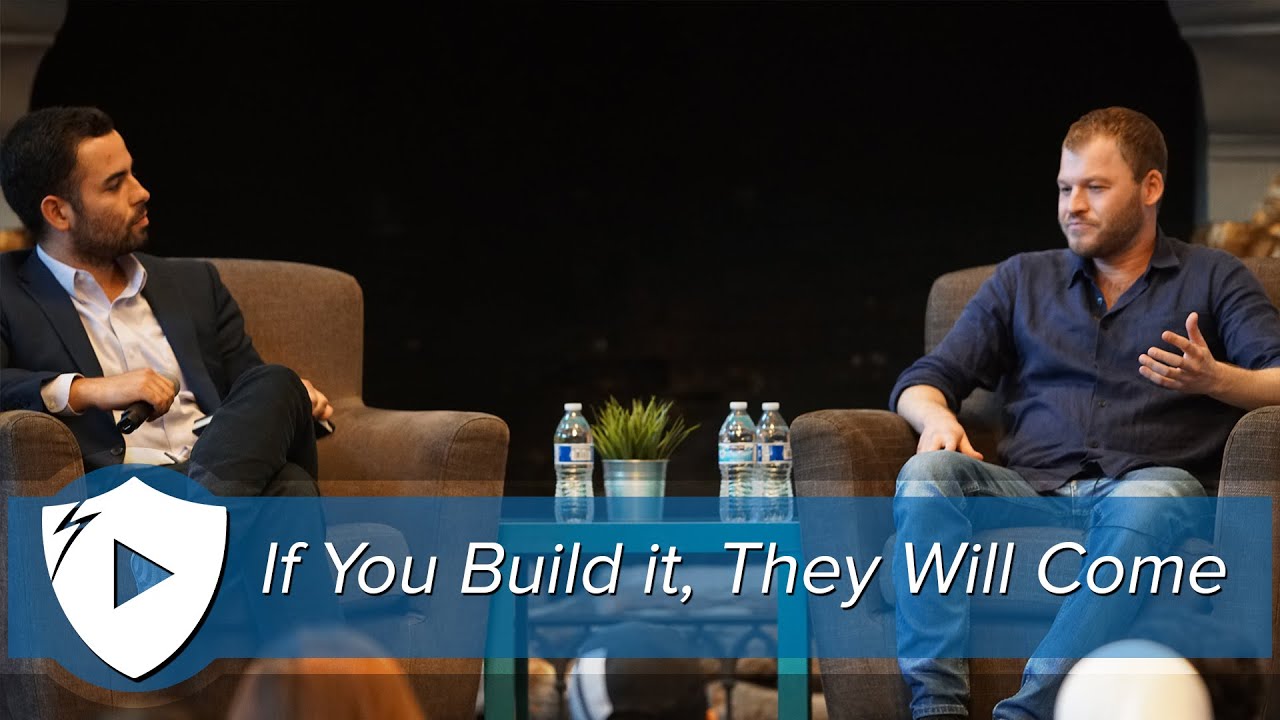
Trip Adler, Scribd's co-founder and CEO, talks about raising venture capital from Y Combinator's initial $12,000 to a $25 million round in 2015. He discusses valuation dynamics, bidding wars with investors, and whether the company should pursue acquisition or go public.
Chapters
All right, Tripp, so you mentioned venture capital earlier. You raised some money, I guess, from Y Combinator. That was the first kind of check that went in to your company?
That was the first $12,000. So back then they only gave you $12,000.
Cool. So that lasted a few weeks?
I mean, that lasted like 6 months, 'cause we were just living cheaply back then.
Nice. And it wasn't here in the Valley?
Let's see, we were first in Boston, And then we worked out of my parents' house in Palo Alto for a bit. And then I guess we used our Y Combinator funding to get an apartment in the city. It was actually much cheaper rent back then, 10 years ago.
Did you notice you have to go and fetch the venture capitalists for further rounds, or they just saw the growth and they kind of came knocking?
So before we launched, we tried to get meetings with venture capitalists. No one wanted to talk to us or meet with us, took us seriously. And then we launched the service. We had amazing growth in the first few weeks, and then we basically just had all the venture capitalists reaching out to us. So my phone was ringing like 3 times a day from venture capitalists trying to invest.
Wow.
And I think, I mean, the lesson there is if you actually have a product and you have traction, it's much, much easier to raise funding than if you're just Would you say that created a bit of leverage?
You reached out to them, they said no, but then they're reaching back out to you. Is that a good opportunity to raise your valuation, or you kept it the same, basically?
Yeah, I mean, we were getting such good offers and such interest that we did raise a round pretty quickly. We actually had a bidding war going between venture capitalists, which was really cool. It was a unique situation at the time, right? There weren't as many companies back then, and not as many companies had that much early traction as us. So we were able to pull off a really high valuation early on, and I think we raised just because we had that unique circumstance. I mean, I think we actually raised more money than we needed. I think at that point, we didn't really need $3.5 million. We took it just because we were getting such good terms. So I think if you're in that kind of situation and you have a lot of funding options, Go for it, but there's— you definitely don't really— you don't need to raise that much money. Oftentimes, these companies can be built with much less capital than you realize.
And you've probably seen a bunch of companies in the past just raise a bunch of money. Right now, with the whole ICO craze, sometimes they raise all this money and it completely turns them around. They just blow through the money. They can't actually build a product. When you were building this company, Once you got the venture capitalists on board, did they influence a lot of what continued to be built? Like, did they become kind of like the boss of Scribd and now you have to report to them, or were you still very free into building the company yourself?
I mean, I'd say we partnered with the venture capitalists. I mean, they joined the board. We meet them quite a bit, and it's just like any partnership. You get their advice. They are involved with the company, and in some ways you work close together. In some ways we have a lot of autonomy. So yeah, just like any partnership in terms of partnering with someone or hiring someone, you just work together in the best way possible.
You raised your last round, I think $22 million. Is that correct?
I think it was like $25 million.
Okay.
In 2015.
You haven't raised since. I also read that you guys were profitable at one point. One of the questions that I often get is, okay, venture capitalists put money in, and the liquidity event will be when the company gets acquired or if the company goes IPO.
Mm-hmm.
For your— the vision that you have for your company, what is that exit strategy, or how do you keep these investors still interested in this company? When do they see the returns, basically?
Yeah, so, I mean, we're lucky we have really patient, long-term-focused investors. We haven't had a big liquidity event yet, but our metrics and revenue and profits look like we're on track to have something in the near future. So I think our investors are pretty patient that there will be liquidity at some point. For a while, we always thought that we would get acquired, but that would be the end outcome. But now that we have solid revenue, solid revenue growth, solid profitability, we think we're a company that's pretty well positioned to go public. So I think we're thinking about an IPO in the future. When that happens, that's when the investors will get their liquidity. We're definitely taking— I think the investors, as long as they see that there's a big outcome on the horizon, a lot of investors can be pretty patient and help do what's right to get the company to that position. Thank you.