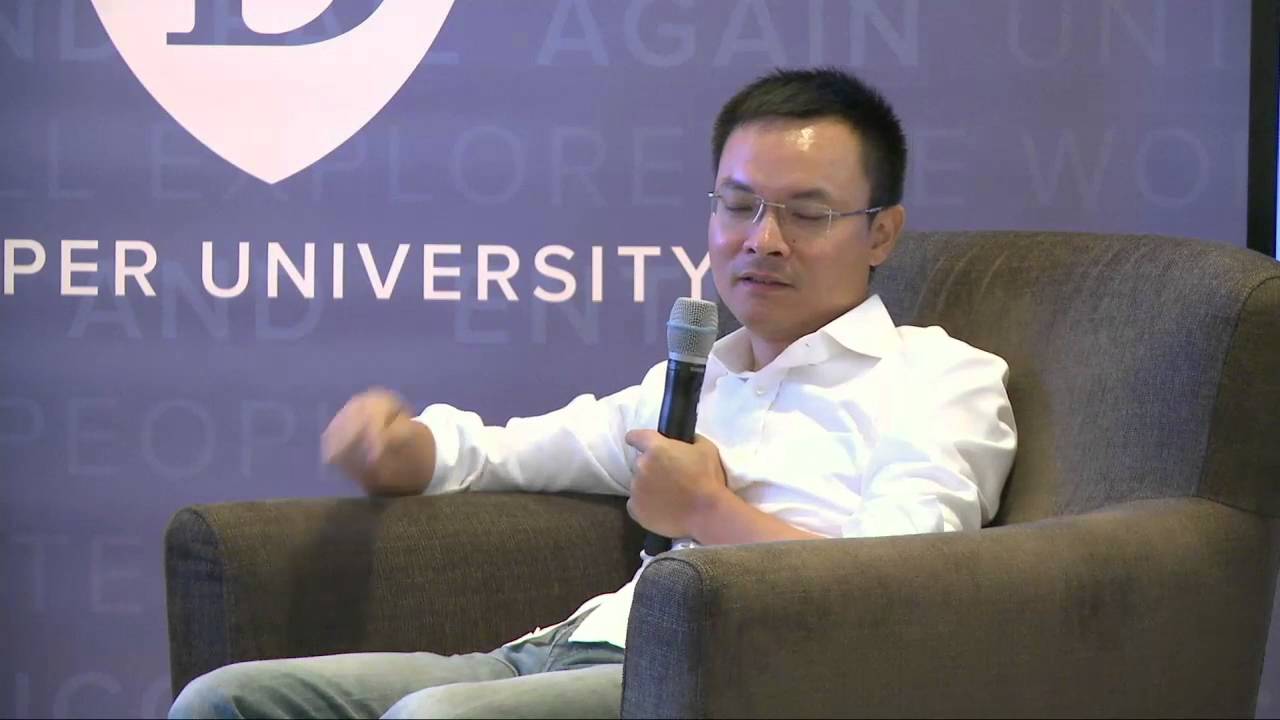
In this talk, Richard Liu recounts three pivotal experiences that shaped his investment philosophy. He first describes investing in UCWeb in 2007, recognizing that the company’s mobile browser combined the functions of Netscape and Yahoo for Chinese users, especially given Baidu’s reliance on a single-page directory that captured 20‑40% of search traffic. This insight led to a 20‑fold user growth before the rise of iPhone and Android disrupted the market. Liu then explains his later investment in Xiaomi, seeing it as a Chinese counterpart to Apple that would dominate the Android ecosystem. Finally, he shares the challenges of transitioning from a family office to founding his own venture capital fund in 2007, navigating a global financial crisis, securing a decisive LP commitment that doubled its share, and ultimately delivering a 40‑plus times return. Throughout, he emphasizes the importance of local market knowledge, low‑risk opportunity focus, independent branding, and following one’s conviction despite uncertainty.
Chapters
I share with you another story. I invest in a company called UC Web, and they are the browser company in the mobile phone. We invest in the A round, and later this— the company was acquired by Alibaba with $3 billion. And when we invest in that company, that's in the year 2007. Quite interesting, they do The first time I met the company, they tried to describe their business plan, quite long, lengthy content. But I just realized one simple conclusion. What they're doing is Netscape plus Yahoo in the early days in the PC stage, similar like United States. I think everyone will argue that, Compare Yahoo directory with Google. Definitely, Google is more powerful because search engine can have more scale scalable to aggregate all the content. But quite interesting in China, even Chinese Google like Baidu, twenty to forty percent come from a very single page called Hao Er San. The Chinese here know the, know the story. Haoer San is a single page, just one page website. They will account for 20 to 40% traffic, the search traffic. Why? Because a lot of Chinese cannot type in the domain name in English. And they need a single page to give them directory, just like Yahoo, to tell you this news, this video, this e-commerce, this game, what kind of— and you, you just use the click, click, click, click and find out that one. So that's, that's very interesting. So why? I think everybody, if in the year 2000 you will go to the, uh, surf the internet through Yahoo, But in the year 2005 or 2006, I think everyone uses Google. But in China, in the year 2007, I met the company. At that time, 20 to 40% of traffic comes from single page in Baidu because Baidu acquired that single page. So we realized that very interesting, that company fit Chinese behavior. So think about it, if in the smartphone in the year 2007, no iPhone, no Android, just Symbian. Right. So we say, if there is a company can really fit Chinese behavior and offer you a Netscape in the smartphone, Symbian, plus a directory, what will happen? So we believe they will become the portal site, and everyone will go to Xingbian and use that directory to surf over the mobile internet in the year 2007. So make that, you know, the judgment, we make the investment. And the second year after we invested, they have 20 times user base growth. Wow. But, you know, later there is, you know, the iPhone and Android. They're still very powerful, but we realized that would be disrupted by other new technology. So that's the answer. We make the investment in Xiaomi because this is another company trying to, you know, chase up the new disruption and deliver the similar model like Apple. but above the ecosystem of the Android in China. So, I share those stories. There are several takeaways you can think about them. If I am an entrepreneur, I keep myself as the low opportunity risk and follow my own heart and not just behave regularly, do not join another Silicon Valley-based brand because like Sequoia, Redpoint at that time, they use headhunter to find out some, you know, the people to join them. Do you remember I tried to recruit you? Yes. So very similar like you guys, I have the ambition, say, to tell myself if whether I can build up the top-tier VC brand name by ourselves. This is my dream. And also, I realized, you know, we have the edge as local Chinese. We know the China market very well, and we also know the industry very well. So we choose to be independent. And in the year 2007, I go outside to— because we used to be the family office and institutionalized from the family office to the VC brand. I changed my role from the staff to the founding partner to raise my first institutional fund in the year 2007. Timing is interesting. Timing is really tough because I remember I traveled to do the roadshow by the end of year 2007, and we went to Europe, we went to the United States, and meet different LPs, and some of them showed interest. And then in February, financial crisis happened, and a lot of LPs, they pulled back from their oral commitment. It's very tough. We are very lucky we got one LP very dominantly. They previously committed 1/3 of the total fund size. And we already fixed another 1/3, so we cannot close the deal. And one LP volunteered to increase from 1/3 to 2/3, so we get the fund closed in the year 2000. That's not the family? That's family. That's family. The family really got, you know, the support at that tough time, but they get a very good return. That fund, we pay back probably the over 40 times multiple to the existing LP. So, the story, just like the movie, you have the plan, but you never expect what will happen on the road. And you have to survive and keep focused on something You know, follow your own heart and do something you, you believe this is the right thing you should do. And no matter how hard it is, just focus on something you are really with the passion. So that's my story. Mm-hmm.