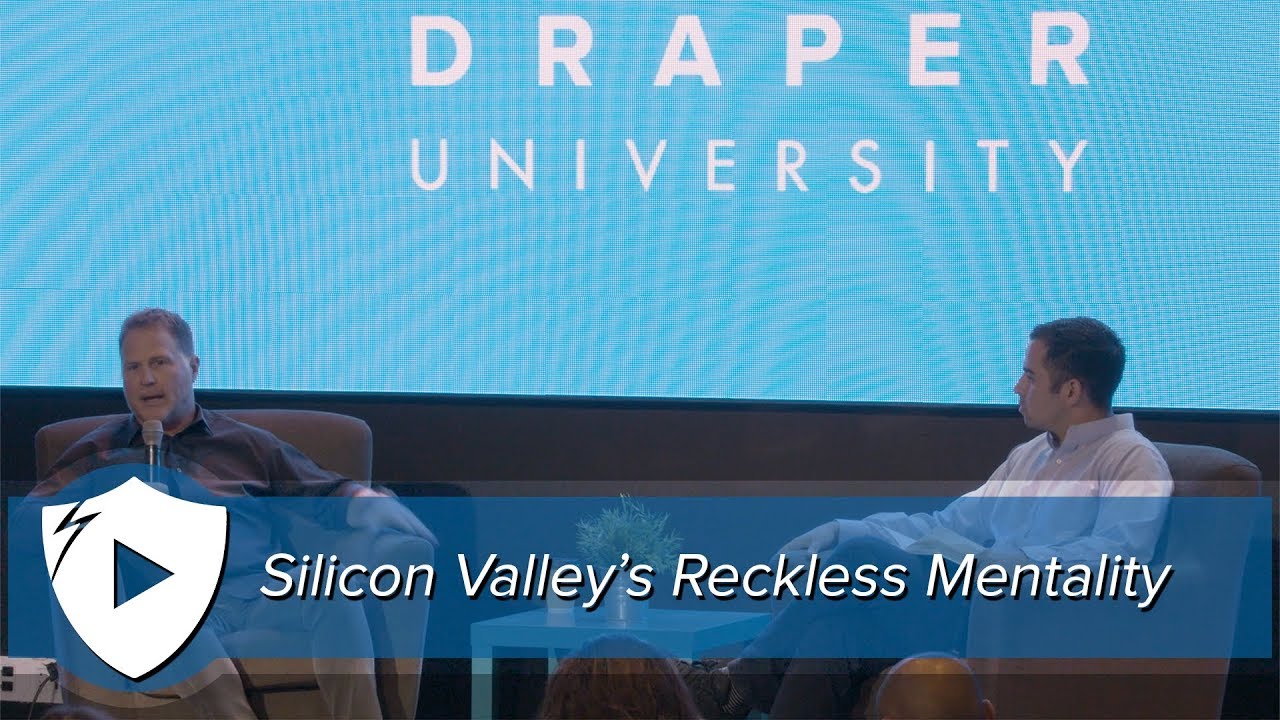
Zenefits CEO Jay Fulcher argues that "move fast and break things" is reckless. He says founders must talk to at least 100 customers before launching, and that preserving customer intimacy becomes harder once a company reaches several hundred employees. Culture and mission matter most early, when resetting values is still possible.
Chapters
Great. And you mentioned the difference, a little bit of the difference between getting from 0 to 1, which is where everyone here is at.
Yep.
But I'm sure there's a lot more challenges going from 1 to 10.
Yep.
What are some of those challenges other than having to come in the first week and be the bad guy and have to restructure everything? What are some of the challenges big companies face that they should keep in mind once they start growing?
Both phases are difficult, you know, um, and, and I've been fortunate in that I've got multiple examples of things that we've been able to pull off in, in both phases where we were super small and it was literally just me and potentially one other or two other people, and we were solving a problem kind of conceptually, and we were trying to figure out, you know, how many customers do we actually have to talk to to know that we've got this right. By the way, it's a lot more than you think. I think if you haven't talked to 100 customers, you shouldn't start a company. 100 customers. If you really hold yourself to some of these disciplines, it's not easy to find 100 customers to go talk to. That's a lot of work. You've got to be able to do those things. Quite frankly, there's a corollary in terms of the stuff that you do 0 to 1. There's a corollary in terms of the 1 to 10. Some of the challenges there are around continuing to maintain that customer intimacy. Um, you know, I now run a business, you know, where we've got, you know, 10,000 customers and we've got, you know, a fairly weighty group of people that rely on our products every day. But you've got to really work at making sure that you've got a good understanding as to both where the customers are today, how they want to be able to rely on these products going forward, you know, the new world of work and how employees interact with their employer is completely different. The social contract around how employees show up for work every single day is very different. And so the software for managing a workforce has to reflect that. And at Zenefits, we're really, really serious and intense about how important that is and how you have to go build that. And so that really takes a lot of customer interaction. It requires you. It demands that we spend a lot of time with customers and prospects understanding a lot about how they currently are operating, but frankly how they want to operate, how they want to use technology to be able to get all of the headaches and compliance issues and governance problems and tax and payroll and all the, all the stuff that's really hard for young businesses to deal with, getting that out of their way so they can kind of focus on what they're passionate about.
Mm-hmm.
What they— what, what the business is really intended to do. For me, one of the things that was so exciting about joining Zenefits is what a cool mission to be able to help young businesses basically reach escape velocity by frankly managing what needs to be managed, getting that under control, but allowing these businesses to be everything that they can go be. In the 1 to 10 scenario, Choosing the team and the initial group is huge. It's crucial. I think being really intentional about what the business is there to do, what you're trying to achieve, what the mission for the company is all about, that really sets the tone for all the other cultural implications of how you're going to hire downstream. Changing culture midstream, and I have some experience with that, in my current job at Zenefits because we've helped to reset the culture, reset the company's values to some degree. That's a really hard thing to go do once there's 500 or 600 employees in place. It's much easier to do that when you have 5 or 6 people. Getting all of the right ingredients, I think, in place so that you're prepared to be able to scale as scale opportunity kind of presents itself is really the critical factor. Ultimately, for an entrepreneur, that's your responsibility. It's not as simple as just building a great product. You want to build a great company. There's more to it than just the tech.
To that point, I know the Silicon Valley mentality sometimes is build fast, break things, do whatever you need to get to the next step. How important is that as compared to the things that you're mentioning now at this stage? Because some of them are just— they just want to get out there and sell a product. If you could speak a little bit on that.
This may be a little provocative, I don't know. I think go fast and break things is total bullshit. I recognize the ethos and the way that Facebook and Google and others want to talk about the history of the company. There's a time and a place for that notion. But the reason that I think it's kind of a bullshit situation is that I think it tends to insinuate that you can be reckless or that you potentially can take shortcuts. And I just don't believe that. I think it's really, really difficult to suggest that the best approach to take is to go as fast as you possibly can and don't worry about the implications. Now, I will say that it's important, I think, to experiment. I think it's important to be open-minded. I think you have to act with a ton of urgency. For all of you that are starting businesses and thinking about starting businesses, the reality is you have less time than you think you do.
Mm-hmm.
The level of intensity and urgency that you basically are thinking about and launching your ideas and your career and finding a co-founder and all the other things that happen in the early stages, those things are really, really critical. I also think that there's some real damage that can be done, especially in young companies, when potentially you're not thoughtful enough about what you're trying to go do and the way that you're trying to go do it. I talk to lots and lots of entrepreneurs that come to me for advice or counsel on various things. They're often really anxious to just get to the next step, onto the next step. If I can just find my first seed round or whatever it is. Often the basic formulas, the basic ingredients for having a high-potential business that can be sustained are missing. And as a result, you're sort of setting yourselves up for some challenge and some frustration if some of those basic ingredients aren't already in place. So I'm all about the urgency. I'm all about the intensity. I would always say that working hard is just a prerequisite. It's just such a necessary thing to kind of making it in a very, very competitive tech space. But by the same token, this notion that somehow there are shortcuts or there are formulas that can be kind of benignly applied to every single business and it'll all work out, it's just not accurate. You have to actually go and dig out the facts and the data, and you've got to go do the work, and you've got to go talk to the customers, and you have to have A lot of that in place before you're sort of ready for that next step.