Starting Two Bit Circus | Brent Bushnell
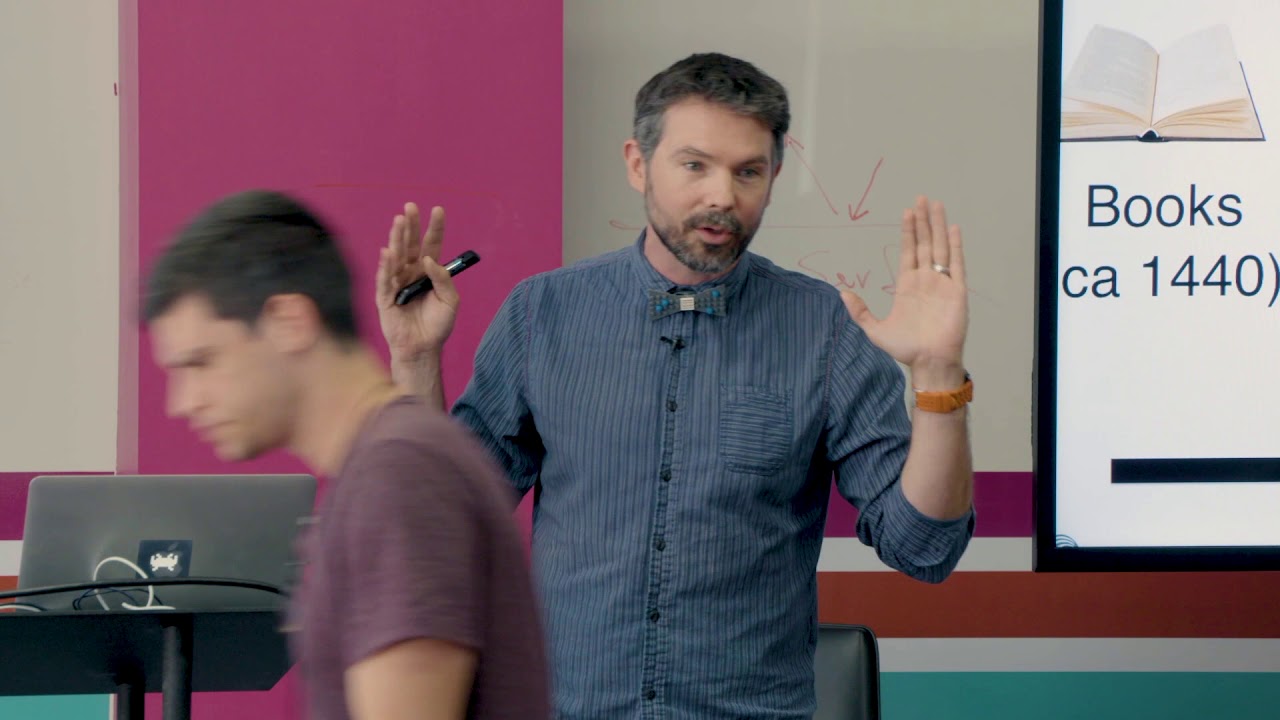
Brent Bushnell, an engineer and trained clown, started Two Bit Circus with a co-founder to build simple, social physical games using cheap sensors like Arduino and depth cameras. Early projects included interactive art installations, fog-and-laser obstacle courses, and a car piano, with collaborations from OK Go and Intel before launching immersive out-of-home attractions.
Chapters
But things didn't really kind of get weird until I met my co-founder. He's also an engineer, a roboticist. Turns out we're both trained clowns. And so how 2 clowns that are both engineers found each other, I still don't really know. But it was definitely a match made in heaven because we just started— the day we met, started building stuff together. And that was 8 years, 9, 10 years ago. And we haven't really stopped. So one of our— it was 2008. The world's collapsing, financial crisis, we're super frustrated with what we were doing at work, and so we just started collaborating making interactive art. And our thesis was sort of multi-part. There was all this great new tech, right? Arduino was on the scene and making microcontrollers really easy. Depth sensing cameras, computer vision was getting awesome, right? An infrared camera was $10,000 at the time before Xbox made it $100. We happened to have access to one of those cameras at $10,000, and so we were playing with stuff, and people's minds were like, wow, this is awesome. But that was happening on a lot of levels, right? The stuff that made your cell phone possible, your smartphone possible, all those sensors were getting cheap. And so we were like, hey, with all this cool new stuff, what new ways can we play? And the out-of-home entertainment industry hadn't changed a lot since laser tag and mini golf, and we were thinking about how If you think about just Super Mario Brothers evolved from a single screen game to a side scroller to sort of an open world to like really crazy open world. And there was this sort of disturbing trend that he and I saw, which was like the increasing complexity of how to even play those games. There was this kind of asymptotic number of buttons on the controller that was not fun, right? We wanted it back to the old school stuff, the really simple things, the things that You could pick up and play immediately, and you didn't need a big long manual. Just to really drive that point home, the original Pong manual is literally 3 lines. Deposit quarter. Ball will serve automatically. Avoid missing ball for high score. Right? You can be blotto out of your mind and play this game. And that, in public, that's a really easy, nice thing. Contrast that with the Mortal Kombat manual, which is like this, and like this, and like this, and it just keeps going. And that's— as it pertains to games, It's wonderful to have things that are simple, right? Easy to learn but impossible to master, so that it sort of has this really low barrier to entry but a really high ceiling. And so we wanted more of those kinds of games, especially games that got people off of their screens and playing with each other in public. And if you think about the kind of evolution of entertainment, it's about increasing your immersion in that space. And so a book, you do all the imagining, you're a passive observer. A movie, some of the imagining's been done for you, but you're still this passive observer. Video game maybe gives you some control with your thumbs. A Wii and a Kinect, you can kind of dance around in front of it. Wow, VR is super awesome, right? Now all of a sudden you're in that world where we're having to go to great lengths to recreate walking and haptic effects and all the other stuff. But you know what's more immersive than VR, more incredible? A book. Real life, it's fucking rad. High resolution, freaking crazy haptics that can kill you. So all kinds of stuff that, but it is important to remember that real life is incredible. And it is a great medium for social interaction, and it's actually really a wonderful place to hang out. And something that really drives this point home for me is, My friend Ryan Lukin says, you know, a picture of a glass of water is no substitute for drinking that glass of water, right? I could describe to you what that's like for ages and ages, but the actual action is way more compelling. So one of the first things we played with was just an interactive whiteboard. We pointed a camera and a projector at a whiteboard. The camera would pick up what you were drawing. The projector would project a physics simulation that would bounce off what you did. We took it to a party and people liked it, right? Super simple, we made this in a night, one evening, right? Open source software, super simple. And people started making their own games with it, so it was fun. Our confidence was bolstered and so we said, okay, we're gonna make something new every single month. So we started making lots of different stuff, throwing lots of things against the wall. There was an event in LA at the time, downtown LA, that was a little bit like a TED conference meets a cocktail party, lots of different presenters on different topics. Always, you know, these things were kind of illegal. They were just always just popping up some random warehouse. Yeah? So you said you made this in a night? We made this in a night, yeah. How many hours? Probably, it was a long night, like 6 hours. Yeah, 6, 8 hours, something like that. And, but we, yeah, so this event in downtown LA was, A fun place to be able to test stuff. And because it happened every month, we couldn't do things that were too complicated, right? We had to be able to build it in the month. We filled a room with fog and laser beams. Have you ever been to Mission Impossible, right? You had to get across the room with laser beams. I joke, my co-founder actually met his wife in this game. And they just had their first kid, 9 years on. So I consider this still, after all these years, our most effective game. So we'd thrown a lot of stuff against the wall, lots of different things. Ended up a rock band reached out and they were like, hey, we heard about this band of nerds in downtown LA. We'd love you to help us with a music video. And so we were like, of course. What other answer do we have for you? And if you know the rock band OK Go, the guys who dance on the treadmills and did the big space thing, so we made their one with the big Rube Goldberg machine where the band gets covered in paint. smashed pianos and stuff, so it was great. By then our sort of band of nerds had grown to about 60 strong and we were all meeting regularly to share different ways to play with interesting stuff. We bungee jumped a car, we literally dropped this off a shipping container, we helped Chevy launch a car. This was sort of the beginning of an interesting transition for the company, right? We had already been building, well actually it wasn't even a company right then, it was a Big band of nerds. And we were on this trajectory of building our own stuff, and then the brands started coming and saying, hey, build stuff with us. We want a viral thing. We want to do interactive, immersive stuff, physical things, not just digital stuff. And so we helped Die Hard Battery launch, basically build a huge car piano. We took 25 cars out to the desert, arranged them as a big piano. hooked them all up to a single battery and a MIDI keyboard, so that when you hit a key on the keyboard, the corresponding car, its horns would blow and its lights would turn on. And then Gary Numan, for the older folks in the audience, played the song Cars on the cars, which was super funny. So anyway, this was all about physicality, experiential stuff. A lot of the branding agencies that were coming to us had copywriters and web developers and project managers, and nobody who could weld. So they, but they sort of recognized that the trend in entertainment was for real, real stuff, right? This all could have been computer generated so easily, but they wanted, the magic of this was that people wanted the physical, the real thing. And so we were both building these kind of spectacle stunts as well as physical attractions in public. You know, how does Intel launch a new product at CES, right? They want people to get their hands on that gear. So, So we were bringing our stuff to those events but using their technology in order to be able to build those attractions. Weirdly enough, I guess you can't be in LA and not have Hollywood come in. We ended up as the on-camera inventors for Extreme Makeover: Home Edition. If you know that show, they would knock the house down and build a new one. We would build some new invention for each one of the families, wheelchair-controllable pitching machines and projection-mapped rooms, all kinds of fun stuff. That's awesome. and stuff. So it was right about now that we were like, OK, it's time to turn this into a real company. And so we started a circus. So we called it Two Bit Circus. And we ended up with really— this was basically right out of the gates a consulting company. And it was basically 2 parts. We built all these attractions, and brands wanted us to bring them to their parties. And this was strictly like, hey, we don't want to do casino night. We want the high-tech circus. Bring all your games. We're Amazon. Do our holiday party and make our employees have fun. Or we're Intel and we want to entertain the kids at our science fair. Intel was the first one who said, hey, we've got these new chips. We've got these new cameras. Make stuff with our stuff. And so this started kind of phase 2, which was building custom attractions in public utilizing either IP or technology. And we really did— A ton of that stuff. I mean, for a small team, we've touched a really broad spectrum of brands. This is literally just a subset. What are some of the brands that you've worked with?
More from Tim


He Sold His Car to Build This Startup, Then Pitched It for $1M 😳 #Startups #AI

This Startup Moves Your Crypto BEFORE Hackers Can Steal It 😳 #Crypto #Cybersecurity




15 Months Without Refrigeration?! This Startup Thinks It Can Go Global 🥥 #FoodTech #Startups



