Starting Up Loopd | Aventri VP of Innovation Brian Friedman
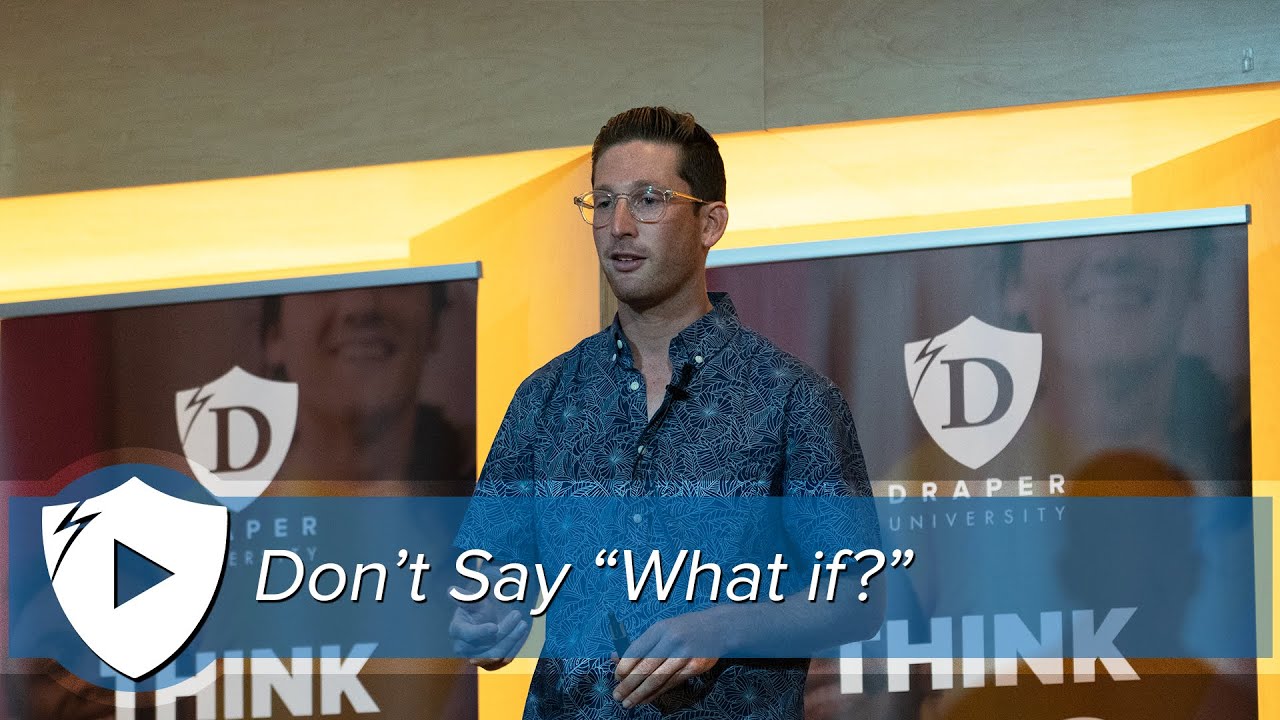
Brian Friedman founded Loopd, a wristband combining hardware and software for events, raised money from Tim Draper and Mark Benioff, and scaled the company through an engineering office in Taiwan before Eventbrite acquired it. He now leads innovation at Aventri, overseeing product, engineering, partnerships, and marketing.
Chapters
From there, we ended up winning some awards. So we won Event Technology Startup of the Year, Bluetooth Technology of the Year. And once again, it's not validation. At first, I thought raising money essentially was validation. I thought winning all these awards was validation. It's good because you basically have people that believe in you. However, end of the day, it's really about making sure you're solving a problem in a simple way and you're driving revenue for your company and reaching profitability. Going back to the beginning, you probably recognize where this is upstairs. So these are my 2 co-founders and our first employee. Sambhav is to the left of me and Alan's to the right of me. Sambhav is from India and he was only in the US for a few months before coming to Draper University. For Alan, he's from Taiwan. And for myself, when I was looking to start a company— actually, when I came out here, I didn't even know I was going to start a company. However, I knew there was 3 things I was looking for. First thing was I was looking for a really interesting concept, which was a combination of physical product and also software. And we came up with the wristband naturally. That idea kind of fit into that category. I was looking for other founders that wanted to join me, that it wasn't forceful. So actually, I came up with this idea, and then Sambhav and Alan were looking for an idea to pitch. And they came to me and said, hey, your idea is really cool. Sambhav says, I'm a hardware developer. I can build it. Alan said, I'm a software developer. And I was a mechanical engineer/material scientist/designer. So I said, OK, I can basically do all the manufacturing stuff. And I can also do all the UI and UX design for all the software. And then the third thing was I was looking for an investor that really believed in what we were doing. And that was Tim. So when all those 3 things came together without even trying to force anything, I said, I can't say what if. We have to do this. So fast forward a few months, we end up launching. This was our article on TechCrunch, basically announcing our raise with Tim and Mark. So Mark Benioff became one of our main investors. And I actually met Mark by sneaking into a party at his house. So Tim had introduced us, and I'd been emailing Mark back and forth. However, I knew in order basically to close a deal and to make sure they were the right investors for us, I had to meet them in person. And I've been trying months to basically meet Mark. And one of my other investors said, I have this plus one for this gala at Mark's house. He's probably not going to be there. I've been a few times. He's never there. What do you know? I show up. There's this big guy basically introducing his company that he's invested in for this gala. And I said, okay, this is my opportunity. So end of the party, I asked Mark if he had like 10 minutes. I ended up chatting with him. A few weeks before, they had Dreamforce, where he was talking about the future of Salesforce's offline data. They wanted to basically know all the actions of salespeople that can drive more revenue. So I saw that our technology, at least for all of their events, could be that missing gap, or that missing fit for their gap, that would basically go in. So I pitched that. He liked it. We then basically called up TechCrunch, and we said, okay, you have an embargo for our story. We'd like to launch with you. We actually did an interview with Tim. And Anthony Ha, who's a reporter for TechCrunch. And then we launched. Also, from this article— so this is really a good learning story. TechCrunch, at least when I was out here, I was like, TechCrunch is really cool. It's validation. Not necessarily. For all of my other nerdy tech friends like myself, they're like, that's super cool you're in TechCrunch. For this, it did get us a lot of attention from the investor community and from the startup community. However, a lot of the startups couldn't afford our product. For the enterprise, it wasn't as much validation. So this was a good starting point. And from there, we started creating more PR, which was more industry-specific, that our clients would be reading. And they'd say, hey, we saw your product, and then reach out to us and want to learn more. Fast forward to the end, October 2015. Our team, we at that point had about like 15 enterprise clients. Our team, we scaled to about like 20 employees. We had an office here in San Francisco and in Taiwan. At first, we were scaling our company here, and we were kind of looking at our burn rate, and it was really hard to find engineers here in Silicon Valley. The reason is Google, Facebook, they pay astronomical wages to basically take these people off the market. If not, you basically have venture capitalists going to startups. And it's just really hard to compete or keep someone's focus for more than 6 months. So we'd hired all these amazing software developers. We were paying maybe 4 to 5x what we would in like the Midwest, or there's a lot of companies now in Salt Lake City. And every 4 to 6 months, once someone was like pretty much ramped up in our technology, they would leave. So my co-founder Alan, who had moved to Taiwan when he was 14, he said, hey, Let me try opening an office there. There's actually a lot of data scientists from the UK, and there's— when it comes to basically manufacturing robots, Taiwan and China, for Taiwan Semiconductor and Samsung, are the 2 innovators outside of Intel. So we said, okay, let's do this. So we basically then opened our main engineering team software-wise in Taiwan, and we did this remote style for a few years. From there, we ended up winning some awards. So we won Event Technology Startup of the Year. We won Bluetooth Technology of the Year. And once again, it's not validation. So at first I thought raising money essentially was validation. I thought winning all these awards was validation. It's good because you basically have people that believe in you. You know, the awards say, hey, you're basically pushing the market forward. Investment shows, hey, you basically need investment to move your company fast. However, end of the day, it's really about making sure you're solving a problem in a simple way. and you're driving revenue for your company and reaching profitability. So for us, about halfway through, we said, okay, let's start going closer for profitability and really focusing on our clients and scaling it out. So in about, what was it, I think like October 2016, we were raising our Series A. We actually had no intention to get acquired. We started reaching out to a few venture capital firms that had invested in event technology companies. And because of that, within like one week, we had the top four companies in our space reach out to us and say, basically, we want to acquire your company. At that time, I was looking at different markets, and I said, well, okay, the event market—it's not the biggest market, so valuations aren't going to be as high. However, our technology could be used for retail. So I started reaching out to Walmart, and it could be used for manufacturing. So I reached out to General Electric, and I said it could be used for. theme parks. So we reached out to Six Flags. All of them were super interested, but what they said was, okay, in order basically to validate your product, you're going to basically need to do a proof of concept with us. And that pilot program to build and to launch within our organization is probably going to be a year. And then after that, we can basically determine if it's a good fit or not. To me, that was a pivot. And we talked to our investors. It was pretty much like starting over. And we also wanted to be focused. So we said, what's our mission? And our mission was really to Bring the right people together to connect them and to build high-quality relationships. We said, are we gonna do that through retail? No way. We're gonna do that through theme parks? Possibly. Manufacturing? Probably not. And people, the people using our technology for manufacturing plants, they're probably not gonna like the fact they're being tracked everywhere and that's showing how long they're working at a machine. So we looked at all these different companies, and at the time the company was called eTouches. But eTouches was really focused on the power of human connection. Every other event technology company that we had talked to, it was all about, okay, how do we sell more tickets? How do we convert more attendees? How do we drive more business leads to our exhibitors? And for myself, I said, that really wasn't exciting. It wasn't really following our mission. So we ended up getting acquired by Eventbrite. I'm still at Eventbrite, but for the first year, I was essentially our head of product. So I worked on all of our mobile and data products. They'd acquired a few other companies, and I became like a mini CEO of all of them and started integrating them together. And then a year after, I got promoted to their executive team. And at the time, eTouches, they were only around 80 people. Now the company is around 500. And we ended up going through a whole entire rebrand. So I got to work with them and take their message of power of human connections and create this new name, which means avenue plus event plus entry, which really ties into what we were trying to do. And then from there, we started buying out other companies, scaling them. And currently, I'm the VP of Innovation. So my job now is I'm basically head of product for all of our future products. I have a lab of basically 10 engineers that build out technology for me. And I still design all of it, because that's what I love to do. And then I also run all of our technology partnerships. So anyone wants to integrate into our platform, I basically push it forward. I do that as well. And then lastly, I run all of our product marketing. So really everything messaging-wise, branding, that goes out there. Thank you.
More from Tim


He Sold His Car to Build This Startup, Then Pitched It for $1M 😳 #Startups #AI

This Startup Moves Your Crypto BEFORE Hackers Can Steal It 😳 #Crypto #Cybersecurity




15 Months Without Refrigeration?! This Startup Thinks It Can Go Global 🥥 #FoodTech #Startups



