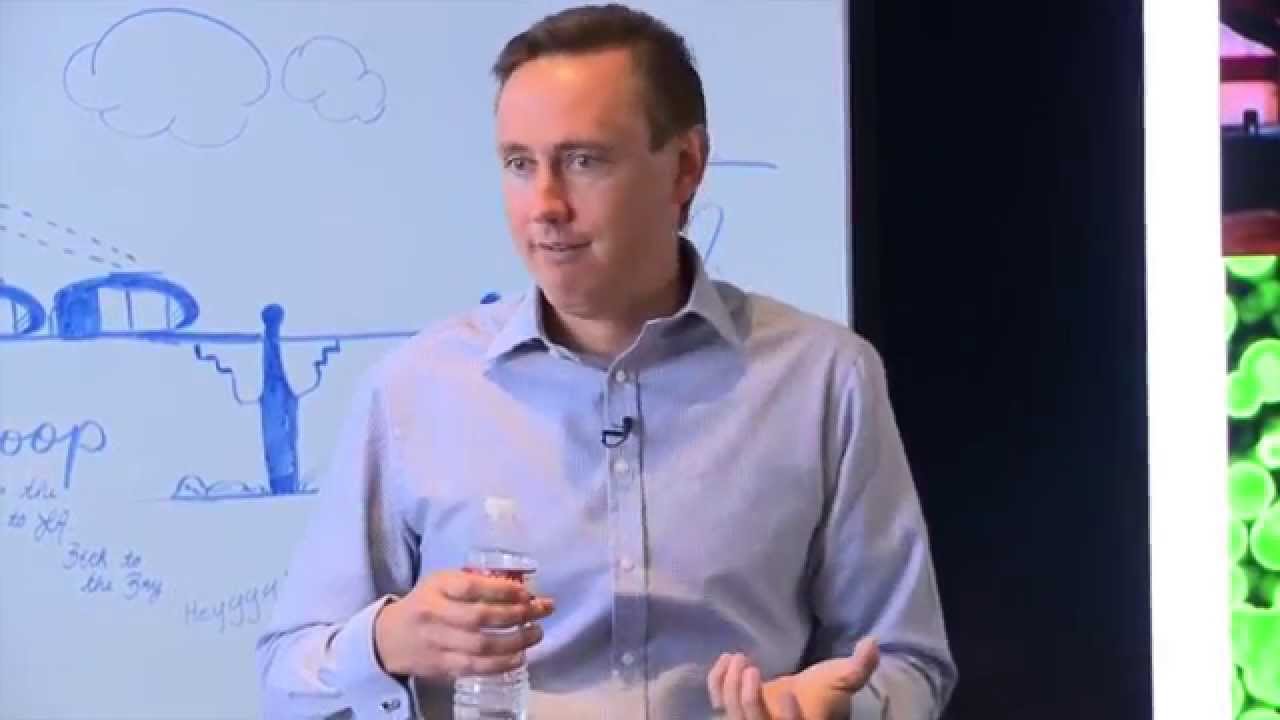
Steve Jurvetson explains how computing transforms industries by replacing physical experimentation with software. Wind tunnels gave way to computational fluid dynamics, SpaceX accelerated rocket design, and the iPhone proved hardware could become minimal. Computing now enables synthetic biology, agricultural biotech, and robotics, accelerating innovation across every field.
Chapters
As Moore's Law continues up and up and up and up, it eventually reaches certain interesting thresholds where something that was not computationally possible becomes possible. The place where that gets interesting in my mind is when something that was a trial and error experimental science, where no one knew the system theory or couldn't model the system, suddenly becomes an information science where you have a simulator. So take, for example, aircraft design. Prior to the Boeing 777, they used wind tunnels. You would build a physical model scaled down of an airplane, put it in a wind tunnel. There's like 3 or 4 huge ones at NASA Ames now that just basically get used almost never because computer power now allows the Boeing 787 and future models to be fully built, iterated, and executed without a wind tunnel experiment of any sort. You just don't need wind tunnels anymore. The computational fluid dynamics, turbulence modeling, all that is good enough. And those were computationally intense tasks. So that field changes forever. The infrastructure required, the pace of innovation most importantly, dramatically accelerates. And aircraft and rocket design for SpaceX starts to feel more like a computer science experiment in terms of release schedules and update schedules versus some industrial slow-moving thing. And this is where you see these massive disconnects between business as usual and the old model and something very new where the pace of innovation just feels like the computer industry. It's as if the computer industry suddenly hit these formerly sheltered domains. Well, these two are not sheltered. Those are sort of squarely in the Moore's Law area. But into new models of manufacturing, synthetic biology and reengineering the information systems of biology, agricultural biotech, which we're investing in, rockets and satellites and robots and drones. These all are very interesting products today because they're becoming software products. The hardware is this minimalist vessel, kind of like your iPhone. You don't expect the next iPhone to be physically something completely different from the last few. It used to be that every physical phone generation, whether it was Nokia, Motorola, whoever was flying high, looked different. The phone was a physically different thing. The buttons, the thing mattered. Now it's all about the software and services layer. So yes, the processor, memory, and camera improve from generation to generation, but what Jobs did almost intuitively and brilliantly is he reduced the physical thing to its minimalist container for code and services. And that's what's happening in more and more products and services.