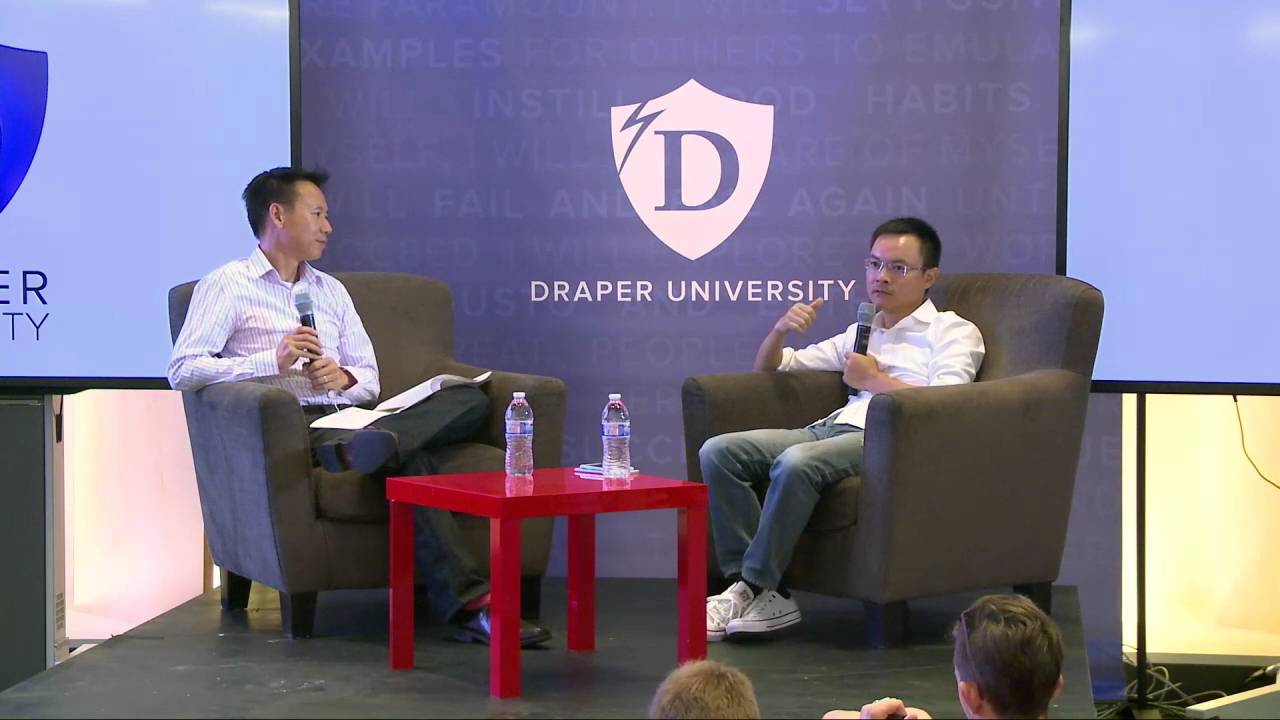
Richard Liu discusses what separates strong leaders from managers: decisiveness paired with vision. He uses Lei Jun, founder of Xiaomi, as an example of a leader who combined the "killer" instinct with missionary zeal, managed his ego through Taoist philosophy, and broke massive goals into smaller wins to build momentum.
Chapters
The third thing is that, you know, we try to find out— I think Max, just Instagram, people mentioned a quite interesting topic about, you know, how to create what we call the network effect. He's talking about the pivotal. That means actually, pivotal means the momentum. You really can create that. And we just realized, you know, the great entrepreneur knows, choose the very ambitious big sector, choose the right timing, jump into that sector. And the last piece we very focus on is the people, and whether you have the great people. And the great people means we don't want a bad manager. We want to be the leader. The leader is different from the manager, means is that he has the vision and he can inspire his team and he can design a doable execution plan and try to, you know, divide very ambitious objective. Divide that into small steps, and each small step can reward high morale in the staff, in in in the in the team. So that three things is something we really can follow up on people.
I think something you have said in the past is杀手的气质跟传教士的能力. Yeah.
So maybe you want to translate that or well, I mean the I think the I'm talking about you know the the leadership from from Chinese you know the perspective. I think two quality quite interesting. One is the murder,杀手 killer, the killer.传教士 I don't know in English maybe evangelism. Sorry for that.
Maybe evangelist.
Missionary. A missionary. He will preach to people. Yeah. So basically, I just remember, I just can try to abstract, you know, that quality from the great leader. The leadership, they have to show 2 things. The visionary is the guy who can tell people That is something you didn't see in the future. I'm the guy tell you, just like传教士, right? But he also another quality of the visionary guy is that he know he's not a single hero. He know he's not a superman. He know he need help. And that's not just the concept. He knows what kind of help he needs. But he is the guy, really, almost everyone loses the confidence, but he's the one sitting there saying very confident, we will, we will be the winner. And he can have that capability to attract so many talented people. So I think, you know, the great leader should have these 2 qualities, put them together, and make it happen.
And can you think of one in either China or in the US that a leader who has both?
Well, I guess, you know, Xiaomi's founder Lei Jun is one of, you know, the quite, you know, the, that quality of the entrepreneur. Visionary guy, very strong leadership. He invite eight co-founders to join Xiaomi from day one. He told me, although I can do so many things, but I understand I need help. So the great leader in Chinese culture is is kind of you know the you need help. I don't know how to translate that in English, but basically I'm the believer of Daojiao.
Taoism.
Taoism just tell you, you need manage your ego, put your ego very small. Because you have small ego, you can accommodate so many different people and form them together as It's the same team. So that's something I think a lot of, you know, the Chinese great entrepreneurs, they have that Chinese leadership. And 2, he also, he's the great innovator. He knows how to disrupt a lot of, you know, things in the marketing, in the product, in the channel, and in the organization behavior. He did a lot, you know, the great team and organization and the culture. My only concern is that, could you forget you are so successful entrepreneur, you are so successful chief scientist in Google China lab, and you guys have, you know, the $2 million salary or package or $5 million, whatever. Can you Forget that, and you just nobody.
The opportunity cost you were talking about earlier.
Yeah. Can you work very hard every day? You can work over 12 hours like a regular entrepreneur, like nobody. In China, a lot of people work very hard. Can you do that? And can you really build up the Xiaomi culture? That's the only question I care. I don't care others because others' risk I already take. I think if Steve Jobs sitting in the meeting room, you give that comment to him, maybe he will be very angry. I think Lei Jun at that time, he is not so powerful like Steve Jobs, but he's a well-known guy, very powerful. But we are good friends. We know each other so long time. And then personally, I had over 12-hour phone conversation with him before that meeting, so we know very well. But that meeting finished, Lei Jun put me— grabbed me to another room. He said, hey guys, I need you come back every month to my team, just raise the same question. To help him to build the culture, to manage our own ego. We are small. company when nobody. So I want to share this story with you, try to explain to you, although very powerful entrepreneur like Lei Jun, he managed his ego very well, and he know he need help, and he know he need somebody to help him to shape the culture in that way. You need to think a very big question, but you move very small step. Thank you.