StubHub Business Model | Scott Cutler
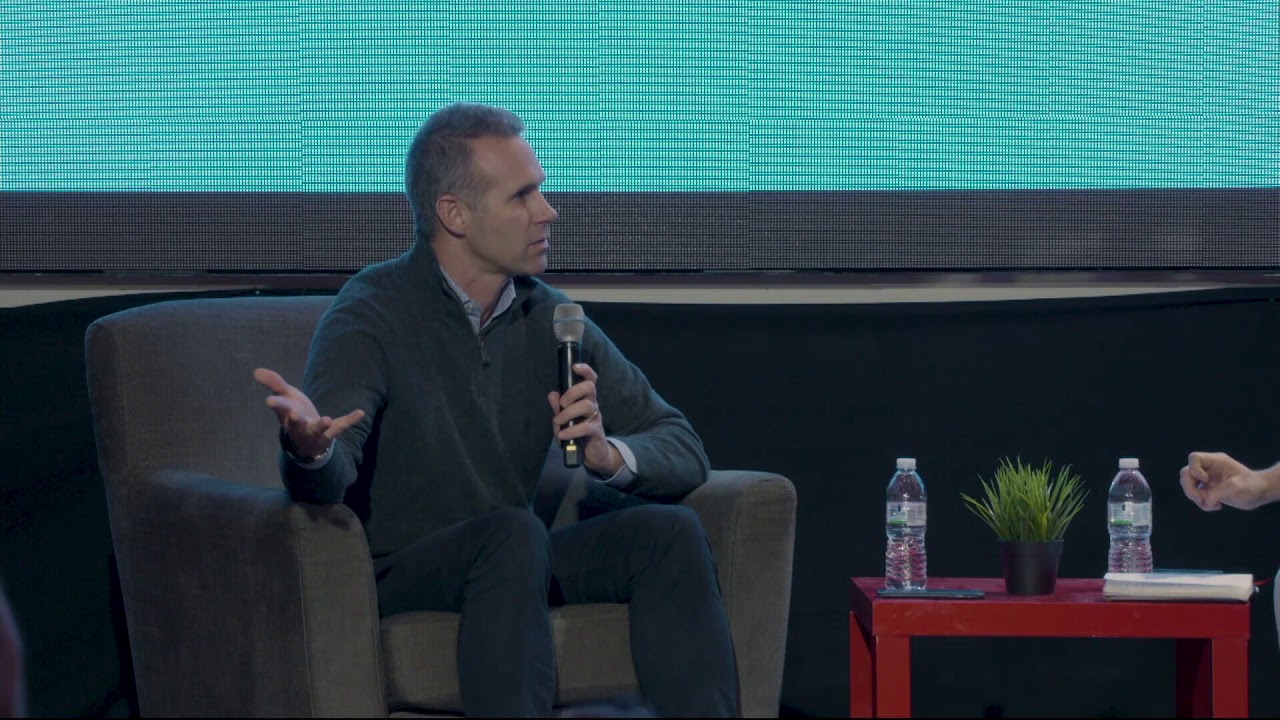
Scott Cutler left the New York Stock Exchange to run StubHub. He changed how prices display on the site, which significantly boosted revenue, and rebuilt partnerships with major teams like the Yankees after the company had damaged those relationships.
Chapters
So once— now you've been at the New York Stock Exchange for 9 years, I believe?
Yep, 9 years.
What is the transition into StubHub like? How do they— how do you get connected to that?
Yeah, so I— after I'd been there, I wanted to actually move back out to California, was my goal. I wanted to run a marketplace business at scale and technology. I knew the leadership team at I knew Devin Wenig, who's the CEO at eBay. I actually knew him back at the New York Stock Exchange when he was at a prior job at Thomson Reuters, and the New York Stock Exchange, we were one of his largest customers. He covered me as a customer. I came out here to tell him I was leaving the New York Stock Exchange. It wasn't public at that point in time, and I was thinking about other opportunities. Honestly, It was like a Wednesday afternoon, and he said, would you be interested in running StubHub?
A Wednesday afternoon?
It was a Wednesday afternoon, and he said, would you— after I had come and talked to him about a bunch of different things at eBay, he said, hey, would you be interested in running StubHub? I was like, oh, I didn't even know eBay owned StubHub. I said, yeah, but I gotta fly out tomorrow. I was in New York. I said, I need to fly out tomorrow, 'cause I got 2 or 3 other things that I'm thinking about. So I came out on a Thursday, Friday. I had the offer on Monday. And then the following week we announced that I was going to go to StubHub. I mean, it was that fast.
That's extremely fast.
It was really fast. It was crazy.
So because the New York Stock Exchange is this marketplace, I assume, and StubHub is this ticket marketplace, you had to take lessons from your time at the NYSE over to StubHub. And was that one of the driving factors in why you chose to go with StubHub over the other 2 things you were thinking about?
The StubHub business model, it was a marketplace. Again, platform for matching buyers and sellers. It was at scale, literally selling billions of dollars of event-going experiences. It had some aspects that I thought were opportunities. One of them was it's a 2-sided marketplace. You've gotta focus on buyers and sellers. It was also a disruptive technology, but hadn't, as a brand— I thought there was opportunity for us to be better partners and have better perception externally in the industry, and that was my focus. I was able to make some changes early on and focus on the perception challenges of StubHub and really make a difference. I was doing that for 2 and a half years.
Right.
About a month ago, was called. I now run the core marketplace business at eBay, which is almost 10 times as big as StubHub.
When you came on board StubHub and you noticed things that you saw as opportunities, what sort of things were you noticing?
Again, that was a company that had been around for 15 years when I joined. One of the things that I learned at the New York Stock Exchange was that In a world that was moving to electronic trading, and in a world where the same thing that was being sold on the New York Stock Exchange was being sold on 50 other different places, you had to get to the customer first to win. And in that case, it took technology to do that. The analog in the event-going experience to ticket marketplaces, StubHub at one point in time was the only place that you could resell tickets, and then it became one one of many different places. How we competed to be the first— Was that before you were there? Before I was there. I came firmly into a company that it was a multichannel environment. StubHub had chosen— again, this gets too technical, but pretty easy to explain. If you fly on a plane and if you're searching for a ticket, if I was looking at that United ticket on one website, it showed me the price of the ticket, plus baggage fees and airport fees and all these other things. I showed you the price and then somebody else just showed me the base price of the ticket. StubHub was the place that showed you all of these different prices and everywhere else just showed you the ticket price. I was like, well, we're— in the end, you're probably paying the same, but we're losing people thinking that we're more expensive just out of the gate. Turned out just changing the way the first price was displayed was a billion-dollar idea in one year.
Just changing that?
Just changing that.
The way the price was displayed?
Just changing that. Didn't change the fees, just changed the way when those fees were shown and your ability to actually toggle in between knowing what that, you know, the price you're paying, then showing you the fees. Like, just showing that was nearly $1 billion in one year. Wow.
And that was part of an overall branding makeover for the company?
A small tweak to how the inventory was shown to the market. It had a dramatic impact on the business in a very, very short period of time. The rest has really been focused on team, building the team, and then taking the business global, which came via an acquisition.
Got it. Speaking of taking it global, we have a lot of We have a lot of entrepreneurs here who are from overseas. What was it like managing operations overseas in Europe and China versus here?
It's interesting. Again, this is probably from my perspective at the New York Stock Exchange, having worked with entrepreneurs all around the world. It was amazing to see entrepreneurship take hold in the early days of China's ascension in the global markets. It was also really interesting to see that happen in Brazil and to start to see that in places in Africa. I guess what was unique about all of those different microcosms, very much like the Silicon Valley, is you develop this ecosystem of an entrepreneur that becomes successful and then takes that success and plows that right back into another company, another startup, and then goes and does it again. In places where you get that ecosystem and that flywheel creates this unbelievable velocity of capital formation. That perspective of, boy, if you have the opportunity to make it and plow that back into the next opportunity, that's the flywheel that actually makes an economy great. One exit for one person does nothing, really. Somebody will get wealthy and then that— it won't really create new jobs.
Right.
When that person deploys that— imagine Elon Musk, one of the most successful entrepreneurs. When he sold PayPal to eBay, he made hundreds of millions of dollars. Imagine if he stopped there. Look at what he's done and what all the folks at PayPal have done. since that point in time. They started new companies and started new opportunities. Some of the greatest technologies that we have out there right now today would not have existed if they essentially just took what, for most, would be generations of wealth and just essentially sat on it.
When you were moving out into these places, was StubHub creating the driving jobs in these places? Were they there already?
No, this is more my perspective of seeing entrepreneurship over the years of over the years of my career. StepHub, as crazy as it may seem, there are people who their livelihood was buying and selling tickets to events, taking advantage of an arbitrage opportunity, buying inventory and selling it on our marketplace. I met people in the military who were providing a living for themselves and their families I mean, that surprised me in just ticketing. But half of the business at StubHub came from just consumers. People that were essentially making a living out of this activity.
Was StubHub itself selling tickets, or was it relying all on these resellers?
StubHub is a marketplace, so it just connects a buyer and a seller. So at some point, somebody has the courage to take that risk in a position. buys a ticket and then either sees an opportunity or can't go to the event and chooses to list that on StubHub.
When you came on board, did StubHub have a pretty healthy supply of both buyers and sellers, or was one kind of lacking?
It did. It was a healthy ecosystem. Again, it had been there for almost 15 years. What was changing in the industry was our ability to take it to the next level really required us to think differently about partners and partnerships. One of those was the New York Yankees. New York Yankees, we had had a 7-year litigation history with the New York Yankees. It was a place where the 2 organizations just didn't see eye to eye. It was a little over a year and a half ago where I reached out to them and said, There's, you know, we have so many of our customers are going into your stadium every single day that there ought to be a way for us to work together. And so we were able to, you know, to put together a, you know, a new partnership, change that perception. And now, you know, we have a great partnership with, you know, one of the—
Yankees.
You know, one of the top franchises in the world, as much as we have a fantastic relationship with the Giants as well. But it was sort of the point of, We have to change that perception of how we were perceived as a brand to the big partners that are driving content and have these venues that are amazing experiences for our customers.
More from Tim


He Sold His Car to Build This Startup, Then Pitched It for $1M 😳 #Startups #AI

This Startup Moves Your Crypto BEFORE Hackers Can Steal It 😳 #Crypto #Cybersecurity




15 Months Without Refrigeration?! This Startup Thinks It Can Go Global 🥥 #FoodTech #Startups



