The 7 Captivation Triggers (Part 3) | Venture Capitalist and Author, Ben Parr
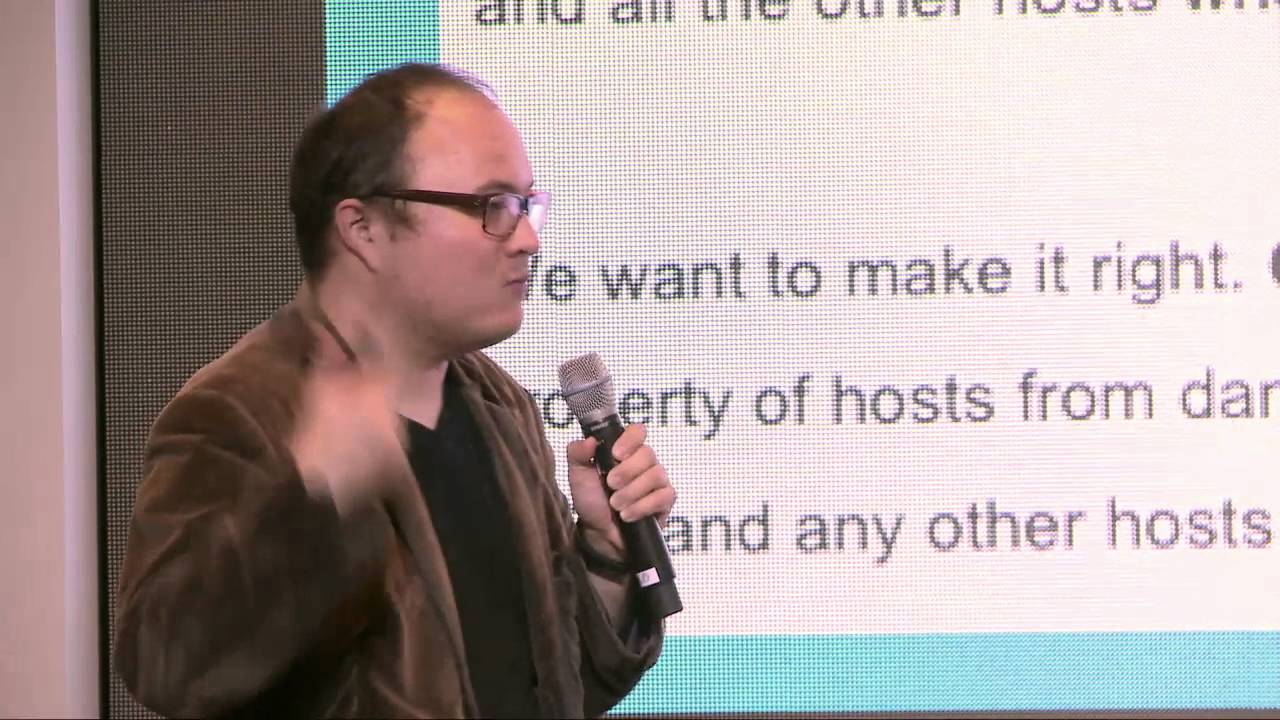
Ben Parr explains how to capture attention through uncertainty, suspense, and crisis communication. He uses examples from Malaysian Airlines, Budweiser, and Airbnb to show how acknowledgement and participation make people care about brands and stories.
Chapters
Now, a second reason that we pay attention to mysteries— oh yeah, isn't that great?— is something called uncertainty reduction theory. So let's pretend you and I are on a date, all right? Or like, when we're going on a first date, or even if we're like on Tinder or Hinge, what we're going to do is small talk. We're gonna start learning a little bit about each other. We're gonna try to find information, right? What are your hobbies? What do you like? Where'd you come from? That sort of thing. Why do we do this? The reason, one theory suggests, is that we don't like uncertainty in our lives. And when we meet a stranger, it's nothing but uncertainty. And so it's our— we are compelled to learn as much as we can, especially if we want to interact with this person more, as much as we can about that person, and gain as much information, which is why we ask more questions and try to find out information to reduce the amount of uncertainty in that first interaction. And that's not just true in personal relationships, but it's true all over the map. When there's uncertainty, we look for ways to reduce that uncertainty because uncertainty makes us uncomfortable. A perfect example of this in the news was the Malaysian Airlines disaster. If you all remember, a while ago, a Malaysian Airlines plane went down in the ocean, and it was all over the news. Now, planes go down on a regular basis. On occasion, it just happens. But that's not the reason why it made the news. The reason it made the news was because no one knew what happened to it. A plane mysteriously disappeared. This shit's not supposed to happen. Oh my God, what's going on? And so CNN and all the others, and especially CNN— I'm looking at you, CNN— nonstop hype cycle because there was a complete uncertainty gap. And we are uncomfortable with that. So we fill it with as much speculation as possible. As much information as possible. We kept on paying attention because the loop wasn't closed. We needed to know what the hell happened to this airplane. And that made us pay attention, at least for a good long time. And so, one of your goals when it comes to capturing attention is to find a way to create suspense. And to create that anticipation. And to have people wonder what's going to happen. And it's not just about— and it's not just something in storytelling, but it's also something In advertising, so I'm going to show you this. I'm going to explain why this works.
When I wake up, well, I know I'm gonna be. I'm gonna be the man who wakes up next to you. And when I go out, yeah, I know I'm gonna be. I'm gonna be the man who goes along with. No.
Okay, that's the best response I've ever had to that. I like excuses to put puppies and kittens in my presentations, by the way. So that ad aired during the Super Bowl earlier this year, and it was one of the best-rated ads. Now, why is that? Beyond the puppy, the ad had a lot of suspense to it, moment-to-moment suspense. And so there's research that shows that When something like an ad— when an ad has moment-to-moment suspense, we pay far more attention to it, we have a stronger memory of it, and we rate it more highly. It's more likable. And so in this case, we know in the end the puppy's going to get home. Budweiser's not going to kill a puppy. They're not Nationwide. But we still are invested in the journey of how's the puppy going to escape from these wolves? How is it going to get home? These little questions and moment-to-moment suspense make us and force us to pay attention and make us like an ad like that a whole lot more. And so creating suspense is a very powerful tool of the mystery trigger and makes us pay attention over the long term. Another tip is to use cliffhangers. And cliffhangers not just in storytelling, but even in meetings. A reason for people to come back, to listen to you further, to find out more. These cliffhangers make us come back because, again, the uncertainty reduction theory. When there's uncertainty, we wanna come back to find out what the answer is. There is, of course, an exception to when you should use cliffhangers, and that's when you're going through a press crisis. So this guy who just got demoted by like 8 levels, you know, he had a press crisis last year, or was it earlier this year, where he, you know, Brian Williams, I almost forget his name, that's how much attention he's lost. Brian Williams. He started talking about bullshit about how his time in Iraq, and people called him out on it, and he didn't fess up to it, and he didn't explain what was going on. And so when it comes to a press crisis, your goal is to end the press crisis. And the best way to do that is to remove all the mystery and uncertainty from the equation. And by actually apologizing and explaining exactly what happened, you remove all the mystery. He didn't do that, so he got docked for 6 months, and suddenly he got demoted to MSNBC. I'm sorry, Brian. But this happens a lot in companies as well. And I remember years ago when I was at Mashable, Airbnb had a crisis. So they had a crisis years ago where a gal named EJ, she was renting out her place. She came back, it was totally ransacked and completely destroyed and drugs everywhere. A very scary process, right? And Airbnb was being slow on helping her and assisting her. And eventually, EJ went public with what happened in a blog post that went viral and went on all the news. And so eventually, Airbnb responded. And the Airbnb CEO, Brian Chesky, responded on Hacker News with a statement which is basically, you don't even really need it. It's like, we have been working closely with the authorities, blah-de-blah-de-blah-de-blah. It was absolutely written by a lawyer. It was lawyer speak. It didn't apologize. It didn't say anything of consequence. So guess what? The story kept on going. E.J. put another blog post, the story got 3 times as big, until finally Airbnb and Brian Chesky got the message, and they did the right thing, which was end the mystery by this blog post, which was, we are very sorry, we fucked up, here's what happened, and here's how we're gonna fix the problem, which is when they introduced that big $50,000, $500,000 Airbnb guarantee. And when they did that, the story died, the whole problem ended, and Airbnbs have been much better and much more responsive to press crises since. And so when you have a press crisis, you end the mystery because when there's uncertainty, we keep on adding more information. We keep on looking for more. Final trigger and then question time. Trigger number 7, acknowledgement. So there was a study that where what they did, and I don't know how they thought this was a good idea, but what they did was that they got married women and they had them sit in a room and they strapped electrodes to their ankles in order to find out how much pain they could tolerate. But they had 3 different conditions for this. Condition 1, married woman sitting alone in a room with electrodes strapped to her ankles. Condition 2, a married woman could hold the hand of a stranger. Condition 3, married woman could hold the hand of her husband. Unsurprisingly, the women who felt the most pain were the ones who were sitting alone. They had nowhere else to turn their attention towards to go away from the pain. And the women who felt the least amount of pain were the women who could hold the hands of their husbands. Because they had someone they loved that they could turn their attention towards. But what I found fascinating, a secondary result they found from the study, was that they found a direct correlation between the strength of these marriages and how much pain these women felt.
Hmm.
The more— the stronger the marriage, the less pain. And so literally, love helps us not feel pain, and it's because acknowledgement is the most powerful trigger when it comes to attention. We pay attention to the people and things that pay attention to us and provide us with validation and empathy and understanding. Because these are fundamental human needs. There is attention and then there is acknowledgement. And when we have acknowledgement, we really pay attention over the long term. It is the longest form of attention. And so, I actually interviewed— this was from actually an interview I did with him at the NASDAQ with Adrian Grenier from Entourage. And Dr. Thomas de Zengotita, who is the author of Mediated, and they seem like an odd couple, right? But the two of them actually did this fantastic documentary a couple years ago called Teenage Paparazzo, where they followed a teenage paparazzi, like a 15-year-old teenager who was being a paparazzi, and they used that as a guise to figure out why we care about the paparazzi, why we care about celebrities, what is up with celebrity culture. And after an hour of discussion, the 3 of us came to the conclusion that one of the big reasons we pay attention to celebrities is because they are in some way a reflection of who we are and the community we belong to. It says something about you and your identity and who you are and who you belong to if you're a fan of Justin Bieber or Beyoncé or Sheryl Sandberg. And this reflection is really important to a lot of us in society. It's part of the reason why We pay attention so much to celebrities. And in fact, there's actually a term for this called the parasocial relationship. And this is our capability to feel a 2-way relationship with a person or a brand when we actually have a 1-way relationship with it. So a lot of us can probably describe the personality of Jennifer Lawrence or Google for that matter. But Jennifer Lawrence and Google don't know us. They know shit about us. We don't have a 2-way relationship with them, but a lot of us feel like we do. And that is the power of the parasocial relationship. The current master of this is Ms. Taylor Swift. And so the reason, like, so what Taylor Swift does, and I think is a good example, is she does Swiftmas. So every Christmas, she finds a couple of her fans that, she stalks them, which apparently is okay if you're a celebrity to stalk people, and she finds out what they want and she videotapes herself gift wrapping them and sends it and posts this on YouTube. And it goes viral every year because she's showing she cares about her audience and she cares about their needs and she's listening to them. And the big thing here is that she's building a relationship with her entire audience by only giving a gift to a few. She doesn't have to give a gift to everybody. By just demonstrating she cares and giving a gift to a few, everyone in her audience, all of her fans feel like she cares. And it expands her audience because she is building a relationship at scale. And that is the power of the parasocial relationship. And you have to find a way, like Taylor Swift did, to validate your audience and show them that you care and show them that you are listening and that you believe they're right. One way to do that is through the power of participation. So, 1950s, Betty Crocker was in a 3-way race with Duncan Hines and Pillsbury for control of the cake mix market. It was a brutal battle. Lots and lots and lots of deaths, you know. But in this battle for supremacy over cake mix, none of the cake mixes were taking off. And they didn't know why Bisquick was already popular, but no one, none of the women in their target audience were buying cake mix. Why was that? They wanted to find out. So Betty Crocker went and they got 2 psychologists and they had them investigate. And what they found was The reason people weren't buying cake mix was because of the eggs. And in the old cake mixes, eggs were powdered. And you honestly, if you have a cake mix with powdered eggs, it tastes just the same as one with fresh eggs. But the women didn't feel like— didn't like cake mix because they didn't feel like they were adding their own flair. They didn't have any participation in the creation of the product. All they were doing was pouring some milk into the mix and that was it. They wanted to do something more. And so Betty Crocker figured out the way to make women and people in general buy cake mix was to make it harder to use their product by making them have to go buy and put in fresh eggs. But when they did that, the sales skyrocketed and Betty Crocker dominated the market almost immediately. And so by creating the power of participation, by giving them a way to be part— to acknowledging their audience and making them part of it, Betty Crocker was able to win the cake mix wars by enabling participation. Vitaminwater, in a more modern one, did this in an awesome campaign I wrote about years ago where they asked their audience to help name and create the next flavor of Vitaminwater. And they had a campaign where people could make suggestions and submit their own recipes and vote up the top recipes. And this generated a ton of news and a ton of hits and a ton of attention. And the result of that was a new flavor called Connect, but Vitaminwater grew and became a much bigger thing as a result of this. So I've gone through a lot of information and this is just a quick recap of all the triggers. And I've scratched maybe 2% of the surface. There's a lot more in my book Captivology. There's a lot more information there. But really the one last thing I wanna say before we go, we go through, we go and ask questions and all that fun stuff and maybe go dancing, who knows. is that the world's masters of attention, the people, the Sheryl Sandbergs and Bill Gateses of the world, they don't try to capture attention for themselves as people. They're capturing attention for their passions, their products, and their ideas. And it's a noble thing if you have something, a charity, an idea, a startup, that you think will really change the world. It is a blessing to court attention for that, to bring people to that. I hate the phrase, if you build it, they will come. That is total bullshit. In the modern era, you have to go out and you have to hustle to get people to listen, to pay attention. And I hope these tools that I've shown you will help you in some way build audience and build attention for what you did. This is a quote from my friend Susan Cain who wrote the book Quiet, which is a fascinating book on introverts, which is, there's attention for the sake of being in the limelight, and then there's attention for the sake of what's intrinsic to you. And so there's captivology. I'm Bennett Benpar, Bennett Dominate Fund, and thank you.
Thanks.
More from Tim


He Sold His Car to Build This Startup, Then Pitched It for $1M 😳 #Startups #AI

This Startup Moves Your Crypto BEFORE Hackers Can Steal It 😳 #Crypto #Cybersecurity




15 Months Without Refrigeration?! This Startup Thinks It Can Go Global 🥥 #FoodTech #Startups



