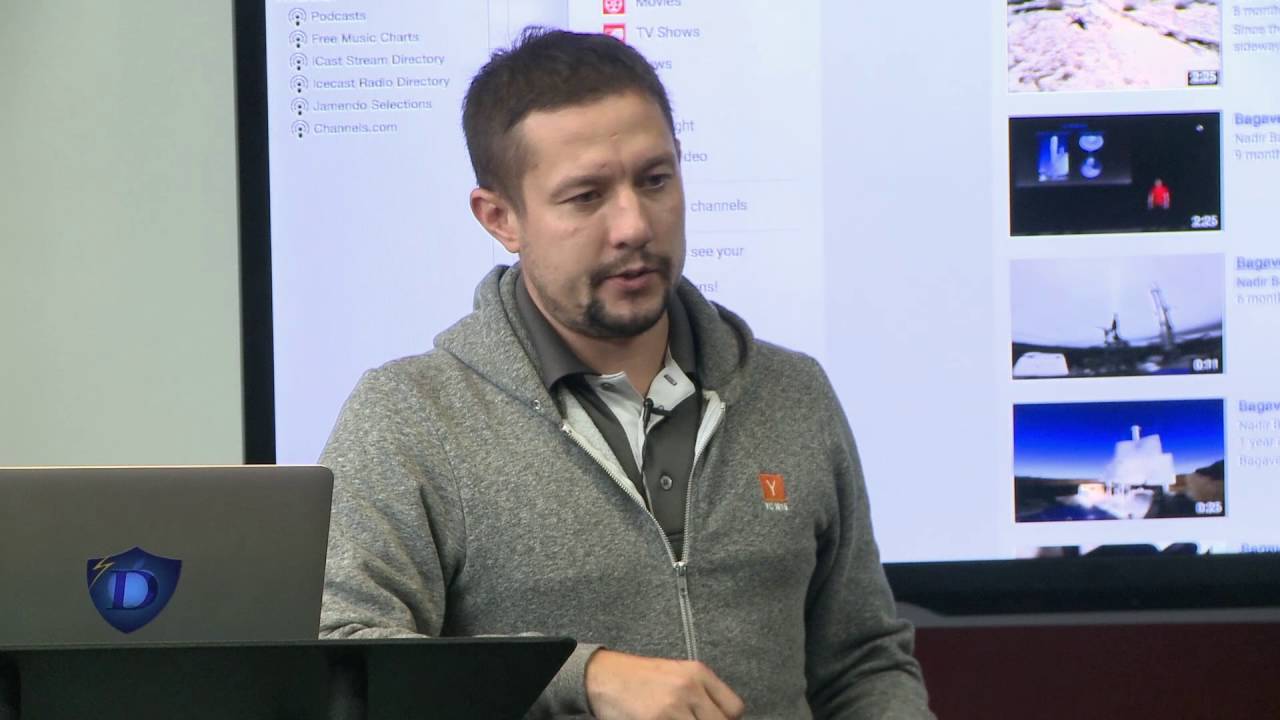
Nadir Bagaveyev discusses building small rocket engines and turbopumps, covering cryogenic pump design, 3D printing parts, and recent test launches. He outlines plans to keep costs low and reduce risk before Series A funding, with a roadmap to scale from nanosatellites to multi-ton payloads.
Chapters
What are the physical problems that you have? Oh, okay. Well, first of all, we've got to make sure that these engines do not melt. That's the very first problem we had. Then we solved that problem. The other one would be, for example, this turbine that I showed you has to get together with 4 different pumps and work together as one closed— it's almost like designing a car engine where you saw the 4-cycle idea only in a book. Like, you've never ever seen the rocket— sorry, the car engine working, and you read the books and you're trying to reinvent this thing. So this is kind of a thing that we're going through right now. Although we theoretically saw how turbines spin on a rocket, we saw how rocket engines burn, but none of us has rebuilt this. It almost became like an ancient knowledge of mankind that only very select few know. It's almost like reading manuscripts and recreating these ideas anew. Although what we're doing right now is the same stuff. You're burning oxidizer and fuel together and make a thrust out of it. But we have to go through this process.
Here's a—
Short rocket engine test. Sorry. One more time. We go into the farmlands in Half Moon Bay. It's closer to the ocean because I like to surf. Well, no, actually. They allow us to test on farmlands. That's why we're doing that. Yes?
So what are you working on right now? What's the challenge you're facing today? So you've gotten one small launch up.
What's the problem you're facing now? Our biggest problem right now is, as I said, to put this turbine together with— and I'll show you the video of the pumps. Basically closing the cycle, that's what it's called, is when you have 4 pumps, 1 turbine, 1 engine, and they all have to work together as 1 unit. The cryo— and I'll show you approximately how this thing— It's open.
OK.
This is what cryogenic pump looks like. And it spins at 60,000 RPM. And we already burned through like 3 electric motors. So you could see these conditions. It's not like clicking a keyboard. And you have to do it day after day after day until it works. And out of— we went through 4 designs and the 5th one worked on, for example, Valves, we went through 16 designs, and 17th worked. On the engine, we're on 5th design right now. So it's an iterative process of each piece until they come together. And in the end, this pump with that turbine with this rocket engine, they all have to burn together nicely for 5 minutes. When they burn 5 minutes, it means that they can go from here all the way to Space and expend fuel nicely and not screw up on the way.
A follow-up question. Knowing that you have such a long timeline until you're ever going to be profitable, and that you have such a variation in trial and error, right? Because you don't know which design is going to work. How do you keep going back to investors to get them to invest more and know that you're going to hit your timeline or miss it? Do you see what I'm saying?
First of all, in the beginning, people who invest in rockets kind of know that it's going to take a long time. But also, at least what I use, and others may not be using it, is I'm always raising a small amount of money and with every milestone increasing the valuation. So this way I try to lose the least amount of company to investors and keep the burn rate slow until we reach that milestone of engines and pumps working together. Because as soon as that is reached, I can just hire, you know, 10 more people, and then it's all like everybody's working and it will finally finish. So I keep it really, really slow right now. I have 4 employees— well, 3 employees and 1 intern— plus 2 consultants. Keep the burn rate as low as possible until this uncertainty is gone. And when uncertainty is gone, I will do Series A, hopefully raise about $15 million, maybe in about 4 months from now or 6 months from now. And then we can go really fast, as in build the first stage, which is much larger than this rocket. Then we know that— So you're going to go to the market? all our mistakes are going to be small. These are all a bunch of mistakes that we're doing in the beginning. And you probably heard about scaling your product and everything. In rocket engines, what design we're having is also very scalable to— from this small piece, it's about that big of an engine, to really big, like 100-ton thrust engines, which are, you know, as big as SpaceX engines or Saturn V engines. Here's another video of— this one is of our launch, which didn't go perfectly well, but you'll see it actually went not too bad. This is in Mojave Desert in California. And then wind took it and started turning it sideways, and then it went into the ground. What did you say in that one? What is that?
Oh, shit.
You'll hear it from— now this one is from the bunker. But in the end, everybody applauded because it's— I mean, regardless how high it goes, our main goal was to kind of clear the tower and be the first ever 3D-printed rocket engine that ever flew. And it was. What about aerodynamics? I mean, did you have some kind of wind tunnel to test it out? No. For these small things, we do not really need That much of aerodynamics. For example, next rocket that we're launching suborbitally to space means it's not going to orbit really fast, 5 miles a second to stay there, but it just kind of jumps into space and falls back. For that, I have to calculate the nose drag, make sure that it doesn't overheat, and it can be done with relatively simple software tools. So we bring sophistication as necessary. For example, we don't need to simulate the strength of, for example, these beams. They're just overbuilt. They're just heavier than they need to be. They're stronger than they need to be. It's kind of a philosophy of first make it work, second make it light. I'm sure it's also approachable to software. First you make something that just works, and later on you clean up the code and make sure that it's beautiful. Well, kind of the same to a rocket engine, I guess. What are the 3D parts? What is that? What are the 3D parts? 3D printed is the rocket engine and turbopump— turbine. We wanted to do pumps also, but they're not good when they're 3D printed. They leak too much fluid. They're not good for liquids. They're good for gases because, you know, in a rocket engine it's gas going through and it doesn't matter if it's super precise or there's a little roughness on the walls and things like that. But what it gives you is you can iterate much faster. If we just machine and do it traditional ways, it would take us maybe 2 months to make a rocket engine. With 3D printing, it takes 72 hours to print And maybe another day to send it overnight to us from 3D printing companies. And there are a lot of them in America. Hopefully we'll buy our own printer, but they cost $1 million. That's after Series A. Yeah. So you mentioned earlier that your passion at the beginning was to get for yourself into space. So like those ones you mentioned, those are more like smaller size?
Yes.
Is there any potential later to expand or support larger size spacecraft or something bigger than nanosatellites? Well, of course. The reason I told you about these pumps and turbines is because pump, turbine, and engine are a complex thing that can be scaled into as large as possible. If I would want to concentrate only on nanosatellites, I would actually use that electric motor and a pump. And there are a couple of my competitors who just want to use electric motors. But that means they have to take batteries to space, which is stupid. Yeah, there's no need for batteries in space. It's kind of wasting mass that you could be taking to space. So it's OK for small stuff, but it's not OK for big stuff. I went into this designing a system that is more complex than it's needed to be. But I know that that system can be easily expanded into any size rocket that we want in the future. So I'm kind of gaining all the expertise now, making these mistakes while they're cheap, while the parts are small. Because when they become big and you make a mistake, it costs months to produce a part and may be costing hundreds of thousands of dollars instead of just a $1,000 part. So yeah, definitely I have in plans to expand to taking 2 tons to orbit instead of only 15 kilograms. That's going to be our next rocket, 3— 2 years from now. Yeah.