The Chip That Could End Chemotherapy! | Meet The Drapers Global: Abu Dhabi
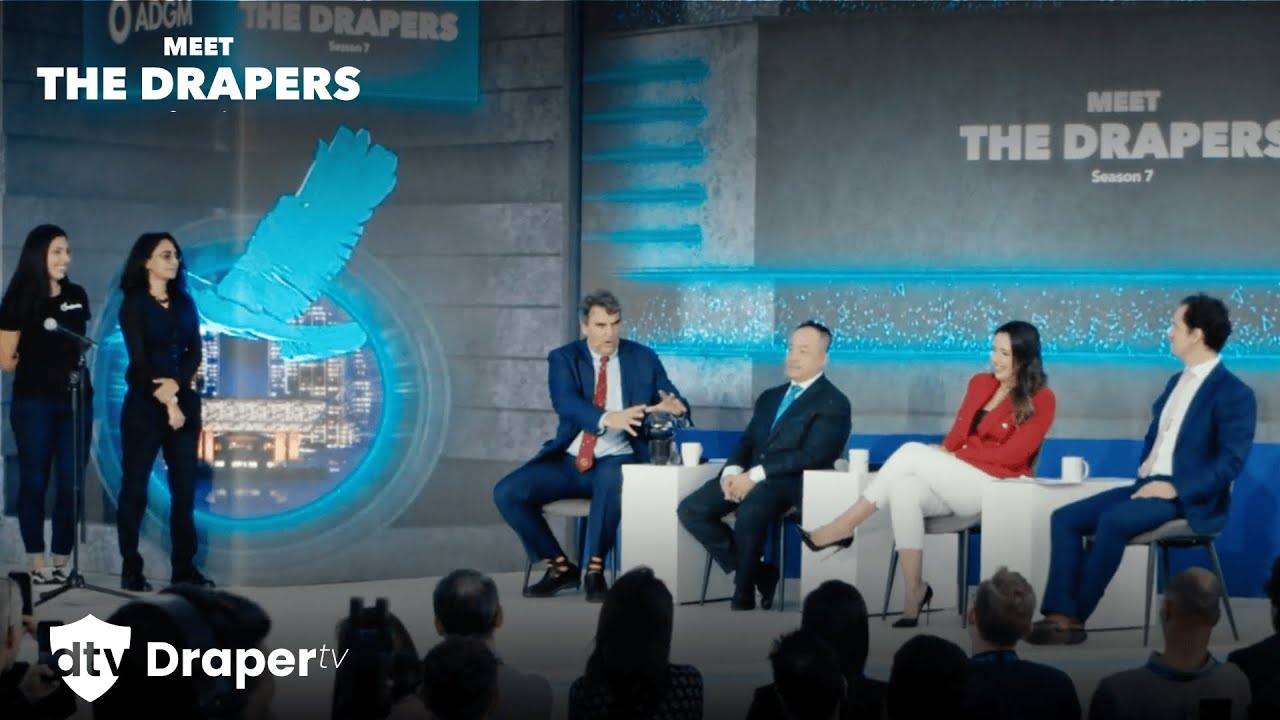
Tim Draper hosts a startup pitch event in Abu Dhabi featuring Dr. Khadijah Ali's MediChip, a 3D-printed chip that delivers chemotherapy directly to tumors, plus pitches from founders working on assistive kitchen tech, an AI algorithm marketplace, and solar investments in Africa.
Chapters
Entrepreneurs and help them secure a spot in the finale. Who will rise to the challenge and secure the funding to, to turn their dreams into reality? Let's find out together on season 7 of Meet the Lakers! Hey, we're here in Abu Dhabi. This place is amazing, and what you're looking at over there is an amazing amount of construction because I was here maybe 10 years ago and that was all one big beach. One big desert, and now it's just this spectacular, thriving, amazing country. There are entrepreneurs everywhere, all through the UAE. Freedom is reigning. This is a really exciting place to be. We're here for Finance Week, and we're going to meet some of the best entrepreneurs in all of the UAE. Hey, how are you? Very good. Terrific. Nice to see you. Ah, and never you never disappoint with the. No, of course. Bitcoin top. Can you see me? I'm filming Meet the. Tim Draper's on stage today. I hear that you've got the Black Eyed Peas. Give Will.i.am my best.
We need $1 million from Tim Draper for our company.
$1 million if we work with him.
Yeah, so with $1 million, we would actually be able to dose the first 6 patients with our chip.
This is a unique opportunity for that $1 million to not only affect the growth of a company, but to affect the growth of a country.
We have to show the world, like, how our solutions are changing lives.
We can get more trust from the, uh, the VC-related people.
Great, cool.
Thank you very much.
Welcome everybody to Meet the Drapers! So great to have you all here. It is so fun to be here in Abu Dhabi. So we have today the honor of having 3 extraordinary judges, and since it's called Meet the Drapers, I, I always adopt the judges into the Draper family. And so welcome to the Draper family. We have Hasnaa Taleb, and Hasnaa is a multi-award-winning stock trader and entrepreneur. Tell us about yourself.
I left Morocco at the age of 17, and I went to to the US searching for the American dream. After 2 years and a half, I moved to NASDAQ. This is where they called me the she-wolf of NASDAQ because I was on the trading floor.
Oh, I thought it was because you threw really good parties.
Could be that as well.
So here to my left, we have Harry Yeh.
Yay!
Harry Yeh.
My background's actually software engineering. Cut my teeth at Microsoft and Hewlett-Packard. Spent a lot of time in Silicon Valley. I got in Bitcoin at about $60, started one of the first hedge funds. We built a very, very successful OTC business. Figured, you know, I'd come to the UAE and retire just because there's amazing tax benefits here. You know, 0% income tax, 0% capital gains.
Zach Safarelli, what I know of him was he started as a child actor.
So yeah, I started as a child actor and I, you know, had all the savings and my grandmother told me, you got to buy bonds, you got to invest. Started my first hedge fund straight out of college. Gone into investment banking and came to Dubai about 10, 11 years ago now and just been part of the growth story that is Dubai.
Zach Cefaroli Draper has eyebrows, but we probably have to mark them up a little bit to get to the full Draper status. Yeah. Oh, good. Good movement though. And now let's introduce to you some entrepreneurs who are just getting started. But before we do, Let's see what's going on behind the scenes. And now there's an eyebrow thing, so go ahead, do your eyebrows.
There you go.
So hi, my name is Khadijah Ali. I'm the CEO of BioSapien, where we treat cancer locally. So I was like 18 years old doing philosophy and physics at McMaster University, contemplating life, as I sometimes like to call it. And essentially my dad, who is my best friend, also my business partner and my mentor, ended up getting diagnosed with cancer. Unfortunately, he passed away, and as a way to sort of give back or like keep that alive, I dove into medicine. So I decided to go to medical school, do some research around cancer primarily. Initially, I thought I would be a family physician. It's funny because I ended up going the opposite way.
How did you feel like that transition was received by the rest of your family? And, or your friends, or—
It's really funny that you asked that because a couple of my friends asked me if I was okay and like if I was, you know, doing the right thing. Because to go from something that's really secure, like you said, right, and stable, to jumping into something that's very intangible and abstract— and at that point it was just this idea that was in my mind— so to chase that and want to turn that into a reality was something that not a lot of my friends understood. I'm generally a risk-taker. So from that perspective, I really do love the entrepreneurship because you get to create something and build something, and there's like a different kind of thrill in that in comparison to, you know, prescribing somebody Tylenol, right? Don't get me wrong, that has its own joy to it, of course, but it's just I'm much more of a high-risk, high-reward person. For context, I skydive, so, you know. So fast forward 5 years, right? We're pretty much ready with a product. that can go into humans. We've done all the animal testing that we needed to do to prove that it's safe and it works. And essentially the next step after that is that you do a clinical trial in humans. And Abu Dhabi was very forward-thinking, was very innovative, friendly, and said, hey, instead of you guys spending a couple more months trying to do this in the US, why don't you come here to Abu Dhabi and we can start the clinical trials here?
Have you felt any sort of Like, challenges specifically related to being a female entrepreneur, or is that something that hasn't really touched on you?
Yeah, I think that's one of the most difficult sort of challenges that you run into, especially in the US. So the industry, especially in biotech, is primarily, I would say, 95% male dominant. But the unfortunate truth is that only 2% of all female founders get funded.
Oh, I'm so nervous.
Are we done?
Instead of taking a drug that's fully systemic—
Yes.
You lose your hair and all that stuff. This is a drug that just goes right on the tumor and attacks it right there.
Right on.
What a cool idea!
I think there's a lot of activities for people to do here, so it doesn't matter what kind of hobby you're into, you can always find like-minded people, which is really nice and exciting. It kind of feels like New York in that way where you can be yourself. There's a lot of things to do here, so you can play volleyball, you can actually go scuba diving, which is really exciting because there's all sorts of different kinds of animals, sea life and turtles that you can see. Kitesurfing, wakeboarding, which is really exciting as well. I think the best part though about this beach is that you can actually get food delivered right to where you are, which is novel and unique. You don't get that in California. And of course the water with the Pacific, it's like 50 degrees, right? So you're shivering. Over here it's like a perfect 80, it's crisp. So one of the other things I really like about Abu Dhabi is it's got the southern hospitality because people are very friendly, the food's amazing, and yeah, you just get to watch the sunset and relax and hang out and meet cool people.
Super excited, a little bit nervous, but I've got some of my friends here, so I think we'll be good. Hi, my name is Dr. Ali, and I'm going to take you on a little journey. I want you to imagine someone that gets diagnosed with cancer. They get systemic chemotherapy, and within 4 to 5 hours, they end up with nausea and vomiting. 4 to 5 days, they end up with hair loss, and a couple of weeks later, they end up with long-term complications. This is something I experienced with my dad. And the reality is, is that 1 in 3 people will end up with cancer in their lifetime. So my team of experts from the industry, including the FDA and pharma, combined 100 years together, came together for the last 5 years to make MediChip. MediChip is a 3D-printed drug delivery platform which is able to deliver the same type of chemotherapy that you would get systemically, but without any of the side effects. So really?
So let me— help me with this.
This is—
oh, it's this paper-thin chip, right?
Yeah, yeah.
You know, he like stepped in, Tim stepped in and was like, so what is this thing? And I was like, oh.
Do I put it on the side of my neck? What do I do with it?
Yes, that's a great question. So you can actually put it on top of the tumor. You suture it on from the 4 corners that you see, and it provides the same chemotherapy for up to 1 month. So you could be roaming around, sleeping, doing groceries, but the cancer is still getting treated.
So when he started mentioning, you know, like, does it go in the neck? You know, is it something that I put on my skin? I was like, oh no, I think, I think I've lost it, right?
So like, let's say you are going in for surgery, right? So they're going to your pancreas or they're going into your stomach for surgery. They go through a scope, they put this in directly on top of the tumor.
They put it on the tumor, right in there.
Yep, right on top like a Band-Aid.
Honestly, I think the fact that I've taught In the past, like undergrad and graduate students and med students and things like that, I felt like honing onto that experience and bringing it in to be like, no, no, it's not this, it's this, and like, let's look at it this way.
Well, how do you keep it from slipping off?
So you see those 4 corners over there?
Yeah.
Right?
That's actually where you attach the sutures onto the tissue on top of the tumor. It's meant to be delivered in that way, and you can put more than one. So if the tumor is big enough, you tie the knots together to make a larger mesh. And then you put it on top of the tumor.
So instead of taking a drug that's fully systemic—
Yes.
You lose your hair and all that stuff. This is a drug that just goes right on the tumor and attacks it right there.
Right on.
What a cool idea!
Once they got what it is that we do and the fact that it goes on the tumor and you put it in and it releases the chemo, like, they were finishing the thought for me.
Yeah, how much time does it take for it to start working? So once I apply it?
So 24 hours. So basically the The moment it touches tissue, it gets activated. Within 24 hours, you get this burst release, which is like about 25% of the drug initially, so it gives that little kick, and then over 2 weeks, it releases from the 2 sides and then from the major parts of the chip itself over a course of a month.
Give us an idea of the market size. How many cancer patients would be suitable for this type of treatment?
That's a great question. There is about 600,000 people that get diagnosed with cancer every year and about 1.8 million new cases. By treating 3,000 patients, we hit the billion-dollar mark in revenue.
Woo!
What's the exit for you on this one? Like, as an investor?
That's a great question. So we have several exit opportunities. One is basically an M&A, right, with a pharma company or a medical device company that wants to buy us out.
Another is to do an IPO.
Terrific. Well, thank you so much for coming and being on Meet the Drapers. Good job. All right.
Oh my God, that was awesome. A bit nerve-wracking, not gonna lie. Some of the questions that he asked, I don't get from a lot of medical folks.
It's a big potential, right? I mean, $1 billion of revenue from 3,000 patients.
This sounds like a miracle because My grandma has been diagnosed with cancer, and I and I've been with her throughout the whole you know the cycle, all the sessions, all these things. First of all, you pay a lot of money, and second, at some point patients cannot do more.
I mean, if that works, yeah, it's a good job. Gloms on and reduces the size of cancer.
Very very knowledgeable. She really really knew her stuff. Most entrepreneurs, like you know, even the patient may know the product, but she answered a lot of the questions, even the technical, the. the financial part, you know, the exit.
Hey, what did all of you think? What'd you think of Dr. Ali? All right. So let's bring on our next entrepreneur. But before we do, let's see what's going on behind the scenes.
I'm Marcelo Rubinger. I'm the CSO of KitchenAid Technology.
Hi, I'm Carla from Brazil. I am co-founder and CMO at KitchenAid. And at Key2Enable, we help people with disabilities reach their full potential with our hardware and software solutions. As Josel likes to say, I used to be a tree hugger. So I was working in music festivals, I was in another sector. I always wanted to work with something related to a social cause. I didn't know what back then, but when I saw the music solution working, I saw people playing like a keyboard people that don't have the motor coordination. I really felt that. But also, I think it added a lot to our startup now, the fact that I came from a completely different field. Also, we go a lot, we meet a lot of the people we are deploying the solutions. So it's just not delivering. So sometimes in our daily lives, we go to their houses, we go to the school, we see how they are doing. We went to a few orphanages and I saw The real challenge there. I saw people with different disabilities, different, different ages. They are learning and they are gaining autonomy. I saw many people that couldn't even speak before or do a daily activity. They can do it now.
We see the, the people that are using our solution. It changed our life. It's impossible to just leave this and try to do another company. No, it's, it's our life now.
They find— how do they find out about you? You're knocking on doors?
We are knocking on doors because we need help from someone, maybe you. So we do the parties.
You want me to knock on doors for you?
As an engineer, I always stop here and see how they did all of everything on here. Because from here to 1 kilometer far away, it was all ocean. It was the beach.
Actually, where we are standing.
Yes, it's like 1 kilometer away. They just landed here. They built so big buildings.
buildings.
On this area.
Exactly. But I see that here in this part of the city, there's a lot of history also. That's where all started. Then I don't know if people, when they come to Abu Dhabi, they come to this area.
They don't know what is— what happened in the past, because it was just the house of the Sheikh and everything starts from there. He just believed, let's do a new city, let's do a new country.
And for me, like, what I like the most about here. We meet a lot of people from different places here, and because we're from Brazil, we don't have this contact, especially with the Asian population. So here we meet everybody from everywhere, and for me, that's the best part of Abu Dhabi. Not nervous at all, but— no, I'm kidding, I'm a little nervous, but we are super excited to meet Tim especially. I'm Carla, co-founder and CMO at KitchenAble. Imagine a child who is nonverbal and does not have motor coordination skills. So this child cannot write their name. They cannot use a keyboard or engage with traditional technology. Now picture the frustration of parents and teachers who, due to the lack of tools, cannot measure this child's capabilities or even track their learning progress. Well, this isn't just the story of one child. This is a reality for 240 million children with disabilities globally.
This is not just a niche, it's the biggest—
Biggest minority in the world.
Biggest minority in the world.
That's why we created the KeyX, and that's Marcelo, my CSO and co-founder. He will be our stand here, like in UFC, you know, when they have the points here.
Yeah, we have to be prepared for everything. So the good thing is that I can still be— they stand there and I could show our solution.
Here, bring it up here, Marcela. Okay, explain what this is.
Yes, so this is a keyboard and mouse to empower children with motor, physical, and cognitive disabilities to type, to use the computer in all the ways they can, and this leads for them to Get educated, communicate, be autonomous, and do simple tasks that we do every day.
Now I've been trying lots of things and nothing's happening on your keyboard there.
No, that was amazing because when I just showed him the keyboard, it's like he was just touching, touching, touching.
And then he started touching me.
Please let me have just a little second to show you how it works.
So for example, if we want to write Tim, for example, we have T here. You press this pink one because T is here, and then you press the red one here.
Oh boy, this is complicated.
Yeah.
Now we're trying to find an I.
Perfect.
Here.
Yes.
Okay, now an M would be here, here.
Yeah.
So we spelled my name.
Hey!
With 2 seconds he will understand. And he did. He understood and wrote his name.
Now I get it. It's code. Why does this help somebody who can't code?
It's a combination of colors and symbols because people with motor disabilities, they cannot use the keyboard because they need spacing. A cerebral palsy man that we know in Brazil, he created this combination so we have all the commands of a regular keyboard and mouse in just that small panel.
How many have you made? How many have you sold?
We, we sold 30,000.
And how much are they? How much do you—
They are $1,500.
30,000 times $1,000, you've— you're at $30 million revenue, right?
No, no, because a lot of them are in schools, so we put them in a classroom and many children can use it.
Oh, it reaches 30,000.
Yeah, yes.
Oh, okay. How many have you sold?
We sold around 800, yeah.
They find— how do they find out about you? You're knocking on doors?
We are knocking on doors because we need help from someone, maybe you. So we do the pipes.
You want me to knock on doors for you?
No, no.
I've done that. That's how I got started in the venture business. You're from Brazil. What brings you to Abu Dhabi?
Yes. So we won the grant from Hub71 3 years ago.
So when did you start the production? 2018?
Production started 2017, but we started like go-to-market only in Brazil in 2018.
So we are 2023. So from 2018 to '23, you've made sure to sell 800. So why took you 6 years to sell 800 devices only?
From 2017 until 2019, we were inside the field learning with children, with disabilities and also learning with the teachers, with that we made other kind of solutions. So we have the keyboard, we have accessories, we made the educational platform, and I can say that during COVID we started selling. It was the, the go-to-market directly.
What are the challenges in increasing the, the sales? Is it, is it the cost of the device?
Is it This is one of the challenges, the cost of the device. So we are raising actually because we want to manufacture and lower down the costs and make accessible because most assistive technologies, something— we don't have a direct competitor. Something close to us, it starts at $4,000.
Terrific. Well, Carla, thank you so much for coming on Meet the Drapers.
The message was delivered and some people, I'm pretty sure they understood. Of course, I hope we are inside Tim's head after we go out of here.
We have to show what we do, what we have for the world.
Yeah, we are proud of our work. That's it.
So I love the mission. I love the impact. I love how she's trying to help kids. You know, I think it's quite challenging making it scalable.
You know, when I did it though, I found that it was kind of fun. I didn't feel like it— maybe they're not— they don't have to be limited to just the market they're going after.
We missed it a little bit to make it happen, to say how we are big in Brazil and how we can be big because the size of the market is huge.
Maybe build something so that maybe everybody in the classroom can use it and then you get economies of scale for manufacturing. And the price becomes much lower. It's much easier to sell.
And the price point of $1,000—
It's a bit high for a keyboard.
It's very high for a game, for a toy.
This is changing an individual's life. It's not just a toy, you know.
Let's move on to our next entrepreneur. But before we do, let's see what's going on behind the scenes.
My name is Kazuya Sagenawa and we are from BitGrid. And BitGrid wants to provide AI for everyone. My first job is working in Canon, that is a camera maker in Japan. In 2016, I saw blockchain technology in China. In that time, I learned smart contract itself and I want to use this smart contract feature too patent-related business. I want to provide more directly support to engineers. That's why I started my company.
So how did your life change when you quit Canon and went from the big, safe mega company to being an entrepreneur?
Honestly speaking, first time I feel a bit scared because Big company supporting entire my life, but other side I want to challenge to support engineer because new things they will make. I respect that. When I want to start in business, I try to look around which part of the world is the best suitable for our business. In that time, I met my co-founder in Dubai. He's Japanese, but he has already experience with PR and marketing layer. Last year, we selected by Hub71 in ADGM, and we moved Japan to Abu Dhabi. Headquarter, we moving. Now we can access with the Web3-related community.
Has it been difficult to be away from them, or did your family come with you?
Okay, yeah, actually I will marry next January. And after that, my wife is coming to Abu Dhabi. Sometimes I feel a bit sad, but not so big problem because if I try to go back to Japan at 10 and 11 hours, I can go back to Japan.
So what it means is you don't have to share your confidential—
Can we get specific? I'm a company. Why do I use this?
Louvre is my one of the favorite place in Abu Dhabi because as you see, very beautiful. And this museum is amazing. So many famous art is physically exist. That is very happy to me. And I work hard and sometimes to break, in that time I come here. And also inside is very beautiful. The dome is quite, how to say, new architecture.
I think it's just a contemporary blend. Like you see a kind of a modernist architecture and then you basically have all the antiquities and the historical artwork in there. That says a lot about, you know, how we can actually, you know, come over here and just think about where to go next. It's a very calming environment. I think what's interesting is the kind of mix of people that we see. You know, there are people from all over the world that just come here and have businesses that do technology.
All right, let's bring on our next entrepreneur.
My honest speaking, I am a bit nervous. This is a big challenge for me to preparing the English speech. My name is Kazuya from BitGrid, and here along with my partner Saksham is here for the Summertime Q&A session. I believe that AI will communicate with each other and learn without human intervention in the future. And we provide our algorithm library for everyone. We provide to huge companies, and for small, we can provide to AI itself. We funded costs from investors to run a competition. We get 3 top algorithms from the data scientists, and we are making them available to our library. For data scientists, I want to support them for more easy to using their algorithms. We already have a competition with a big company, NASA and SoftBank.
We already—
we have over 30,000 data scientists in our community, which is the second largest online community for data scientists.
So the idea is that you crowdsource algorithms.
Yes.
And you bring them all together. And when you say everyone, you really mean all the data scientists. And then people can then— you create a marketplace for algorithms.
Yes.
There was an element of language barrier coming in place, so There were a couple of things that definitely we wanted to communicate. So any data scientist can deploy, scale, and monetize all of their artificial intelligence models and sell them off to companies.
So help me with something. Give me an example of how this would be used. Where would you say, okay, here's an algorithm, a lot of people are going to want this algorithm, they're willing to pay a lot of money for this algorithm? What's a good example?
So the first thing is that we are not selling algorithms directly on the market. It's one of the options, but the main thing is that companies can try algorithms on a pay-per-use basis. So what it means is you don't have to share your confidential—
Okay, get specific.
Okay.
I'm a company.
Yeah.
Why do I use this?
So one is, for example, of a transaction routing problem. So there are banks and you have to have an AI solution of which corresponding bank you have to route a transaction through. And overall, you are able to test out a particular AI use So how does BigGrit make money? The AI marketplace is where we share remuneration with the data scientist 50/50. So if there's a company and if, for example, every API used for that particular model, they're charging like $10, that basically goes $5 to BigGrit and $5 to the data scientist. So they retain IP and they start making money out of it.
I saw something with crypto. Explain that part to me.
Actually, the BGR token is one of the most important elements of the entire—
So you guys have a token?
Yeah, we had one in Japan and that had a bit of problems because of the regulatory environment over there. So they tax you on the total market cap.
So my question is, why are you guys launching a regulated token? Why don't you launch a utility token?
One is, first of all, the token is used as a remuneration mechanism. So every time an API call is used, the One of the fundamental things that we always kept about our business was to kind of, you know, comply with all the regulations to make sure that we don't get to a stage wherein the entire business gets into trouble just because we're not compliant with certain policies.
So you said that some of your clients are NASA, SoftBank, and Tokyo government. What type of agreement do you have with these clients?
So for example, with NASA, we had a competition where the prize money was the entire It was a very specific problem statement where they had to find correlations between biomedical entries and research papers. That particular scenario, you have, you know, a 2-phase competition where it was spread out across teams all over the world, and they were participating in order to get to the best possible solution.
Terrific. Well, thank you so much for being on Meet the Drapers. Thanks so much for presenting.
It was an eye-opening experience.
Yeah.
I learned many things for this pitch.
I think the idea is great, but it probably fits better in a tokenized model than a traditional, I would say, equity-type model.
I would love to learn more about the entrepreneurs themselves.
The story. We don't know what the story is. I don't know the story of it.
I'm still trying to understand what I just heard. You know, I would love to understand how they generated $5 million of revenue, where that came from.
I was pretty interested in how they're doing this because I do think that there's something to marketplaces for scientists, for data scientists, for all scientists. So let's bring on our next entrepreneur. But before we do, and now I think I want the whole audience to do the eyebrow thing. Wow, I see some good eyebrows there. Wow. That's like a 3-inch vertical on your eyebrows. But before we do, let's see what's going on behind the scenes.
My name is Aaron Posthumus. I'm the founder of Moment, and we're making it possible for the world to invest in Africa's energy transition. So actually, I've been an entrepreneur since I was like yay high. I grew up in a home with a single mom of 3. I'm the youngest. And when I was really young, my mom sort of told me, you're going to like you've got to be the man of the house, and I think I took that too literally. She was maybe joking with me, but I was selling toys in school since grade 3, and every year after that I had like a different product that I was busy selling at school. Got in trouble a few times, but also at the end won like an entrepreneur award in grade 7. I've been sort of on my entrepreneurial journey ever since then. My personal background is in computers, so I started my career in cybersecurity, hacking banks and telcos as a certified ethical hacker. Ethical is the important part. I want to make the world a safer place. I had a co-founder and we ran a technology business. We were a development agency, basically startup as a service. We specialized in building MVPs and then scaling them up. We were doing this all in South Africa where we have rolling blackouts 3 times a day, every single day. The country literally has no power. We were like, this is a problem that we really want to address and solve.
Have you had the opportunity to, like, engage with a specific project where you've seen this help a school or a specific business?
The project that's really close to my heart is a gender-based violence safe house. So I'm a single boy in a house of 3 women. This is something that means a lot to me, and we did a solar installation for a gender-based violence safe house. These are women and children who are literally running away from, you know, violent situations. And when the power goes out for them, it's not just you can't charge your phone. For them, it's, you know, security cameras are down, electric fencing is down, and it can be a very traumatic experience because potentially, you know, somebody's out there like looking for them. This is one that really means a lot to me, and I think it's just one of the use cases that shows how powerful just energy can be in a country that doesn't have it. And there's so many more, man.
We charge our customers a flat rate of 2 rand.
So why don't you charge them more so your investor can get better than 12%?
Sometimes in the middle of the day, I'll just sort of come down here. I think it's got a really beautiful view.
You can see the whole cityscape here. Something about the UAE is just the culture is really so open. Every day you're meeting new people from all over the world, different cultures, and it all sort of collides and clashes here.
And there's a lot of tech companies here. There's a lot of innovation happening here. The Abu Dhabi Global Market Square is here, but there's a lot of structured planning that goes into the layout of the region.
I think it makes it so much easier.
Like, I haven't been here for a long time, and it's clearly built for people coming from all over the world and be able to settle really quickly. Super excited.
I'm definitely— I do feel confident. The nerves are starting to settle in a little bit.
I didn't think I would be nervous at all, mainly excited.
Hi, my name is Aaron. I have a background in cybersecurity and product development. I was at the helm of a venture studio that was building software at multi-million dollar valuations, all while our home country was facing daily rolling blackouts. In South Africa alone, there's a $28 billion funding gap for solving the problem of renewable energy finance. So we created a project in January this year that allows private investors to purchase parts of solar installations. These solar installations are powering businesses like schools, factories, and farms. The earnings from their bills gets distributed right back to those investors through secure contracts on the blockchain. Our investors love this because they get to power businesses in developing economies with renewable energy, but it's not a charity. They make about 12% per annum on their investment. Our businesses and communities love it because they get a, a mini-grid for $0 down. We've got about 50,000 users to date and have done $1.4 million in sales. We have a pipeline of about $20 million worth of incredible schools, farms, and factories waiting for their power. The question is, Drapers, are you gonna help us get it to them?
I think we've got a really refined product, and I think we're solving a really massive problem.
It doesn't seem as though there's any, um, anything, uh, particularly unique here because someone else can easily do the same thing.
Not at all. So we've actually been working on the technology for about 2 and a half years, and we've spent significant time and money on the legal models as well as the legal frameworks. It's a unique ownership model.
So I see Ethereum, Polygon, and Cardano. Explain to me the blockchain play.
Yeah, so from day one, we wanted to make sure we were blockchain agnostic so we can support multiple chains. And this was important so that we're resilient. Important to note, we pay out in USDC, so it's not a speculative coin.
So why don't you guys have a token?
We haven't launched a token yet.
But are you going to for your investors? Are you going to do the—
We absolutely could.
Ah, okay, I like.
And we do have a token strategy. That could have been a much stronger answer than just, you know, that's something we could do.
Is there a secondary market for these interests?
Thank you so much for that question. So yeah, we actually saw a 260% secondary trade on our first project, which was a high school, because there was a lot of demand from the community for that project. So you can sell your token on the secondary market.
And are you taking money on the trades?
Absolutely. 1.1% on every trade on the market.
What's the average price per kilowatt-hour of energy?
In South Africa, it's about R2.80, but it does depend on the whole business, where they are in a complex.
R2.80 for the normal grid, but what about for your—
Oh no, for the normal grid, it's as high as R4.50. We charge our customers a flat rate of R2.
So why don't you charge them more So your investor can get better than 12%?
So we actually have a very refined model that makes sure that like everybody is kind of winning out of the solution. The normal grid goes up to R4, but it also comes down to like R2 as well. It's a very complicated system.
Okay, so you've raised R350,000 plus another R1.15 million. That's around R1.5 million.
Yeah.
You've secured 55,000 users.
Yeah.
You've made sure to sell more than around $1.4 million in sales.
Correct.
How did you do that?
Really great question. So we actually did a whole YouTube, like, content marketing approach. What I love about content marketing is it always stays on. You don't have to keep investing in it. We actually have a series called In the Moment, which is just following our journey as a startup to becoming a unicorn, which we know we will be.
Terrific. Aaron, thanks so much for being on Meet the Drapers. Terrific. Well done.
I think it went really, really well. I think we've got a panel of judges who really understand financial models, which is great. They're supporters of the token economy.
The energy.
I think Aaron will get to be a unicorn one way or another, right?
It's really cool to get that validation from Tim himself.
I think the idea is great. Some of our— actually, my co-founder on theprotocolife.com, he's actually from South Africa, so I know about The South Africa rolling energy problem. So the fact that somebody is trying to solve it is great and they're using blockchain technology.
I think I was a little bit surprised that Judge Yeh wasn't more eager on the business, given his background and given his involvement with Cardano, for example, which is one of our investors.
They have started this since January and they're almost in their breakeven. If he was talking about being the unicorn, we might, we might hear of them soon.
I loved his energy. I mean, I would never bet against somebody who has that kind of energy. Seems like he'd run through a brick wall.
In the long term, he will have a lot of competition, and there will be a race to the bottom, so the margins will shrink all the way down. But he'll get a lot of customers, and then eventually, you know, he can sell them other things. Okay, so now we have a very difficult decision to make. We have to decide which of these 4 entrepreneurs are going on to the semifinals. And as you may know, at Meet the Drapers, we always fund the winner at $1 million, and sometimes others of them get funding along the way, but we are gonna only choose You have to send your energy to the crystal ball, and I need to, to feel that energy. Is it BioSapien, Key2Enable, BitGrid, or Moment? We can think whatever we want, but it's really up to the crystal ball as to who goes forward to the semifinals. Om mani padme hum. Are we helping people who have problems? Are we solving a big issue in energy? Are we— what are we doing? We're doing Biosapiens! And congratulations, Biosapiens! Congratulations, you move on to the semifinals.
It's a bit surreal. I think I still haven't processed it. I was really nervous before I got on there. I didn't even know who I was competing against. So it was very nerve-wracking in that sense.
And each of you can look and convince the camera that you should also be voted in. And congratulations for being on Meet the Drapers.
Give us another chance. We're helping people with disabilities to have another life.
They change these people's lives, and we would like a new chance to show them. This market is not being addressed, so please give us a chance to make a positive impact with these people.
I, I think there's a lot more to the company than probably what was presented out there in the show. Definitely, if you kind of go over to all the community we have built or go over to our website and experience the kind of opportunities we've offered to data scientists. It's something that would kind of, you know, inspire them to be a part of the change we are trying to achieve.
Moment is changing real people's lives. There are people who now have energy and power that previously never had access to energy. I would really like to be voted back in so we can have another opportunity to continue impacting people's lives.
See you next time on Meet the Drapers!
More from Tim


He Sold His Car to Build This Startup, Then Pitched It for $1M 😳 #Startups #AI

This Startup Moves Your Crypto BEFORE Hackers Can Steal It 😳 #Crypto #Cybersecurity




15 Months Without Refrigeration?! This Startup Thinks It Can Go Global 🥥 #FoodTech #Startups



