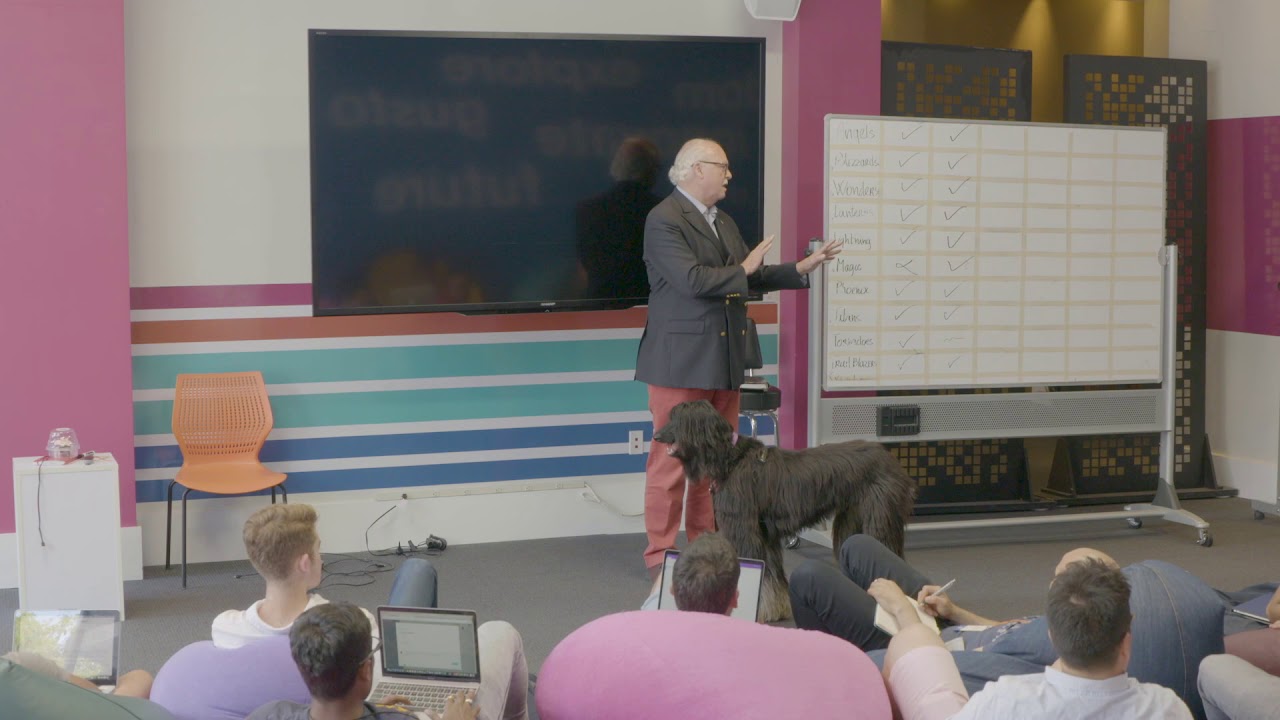
In this talk, Richard Horning recounts his personal path from Duke Law graduate to early Intel lawyer, highlighting the 1971 naming of Intel as the symbolic birth of Silicon Valley and using his commute time as a vivid gauge of the region’s economic health. He then shifts focus to practical advice for foreign founders seeking to establish and stay in the U.S. tech ecosystem. Horning explains the Visa Waiver Program’s short‑term allowance and its enforcement limits, then details the E‑2 investor visa—required foreign‑sourced investment (typically $75k‑$200k), 50% ownership, business‑plan submission, and renewal considerations. He contrasts this with the EB‑5 program’s higher ($500k‑$1M) investment threshold that directly leads to a green card. Finally, he outlines the L‑1 intracompany transfer visa, emphasizing the 365‑day employment prerequisite, payroll documentation, and common pitfalls for founders. Throughout, Horning adopts a conversational, instructional tone, offering a pragmatic, cautiously optimistic roadmap for navigating U.S. immigration as an inbound entrepreneur.
Chapters
Thank you. Thank you for the kind introduction. Thank you. Just to give you a little more perspective on my involvement with Silicon Valley, when I graduated from Duke Law School, I came back to California and I clerked for a judge on the U.S. Court of Appeals in San Francisco and then started with the Pillsbury law firm. And at the time, the Pillsbury law firm was the largest law firm on the West Coast. They represented just about everybody. And they discovered that while I was at Berkeley, I spent 3 semesters in the engineering school. And even after transferring out of engineering, I took a course in computer science, a course in statistics, a course in things that are useful to the modern economy. And they handed me a file and said, take this file and go down and see this young company down in Santa Clara that has a trade name problem. So I looked at the file. This company's incorporated under the name NM Electronics. At the first meeting of the board of directors, Art Rock, who was the chairman of the board and the guy who raised the money for this company, said, there's not going to be any brand value in NM Electronics. We need a better brand. And so they hired a famous brand consulting firm in San Francisco named Walter Landor Associates. And 2 months later, the board convened again. There was a report, we found a great name for this company. It's a small company in upstate New York in the television parts business. We bought the name for $25,000. The name is Integrated Electronics, which got shortened to Intel. And I was actually at Intel on January 11th, 1971, as a young lawyer. helping them with this problem. January 11th, 1971 is the birthday of Silicon Valley, the first time the word appeared in print. So I've been driving down from San Francisco to Silicon Valley ever since. And you can judge the state of the economy by how long it takes me to drive from my home in San Francisco to my office in Silicon Valley. Right now it's booming because it takes me about an hour and a half during rush hour. When the bubble burst in 2002, it was 52 minutes. So that gives you some idea of the change in the economy. So I've been— I've had the privilege of working with a lot of inbound foreign companies that come to Silicon Valley seeking fame and fortune, seeking to take advantage of the talent pool that's here, seeking to take advantage of an entry point into the U.S. economy. So, Tim, The first challenge that every foreign company that comes here, every group of founders that come here have to face is how do they get to stay here? Like most countries of the world, we have immigration law. And depending upon who's in charge in the White House, it's either open, Or closed. And right now, I won't engage in a long political diatribe about the President of the United States, but he's not exactly friendly to inbound entrepreneurs. In fact, he revoked the entrepreneur visa program. So we have to look at the opportunity to come here in a different light. Look, everyone— almost all of you, depending on your country of origin, can come here under the Visa Waiver Program. And so you can show up at the airport, you have your fingerprints, your picture taken, say, why are you here? And you stay for, you know, 3 months, 2 months, whatever. And you keep coming and going until someone at the airport says, how come you keep coming here? Are you sure you're not working? Because it's against the law to work in the United States unless you have a green card or a work visa or citizenship. At that point, the dialogue usually is, I'll let you in one more time, but the next time you better come with a work visa. And they tap that into the computer. Or They could kick you out. I actually had an Estonian— I'm the honorary consul for Estonia, so it gives me quasi-diplomatic status. So if some Estonian citizen comes to the United States, comes to Silicon Valley, and has a problem, they call me. He gave the wrong answer when he got to the airport, and the security officer at the airport said, you have 1 week to leave. So I got summoned to the airport. We cleared it up what the problem was, and so he was admitted under the usual visa waiver program. But there's the problem. How do you get to stay? One method is an investor visa where you and a group of investors from your home country get together and raise $75,000, $100,000. You own more than 50% of the company that will be formed here, and you apply for an investor visa. You have to have a business plan. The government, you know, ought to say, hey, great, you're going to come here, you're going to set up a company here, you're going to hire Americans, you're going to grow the company. Hallelujah. Well, depending on who is in charge in Washington, Yes or no. But by and large, this works provided you have a storyline. Because these visas are discretionary, as they all are. And so it's a matter of thinking about the process as pitching the United States government to be an investor in your company. Give them the slide deck. Give them the idea. Give them a 5— you'll be asked for a 5-year plan. Yes, sir. How do you get the investor to come to the United States? Wasn't the amount half a million for the investment visa? That's a different EB-5 program, which is where you buy a company or real estate and you get right into the green card program. The investor visa program, which is the E-2, is a different program. Yeah, you could— How much was this? Well, again, I've seen numbers Numbers as low as $75,000. I've seen $200,000. Again, it's— you're making application to the government to let you in. The government's going to look at your business plan and they want to know, is this a viable business or is this just a hobby? And so they want to see that there's sufficient money To get started and grow the business. That's the— again, think of it as a business plan. Think of it as the United States government being an investor. And if the money comes from investors from here in the U.S., it doesn't count? Nope. Nope. It has to come from your home country. You can top it up with money from here. But then you've got the problem of how do you maintain— this is another little trick of the— a challenge to the investor visa program. You, the entrepreneur, have to maintain a 50% ownership. So if you get Tim to put some money in and you get diluted below 50%, you have to find another way to stay. Now, the reality is that these investor visas are issued Usually for a 3 to 5 year period. And during that 3 to 5 years, the Immigration Service doesn't come by and say, oh, have you taken in more money? Oh, Tim gave you half a million dollars and you're now at a 40% ownership? You have to leave. It doesn't work quite that way. But just know, when it comes time to renew the investor visa, if you're still in that category and haven't found another way to stay— You're going to have to leave. It'll be a problem. So think of it as 50%. That's one way. The second way is you have formed a company in your home country with whatever money. It can be money from the United States. And you set up a subsidiary here. And you make application for an L-1 visa. What's an L-1 visa? Which is an intercompany transfer. The pitch to the government again is, we want to move a senior person from the country abroad to the subsidiary in the United States to grow the company. There are a couple of requirements that usually trip up this L-1 process for entrepreneurs. The first is you have to have been employed by some company in the group for 365 days before you make application. That 365 days, you have to add to that the number of days that you spent in the United States. So during that period of time, if you keep coming to Silicon Valley or go to CES in Las Vegas and spend 2 weeks there, Now it's 365 days plus 2 weeks. So you have a counting problem. The second problem you have with that is you have to be on the payroll. Founders are very rarely on the payroll. So if you're going to use this vehicle, you start your company in your home country, put yourself on the payroll. The government will want to see the records that you're on the payroll.