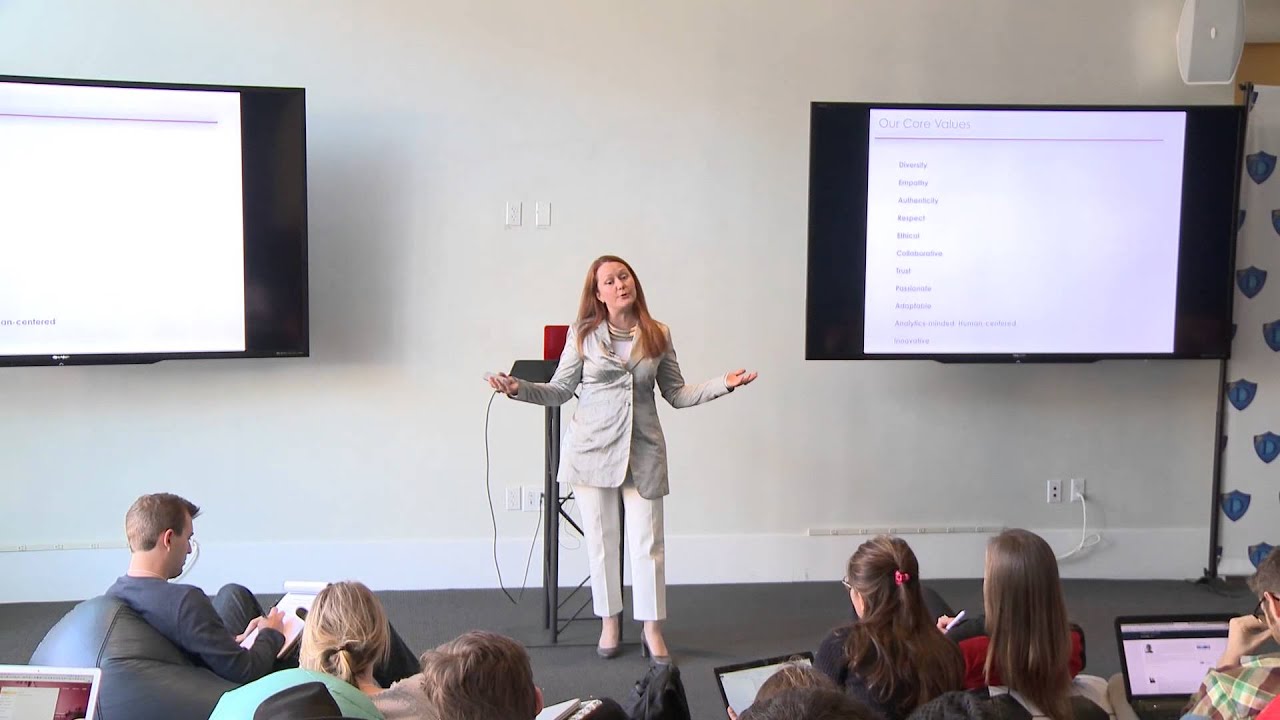
In this recorded discussion, co‑founders Rachel Payne and Natasha Mohanty articulate FEM inc’s purpose‑driven culture. They begin by defining the company’s mission – to create video‑based experiences that resonate with diverse audiences, avoid filter‑bubble narrowness, and expand human potential. Their long‑term vision is a world with greater empathy and wisdom, where video serves as a catalyst for inspiration and behavioral change. The founders enumerate a broad set of core values – diversity, empathy, authenticity, respect, ethics, collaboration, trust, passion, adaptability, and a human‑centered analytics mindset – and explain how these values shape an open, conflict‑friendly culture that fuels innovation. They describe the team’s entrepreneurial characteristics: resilience, owner‑mindset, boldness, scrappiness, cost‑consciousness, and a focus on impact‑driven prioritization, especially under resource constraints. The conversation then shifts to hiring, highlighting how writing out the mission, vision, values, and desired attributes created a clear hiring blueprint that attracted talent aligned with the company’s deeper purpose. Throughout, the speakers stress the importance of recognizing personal biases, leveraging diverse perspectives, and using video as the medium through which FEM inc can influence beliefs, introduce new ideas, and foster a shared human narrative.
Chapters
So our culture is built on things that you'll recognize: mission, values, vision. When we think about these things, you know, coming from Google.org, we spend a lot of time on developing a vision and a mission and core values. So when we think about what is our mission, you know, what do we want to do? Well, we want to create these experiences that resonate with diverse audience needs and voices. So you'll notice that a through line in everything we talk about is diversity, partly because we believe that there are segments of the population that are underrepresented in popular entertainment, or even misrepresented, sometimes stereotypically represented. But more than that, we also want to tap into these deeper motivations that really drive human behavior. Things like, what inspires you? Or what are you passionate about? How can we help you find more of that? Or what is it you'd like to learn, and how can we facilitate that process? without becoming a really narrow preference model, without creating that sort of filter bubble where you're really isolated down to the clicks that you— the actions that you take, such as clicks, to the point that we're excluding all these other realms of possibility. So we think about ourselves as more of an expansive model to help people beyond just the immediate and really looking at how can we expose people to new ideas, new content, help pursue whatever that trajectory is that they want, and try to have an intuition about how to get them there. So our mission is really to do that, and the practical way that we would do that is through the technology that we build. Our vision, and this is, so when you think about our vision, the way that we think about how to frame a vision statement is what is the impact in the world that you'd like to achieve by having existed? And that's in 10, 20, you know, however many years. So it's not an immediate, it's what is the world that you would like to inhabit as a result of your work? And so, to that end, we believe that our vision will help create a greater diversity of human potential. And this is expanded by the imagination through video that entertains and inspires and resonates. When we think about the role of video, it's not accidental. Video, in many ways, has the sight, sound, motion attributes of TV, but there are all these other things at play that happen, and video is a great vector for capturing The way in which impact happens in the world. It's what can motivate behavior. It can reinforce certain beliefs. It can introduce new ideas. So video is our proxy for all forms of entertainment-type content or media that can have an impact or can be a catalyst for impact. So we envision a world with more empathy and wisdom, where everyone has the freedom to forge their unique path And fully participate in our shared human narrative. These are our core values. And I didn't do one of those neat acronyms where you're like, oh no, our core values stand for TEAM, because we have too many. So if you have any creative ideas, let me know. Really core, diversity. We believe in diversity. So we might be Femme Inc., but when you look at who the team is, it's pretty diverse. And we're very proud of that.
We're proud of—
we're also proud of the fact that when we think about building technology, we do try to do so from multiple vantage points. So continuously trying to reassess whatever assumptions we might be going in. And when I was working in development and at Google.org, one of the things that was really important is to know your bias up front. What are your biases? Because it actually can be a real hindrance to innovating in a way that can speak to a broader population. So diversity, empathy, authenticity, Respect, being ethical, collaborative. Collaborative is huge for us. I mean, we definitely have an open culture. We don't always agree. In fact, even in this talk you will see us disagree. But that's okay, you know, because there's space for that. That's the point. That's how great ideas come. And in fact, diversity is key to that. Diversity is what enables you to have multiple Perspectives represented simultaneously. And it's through that process, conflict and resolution, and also just the process of having ideation from multiple perspectives that allows innovation to really flourish. Trust, passion, being adaptable, analytics-minded but human-centered, and of course innovative. That kind of goes without saying, I guess. Characteristics of our Fending team. These are all pretty self-explanatory, but I have to say, especially when we were raising our venture round, sometimes it felt like we were doing impossible things every single day. And I know as entrepreneurs, many of you can probably identify this, where you're like, wow, we just did something amazing, and that was impossible, but we did it. And you should celebrate that because that is true. That's what it's like to be an entrepreneur a lot of the time. We think and act like an owner. We're resilient. We have vision. We dream big. We're bold and scrappy. Being scrappy is sometimes just necessary. But it also helps you be cost-conscious. You know, it helps you think about what really matters. There's nothing like resource constraints to force prioritization, by the way. And to solve for impact. And this translates down, down to, you know, the most junior level, where if you're faced with multiple competing priorities, The best way to prioritize as an individual, as a team, as a company is to really think about what's going to have the greatest impact. Solve for that.
I think one of the things that I want to mention with this stuff is it's actually been really helpful to write this out, which I wasn't quite sure it would be, as we started hiring. Because I think the co-founders, the 3 of us, had worked together enough that we felt like we understood each other really, really well. And as we raised money, we started hiring people. And then it became really critical, because each of us was hiring independent of the other 2, to kind of be aware that we were all on the same page. And so that exercise of writing things out, which a younger part of me was like, why should we write it out? We know who we are, was actually really critical to make sure that we can hire the right people for the team. And so far, our hires have been amazing. I mean, I love them. And I think I can— we can say that because we went through a lot of trouble to make sure they have the right qualities, not just the qualifications, but absolutely the attributes that made them perfect for us.
I think that's a really good point because when you look at the DNA of your organization, when you think about the blueprint that you're developing, having clarity around your mission, your values, your vision, characteristics of the people you want to work with, and you hope— I hope you like them because you're gonna be working a lot with them. What it also does, it's not just about articulating it for yourself, it also attracts people because they're intrinsically motivated by something deeper and bigger. And when you share that, it's a really powerful connection. So I think for us, hiring has actually been way easier than we thought it would be so far. Knock on wood. Yeah, so far. But because people are drawn to not just the technology and what we're building, but they're drawn to something bigger than that, and they can envision their role in having impact. And I think that's really exciting.