The League Dating App EXPLAINED In Depth by CEO | The League Founder, Amanda Bradford
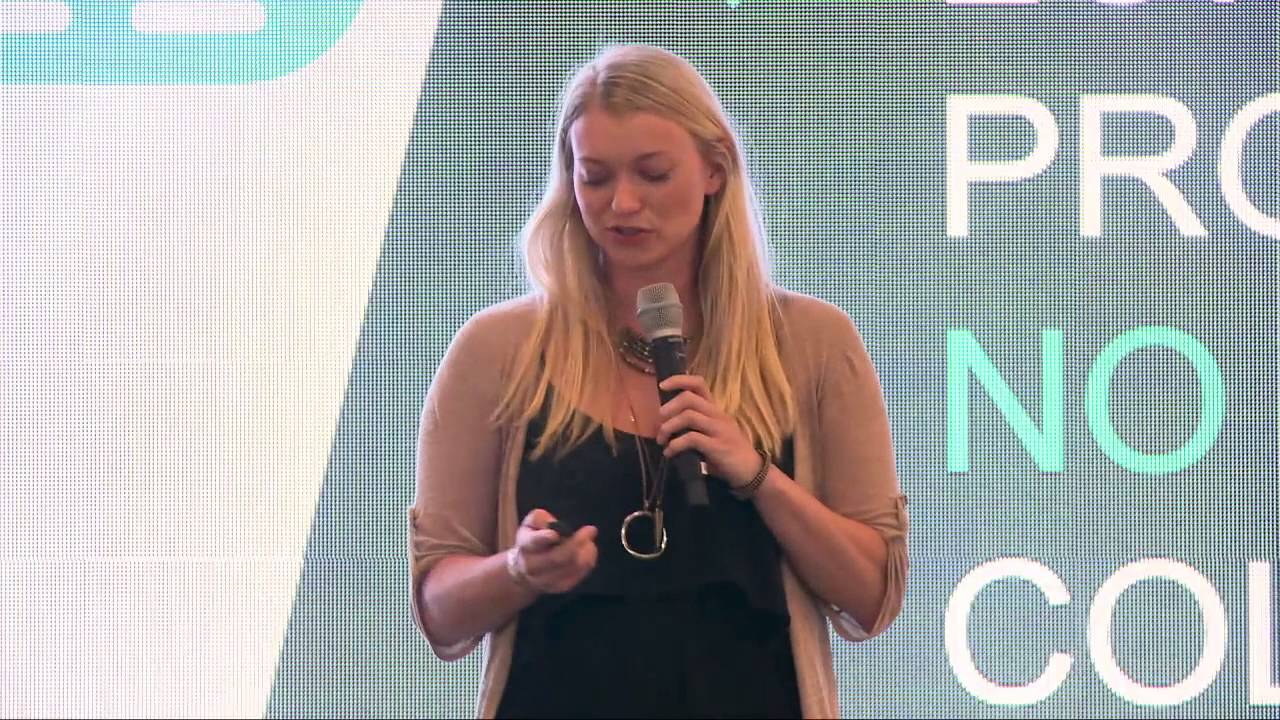
Amanda Bradford built The League, a dating app for high-achieving professionals, after getting frustrated with existing apps' lack of privacy and superficial profiles. She used dual verification through Facebook and LinkedIn, automatic coworker blocking, and an admissions-only model to eliminate bots and create a premium brand. Pre-launch sign-ups and zero marketing spend drove faster growth than competitors like Hinge.
Chapters
So today I was gonna talk about how to launch successfully in a crowded marketplace. I wanted to open with asking for a show of hands if you're launching a product that is first of its kind, brand new market, you're defining a market, nobody knows what it is. Raise your hand. Got 1, 2. Now raise your hand if you're launching something where there is a competitive alternative that is somewhat works. Right. And that's actually most of startups out there. It's very rare that you're really defining a brand new market, a brand new model. And if you are, that's great. It has its own set of challenges because people don't know necessarily that they need that market. And so that's a topic for another person to talk about. But I created an app where it's definitely a crowded marketplace. There's definitely alternatives that are working for people. And you're trying to prove that you're different, that you're better, that you're gonna stand out from the crowd in a very noisy marketplace. So first I wanted to quickly give you guys a background of myself, how I started The League. It sounds like most of you guys are at the kind of beginning parts of starting your venture. So hopefully this will give you a little bit of inspiration that It gets better. And there's, you know, once you kind of start the ball rolling, momentum does kick in and it's a lot easier. Then I was gonna kind of go through what my 3 tips are for launching in a crowded marketplace based on my experience, and then finish with Q&A. So my background, as you so nicely gave a quick overview— whoops, told you these screens are Not my— whoops. All right. You just got a preview of the presentation. But my background is— I call myself semi-technical. So I studied computer science for 2 years at Carnegie Mellon, switched into information systems, which is a much more practical, hands-on, more programming and less math, less theoretical. It was kind of for people that like to get shit done and build things and less kind of wonder about how efficient their code was or how scalable their code was. So I call it like the hacker degree. So I did that, and my first job out of college was basically kind of hacking. I worked as a programmer, but in the sales organization at Salesforce, and I learned really quickly how to kind of build proof of concepts really fast. The code was not what I would call good, high-quality code, but it was definitely good enough to kind of prove the concept. And I switched from there into more of a sales role where I got a lot of experience working with customers, closing deals. Moved over to Google where I did a similar kind of hybrid role where I worked with the engineers but also the salespeople to get a feel for, you know, the technical challenges that the customers were facing but also working with the engineers to kind of advocate for the customer. So I've always sort of firmly been in between this kind of engineering and business world. And then I went— when I went back to Stanford, I knew I wanted to do something in entrepreneurship. I felt like I had a good background to understand the technical components, but also had the business sense and desire to kind of be able to do the business development, the sales, the fundraising aspect of it. So I wasn't quite sure what I wanted to do. Went through business school, actually had accepted a job offer at Facebook to do product management. And my last semester— in business school, you don't do much work your last semester, but— or the last year for that. But so the last year, I started really wanting to work on this dating app. I had recently become single. I was looking at a bunch of the apps out there, including Tinder. A lot of my friends were using Tinder, and it was pretty shocking the amount of basically disruption they had in my peer group. It went from people who had never done online dating before to almost everyone who was single having an app or more on their phone. And so to me, that, you know, I smelled opportunity there. And then personally, I was pretty frustrated with a lot of the features and functionalities on the app. So, you know, all sorts of kind of issues. I didn't like the fact that your coworkers could see you. I didn't like the fact that you didn't know anything about the person except what their face looked like. So I would tend to be— find myself stalking and doing social media due diligence. on different people I matched with. And it's really easy to find people online if they give you one morsel of information. You just— they tell you what college, or they tell you where they work, you can find them on LinkedIn. So I got really good at that. And the other issue I had was that, you know, as I progressed in my career, and especially after getting a pretty expensive MBA, I was determined to use it, determined to be really successful, whether I joined Facebook or whether I started my own company. You know, the thought of like getting married and kind of raising kids was not necessarily like my number one priority. And I think when I went out with a lot of men, it seemed that there was still a pretty large cohort of men that kind of expected women to be in that more traditional role. And I think that all of those things combined was just like a very bad use of my time and their time. If you're taking 2 hours out of your day to go meet someone new, like, let's kind of get all of that stuff out at the beginning so that when you do meet them in person, it's You know, you get to talk about the fun stuff. You get to kind of, you know, understand the personality and wit. And so that was really the kind of genesis of why I started the league. And I wanted to really create a community of like high-achieving, ambitious people that really thought that was a desirable trait. And that was, you know, potentially, you know, the— one of the highest priority traits rather than just looks, rather than just, you know, ability to— desire to like wanna prioritize the other person. So it was a little bit of a— my own personal struggles as a single 30— or I guess 28-year-old dating. So sorry, I keep— I'm not doing well on this. So yeah, so this is my— Thank you. That was one of the only good pictures I've taken in press. So this is sort of— this is actually a slide I use with VCs to kind of get them, especially when you're talking to a bunch of old white men, to kind of put them in my shoes and say, look, there's women out here that we're graduating from college, 60% compared to 40% men. More of us are getting graduate degrees. These women are ambitious, and they want an equal partner. And they want someone who's going to treat them equally. And how do we create a community that's designed for those type of high achievers? And you design things for yourself. I always think the best entrepreneurs feel the pain point themselves. And I think that that's one of the strengths I've had as far as tip number, I guess, 0 in this case is really want the solution for yourself first. And then if you look at just the overall dating problem, I mean, people are getting married much later. The relationships are shorter. The more you excel and the more you kind of progress up the career ladder, the more you're working and less time you have to go to these parties or these dinners or these events where you could meet kind of organically, which we all tend to prefer to do. And so it almost starts to kind of counteract counteract what, what's happening in your career is your relationship life kind of goes downhill as your career goes uphill. And there's also an issue with the online. You think online's a great solution, it sounds great in theory, but then when you actually go on the online sites, there's a lot of issues. A lot of it has to do with the stigma of the industry, but there used to be, you know, a lot of people felt like if they put themselves online, it means that they weren't successful offline. So you have this adverse selection criteria where, you know, you don't have the people that, you know, you would maybe potentially think as a good match for you who might not be signing up for these websites. Typically, the process is really long, which is kind of counterintuitive to that busy professional that doesn't have time. So that's another kind of friction point. And then the last is that there's no privacy. So once you sign up for Match or eHarmony or OkCupid, anyone in your professional and social circles can see you. And as— That's right. Again, as a career-oriented female often working in a male-dominated workplace, that I really wanted to separate my dating persona from my work persona. And so these are some of the issues that I faced. And so when I designed The League, I tried to figure out a way to address all of these issues. So the first one was, let's brand this for high performers. How do you do that and actually mean it? You make it admissions only. I mean, what college do you know— that is super competitive and prestigious lets everybody in. It kind of counteracts its whole mission statement. So let's create it as an admissions process. Let's use Facebook and LinkedIn to validate that the user is who they say they are. They went to said school. They have said degree. For those of you who don't know, online dating is typically riddled with a lot of lying profiles and people that kind of make things up, use fake photos from the internet. It's very easy. It's probably one of the easiest social network communities to kind of go downhill towards, like, spammy users and bots and all sorts of prostitutes. I mean, you'd be surprised if you just, like, look at some of these sites out there. The other one was with the LinkedIn verification, not only can we see your institution and the degree you've received, but we can also block you now from your coworkers. So anyone who says they're currently at Google is automatically blocked from each other. And the idea behind that is we consider our users to be smart enough that if that person's in their direct network, whether it's through a Facebook friend or a LinkedIn connection or at their place of work, they could figure out a way to meet that person. And then I mentioned this, but low-quality profiles, that double verification with Facebook and LinkedIn really made it so we had no spammy users. And there was a lot of friction for these typically low-quality users, I would say, to come in. So since we launched in November of last year, we've had really great growth. And we've spent $0 on marketing. And I think— I'm going to go into why I think that is. But I think it is because we really understood our niche. We also did a lot of work upfront, both in validating the idea and making sure people would be excited about it, and then also signing users up before we even launched to ensure that we didn't have that kind of cold start effect. And I'll go into that a little bit more. But basically, you can see, like, if you compare ourselves to Hinge or Coffee Meets Bagel, 2 of our competitors, they had a much slower start. And I think that's because they didn't really have a differentiation or really a brand.
More from Tim


He Sold His Car to Build This Startup, Then Pitched It for $1M 😳 #Startups #AI

This Startup Moves Your Crypto BEFORE Hackers Can Steal It 😳 #Crypto #Cybersecurity




15 Months Without Refrigeration?! This Startup Thinks It Can Go Global 🥥 #FoodTech #Startups



