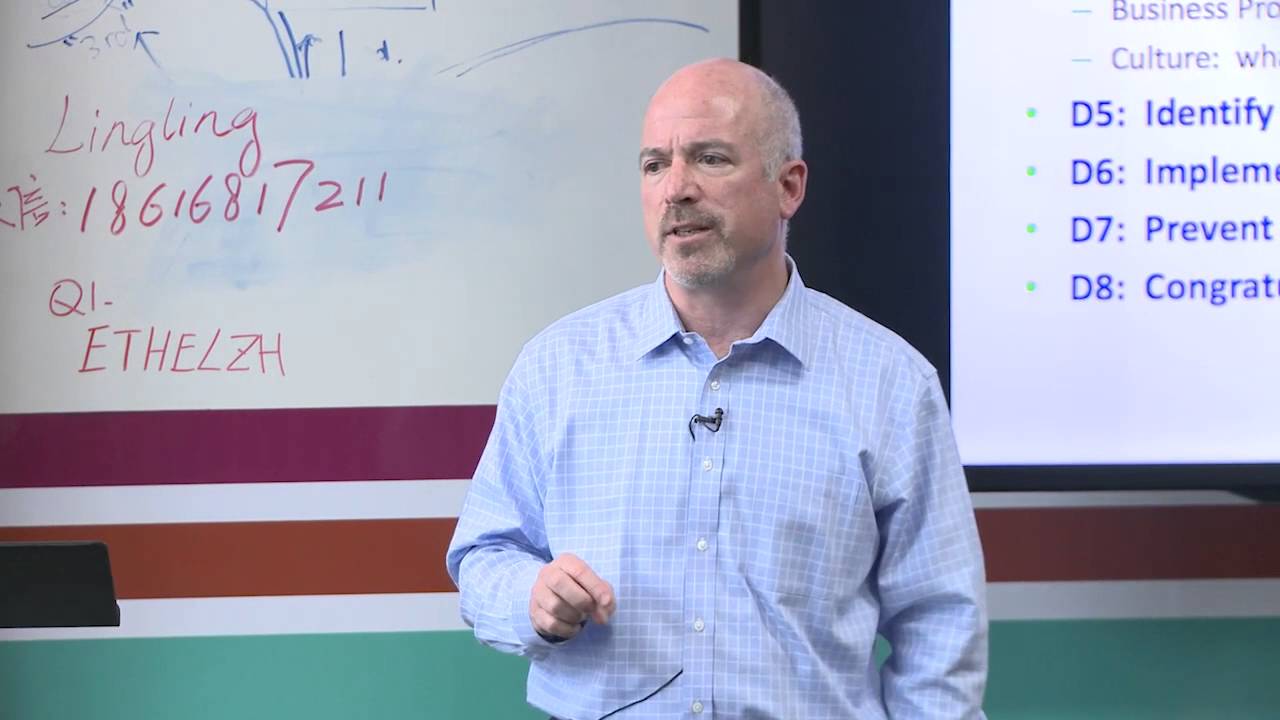
Dave Kranzler explains how to build a learning organization, from collecting data and setting strategy to hiring and managing teams. He stresses that most repeated failures come from overlooking process and culture, not just fixing the technical symptom. He walks through the 8-Disciplines process, a structured root-cause analysis that asks why at least five times and documents what you learned.
Chapters
So we have gone through how to take data, how to learn, how to understand what is going on. We have gone through once you have done your assessment, how do you decide what your strategy is? How do you flow that down to the things that you are going to do every day? We have talked about how do you build a team, a little bit about how do you build a team. How do you hire people? What do you look for? How do you communicate with them? How do you How do you manage them on sort of a day-to-day or quarter-by-quarter basis? We've gone through a couple simple tools that you can use to solve real problems or to organize yourself. And if you remember in the steps of management, once you've done all that, you have to step back and measure, and then invariably you find it doesn't work exactly the way you want it to, so you have to go in and change. You cannot do that unless you set up what's called a learning organization, which means quite simply you have the capacity to learn from your mistakes. Sounds simple, right? Not so much. How many times— I've seen this a lot— do people make the same mistake over and over again? How many times do you go through that fishbone analysis and you come up with plenty of good technical reasons as to why it failed, But it just keeps happening again in sort of a different way each time. The paradox here is that people typically just look at what we call the subject matter, what actually was the problem, and they don't often look at the process, which is what's wrong with how we do our work, or the culture, which is what's wrong with us. And until you actually examine those things, you don't really get better. And you don't learn. So there's a process again invented by the auto industry called the 8D or 8 Disciplines process, which is a very structured way to learn. Now it's a lot of work, so you typically only do this after you've had a big problem or big disaster. And you have to gather together a team to do this, which is the first step. It's got to be cross-functional. Yeah. You check your egos at the door, you don't be defensive, but you get together the team and you define, okay, what was the problem statement? Not necessarily what went wrong, but what really went wrong. And I could give you a ton of examples, but about a year and a half ago, we delivered a product to a customer and the symptom was it just didn't work. But what really went wrong was a bit more complex than that. It had to do with what happened in our manufacturing process and how we didn't set it up correctly and a bunch of things I won't bore you with. But if all we did was say, okay, well, we got the certificate management wrong, we will just fix that and move on, we would have missed the opportunity to learn. So when you have got a problem, you have to contain it. While you are doing all this great learning stuff, you still have to keep your business running. But you don't really get to the learning until you sit down and you identify the root causes. And the discipline here is you have to ask why 5 times in a row. Very easy to blow it off with one why. But until you— that forces you to dig deeper. And then you also have to not just look at the technology or the problem itself, but you have to look at the process. Most people kind of get that. Okay, there's a hole in our process. We'll close it, we'll write a new spec, and we'll move on. If you don't then also look at the culture— remember we talked about culture? And what might have been wrong there? Why weren't we thinking? Why didn't we go involve this other organization that could have helped us? And you really have to be honest with yourself and a bit vulnerable to go ahead and do that, but then you get the great insights, and then everybody walks out of there Realizing that there is something they have all learned together. So once you can do D1 to D4, the rest is easy. You fix it, you write down how you fixed it, you make certain you have a process in place, and then you go have a party. Congratulate the team. It's not all that simple, but these are a few things you can use to make it a little bit simpler as well as to expose a little bit of the complexity That happens when you're trying to build a larger team or a larger business.