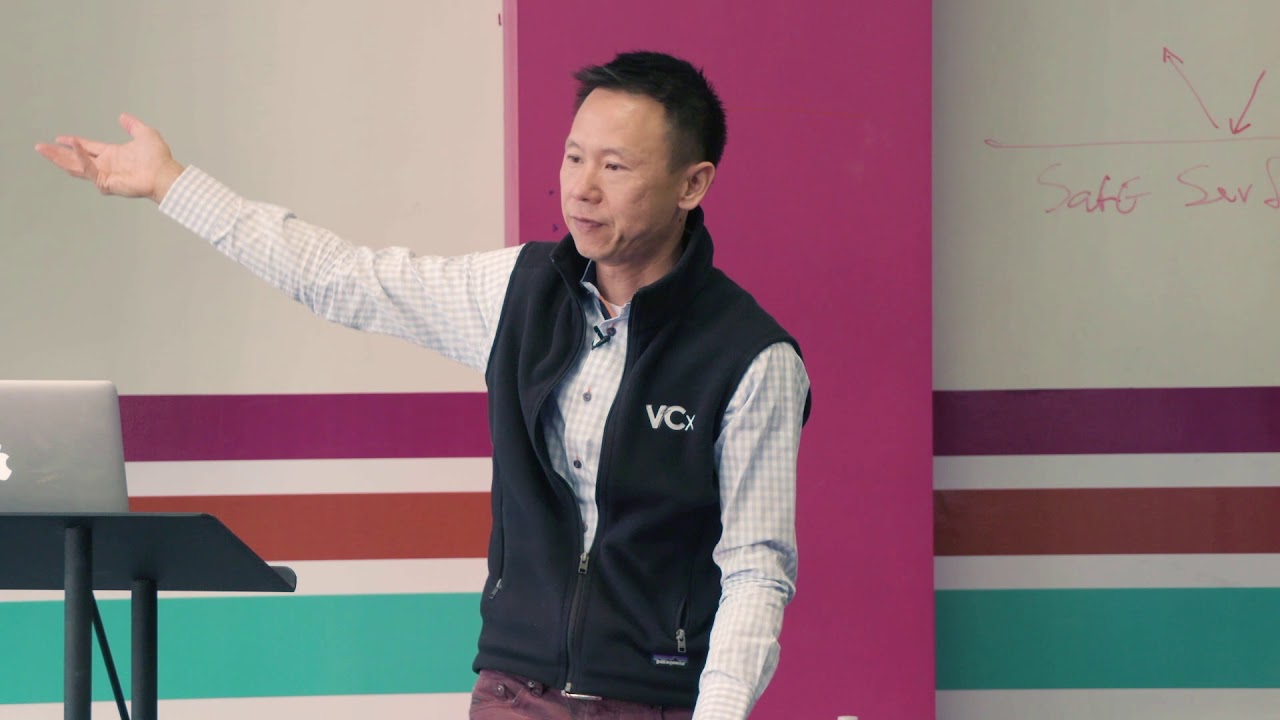
Andy Tang breaks down fundraising for early-stage founders: keep cold emails to one screen, focus each investor conversation on getting a meeting not a check, and use video sparingly and strategically. Build deal momentum by delivering on promises and letting competitive pressure do the work instead of asking repeatedly.
Chapters
Yes, please.
I think he has another point is how to approach one investor he never met before. You are trying to use the email or cold call to approach this investor, and all— if I'm trying to approach this investor, what I should bring with me? Maybe I can write down my business model in the email content or just talk with him.
Yeah, so let's address that with the point number 3. So somebody read that.
Find the meeting instead of the check.
Okay, what this means is that your goal for every interaction is to get a meeting as opposed to getting money. So the first email, it's about getting some time to just talk, right? So for that, you have to use your own judgment. Everyone is different, right? What do you think is going to get someone to respond to the request and meet? My judgment tells me oftentimes it's the size of the impact, the scale of impact. The uniqueness of the approach, size of impact, and the team, like you have some pretty unique qualification that I might want to take 30 minutes to meet with you. So you need to emphasize that. And don't do these long emails, I mean people don't have time, right? Even when you see long emails, you probably don't read them all. So think of investors as sort of the same boat.
Yeah?
Okay, good.
What is your ideal email size?
It fits on one screen, that you don't need to scroll. Yes, please.
Would you watch a video if it came in an email?
So this is a good question and this is email— in fact, we should have a whole class on, if you haven't had it, growth hacking or email marketing. The timing of that is important. I might watch a video if it's like I get an email on the weekend when I'm just catching up, but I'm not going to watch an email— a video if I'm catching up on email when I'm sitting in the meeting, right? So the timing of these emails, when people get it, and there's all kinds of theories about when you send emails, how— so I would— it's worth investing a little bit of time to study, and if you find out, share with your— classmates because there's a science behind this, right? What I'm telling you, the strategy can be drastically enhanced by some modern email marketing techniques. And I hope you guys have taken a class on— or we have given you a class on growth hacking. Not yet?
We will.
Growth hacking?
No, not yet. Okay.
Let's see what else.
Can you touch point 4?
Hmm? So yeah, point number 4. So this is the idea of not keep asking people for money.
Right.
Money comes naturally. So there is a deal momentum, it means you tell people what you're going to do and you do what you said you're going to do, and you keep doing that and then there is an opportunity of financing coming up and that round of financing may become unavailable to other investors. So investors would start thinking, well, even though he didn't ask me to invest, clearly there is a round of financing and if I don't act it's going to disappear. So there is deal momentum, right? And also if you sense when people are pushing your investment, they themselves have processes inside their company and so you kind of see If they're filling out paperwork or going to investment committee meetings, those momentum kind of sort of push itself. So ask subtle questions to figure out like where they are in terms of decision-making and just let the momentum take the deal itself versus you keep pushing. Because sometimes by you— most of the time by you pushing doesn't help. Right, people are busy. People react to competitive pressure, people may have internal momentum that just kind of keeps them going and once the momentum keeps going, you don't need to do anything, it's just going. They may want to do the investment more than you do, because if they already spent time convincing their partners they should do the investment, let them do their work. Make sense? Okay, let's keep going.